

P2111 on 2011-2025 Dodge Durango 3.6L: Throttle Actuator Control System Stuck Open Guide
For a 2011-2025 Dodge Durango with the 3.6L V6, code P2111 almost always means the electronic throttle body has failed. This will put the vehicle into 'limp mode,' with a flashing red lightning bolt on the dash. Replacing the entire throttle body assembly is the most common and reliable fix, and a throttle relearn procedure is required afterward.
- P2111 on a 3.6L Durango almost always points to a failed electronic throttle body.
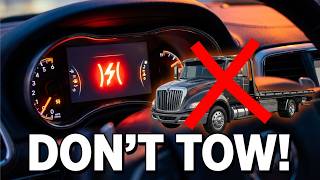
- Symptoms are severe and immediate: a red lightning bolt on the dash and the vehicle entering 'limp mode' with very little power.
- The fix is typically to replace the entire throttle body assembly, as its components are not sold separately.
- Before replacing parts, perform a quick visual inspection of the throttle bore for heavy carbon buildup that could be causing the plate to stick.
- After replacement, a throttle relearn procedure is necessary to ensure proper idle and performance.
What's Unique About the 2011-2025 Dodge Durango
The 3.6L Pentastar V6, used widely across Dodge, Chrysler, and Jeep vehicles including the Durango, is known for electronic throttle body failures. These failures are often sudden and will immediately trigger the Electronic Throttle Control (ETC) warning light (a red lightning bolt) and put the vehicle into a reduced power 'limp mode'. The issue is so common that the throttle body assembly is one of the most frequently replaced parts on this engine, with the latest OEM part number being 05184349AF, which supersedes several previous versions.
Generation note: The 2011-2025 Dodge Durango is part of the third generation (WD). While there have been several cosmetic and feature updates since 2011, the core 3.6L Pentastar engine and its electronic throttle control system have remained fundamentally the same, making this guide applicable to the entire year range. The throttle body failure is a known issue across all model years within this generation.
Symptoms You May Notice
- Electronic Throttle Control (ETC) warning light illuminated (red lightning bolt symbol).
- Check Engine Light is on.
- Vehicle enters 'limp mode,' with drastically reduced engine power and limited RPM.
- Poor or no acceleration.
- Unstable, high, or fluctuating idle.
- Engine may stall, especially when coming to a stop.
- Hard starting or no-start condition.
- Replacing the accelerator pedal position sensor (APPS). While related to throttle control, a faulty pedal sensor will typically set its own specific codes (e.g., P2122).
- Replacing the PCM unnecessarily. PCM failure is very uncommon and should be the last resort.
Most Likely Causes
- Faulty Electronic Throttle Body Assembly 🔴 High Probability → Shop Fuel Injection Throttle Body The throttle body on the 3.6L Pentastar is a known failure point. The internal electronic motor, plastic gears, or integrated position sensors can fail, causing the throttle plate to not respond correctly to PCM commands. This is the most frequent cause for P2111.
How to confirm: After confirming no wiring issues, the most practical test is to replace the throttle body. A scan tool can be used to perform an 'ETC Throttle Follower Test' to see if the plate moves, but internal electronic faults are common and hard to verify without replacement. Visually, the plate may be physically stuck open.
Typical fix: Replace the entire electronic throttle body assembly. The sensors and motor are integrated and not serviced separately. A throttle relearn procedure is required after installation.
Est. part cost: $70-$250 - Carbon Buildup or Debris 🟡 Medium Probability Over time, carbon and oil deposits from the PCV system can build up around the throttle plate and bore, physically preventing it from closing completely.
How to confirm: Remove the air intake hose from the throttle body and visually inspect the throttle plate and bore for heavy black deposits that could restrict movement.
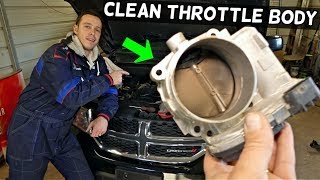
Typical fix: Clean the throttle body bore and plate thoroughly with a dedicated throttle body cleaner 🎬 Watch: How to properly clean your 3.6L Pentastar throttle body. and a soft brush or rag. Do not force the plate open manually; have an assistant turn the key to 'ON' (engine off) and press the gas pedal to open it electronically. If cleaning resolves the issue, a throttle relearn may still be necessary.
Est. part cost: $5-$15 - Wiring or Connector Issues ⚪ Low Probability The engine harness is exposed to heat and vibration which can lead to issues over time. The connector pins can become loose or corroded, or wires can be pulled out of the connector.
How to confirm: Inspect the wiring harness and connector at the throttle body for any signs of damage, corrosion, loose pins, or chafing. Check for a secure connection and ensure no wires are pulled or broken.
Typical fix: Repair the damaged section of the harness or clean/replace the connector.
Est. part cost: $10-$50
Rare But Worth Checking
- Faulty Powertrain Control Module (PCM): → Shop Engine Control Module (ECM) This is extremely rare. The PCM should only be considered after all other possibilities, including the throttle body and wiring, have been definitively ruled out.
- Short in 5V Reference Circuit: On some Chrysler/Dodge vehicles, a different sensor (like the oil pressure sensor) can short out the 5-volt reference circuit that it shares with the throttle body, causing throttle-related codes. This can lead to misdiagnosis if not checked, and may be accompanied by other codes like P0642. 🎬 Watch: How a faulty oil pressure sensor causes throttle issues.
Diagnosis Steps
- Scan the vehicle for all DTCs. Note any other codes that are present, especially those related to throttle position or sensor voltage like P2112, P2110, or P0642.
- Turn the ignition off and remove the air intake tube from the throttle body.
- Visually inspect the throttle bore and plate for any heavy carbon buildup or foreign objects that could cause it to stick.
- Inspect the electrical connector and wiring going to the throttle body. Look for loose pins, corrosion, or damaged wires. Wiggle the connector to see if the fault condition changes.
- If the throttle body is dirty, clean it using throttle body cleaner and a soft cloth. Do not move the plate by hand. Have an assistant turn the key on (engine off) and press the accelerator to open the plate for cleaning.
- If cleaning does not resolve the issue or the throttle body is clean, the most likely cause is a failed throttle body assembly.
- After replacing the throttle body, a 'throttle relearn' procedure must be performed. This can often be done without a scan tool by turning the ignition to 'ON' (not start) for 10 seconds, then 'OFF' for 10 seconds, and then starting the engine. Let the engine idle for a few minutes to complete the process.
- Clear all DTCs and perform a test drive to ensure the problem is resolved.
Parts You'll Likely Need
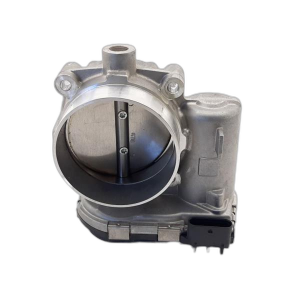
- Electronic Throttle Body Assembly
(OEM #05184349AF)— This is the most common failure point for code P2111 on the 3.6L Pentastar engine. The internal motor or sensors fail, requiring replacement of the whole unit. The part number 05184349AF is the latest Mopar revision, replacing older versions like 5184349ab, 5184349ac, 5184349ad, and 5184349ae.
Trusted brands: Mopar, Dorman OE FIX, Hitachi, BBK (performance upgrade)
OEM price range: $150-$250
Aftermarket price range: $70-$180
Related Codes That Often Appear With This One
- P2112 — P2112 is 'Throttle Actuator Control System - Stuck Closed.' These codes are two sides of the same coin, indicating a general failure of the throttle body to respond to commands.
- P2110 — P2110 is 'Throttle Actuator Control System - Forced Limited RPM.' This code is often set as a result of the P2111 fault, as the PCM intentionally limits engine speed when it can't trust the throttle's position.
- P0642 — P0642 is 'Sensor Reference Voltage 'A' Circuit Low.' This can appear with P2111 if another sensor on the same 5-volt circuit (like the oil pressure sensor) has failed and is shorting the circuit, affecting the throttle body's operation.
- P0123 / P0222 — These codes relate to the Throttle Position Sensor (TPS) circuits. Since the TPS is integrated into the throttle body assembly, these codes frequently appear alongside P2111, pointing to a comprehensive failure of the unit.
Technical Service Bulletins (TSBs) & Recalls
- While no specific TSB for P2111 on the Durango 3.6L was found, Ford issued TSB 10-21-6 for P2111/P2112 on various 2010-2011 models, indicating the fix is throttle body replacement. This shows industry precedent for this code pointing directly to a faulty throttle body.
Platform-Specific Known Issues
- The electronic throttle body on the 3.6L Pentastar V6 is a widely documented weak point, known for causing a sudden 'limp mode' with the ETC warning light.
- In some cases, a failing oil pressure sensor can short the 5V reference circuit, causing throttle codes like P2111 even though the throttle body itself is not the root cause.
Mechanic-Grade Diagnostic Values
- ETC Motor Resistance — expected: Between 2.5 and 25 Ohms at closed throttle.. Failure: A reading outside this range indicates a faulty throttle body motor.
- ETC Positive/Negative Circuit Resistance — expected: Below 5.0 Ohms.. Failure: Resistance above 5.0 Ohms indicates an open or high resistance in the circuit between the PCM and the throttle body connector.
- TP Sensor Signal Circuit Resistance — expected: Below 5.0 Ohms.. Failure: Resistance above 5.0 Ohms indicates excessive resistance in the signal circuit.
- 5-Volt Supply Circuit Resistance — expected: Below 100 Ohms.. Failure: High resistance in the 5-volt supply circuit can cause sensor malfunctions.
Scan Tool Commands That Help
- wiTECH (or equivalent professional scan tool): ETC Throttle Follower Test — To command the throttle plate to move and visually verify its operation or lack thereof. This helps confirm if the motor is physically capable of moving the plate.
- wiTECH (or equivalent professional scan tool): Throttle Body Relearn / ETC Learn — This is a required procedure after replacing the throttle body or sometimes after cleaning it. The function calibrates the new throttle body's closed, open, and partial positions with the PCM.
- wiTECH (or equivalent professional scan tool): Learn ETC (Electronic Throttle Control) — This specific function in the PCM menu initiates the process where the scan tool guides the technician through the relearn process, which may involve pressing and releasing the accelerator pedal.
Wiring & Ground Locations
- Throttle Body Connector — On the throttle body itself, located at the top of the intake manifold where the air intake tube connects.. This is the primary connection point for all power and signals to the throttle body. Corrosion, bent pins, or a loose connection here will directly cause throttle control faults like P2111.
- G104 — Rear of the cylinder bank on the left side of the engine.. This is a primary engine ground. A poor ground connection at this point can cause a variety of sensor and actuator issues, including erratic behavior from the electronic throttle control system.
- PCM C2 Connector — The Powertrain Control Module (PCM) is typically located in the engine bay. The C2 connector is one of the main harness plugs into the PCM.. The circuits for the throttle actuator motor (ETC Positive and Negative) run from this connector to the throttle body. Diagnostic procedures require checking for voltage and resistance at this connector.
Real Owner Repair Stories
- YouTube video from a repair shop (2013 Jeep Grand Cherokee 3.6L (same engine and platform)) — Multiple codes including P2111, P0642 (Sensor Reference Voltage Low), P2122, P2135, and P0339.
❌ Tried (didn't work) The vehicle came from another shop that had already diagnosed a bad PCM and attempted to replace it.
✅ What actually fixed it The technician traced the shared 5V reference circuit and found that the wiring to the oil pressure sensor, located under the intake manifold, had been chewed by a rodent or was otherwise damaged and shorting out. Repairing the damaged wires to the oil pressure sensor resolved all the codes, including the P2111, without needing to replace the throttle body or PCM. - YouTube video from Omar's Garage (Jeep Grand Cherokee (year not specified, but Pentastar engine)) — P2111, vehicle would not accelerate.
❌ Tried (didn't work) Initial diagnosis pointed towards a standard throttle body failure.
✅ What actually fixed it Upon visual inspection after removing the air intake, the technician found a foreign object—a small plastic piece—had been ingested and was physically jamming the throttle plate, preventing it from closing. Removing the debris completely fixed the problem. This highlights the importance of a visual inspection before replacing parts.
OEM Part Supersession History
5184349AB, 5184349AC, 5184349AD, 5184349AE→05184349AF— Revisions are common for parts with high failure rates. The newer part numbers typically incorporate design or material improvements to increase longevity and reliability.
Heads up: All listed part numbers are interchangeable, with 05184349AF being the latest and most recommended version for replacement.
Model Year Variations Within This Range
- 2011-2015 vs 2016-2025: The 3.6L Pentastar engine received a significant upgrade (PUG) for the 2016 model year, which included changes to the intake manifold. While the throttle body part number (05184349AF) remained consistent across the refresh, it's important to verify fitment using the vehicle's VIN, as minor casting or connector differences could exist. However, the fundamental cause of P2111 (throttle body failure) remains the same for both engine versions.
Diagnostic Flowchart
Other Known Issues on This Vehicle
Issues unrelated to this code that are worth knowing about as an owner of this generation:
- Cracked Oil Filter Housing/Cooler Assembly 🔴 High — Extremely common, especially on models before 2018. The plastic housing cracks from heat cycles, causing major oil and/or coolant leaks into the engine valley. (Ref: No recall has been issued, but it is a widely documented failure. Upgraded aluminum replacement parts (e.g., Dorman 926-959) are a popular fix.)
- Rocker Arm / Lifter Failure ('Pentastar Tick') 🔴 High — Very common, particularly on 2011-2016 models, but can occur on later years. Needle bearings in the rocker arms fail, causing a distinct ticking/tapping noise, misfires, and potential camshaft damage if ignored. (Ref: Multiple TSBs exist, including 09-002-14 for early models. A class-action lawsuit was filed regarding this issue.)
- Faulty Totally Integrated Power Module (TIPM) 🔴 High — Common on 2011-2013 models. Internal relays fail, causing a wide range of bizarre electrical issues, including no-start conditions, fuel pump staying on (draining the battery), horn going off randomly, and wipers activating on their own. (Ref: No recall, but it is a well-known issue with repair services and rebuilt units widely available.)
- Camshaft Position Sensor Failure 🟠 Medium — A frequent failure item that can cause stalling, rough running, and no-start conditions. Often a precursor or symptom of the rocker arm issue. Using OEM Mopar sensors is highly recommended as the engine is sensitive to aftermarket parts.
- Water Leaks into Tail Light Assemblies 🟡 Low — Common across many model years. A poor factory seal allows water to enter the large 'racetrack' tail light assembly, causing moisture buildup and potential LED failure.
Used vs. New Parts: Buying Guide for This Vehicle
When a used part is the smart pick: For this specific failure, buying a used throttle body is strongly discouraged. The part has a known high failure rate, and a used part from a salvage yard is likely to have significant wear and could fail shortly after installation, wasting both time and money.
What to inspect on the donor part:
- Not applicable, as used parts are not recommended.
OEM-only on this vehicle (don't cheap out):
- While not strictly 'OEM-only', using a new OEM Mopar part (05184349AF) or a reputable OE-quality aftermarket replacement is highly recommended for the Electronic Throttle Body. Cheap, unbranded aftermarket parts have a high likelihood of premature failure or compatibility issues.
Aftermarket brands forum-validated for this vehicle:
- Dorman (specifically their OE FIX models like 977-025 which claim design improvements).
- Hitachi
- Standard Motor Products (SMP)
- Bosch
- BBK (as a performance upgrade, may require a tune for optimal performance).
Brands owners have reported issues with on this vehicle:
- Unbranded, low-cost units from online marketplaces. These often use inferior internal electronics and gears, leading to rapid failure.
Real Owner Stories
Aggregated from forums and TSBs cited above. Mileages and costs reflect what owners reported in those sources.
2011 Dodge Durango 3.6L
Symptoms: ETC light illuminated and the engine stalled.
What fixed it: Cleaning the throttle body provided a temporary fix, but ultimate resolution required a full replacement of the throttle body assembly.
Source hint: DurangoForumz.com thread titled '2011 Durango ETC light and stall'
2012 Jeep Grand Cherokee 3.6L
Symptoms: Classic P2111 symptoms and the vehicle entering limp mode.
What fixed it: Replacement of the electronic throttle body assembly.
Source hint: Reddit (r/MechanicAdvice)
Related OBD-II Codes
Frequently Asked Questions
Can I just clean the throttle body on my 3.6L Durango to fix P2111?
Is there a specific TSB for the P2111 code on the Dodge Durango?
Do I need a scan tool to perform the throttle relearn after replacing the part?
Could my Durango's oil pressure sensor cause this throttle code?
What is the red lightning bolt symbol on my dashboard?
Are there upgraded parts to fix other common 3.6L Pentastar issues like the oil leak?
Helpful Videos
Used OEM Parts in Stock
New Aftermarket Parts Available


The information in this article is provided for general reference and educational purposes only. Vehicle specifications, procedures, and part compatibility can vary by production date, trim level, and region. Always consult your vehicle's factory service manual and verify part numbers before purchasing or performing repairs. Safety-critical components such as airbags, seat belts, and braking systems should be installed by a qualified professional.
- Dodge Durango:
- 🧭 Diagnostic Flowchart
- 🎬 Helpful Videos
- 🛍️ Shop This Part
- What's Unique About the 2011-2025 Dodge Durango
- Symptoms You May Notice
- Most Likely Causes
- Rare But Worth Checking
- Diagnosis Steps
- Parts You'll Likely Need
- Related Codes That Often Appear With This One
- Technical Service Bulletins (TSBs) & Recalls
- Platform-Specific Known Issues
- Mechanic-Grade Diagnostic Values
- Scan Tool Commands That Help
- Wiring & Ground Locations
- Real Owner Repair Stories
- OEM Part Supersession History
- Model Year Variations Within This Range
- Other Known Issues on This Vehicle
- Used vs. New Parts: Buying Guide for This Vehicle
- Real Owner Stories
- 2011 Dodge Durango 3.6L
- 2012 Jeep Grand Cherokee 3.6L
- Related OBD-II Codes
- Frequently Asked Questions
- 🎟️ Get 5% Off