

P2111 on 2010-2011 Ford E-Series 4.6L: Throttle Actuator Stuck Open Causes and Fixes
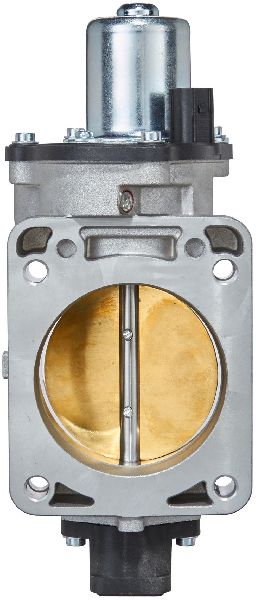
This code means the electronic throttle body is stuck open. The most common fix is replacing the entire throttle body assembly. Expect to pay around $220 for an OEM Motorcraft part and $80-$100 for an aftermarket replacement. It's a DIY-friendly job that takes about an hour.
- P2111 on your E-Series van means the electronic throttle body is stuck open, which will trigger a 'limp mode' and illuminate the wrench light.
- The first step is to try cleaning the throttle body bore and plate of any carbon buildup.
- If cleaning doesn't work, the most likely solution is to replace the entire throttle body assembly. This is a known issue covered by Ford TSB 10-21-6 for specific 2010 models.
- After cleaning or replacing the throttle body, you MUST perform a KAM reset and idle relearn procedure for the computer to recognize the new part correctly.
What's Unique About the 2010-2011 Ford E-Series
For the 2010-2011 Ford E-Series with the 4.6L 2V engine, this code is a well-documented issue. Ford issued Technical Service Bulletin (TSB) 10-21-6 specifically for this problem on vehicles with 4.6L 2V engines built between May 7, 2010, and August 2, 2010, recommending a complete throttle body replacement. An earlier NHTSA investigation (PE13-003) also pointed to issues with supplier parts for the 4.6L 2V engine around this time, where outgassing from sensor gaskets could interfere with throttle operation, making this a known weak point. Ford's own analysis identified throttle bodies produced by Continental Automotive for the 4.6L 2V V-8 Triton engine between March and July 2010 as being particularly affected.
Symptoms You May Notice
- Check Engine Light is on
- Wrench light is illuminated on the dashboard.
- Vehicle enters 'limp mode' (drastically reduced engine power 🎬 Watch: Common Ford E-Series throttle body issues and fixes).
- Poor or no acceleration
- Unstable or high idle speed.
- Engine may stall or be hard to start
- Engine RPM fluctuates at low speeds as the system tries to prevent a stall.
- Replacing the accelerator pedal position sensor (APPS). While the APPS is part of the overall throttle control system, code P2111 specifically points to a problem at the throttle body actuator itself. The APPS will typically set its own specific codes.
Most Likely Causes
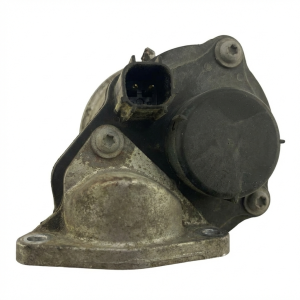
- Defective Electronic Throttle Body Assembly 🔴 High Probability → Shop Fuel Injection Throttle Body As cited in Ford's TSB 10-21-6, a batch of throttle bodies used on the 4.6L 2V engine during the 2010 model year were prone to failure, causing this specific code. The failure is often internal, where contamination builds up on the motor contacts, the internal electric motor fails, or plastic gears wear out, preventing the throttle plate from moving correctly.
How to confirm: After confirming the throttle plate isn't physically obstructed or stuck due to carbon, and the wiring is intact, the throttle body itself is the most likely point of failure. A scan tool may show the 'Commanded' throttle position (TP_CMD) differing significantly from the 'Actual' throttle position (TP_ACT). The failure is internal to the electronics, so cleaning a physically clean throttle body will not solve the issue.
Typical fix: Replace the entire electronic throttle body assembly. The sensors and motor are integrated into the unit and are not typically serviced separately.
Est. part cost: $80-$240 - Dirty or Binding Throttle Body 🟡 Medium Probability → Shop Fuel Injection Throttle Body Carbon and sludge from the PCV system can accumulate over time, restricting the movement of the throttle plate. While less common than electronic failure on this specific model, it is a universal issue for all fuel-injected vehicles. In some climates, manufacturer service bulletin SSM 50597 notes that P2111 can also be triggered by water or ice buildup in the intake manifold behind the throttle body.
How to confirm: Remove the air intake hose from the throttle body and visually inspect the throttle bore and plate for heavy carbon and sludge buildup. Manually (with the engine off) try to move the plate to see if it sticks or moves roughly.
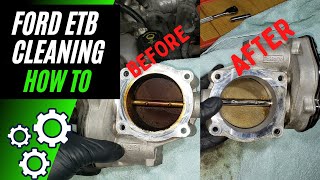
Typical fix: Thoroughly clean the throttle body bore and plate with a dedicated throttle body cleaner and a soft cloth or brush. 🎬 See this walkthrough on cleaning your electronic throttle body Ensure the plate can move freely from fully closed to fully open. A throttle relearn procedure must be performed afterward.
Est. part cost: $5-$15 - Wiring or Connector Issue ⚪ Low Probability
How to confirm: Inspect the electrical connector and wiring harness going to the throttle body. Look for any signs of corrosion on the pins, chafed or broken wires, or a loose connection. A diagnostic scan tool can help identify open or shorted circuits (TACM+ or TACM-).
Typical fix: Repair the damaged section of the wiring harness or clean the connector terminals. In some cases, a new connector pigtail may be needed.
Est. part cost: $15-$50
Rare But Worth Checking
- Powertrain Control Module (PCM) Failure: → Shop Engine Control Module (ECM) This is very rare. Before suspecting the PCM, all other possibilities, especially the throttle body and its wiring, must be exhaustively ruled out. A PCM failure would likely be accompanied by other trouble codes and is the last component to be considered.
Diagnosis Steps
- Scan for Codes: Use an OBD-II scanner to confirm P2111 is present and check for any other codes, like P2104. Note the freeze frame data.
- Inspect the Throttle Body Connector: Turn the vehicle off. Check the electrical connector on the throttle body for a secure fit, corrosion, or damaged pins.
- Inspect the Throttle Plate: Remove the air intake duct from the throttle body. Look for heavy carbon buildup that could be causing the throttle plate to stick. Check for any foreign objects obstructing the plate.
- Clean the Throttle Body: If dirty, clean it thoroughly using throttle body cleaner and a soft rag. Manually move the plate to ensure it operates smoothly without binding.
- Perform Throttle Relearn: After cleaning or replacement, a relearn procedure is critical. The simplest method is to reset the Keep Alive Memory (KAM) by disconnecting the negative battery terminal for at least 5 minutes. Some forum users suggest touching the disconnected positive and negative cables together for 2 minutes to fully drain the capacitors in the PCM. After reconnecting, start the engine and let it idle for at least 10 minutes to reach operating temperature and allow the PCM to recalibrate. 🎬 Watch: How to fix P2111 and perform the calibration
- Replace Throttle Body: If the code returns after cleaning and relearning, and the vehicle falls within the TSB 10-21-6 build dates (engine built 5/7/2010-8/2/2010), the throttle body assembly is almost certainly faulty and needs to be replaced.
- Check Wiring: If a new throttle body does not fix the issue, perform a detailed check of the wiring harness between the PCM and the throttle body for continuity and shorts, paying close attention to the TACM+ and TACM- circuits.
Parts You'll Likely Need
- Electronic Throttle Body Assembly
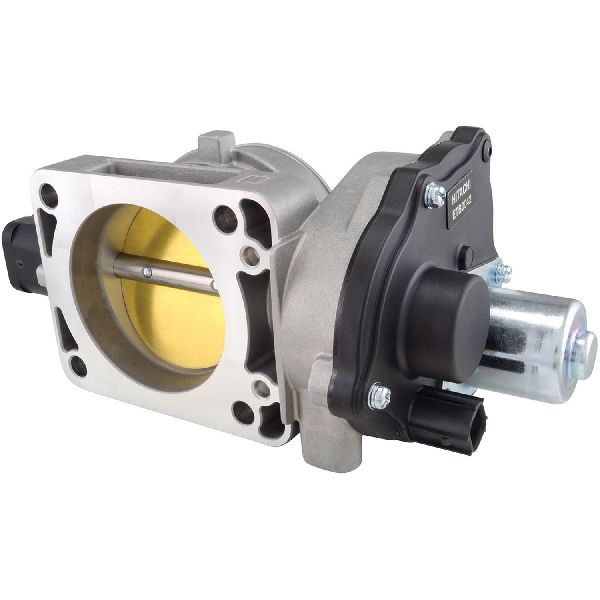
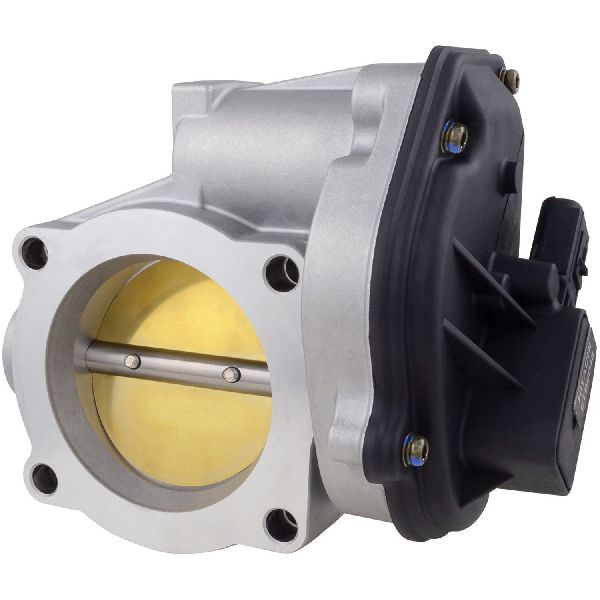
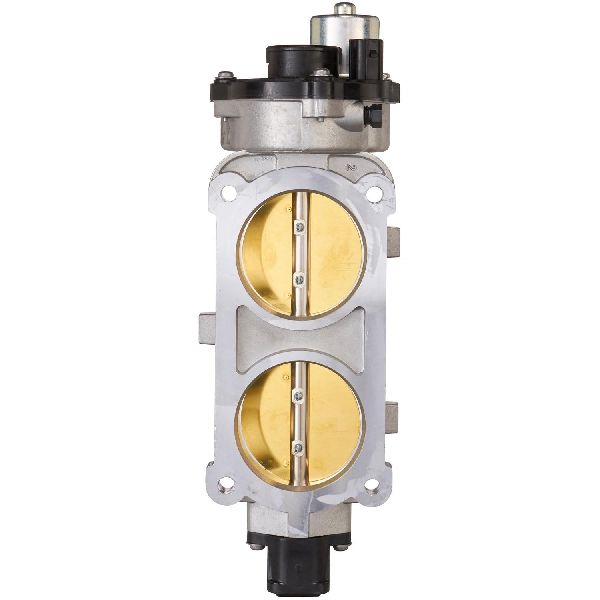
(OEM #9W7Z-9E926-A (replaces 3L5Z-9E926-AD, 6R3Z-9E926-AA, 9W7Z-9E926-B))— This is the most common failure part for code P2111 on this vehicle, as documented by Ford's own service bulletins. The internal motor contacts become contaminated or the electronics fail, requiring replacement of the complete unit.
Trusted brands: Motorcraft, Hitachi, Standard Motor Products (SMP), DriveBolt, Cardone (remanufactured)
OEM price range: $200-$240
Aftermarket price range: $80-$150
Related Codes That Often Appear With This One
- P2104 — P2104 (Throttle Actuator Control System - Forced Idle) is the code that indicates the PCM has initiated the 'limp mode' as a direct result of the fault detected by P2111. They almost always appear together.
- P2112 — P2112 is the opposite code, 'Throttle Actuator Control System - Stuck Closed'. It is often listed in the same TSBs as P2111 and points to the same faulty component (the throttle body), just failing in a different manner.
Technical Service Bulletins (TSBs) & Recalls
- TSB 10-21-6: Addresses DTCs P2111, P2112, and idle fluctuation issues by recommending throttle body replacement for specific build dates of the 2010 E-Series 4.6L, among other models.
- SSM 50597: A manufacturer bulletin for Ford vehicles noting that P2111, P2112, and P2119 may be caused by water or ice buildup in the intake manifold behind the throttle body.
Platform-Specific Known Issues
- TSB 10-21-6 was issued by Ford for 2010 E-Series with the 4.6L 2V engine (built from 5/7/2010 to 8/2/2010) that exhibit DTC P2111, recommending throttle body replacement.
- NHTSA investigation PE13-003 identified that throttle bodies made by Continental for the 4.6L 2V engine between March and July 2010 had a higher rate of failure.
Mechanic-Grade Diagnostic Values
- Throttle Position Sensor (TPS) Reference Voltage — expected: ~5.0 Volts. Failure: Voltage significantly lower or higher than 5.0V indicates a problem with the PCM or wiring.
- Throttle Position Sensor (TPS) Signal Voltage — expected: ~0.9V at closed throttle, sweeping smoothly up to ~4.8V at wide-open throttle (WOT).. Failure: Voltage that is erratic, jumps, or has dead spots as the throttle is slowly opened indicates a failed TPS.
- Throttle Position Sensor (TPS) Resistance — expected: Approximately 3,000-4,000 Ohms at closed throttle, decreasing smoothly to ~350 Ohms at WOT.. Failure: Infinite resistance (open) or readings that jump erratically indicate a worn-out sensor track.
- Throttle Actuator Control Motor (TACM) Resistance — expected: Typically a low resistance value (e.g., 1-10 Ohms), but can vary. The key is to check for an open circuit.. Failure: Infinite resistance (OL) across the two motor pins indicates a broken winding inside the motor, requiring throttle body replacement.
Scan Tool Commands That Help
- Ford IDS (or equivalent high-end bidirectional scanner): PCM Reset / Clear Keep Alive Memory (KAM) — This function should be used after replacing or thoroughly cleaning the throttle body to wipe the old learned adaptive values and force the PCM to perform a new throttle sweep to learn the new closed, open, and part-throttle positions.
- Ford IDS (or equivalent high-end bidirectional scanner): Throttle Plate Position Command — This bidirectional test allows a technician to command the throttle plate to specific angles (e.g., 10%, 25%, 50%) to verify if the actuator motor is responding correctly and to check if the reported TPS angle matches the command, helping to isolate an electrical vs. mechanical failure.
Wiring & Ground Locations
- Throttle Body Connector (C134) — The 6-pin electrical connector directly on the electronic throttle body assembly, located at the front of the engine's intake manifold.. This is the single connection point for all power, ground, and signal wires for both the throttle position sensors and the actuator motor. Corrosion or loose pins here are a primary point of failure.
- TACM+ / TACM- Circuits — These are two wires in the harness running from the PCM to the throttle body connector.. These wires carry the pulse-width modulated signal from the PCM that drives the electric motor to open and close the throttle plate. An open or short in either of these wires will cause a loss of throttle control and trigger P2111 or P2112.
- VREF (Voltage Reference) — A wire running from the PCM to the throttle body connector that supplies a stable 5-volt reference to the throttle position sensors.. If this 5V supply is missing or incorrect due to a wiring fault, the TPS sensors cannot send a valid position signal back to the PCM, leading to ETC system faults.
- SIG RTN (Signal Return) — The dedicated ground wire for the sensors, running from the throttle body connector back to the PCM.. This is not a chassis ground. A fault in the signal return wire will cause incorrect TPS readings and can lead to various ETC trouble codes.
Real Owner Repair Stories
- Ford F150 Forum (2012 Ford F-150 3.7L with 180,900 miles (platform with similar ETC system)) — Truck went into limp mode (idle RPM, no pedal response) three separate times. Sluggish performance and decreasing fuel economy were also noted.
❌ Tried (didn't work) Cycling the key would temporarily clear the limp mode, but the issue would return.
✅ What actually fixed it The owner removed the air intake and found the throttle body had a 1/16-inch thick layer of carbon gunk. A thorough cleaning with CRC Throttle Body cleaner resolved the P2111 code, eliminated the limp mode events, smoothed out the engine, and improved MPG. No parts were replaced. - NHTSA ODI #11417597 — An owner reported their vehicle went into fail-safe mode while in the passing lane with no engine power. After pulling over, they found code P2111 and successfully resolved the issue by cleaning the throttle body and MAF sensor with a $10 spray cleaner.
- NHTSA ODI #11021311 — A driver experienced a sudden loss of throttle and had the vehicle towed. After finding codes P2111 and P2112, they attempted a recalibration test by turning the key on and slowly pressing and releasing the pedal.
When the Usual Fixes Don't Work
- While replacing the throttle body is the most common fix, a significant number of owners have permanently resolved the P2111 code simply by performing a thorough cleaning of the throttle plate and bore, especially on higher-mileage vehicles where carbon buildup is substantial. One owner on an F-150 forum reported fixing P2111 on a truck with 180k miles solely by cleaning, suggesting this should always be the first step before purchasing a new part. Additionally, a manual recalibration procedure (key on, slowly depressing and releasing the accelerator pedal) has been reported to be necessary even after cleaning or replacement for the fix to be successful, a step that can be missed if only relying on a KAM reset. In cases where the dealer was involved, NHTSA ODI #10910652 describes a situation where the PCM was reprogrammed and codes cleared to resolve recurring P2111 and P2112 faults.
OEM Part Supersession History
3L5Z-9E926-AD, 6R3Z-9E926-AA, 9W7Z-9E926-B→9W7Z-9E926-A— Part revisions to improve reliability and address the failures noted in TSB 10-21-6.
Heads up: While older part numbers may physically fit, using the latest revision (9W7Z-9E926-A) is highly recommended to ensure you are not installing a part with the original design flaw.
Model Year Variations Within This Range
- 2010: According to TSB 10-21-6, E-Series vans with the 4.6L 2V engine built between May 7, 2010, and August 2, 2010, are part of a specific batch known to have a high failure rate for the electronic throttle body. Vehicles built before or after these dates, or 2011 models, are less likely to have this specific factory defect, though standard failures can still occur.
Diagnostic Flowchart
Used vs. New Parts: Buying Guide for This Vehicle
When a used part is the smart pick: For this specific vehicle and code, buying a used throttle body is NOT recommended. The 2010 model year is known for a high rate of throttle body failures due to a manufacturing defect (TSB 10-21-6). A used part from a donor vehicle of the same era is highly likely to have the same defect or fail shortly after installation.
What to inspect on the donor part:
- Not applicable due to the high risk of latent defects in used parts for this model year.
OEM-only on this vehicle (don't cheap out):
- Electronic Throttle Body Assembly: While not strictly 'OEM-only', using a new OEM Motorcraft part (9W7Z-9E926-A) is the safest bet to ensure you get the updated design that corrects the original flaw.
Aftermarket brands forum-validated for this vehicle:
- Hitachi
- Standard Motor Products (SMP)
Brands owners have reported issues with on this vehicle:
- No-name, unbranded units from online marketplaces should be avoided as their quality control and longevity are highly questionable.
Real Owner Stories
Aggregated from forums and TSBs cited above. Mileages and costs reflect what owners reported in those sources.
Ford Econoline E350 5.4L — 430000 miles
Symptoms: The computer was showing a P2111 code, thinking the throttle body was stuck in the open position when it was not.
What fixed it: The owner's final fix was not explicitly stated, but their diagnostic process involved replacing the Throttle Position Sensor, the entire Throttle Body, and the Accelerator Pedal and Sensor.
Source hint: youtube_comment from 'Fix It Now'
2005 Ford F-150
Symptoms: The wrench light came on and the truck went into 'Limp Home Mode', with codes P2104 and P2111 stored.
What fixed it: The community diagnosed the problem as a faulty throttle body that required replacement.
Source hint: Ford F150 Forum - 'Limp Home Mode Question'
NHTSA Reported Case — 17,276 miles
Symptoms: A yellow warning light illuminated and the vehicle would not accelerate.
What fixed it: As documented in NHTSA ODI #10953906, an EEC test confirmed code P2111, and the throttle body was replaced with part AT4Z-9E926-B under warranty.
Related OBD-II Codes
Frequently Asked Questions
Is there a TSB or recall for the P2111 code on my 2010 Ford E-Series van?
How do I know if TSB 10-21-6 applies to my specific van?
My mechanic says cleaning the throttle body might fix it. Is this true for the E-Series?
After replacing the throttle body, does the computer need to be reset?
My van suddenly lost power and the wrench light came on. Is this related to P2111?
Are other Ford trucks and vans with the 4.6L engine known for this throttle body issue?
Helpful Videos

Used OEM Parts in Stock
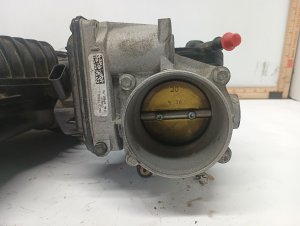
New Aftermarket Parts Available


The information in this article is provided for general reference and educational purposes only. Vehicle specifications, procedures, and part compatibility can vary by production date, trim level, and region. Always consult your vehicle's factory service manual and verify part numbers before purchasing or performing repairs. Safety-critical components such as airbags, seat belts, and braking systems should be installed by a qualified professional.
- Ford E-Series:
- 🧭 Diagnostic Flowchart
- 🎬 Helpful Videos
- 🛍️ Shop This Part
- What's Unique About the 2010-2011 Ford E-Series
- Symptoms You May Notice
- Most Likely Causes
- Rare But Worth Checking
- Diagnosis Steps
- Parts You'll Likely Need
- Related Codes That Often Appear With This One
- Technical Service Bulletins (TSBs) & Recalls
- Platform-Specific Known Issues
- Mechanic-Grade Diagnostic Values
- Scan Tool Commands That Help
- Wiring & Ground Locations
- Real Owner Repair Stories
- When the Usual Fixes Don't Work
- OEM Part Supersession History
- Model Year Variations Within This Range
- Used vs. New Parts: Buying Guide for This Vehicle
- Real Owner Stories
- Ford Econoline E350 5.4L — 430000 miles
- 2005 Ford F-150
- NHTSA Reported Case — 17,276 miles
- Related OBD-II Codes
- Frequently Asked Questions
- 🎟️ Get 5% Off