

P2111 on 2010 Ford Edge 3.5L: Throttle Body Stuck Open Causes and Fixes
On a 2010 Ford Edge 3.5L, P2111 is almost always caused by a failing electronic throttle body. The failure is typically an internal electronic fault, not just dirt, making replacement the only reliable fix. Before replacing the part (around $100-$250), try cleaning it, but expect the issue to return if it's electronic. This is a common and well-documented failure for this vehicle and its platform mates.
- P2111 on a 2010 Edge is a critical code that makes the vehicle unsafe to drive; it will force the engine into a low-power 'limp mode'.
- The first and cheapest step is to thoroughly clean the throttle body with a dedicated cleaner.
- Due to a well-documented history of failures confirmed by Ford TSBs, the most likely fix is replacing the entire electronic throttle body assembly.
- After cleaning or replacing the throttle body, you must perform a 'relearn' procedure for the system to function correctly.
What's Unique About the 2010-2010 Ford Edge
The electronic throttle body (ETB) on this generation of Ford Edge with the 3.5L engine is a known high-failure part. The primary cause is contamination on the internal electrical contacts of the throttle body motor, leading to intermittent connectivity. Ford issued a Technical Service Bulletin (TSB 10-21-6) specifically for 2010 models experiencing this code, recommending throttle body replacement for engines built between March 1, 2010, and August 3, 2010. While warranty extensions like Customer Satisfaction Program 13N03 have expired, they confirm a history of widespread issues with these components.
Symptoms You May Notice
- Check Engine Light and/or a wrench-shaped warning light on the dashboard
- Vehicle suddenly loses power and enters 'limp mode'
- Severely limited engine power and throttle response; pressing the gas pedal has no effect
- Engine idle may be high, rough, or fluctuating
- Inability to accelerate
- Engine may stall, especially when coming to a stop
- Hard starting or extended cranking after the initial event
- Replacing the Accelerator Pedal Position (APP) Sensor. While the APP sensor is part of the same system, the P2111 code specifically points to a problem at the throttle body itself—the PCM has detected the throttle plate is not where it should be. A failing pedal sensor would typically set different codes.
Most Likely Causes
- Defective Electronic Throttle Body (ETB) 🔴 High Probability → Shop Fuel Injection Throttle Body This is a well-documented failure point for this model year, confirmed by Ford's own Technical Service Bulletins (TSB 10-21-6) and Customer Satisfaction Program 13N03. The failure is typically due to contamination of the internal motor contacts, which is an electronic fault, not a mechanical one.
How to confirm: After confirming the throttle body is clean, the most reliable method is to replace the unit. Live data on a scan tool may show a discrepancy between 'Commanded Throttle Position' and 'Actual Throttle Position', but often the failure is intermittent and won't be present at the time of testing. Given the high failure rate, replacement is the most common diagnostic step. 🎬 See how to fix code P2111 and perform the calibration.
Typical fix: Replace the entire electronic throttle body assembly. After installation, a throttle relearn procedure is required to calibrate the new part.
Est. part cost: $100-$250 - Dirty or Binding Throttle Body 🟡 Medium Probability → Shop Fuel Injection Throttle Body The PCV (Positive Crankcase Ventilation) system can introduce oil vapors into the intake, which mix with dirt and form carbon buildup on the throttle plate, causing it to stick. While this can cause issues, the P2111 limp mode is more often tied to the internal electronic failure.
How to confirm: Remove the air intake hose from the throttle body and visually inspect the throttle plate and bore for heavy carbon or grime buildup. Manually (with the engine off) push the plate to feel for any binding or sticking. If it's dirty, cleaning is a worthwhile first step before part replacement.
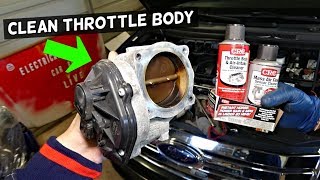
Typical fix: Thoroughly clean the throttle plate and bore using a dedicated throttle body cleaner and a soft cloth or brush. Ensure the plate moves freely after cleaning. 🎬 Watch: Step-by-step guide to cleaning the Ford Edge 3.5L throttle body. Be aware that if the root cause is electronic, cleaning will only be a temporary fix, if it works at all.
Est. part cost: $10-$20 - Wiring or Connector Issue ⚪ Low Probability
How to confirm: Visually inspect the wiring harness and electrical connector at the throttle body for any signs of damage, corrosion, or loose pins. Perform a 'wiggle test' on the connector and harness with the engine running (use caution) to see if it triggers the fault. Check for open or shorted circuits in the TACM+ and TACM- wires.
Typical fix: Repair the damaged section of wiring or clean/replace the electrical connector.
Est. part cost: $5-$50 - Failing Battery or Alternator ⚪ Low Probability
How to confirm: The electronic throttle body is sensitive to system voltage. If the battery is old or failing, it can cause erratic behavior in various electronic modules. One owner on Ford Edge Forum noted the P2111 code appeared when their original battery was failing and disappeared after replacement. Test the battery and charging system to rule this out.
Typical fix: Replace the vehicle's battery.
Est. part cost: $150-$300
Rare But Worth Checking
- Powertrain Control Module (PCM) Failure: → Shop Engine Control Module (ECM) This is extremely rare. All other possibilities, especially the throttle body itself, should be exhaustively ruled out before considering the PCM. A damaged PCM is a last-resort diagnosis.
Diagnosis Steps
- Scan the vehicle for all stored trouble codes. Note any other codes that appear with P2111, as they can provide additional clues.
- Check Battery Health: Before diving into the throttle system, ensure the battery is healthy and the charging system is working correctly. Low voltage can cause erratic electronic behavior.
- Disconnect the battery.
- Remove the air intake duct from the throttle body.
- Visually inspect the throttle body bore and plate for carbon buildup or foreign objects. Even if it looks clean, proceed with cleaning as a baseline step.
- Using a throttle body-safe cleaner and a soft cloth, thoroughly clean the plate and bore until all residue is gone. Manually move the plate to clean all edges.
- Inspect the electrical connector and wiring at the throttle body for any visible damage, corrosion, or loose pins.
- Reconnect the air intake duct and battery.
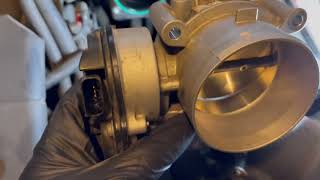
- Perform the Throttle Body Relearn Procedure: Turn the ignition to the 'ON' position (do not start the engine). Slowly press the accelerator pedal all the way to the floor over about 10 seconds. Slowly release the pedal back to the top over another 10 seconds. Turn the ignition 'OFF'. Wait one minute. 🎬 Watch: A quick demonstration of the electronic throttle calibration procedure.
- Start the vehicle and see if the code returns. If the code and symptoms persist after cleaning and relearn, the electronic throttle body assembly needs to be replaced. This is the most likely outcome for this specific vehicle and code.
Parts You'll Likely Need
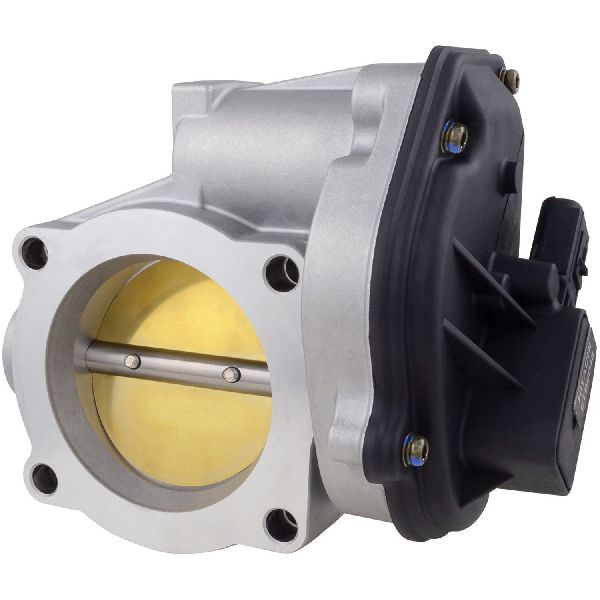
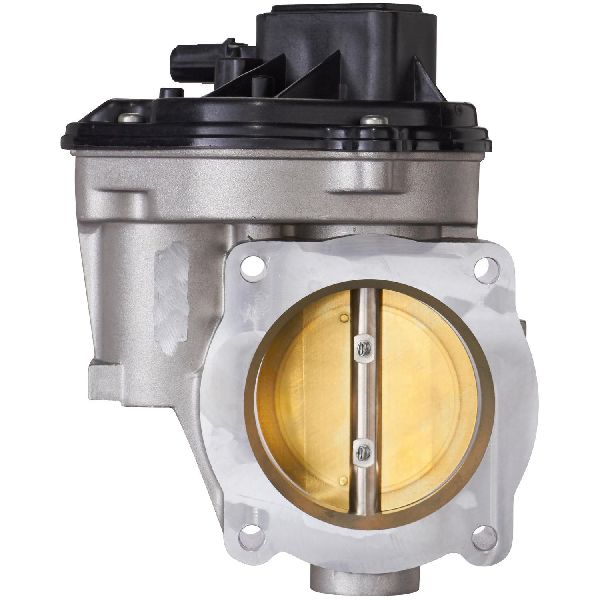
- Electronic Throttle Body Assembly
(OEM #7T4Z-9E926-FA)— This is the most common cause of P2111 on this vehicle, as documented by Ford's own service bulletins. The internal electronics or motor fail, requiring replacement of the complete unit. The original part number 7T4Z-9E926-EA was superseded by this part.
Trusted brands: Motorcraft, Bosch, Hitachi, Standard Motor Products (S20040)
OEM price range: $180-$250
Aftermarket price range: $100-$180 - Throttle Body Cleaner — Required for the first and most basic diagnostic step of cleaning the throttle body to eliminate carbon buildup as the cause.
Trusted brands: CRC, Berryman, Gumout
Aftermarket price range: $10-$20
Related Codes That Often Appear With This One
- P2112 — Throttle Actuator Control System - Stuck Closed. This code is the opposite of P2111 but points to the same failing component: the electronic throttle body.
- P2104 — Throttle Actuator Control System - Forced Idle. This code indicates the PCM has put the engine into the 'forced idle' limp mode, which is a direct result of detecting a fault like P2111.
- P2110 — Throttle Actuator Control System - Forced Limited RPM. Similar to P2104, this indicates the PCM is actively limiting engine RPM due to the throttle body fault.
Technical Service Bulletins (TSBs) & Recalls
- TSB 10-21-6: Addresses DTCs P2111 or P2112, or idle speed concerns, by recommending throttle body replacement for specific build dates of the 2010 Edge 3.5L.
Platform-Specific Known Issues
- TSB 10-21-6 was issued by Ford for multiple vehicles, including the 2010 Edge with the 3.5L engine, for codes P2111 and P2112. The bulletin applies to engines built between March 1, 2010, and August 3, 2010, and directs technicians to replace the throttle body.
- Ford also ran Customer Satisfaction Program 13N03, which extended the warranty on the electronic throttle body for the 2010 Edge to 10 years or 150,000 miles due to a high number of failures. The root cause was identified as contamination on the internal motor contacts. This program has now expired.
Mechanic-Grade Diagnostic Values
- Live Data PID: Difference between Desired Throttle Position and Actual Throttle Position — expected: Less than 3-5 degrees. Failure: A variance greater than 5 degrees will set a fault code.
Scan Tool Commands That Help
- Ford Integrated Diagnostic System (IDS): View Live Data PIDs (TP1, TP2, Commanded vs Actual Position) — To monitor the throttle position sensors and actuator motor in real-time to confirm a discrepancy between what the PCM is commanding and the throttle plate's actual position.
- Ford Integrated Diagnostic System (IDS): Request All CMDTCs (Continuous Memory Diagnostic Trouble Codes) — To retrieve all stored faults from all modules, which can reveal related issues or confirm the primary P2111 code and its associated freeze-frame data.
- Ford Integrated Diagnostic System (IDS): TPS Calibration Module / Throttle Body Relearn — After replacing the throttle body, this function is used to calibrate the new component and reset learned values in the PCM, ensuring proper idle and performance.
Wiring & Ground Locations
- G104 (Early Production) — Located on the left front of the engine compartment.. A poor ground at this location can cause erratic voltage and signaling for various engine sensors and actuators, including the electronic throttle body.
- G103 (Late Production) — Located on the left side of the engine compartment.. A poor ground at this location can cause erratic voltage and signaling for various engine sensors and actuators, including the electronic throttle body.
- Main Battery to Engine Block Ground — The main negative battery cable grounds to the side of the engine block, accessible after removing the battery and battery tray.. This is the primary ground for the engine block. Corrosion or a loose connection here can affect all engine electronics, including the sensitive throttle control system.
- C175E — This is a main 70-pin connector at the Powertrain Control Module (PCM).. The control wires for the throttle actuator motor (TACM+ and TACM-) run from the throttle body to this connector at the PCM. Any pin corrosion or damage here can directly cause P2111.
Real Owner Repair Stories
- Ford F150 Forum (2012 Ford F-150 3.7L with 180,900 miles) — Vehicle went into limp mode three times, throwing code P2111. Also experienced sluggish performance and drivetrain clunking.
✅ What actually fixed it A thorough cleaning of the electronic throttle body, which had a 1/16-inch thick layer of carbon gunk built up. The cleaning immediately resolved the limp mode, improved MPG, and smoothed out performance without requiring a new part. - NHTSA ODI #10638623 — An owner reported that after a month of cleaning the throttle body to fix the problem, the vehicle threw code P2111 and the throttle body completely went out, requiring a full replacement.
- NHTSA ODI #10615836 — After the engine light appeared with code P2111, a dealership replaced the throttle body and updated the powertrain software to resolve the issue.
- NHTSA ODI #10953906 — A driver experienced a yellow warning light and a total lack of acceleration; a dealership EEC test confirmed code P2111 and the throttle body was replaced with part AT4Z-9E926-B.
- NHTSA ODI #10888115 — One owner described a "limp home condition" where the AWD light and engine light both illuminated, resulting in code P2111 and the need for a new throttle body and motor assembly.
- NHTSA ODI #11340206 — A report describes a rough idle and engine light occurring at highway speeds or when accelerating from a stop, with code P2111 indicating the TAC system actuator was stuck open.
OEM Part Supersession History
7T4Z-9E926-EA→7T4Z-9E926-FA— The original part was prone to premature failure due to internal electronic faults. The superseding part is the revised, more reliable version.
Heads up: While both will physically fit, installing the older 'EA' version is not recommended. Always use the 'FA' revision or newer.
Model Year Variations Within This Range
- 2010: Ford TSB 10-21-6 specifically targets vehicles with engines built between March 1, 2010, and August 3, 2010, due to a bad batch of throttle bodies from the supplier Continental.
- 2010: Wiring diagrams indicate a change in the primary engine compartment ground location from 'early production' (G104) to 'late production' (G103) models.
Diagnostic Flowchart
Used vs. New Parts: Buying Guide for This Vehicle
When a used part is the smart pick: For this specific repair on a 2010 Ford Edge, a used part is NEVER a smart choice. The original throttle body is a known high-failure component due to a specific manufacturing defect. A used part from a donor vehicle of the same era is highly likely to have the same defect or fail shortly after installation.
What to inspect on the donor part:
- Not applicable; avoid used parts for this component.
OEM-only on this vehicle (don't cheap out):
- Electronic Throttle Body Assembly
Aftermarket brands forum-validated for this vehicle:
- Motorcraft (OEM)
- Bosch (often an OEM supplier)
Brands owners have reported issues with on this vehicle:
- Unbranded or 'white-box' parts.
- Remanufactured parts that may use older, less reliable sensor designs. One technician noted a remanufactured Cardone unit came with a first-generation TP sensor, making the vehicle less reliable than it was before the repair.
Real Owner Stories
Aggregated from forums and TSBs cited above. Mileages and costs reflect what owners reported in those sources.
2010 Ford Edge 3.5L — ~150000 miles
Symptoms: Vehicle suddenly loses power and enters 'limp mode' with a wrench-shaped warning light. The engine may stall when coming to a stop.
What fixed it: Replacement of the electronic throttle body due to contamination on the internal motor contacts, which was the issue addressed by the extended warranty program.
Source hint: Ford Customer Satisfaction Program 13N03
2010 Ford Edge 3.5L
Symptoms: Check Engine Light with DTC P2111 and possible idle speed concerns.
What fixed it: The directed fix from Ford was to replace the entire throttle body assembly.
Source hint: TSB 10-21-6
2010 Ford Edge 3.5L
Symptoms: Experienced P2111 symptoms and limp mode.
What fixed it: Replacing a failing battery resolved the issue, as low system voltage was triggering the fault.
Source hint: FordEdgeForum.com - Thread 'Can low voltage issues cause code p2111?'
Related OBD-II Codes
Frequently Asked Questions
My 2010 Edge was built in June 2010. Does Ford have a specific bulletin for the P2111 code?
I heard there was a warranty extension for the throttle body on my 2010 Edge. Is it still active?
Is cleaning the throttle body a permanent fix for P2111 on my 2010 Edge?
Should I buy a used throttle body from a junkyard for my 2010 Edge?
After replacing the throttle body on my Edge, is there a special procedure I need to do?
Can a bad battery cause the P2111 code and limp mode on my 2010 Ford Edge?
Helpful Videos


Used OEM Parts in Stock
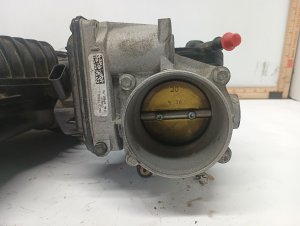
New Aftermarket Parts Available


The information in this article is provided for general reference and educational purposes only. Vehicle specifications, procedures, and part compatibility can vary by production date, trim level, and region. Always consult your vehicle's factory service manual and verify part numbers before purchasing or performing repairs. Safety-critical components such as airbags, seat belts, and braking systems should be installed by a qualified professional.
- Ford Edge:
- 🧭 Diagnostic Flowchart
- 🎬 Helpful Videos
- 🛍️ Shop This Part
- What's Unique About the 2010-2010 Ford Edge
- Symptoms You May Notice
- Most Likely Causes
- Rare But Worth Checking
- Diagnosis Steps
- Parts You'll Likely Need
- Related Codes That Often Appear With This One
- Technical Service Bulletins (TSBs) & Recalls
- Platform-Specific Known Issues
- Mechanic-Grade Diagnostic Values
- Scan Tool Commands That Help
- Wiring & Ground Locations
- Real Owner Repair Stories
- OEM Part Supersession History
- Model Year Variations Within This Range
- Used vs. New Parts: Buying Guide for This Vehicle
- Real Owner Stories
- 2010 Ford Edge 3.5L — ~150000 miles
- 2010 Ford Edge 3.5L
- 2010 Ford Edge 3.5L
- Related OBD-II Codes
- Frequently Asked Questions
- 🎟️ Get 5% Off