

P2111 on 2016-2019 Ford Escape: Throttle Body Failure Causes and Fixes
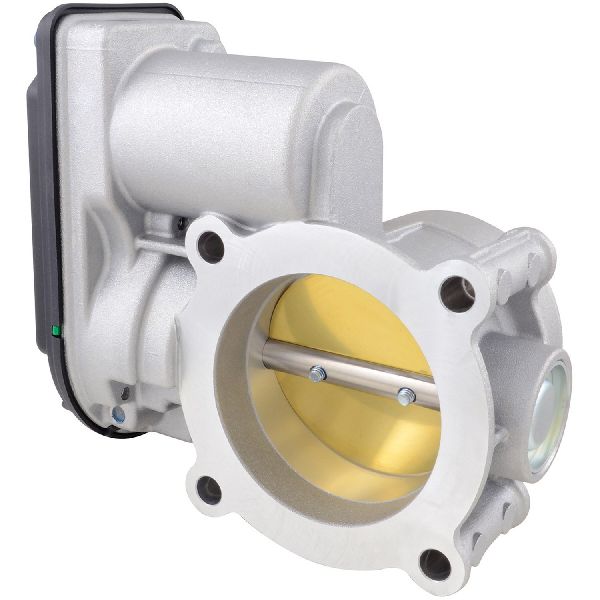
On a 2016-2019 Ford Escape, code P2111 almost always means the electronic throttle body has failed, causing the vehicle to enter a low-power 'limp mode'. This is a very common failure for this platform. The fix is to replace the entire throttle body assembly. Expect to pay $70-$200 for an aftermarket part or $250-$500 for an OEM Motorcraft part. It's a common DIY repair that requires a simple throttle relearn procedure upon completion.
- P2111 on a 2016-2019 Escape is a critical code that makes the vehicle unsafe to drive; it will force the car into a low-power 'limp mode'.
- The cause is almost certainly a failed electronic throttle body assembly; do not waste time or money on cleaning the old part, as the failure is internal and electronic.
- Replacement is a DIY-friendly job, but a 'Keep Alive Memory' (KAM) reset or a pedal relearn procedure is mandatory for the new part to function correctly.
- Ford acknowledged this widespread issue with a Customer Satisfaction Program (16B32) for 2016 models, but it has since expired, leaving later model years and post-program failures for the owner to resolve.
- Always confirm the correct OEM part number for your specific engine (1.5L, 2.0L, or 2.5L), as they are not interchangeable.
What's Unique About the 2016-2019 Ford Escape
Electronic throttle body (ETB) failure is a widely documented issue across many Ford models from this era, including the Escape. The problem was so prevalent on certain 2016 models that Ford issued Customer Satisfaction Program 16B32 to replace the part free of charge. This program has since expired, but it confirms that the ETB is a known weak point. The failure is typically due to an internal electronic fault within the actuator motor, specifically contamination of the internal contacts causing increased electrical resistance, not carbon buildup. This means cleaning is ineffective and replacement is the only reliable fix.
Symptoms You May Notice
- Sudden and severe loss of engine power
- Vehicle enters 'limp mode' (engine runs, but speed is drastically limited)
- Unresponsive accelerator pedal
- Wrench light illuminated on the dashboard
- Check Engine Light illuminated
- Rough or unstable idle
- Vehicle will only crawl forward at idle speed.
- Cleaning the throttle body: While a dirty throttle body can cause idling issues, the P2111 code on an Escape is almost always due to an internal electronic failure that cleaning cannot resolve.
- Replacing the Accelerator Pedal Position (APP) Sensor: A faulty pedal sensor would generate its own specific set of trouble codes (e.g., P2135, P2138), not P2111.
- Replacing only the Throttle Position Sensor (TPS): On modern electronic throttle bodies for the Escape, the TPS is an integrated component and cannot be replaced separately. The entire assembly must be replaced.
Most Likely Causes
- Faulty Electronic Throttle Body (ETB) Assembly 🔴 High Probability → Shop Fuel Injection Throttle Body This is a well-documented failure point on many Ford vehicles of this vintage, leading to a Customer Satisfaction Program (16B32) for 2016 models. The failure is typically electronic, caused by contamination of the internal motor contacts which increases electrical resistance. Forums are filled with owners experiencing this exact issue just outside of the program's expiration date.
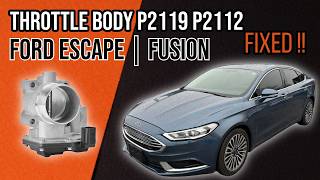
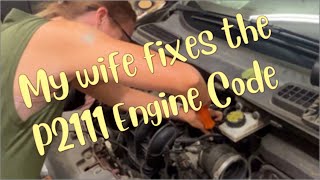
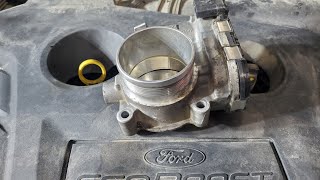
How to confirm: Scan for codes P2111 or P2112. 🎬 Watch: A quick guide on fixing the P2111 code. While wiring can be a cause, these codes on this platform point almost exclusively to a failed throttle body unit. Cleaning the unit is not an effective diagnostic step or fix for this specific failure mode, as the fault is internal and electronic.
Typical fix: Replace the entire electronic throttle body assembly. A throttle relearn procedure (KAM reset) is required after installation to calibrate the PCM to the new part.
Est. part cost: $70-$500
Rare But Worth Checking
- Wiring Harness or Connector Issue: While less common than outright throttle body failure, damage to the wiring harness leading to the throttle body (chafing, corrosion, loose pins) can cause identical symptoms. One owner on a forum noted that the wiring loom is very tight from the factory, which could potentially lead to issues over time. It's worth a visual inspection before ordering parts.
- Powertrain Control Module (PCM) Fault: → Shop Engine Control Module (ECM) This is extremely rare. The PCM is a robust component, and you should only consider it a possibility after definitively ruling out the throttle body and its wiring.
Diagnosis Steps
- Scan for Codes: Use an OBD-II scanner to confirm P2111 is present. Note any other codes, especially P2112 or U0401.
- Inspect the Wiring: Visually inspect the wiring harness and electrical connector at the throttle body. Look for any signs of damage, melting, or corrosion. Ensure the connector is seated firmly.
- Replace the Throttle Body: Given the high failure rate of this part on the Escape, if the wiring appears intact, the most direct path to a fix is replacing the throttle body assembly.
- Perform a Throttle Relearn Procedure: After installing the new throttle body, you must perform a Keep Alive Memory (KAM) reset. A common DIY method is to disconnect the negative battery cable and place a jumper wire from the disconnected negative cable to the positive terminal for 5-10 minutes. This drains the capacitors in the PCM and forces it to relearn idle and throttle positions with the new part. An alternative pedal relearn procedure involves turning the key to the 'ON' position (engine off), slowly pressing the accelerator to the floor over 10 seconds, slowly releasing it over 10 seconds, then turning the key off. 🎬 Watch: How to perform the electronic throttle body calibration.
Parts You'll Likely Need
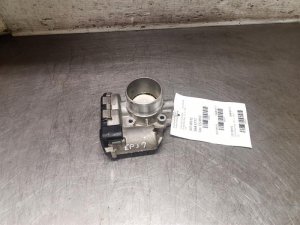
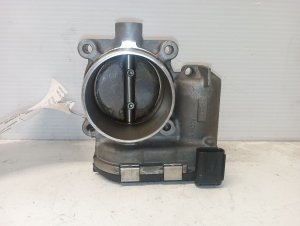
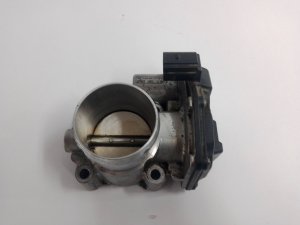
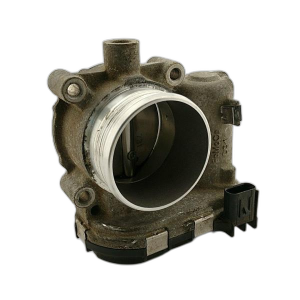
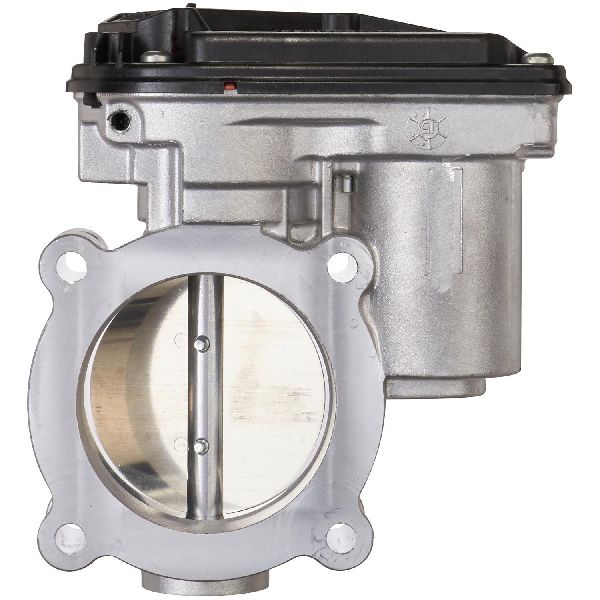
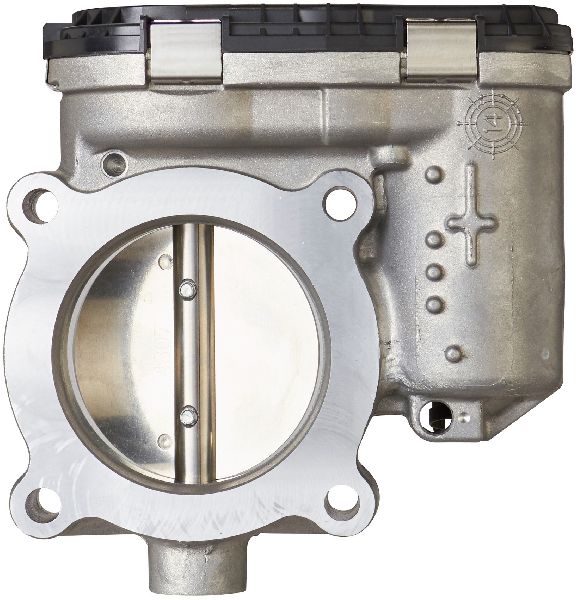
- Electronic Throttle Body Assembly
(OEM #DS7Z-9E926-D (For 2.5L & some 2.0L), DS7Z-9E926-C (For 2.0L), DS7G-9F991-CA (For 1.5L))— This is the root cause of code P2111 in the vast majority of cases for this vehicle due to a known internal electronic fault.
Trusted brands: Motorcraft (OEM), Bosch, Hitachi, Standard Motor Products, Spectra Premium
OEM price range: $250-$500
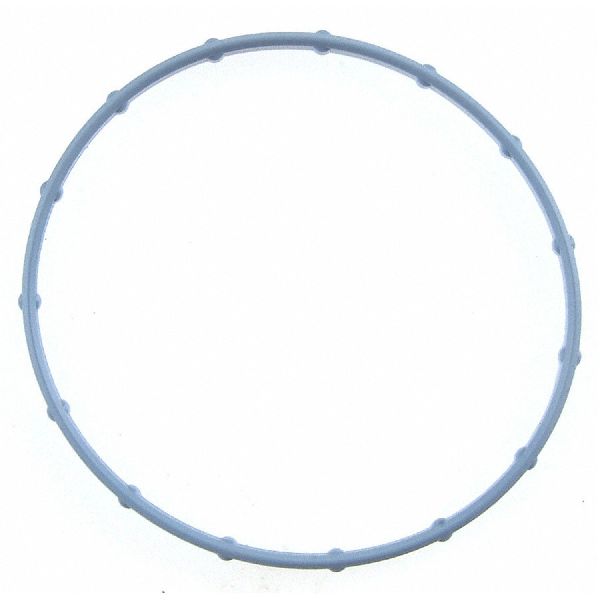
Aftermarket price range: $70-$200 - Throttle Body Gasket — It is best practice to replace the gasket when replacing the throttle body to ensure a proper seal against vacuum leaks. Many new throttle bodies include one, but it's wise to confirm when purchasing.
Trusted brands: Fel-Pro, Mahle, Motorcraft
OEM price range: $15-$25
Aftermarket price range: $5-$15
Related Codes That Often Appear With This One
- P2112 — This code means 'Throttle Actuator Control System - Stuck Closed.' It's the companion code to P2111 and points to the same root cause: a failed electronic throttle body.
- U0401 — This code means 'Invalid Data Received From ECM/PCM.' It can appear alongside P2111, indicating a communication breakdown between the throttle body and the main computer, further pointing to the throttle body's electronic failure.
Technical Service Bulletins (TSBs) & Recalls
- 16B32 (Customer Satisfaction Program): Acknowledged the electronic throttle body defect on certain 2016 models and authorized a free replacement. It covered a wide range of Ford vehicles, not just the Escape.
Platform-Specific Known Issues
- Customer Satisfaction Program 16B32: Ford issued this program for certain 2016 Ford Escapes due to a high rate of throttle body failures. The program provided a free replacement but expired on September 30, 2017. The specific cause was identified as contamination of the ETB internal motor contacts. Many owners report the failure occurring after the program's expiration.
Mechanic-Grade Diagnostic Values
- Throttle Actuator Control (TAC) Motor Resistance — expected: Approximately 5 to 8 ohms between the two motor pins.. Failure: A reading of infinity (open circuit) or zero (short circuit) indicates a failed motor.
- Scan Tool PID: TP_CMD (Throttle Position Commanded) — expected: Value in degrees or percentage that reflects accelerator pedal input.. Failure: A significant and persistent mismatch between TP_CMD and the actual throttle position (TP1/TP2) can indicate a fault.
- Scan Tool PID: TP1 and TP2 (Throttle Position Sensors 1 and 2) — expected: Voltage readings should be inverse of each other (e.g., as one goes from 0.5V to 4.5V, the other goes from 4.5V to 0.5V) and move smoothly with throttle application.. Failure: Glitches, dropouts, or non-linear movement in the voltage readings as the throttle is slowly opened and closed point to a failing sensor within the throttle body.
Scan Tool Commands That Help
- Ford IDS (Integrated Diagnostic System): Powertrain -> PCM -> Power Balance — While not a direct throttle test, this function can help rule out other engine issues by checking the performance of individual cylinders, confirming the problem is isolated to the throttle system.
- Ford IDS (Integrated Diagnostic System): Datalogger -> PIDs: APP1, APP2, TP1, TP2, TP_CMD — Use this to graph the accelerator pedal position sensors (APP) against the throttle position sensors (TP) and the commanded position (TP_CMD). A visual graph makes it easy to spot glitches or delays that indicate a failing throttle body.
- FORScan: Service Functions -> PCM -> Reset All Adaptations — This is the equivalent of a KAM reset and should be performed after installing a new throttle body to clear the old learned values and force the PCM to calibrate to the new part.
Wiring & Ground Locations
- Throttle Body Connector (C139) — Directly on the electronic throttle body assembly, at the front of the engine.. This 6-pin connector is the single interface for power, ground, and signal for the entire throttle body. Corrosion or damage to any pin can cause P2111.
- G104 / G105 — At the left front corner of the engine compartment, near the battery junction box (BJB).. These are primary engine compartment ground points. While not exclusively for the throttle body, a loose or corroded connection here can cause a host of seemingly unrelated electronic issues, including erratic sensor readings that could potentially trigger a false P2111, though this is rare.
Real Owner Repair Stories
- YouTube channel 'MeAndCarKeys' (Ford F-150 (similar electronic throttle body system)) — Vehicle suddenly went into limp mode, P2111 code present.
❌ Tried (didn't work) Cleaning the throttle body was considered but the owner opted to replace it based on research.
✅ What actually fixed it Replacing the entire electronic throttle body assembly with an aftermarket part from 'APremium'. The owner noted that not only did it fix the code, but throttle response was significantly improved, suggesting the old part had been failing gradually. - 2CarPros Forum User (2011 Ford Escape 2.5L with 327,000 miles) — Initially, signs of a stuck purge valve, then later a P2111 code appeared after inspecting wiring.
❌ Tried (didn't work) Replacing the purge valve., Replacing the throttle body assembly.
✅ What actually fixed it The user found damaged wiring at the MAP sensor and purge valve connectors. After repairing these, the P2111 code appeared. The user suspects that manipulating the very tight factory wiring harness to the throttle body may have caused a new break or short in that section of the loom, indicating the final fix was a wiring repair, not the throttle body itself.
OEM Part Supersession History
9L8Z-9E926-A→DS7Z-9E926-A, then DS7Z-9E926-D— Part has been updated by Ford, likely to improve reliability and address the known internal electronic failures.
Model Year Variations Within This Range
- 2017-2019: The introduction and prevalence of the 1.5L EcoBoost engine brought a different throttle body (e.g., DS7G-9F991-CA or HX7Z-9E926-A). While the failure mode (internal electronics) and symptom (P2111, limp mode) are identical, the part itself is not interchangeable with the 2.0L or 2.5L engines.
Diagnostic Flowchart
Other Known Issues on This Vehicle
Issues unrelated to this code that are worth knowing about as an owner of this generation:
- 1.5L EcoBoost Coolant Intrusion 🔴 High — A well-documented design flaw where coolant leaks into the cylinders, causing misfires, white smoke, and eventual engine failure. Often occurs between 60,000-100,000 miles. (Ref: TSB 20-2100, TSB 19-2139, Customer Satisfaction Program 21N12.)
- 6F35 Transmission Problems 🟠 Medium — Owners report harsh shifting, delayed engagement, shuddering, and premature failure. The issue is widespread enough to have prompted a class-action lawsuit covering 2009-2021 Escapes. (Ref: Numerous TSBs exist for specific symptoms, e.g., TSB 16-0043 for seal leaks.)
- Engine Stalling / Overheating (1.6L EcoBoost) 🔴 High — Though mostly affecting pre-2016 models, the 1.6L engine (phased out for the 1.5L) had significant issues with overheating and stalling that are relevant to the generation's reputation. (Ref: Recall 13S12)
- Power Steering Failure 🔴 High — Some owners report sudden loss of power steering, which can be a significant safety risk.
Used vs. New Parts: Buying Guide for This Vehicle
When a used part is the smart pick: Almost never. Given that the primary failure mode of this part is an internal electronic fault due to a known design flaw, a used part from a junkyard is highly likely to have the same defect or fail soon after installation. The low cost of reliable aftermarket replacements makes buying used an unnecessary risk.
Donor-vehicle mileage cap: roughly under 15000 miles for the part to have meaningful remaining life.
What to inspect on the donor part:
- Verify the part number exactly matches your required OEM number.
- Inspect the electrical connector pins for any signs of corrosion, bending, or moisture.
- Check for a return policy or warranty, even if short, from the salvage yard.
- Avoid parts from vehicles with front-end collision damage.
Aftermarket brands forum-validated for this vehicle:
- Bosch
- Hitachi
- Standard Motor Products (SMP)
- Spectra Premium
- Dorman
Brands owners have reported issues with on this vehicle:
- Unbranded, 'white box' parts from online marketplaces with no warranty or seller reputation should be avoided due to high rates of DOA (Dead On Arrival) or premature failure.
Real Owner Stories
Aggregated from forums and TSBs cited above. Mileages and costs reflect what owners reported in those sources.
2017 Ford Escape
Symptoms: Intermittently entering limp mode; finally captured P2111 and U0401 codes.
What fixed it: Replacement of the electronic throttle body.
Source hint: Reddit r/fordescape - 'Help to catch a ghost - ABS/throttle body?'
2011 Ford Escape
Symptoms: Code P2111 remained even after the throttle body was replaced.
What fixed it: Investigation into tight factory wiring which can be a contributing factor.
Source hint: 2CarPros - 'Code P2111 - 2011 ford escape'
2016 Ford Escape
Symptoms: Electronic throttle body failure occurring just after the expiration of the satisfaction program.
What fixed it: Replacement of the entire electronic throttle body assembly.
Source hint: Customer Satisfaction Program 16B32 / Ford F150 Forum - 'F150 Throttle body issue- 16B32'
Related OBD-II Codes
Frequently Asked Questions
Does Customer Satisfaction Program 16B32 still cover my 2016 Ford Escape throttle body replacement?
Can I just clean the throttle body on my Escape to fix the P2111 code?
What is the 'wrench light' on my dashboard indicating alongside the P2111 code?
Is there a specific procedure I need to follow after installing a new throttle body?
Are there any other major engine issues I should watch for on my 1.5L EcoBoost Escape?
My 2017 Escape is throwing P2111 and U0401; are these related?
Helpful Videos

Used OEM Parts in Stock
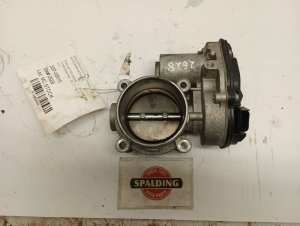
New Aftermarket Parts Available


The information in this article is provided for general reference and educational purposes only. Vehicle specifications, procedures, and part compatibility can vary by production date, trim level, and region. Always consult your vehicle's factory service manual and verify part numbers before purchasing or performing repairs. Safety-critical components such as airbags, seat belts, and braking systems should be installed by a qualified professional.
- Ford Escape:
- 🧭 Diagnostic Flowchart
- 🎬 Helpful Videos
- 🛍️ Shop This Part
- What's Unique About the 2016-2019 Ford Escape
- Symptoms You May Notice
- Most Likely Causes
- Rare But Worth Checking
- Diagnosis Steps
- Parts You'll Likely Need
- Related Codes That Often Appear With This One
- Technical Service Bulletins (TSBs) & Recalls
- Platform-Specific Known Issues
- Mechanic-Grade Diagnostic Values
- Scan Tool Commands That Help
- Wiring & Ground Locations
- Real Owner Repair Stories
- OEM Part Supersession History
- Model Year Variations Within This Range
- Other Known Issues on This Vehicle
- Used vs. New Parts: Buying Guide for This Vehicle
- Real Owner Stories
- 2017 Ford Escape
- 2011 Ford Escape
- 2016 Ford Escape
- Related OBD-II Codes
- Frequently Asked Questions
- 🎟️ Get 5% Off