

P2111 on 2016 Ford Explorer 2.3L EcoBoost: Throttle Stuck Open Causes and Fixes
On a 2016 Ford Explorer with the 2.3L EcoBoost engine, code P2111 almost always indicates a failed electronic throttle body. The vehicle will enter a low-power 'limp mode.' The fix is to replace the throttle body assembly, which costs between $100 and $250 for the part. A simple, tool-free relearn procedure is required after replacement.
- P2111 on a 2016 Explorer 2.3L means the throttle is stuck open, which will trigger a dangerous 'limp mode.'
- The cause is almost certainly a failed electronic throttle body assembly; this is a very common and well-documented issue.
- Do not waste money on diagnosing other components like the gas pedal sensor first.
- The repair involves replacing the throttle body assembly, which is a DIY-friendly job that takes less than an hour.
- After replacement, a simple 'relearn' procedure is necessary and can be done without special tools by slowly cycling the gas pedal with the key on.
What's Unique About the 2016-2016 Ford Explorer
While throttle body issues are not unique to Ford, the Explorer platform from this era is known for them. The P2111 code is a very common indicator of a complete electronic throttle body (ETB) failure, not just a dirty or sticky plate. Owners often experience a sudden and alarming loss of power on the highway as the vehicle enters 'limp mode'. While some TSBs exist for idle issues on the 2.3L EcoBoost that involve reprogramming the PCM, a hard P2111 code almost always points directly to the throttle body assembly itself needing replacement. This issue is common enough that Ford issued an extended warranty (Customer Satisfaction Program 13N03) for the ETB on other models, acknowledging the widespread nature of the defect, though the 2016 Explorer was not explicitly included.
Symptoms You May Notice
- Sudden and severe loss of engine power (entering 'limp mode')
- Check Engine Light and/or a wrench-shaped warning light are illuminated
- Poor, delayed, or hesitant acceleration
- Rough or unstable idle, which may lead to stalling
- Totally unresponsive accelerator pedal when the fault occurs
- Replacing the Accelerator Pedal Position (APP) sensor. The APP sensor tells the PCM how far you're pressing the gas pedal. While it's part of the same system, a failure here would set different codes (e.g., P2135, P2138), not P2111.
Most Likely Causes
- Defective Electronic Throttle Body (ETB) 🔴 High Probability → Shop Fuel Injection Throttle Body This is a widely documented failure point on many Ford vehicles of this era, including the Explorer with the 2.3L EcoBoost. The internal electronics or motor of the throttle body assembly fail over time, causing the throttle plate to not respond to PCM commands correctly.
How to confirm: With the engine off, have a helper turn the key to the 'ON' position (not starting the engine) and slowly press the gas pedal. You should hear the throttle body motor buzz and see the plate move. If it's silent, stuck, or moves erratically, it has failed. Often, the presence of code P2111 combined with the wrench light and limp mode is sufficient confirmation on this platform.
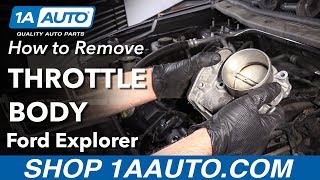
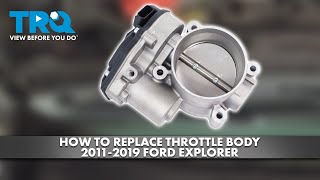
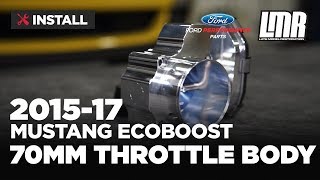
Typical fix: Replace the entire electronic throttle body assembly. 🎬 Watch: Step-by-step guide to replacing the throttle body assembly. After replacement, a throttle body relearn procedure is required. 🎬 See how to fix code P2111 and perform the calibration. This can be done without tools by turning the key to 'ON', slowly pressing the accelerator to the floor over 10 seconds, then slowly releasing it over 10 seconds before turning the key 'OFF'.
Est. part cost: $100-$250 - Carbon Buildup Causing Sticking Throttle Plate ⚪ Low Probability Direct injection engines like the EcoBoost can be prone to carbon buildup. However, on this platform, an electronic failure is far more likely to cause P2111 than simple mechanical sticking from carbon. Cleaning is rarely a permanent fix for this code.
How to confirm: Remove the intake tube from the throttle body and visually inspect the throttle plate and bore for heavy carbon deposits that could physically prevent the plate from closing.
Typical fix: Clean the throttle body bore and plate with a dedicated throttle body cleaner and a soft cloth or brush. A relearn procedure may be needed afterward. If the code returns, the ETB has an internal electronic fault.
Est. part cost: $10-$20 - Wiring Harness or Connector Issue ⚪ Low Probability
How to confirm: Visually inspect the wiring harness and connector going to the throttle body for any signs of damage, corrosion, or loose pins. Use a multimeter to check for proper voltage and ground at the connector per the service manual.
Typical fix: Repair the damaged section of the wiring harness or clean/replace the connector. Forum users have noted that connection issues can mimic a failed throttle body.
Est. part cost: $10-$50
Rare But Worth Checking
- Faulty Powertrain Control Module (PCM): → Shop Engine Control Module (ECM) This is extremely rare. The PCM should only be considered after the throttle body and wiring have been definitively ruled out as the cause.
Diagnosis Steps
- Confirm the presence of code P2111 using an OBD-II scanner.
- Check for any other related codes. If P2112 is also present, it strongly confirms a throttle body fault.
- Turn the ignition off. Disconnect the intake air tube from the throttle body. 🎬 Watch: How to remove the throttle body for inspection.
- Visually inspect the throttle plate and bore for heavy carbon buildup or any foreign objects that could cause it to stick open.
- Inspect the wiring connector at the throttle body for damage, corrosion, or loose pins.
- If the inspection is clear, the most probable cause is an internal failure of the electronic throttle body. Proceed with replacement.
- After replacing the throttle body, perform the throttle body relearn procedure. A common method is: Key on, engine off. Slowly press the accelerator pedal to the floor (over ~10 seconds). Slowly release the pedal (over ~10 seconds). Turn key off. Start the vehicle.
Parts You'll Likely Need
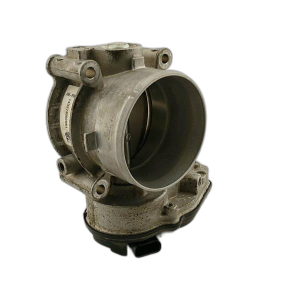
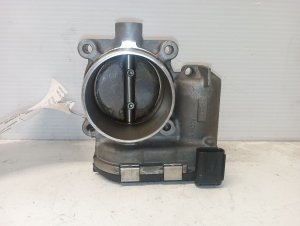
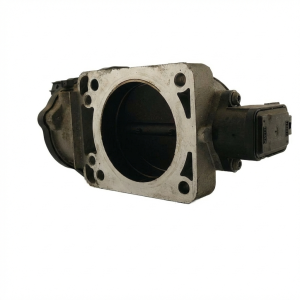
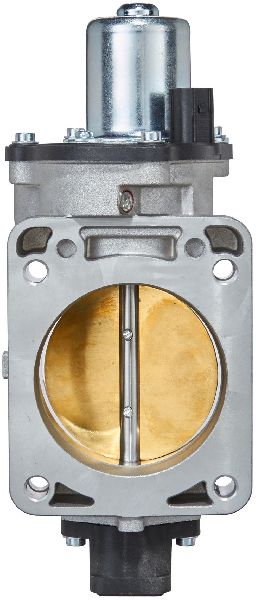
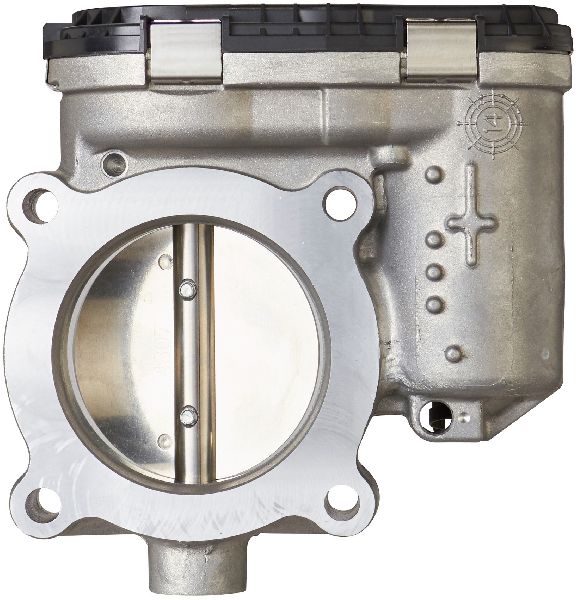
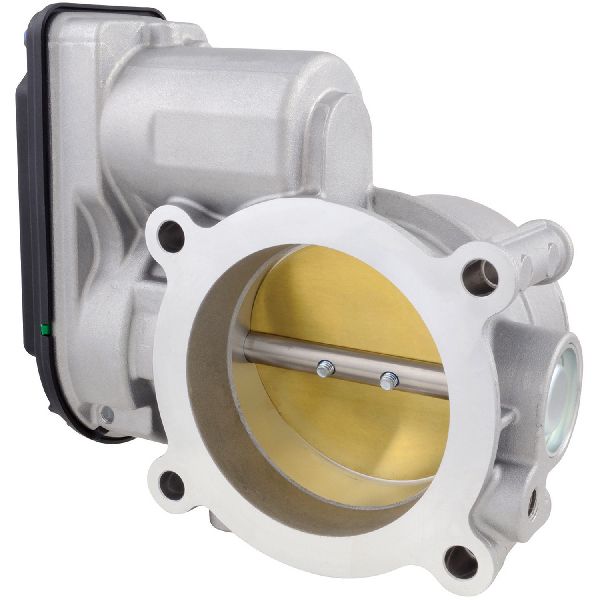
- Electronic Throttle Body Assembly
(OEM #Motorcraft TB-9 (Verify fitment, may be superseded by TB-21 for later models))— This is the most common failure point for code P2111 on this vehicle. The entire assembly, which includes the actuator motor and position sensors, is replaced as a single unit.
Trusted brands: Motorcraft, Bosch, Standard Motor Products (SMP)
OEM price range: $180-$250
Aftermarket price range: $100-$180
Related Codes That Often Appear With This One
- P2112 — This code means 'Throttle Actuator Control System - Stuck Closed.' It's the companion code to P2111 and points to the same root cause: a failed electronic throttle body. Ford TSBs often list both codes together.
- P2104 — This code for 'Throttle Actuator Control System - Forced Idle' is often set as a direct result of P2111. It indicates the PCM has intentionally entered limp mode due to the throttle fault.
Technical Service Bulletins (TSBs) & Recalls
- TSB 10-21-6: While for older models (2010-2011), this TSB directly links DTCs P2111 and P2112 to throttle body replacement, showing a history of this specific failure mode and repair recommendation from Ford.
Platform-Specific Known Issues
- Ford has had widespread issues with electronic throttle bodies across many models in the 2010s, leading to warranty extensions in some cases (Customer Satisfaction Program 13N03), though no specific recall for this exact model and year for P2111 is noted.
- The 2.3L EcoBoost engine platform is shared with other popular vehicles like the Ford Mustang, which also reports P2111 failures with the same symptoms and fix.
Mechanic-Grade Diagnostic Values
- Throttle Position Sensor (TPS) Signal Voltage — expected: Approx. 0.5V - 0.9V at idle (closed throttle), smoothly increasing to approx. 4.5V at wide-open throttle (WOT).. Failure: Voltage is jumpy, erratic, has dead spots, or does not fall within the expected range.
- Scan Tool PID: Commanded vs. Actual Throttle Position — expected: The 'TP_ACT' (Actual Throttle Position) PID should closely mirror the 'TP_CMD' (Commanded Throttle Position) PID with a variance of less than 3-5 degrees.. Failure: A significant and persistent discrepancy between the commanded and actual values (e.g., commanded is 5% but actual reads 20%) indicates the plate is physically sticking or the actuator is failing.
- Throttle Body Power Supply — expected: A steady +12V DC at the throttle controller's power supply pin with the key in the 'ON' position.. Failure: No voltage or an intermittent/fluctuating voltage points to a problem in the wiring, fuse, or relay upstream of the throttle body.
- PCM/Chassis Ground Resistance — expected: Less than 0.1 ohms between the battery negative post and the main chassis/engine ground points.. Failure: Higher resistance indicates a poor ground connection, which can cause a wide range of erratic electronic faults, including throttle control issues.
Scan Tool Commands That Help
- Ford IDS, Forscan, or other high-end bidirectional scanner: Throttle Body Actuator Test — During diagnosis, this command allows the technician to manually open and close the throttle plate from the scan tool. If the plate fails to move as commanded, or moves erratically, it confirms a fault within the throttle body assembly itself (assuming wiring is good).
- Ford IDS, Forscan, or other high-end bidirectional scanner: KAM (Keep Alive Memory) Reset — This function must be performed immediately after installing a new throttle body. It erases the PCM's previously learned adaptive strategies for the old, failing part, preventing issues like high idle or poor performance after the repair and preparing the system for the new relearn procedure.
Wiring & Ground Locations
- Throttle Body Electrical Connector — The 6-pin electrical connector located directly on the electronic throttle body assembly in the engine bay.. This is the single point for all power and control signals to the throttle actuator motor and position sensors. The connector pins can corrode, and the red locking tab is known to become brittle. A poor connection here will directly cause P2111 and limp mode.
- PCM Grounds — While no single ground point is exclusively for the throttle body, the main PCM grounds are critical. These are typically located in the engine bay, secured to the firewall or inner fender on the passenger side.. The PCM controls the throttle actuator by modulating the ground side of the motor circuit. A poor or intermittent main ground for the PCM can cause erratic behavior of any system it controls, including the throttle body, leading to codes like P2111 even if the throttle body and its harness are good.
Real Owner Repair Stories
- YouTube channel 'Me And Car Keys' (Ford F-150 with 174,000 miles (common Ford platform with same issue)) — Sudden limp mode, P2111 code stored.
❌ Tried (didn't work) Cleaning the throttle body.
✅ What actually fixed it Replacing the entire throttle body assembly with an aftermarket 'A-Premium' brand part resolved the issue. The owner noted significantly improved throttle response after replacement. - Reddit user in r/FocusST (Ford Focus ST (shares 2.3L EcoBoost architecture)) — P2111 code, stalling, high/erratic RPM, engine knocking noise.
❌ Tried (didn't work) Reseating the electrical connector, which provided only a temporary fix.
✅ What actually fixed it The final solution was replacing the entire throttle body assembly. - YouTube channel 'Mr Nobodys Garage' (2015 Ford Escape (another Ford model known for this failure)) — Sudden loss of power while driving, vehicle coasted to a stop, P2111 code present.
✅ What actually fixed it Replacing the electronic throttle body assembly. The owner noted this was a recurring failure across Ford vehicles, as he was on his third throttle body for his F-150.
Diagnostic Flowchart
Other Known Issues on This Vehicle
Issues unrelated to this code that are worth knowing about as an owner of this generation:
- Coolant Intrusion into Cylinders 🔴 High — A widely reported issue for 2016-2019 2.3L EcoBoost engines, often presenting as a misfire on cold start. Can lead to catastrophic engine failure. (Ref: Subject of class-action lawsuits (e.g., Nelson, et al. v. Ford Motor Company). No specific recall, but a well-known defect.)
- Exhaust Odor / Fumes in Cabin 🟠 Medium — Common complaint of a sulfur or exhaust smell in the cabin, particularly under hard acceleration. Affects the entire 2011-2017 Explorer generation. (Ref: TSB 17-0044, TSB 16-0166)
- Carbon Buildup on Intake Valves 🟡 Low — Inherent to gasoline direct injection (GDI) engines. Occurs gradually over many miles (e.g., 80k-100k+), can lead to rough idle and reduced performance.
- Overheating 🟠 Medium — The 2.3L EcoBoost engine has a tendency to run hot, which can stress components and contribute to failures like a blown head gasket if the cooling system is not perfectly maintained.
Used vs. New Parts: Buying Guide for This Vehicle
When a used part is the smart pick: For a P2111 code, a used throttle body is NOT recommended. The failure is electronic and related to age and wear, not collision damage. The risk of purchasing a part that is already failing or will fail soon is extremely high.
Donor-vehicle mileage cap: roughly under 30000 miles for the part to have meaningful remaining life.
What to inspect on the donor part:
- Verify the part is from a very low-mileage, late-model vehicle if you must buy used.
- There are no reliable external visual cues to determine the health of the internal electronics. External cleanliness is not an indicator of internal condition.
OEM-only on this vehicle (don't cheap out):
- Electronic Throttle Body Assembly
Aftermarket brands forum-validated for this vehicle:
- Motorcraft (OEM - Safest Choice)
- Bosch
- Standard Motor Products (SMP)
- A-Premium (Cited in one user repair with a positive outcome)
Brands owners have reported issues with on this vehicle:
- Unspecified or generic 'remanufactured' units have been reported to cause issues. It is better to buy a new unit from a reputable brand than a remanufactured one of unknown origin.
Real Owner Stories
Aggregated from forums and TSBs cited above. Mileages and costs reflect what owners reported in those sources.
2016 Ford Explorer — 140000 miles
Symptoms: While driving approximately 75 mph, the check engine warning indicator illuminated and the vehicle stalled. The vehicle went into limp mode.
What fixed it: The vehicle was not repaired (diagnostic confirmed P2111 throttle actuator control system stuck open).
Source hint: CarComplaints.com report for 2016 Ford Explorer
2015+ Ford Mustang 2.3L EcoBoost
Symptoms: Experienced identical P2111 symptoms including limp mode and erratic idle. The accelerator pedal became totally unresponsive when the fault occurred.
What fixed it: Replacement of the electronic throttle body assembly.
Source hint: Mustang6G.com - 'P2111 Error code'
2016 Ford Explorer
Symptoms: Received code P2111 and took it to a shop; owner was concerned about high repair quotes for a common failure.
What fixed it: Replacement of the throttle body (noted as a 'plug and play' DIY job by forum users).
Source hint: Reddit r/FordExplorer - 'Got a code P2111...'
Related OBD-II Codes
Frequently Asked Questions
Does TSB 10-21-6 apply to my 2016 Ford Explorer 2.3L EcoBoost?
Is there a recall or warranty extension for the throttle body on my 2016 Explorer?
Do I need to program the new throttle body after replacing it on my 2.3L EcoBoost?
Can I just clean the carbon buildup to fix P2111 on my Explorer?
Is the P2111 code related to the coolant intrusion issues common on the 2.3L EcoBoost?
Why did my Explorer lose all power and show a wrench icon?
Helpful Videos
Used OEM Parts in Stock
New Aftermarket Parts Available


The information in this article is provided for general reference and educational purposes only. Vehicle specifications, procedures, and part compatibility can vary by production date, trim level, and region. Always consult your vehicle's factory service manual and verify part numbers before purchasing or performing repairs. Safety-critical components such as airbags, seat belts, and braking systems should be installed by a qualified professional.
- Ford Explorer:
- 🧭 Diagnostic Flowchart
- 🎬 Helpful Videos
- 🛍️ Shop This Part
- What's Unique About the 2016-2016 Ford Explorer
- Symptoms You May Notice
- Most Likely Causes
- Rare But Worth Checking
- Diagnosis Steps
- Parts You'll Likely Need
- Related Codes That Often Appear With This One
- Technical Service Bulletins (TSBs) & Recalls
- Platform-Specific Known Issues
- Mechanic-Grade Diagnostic Values
- Scan Tool Commands That Help
- Wiring & Ground Locations
- Real Owner Repair Stories
- Other Known Issues on This Vehicle
- Used vs. New Parts: Buying Guide for This Vehicle
- Real Owner Stories
- 2016 Ford Explorer — 140000 miles
- 2015+ Ford Mustang 2.3L EcoBoost
- 2016 Ford Explorer
- Related OBD-II Codes
- Frequently Asked Questions
- 🎟️ Get 5% Off