

P2111 on 2010-2011 Ford Focus 2.0L: Throttle Actuator Stuck Open Causes and Fixes
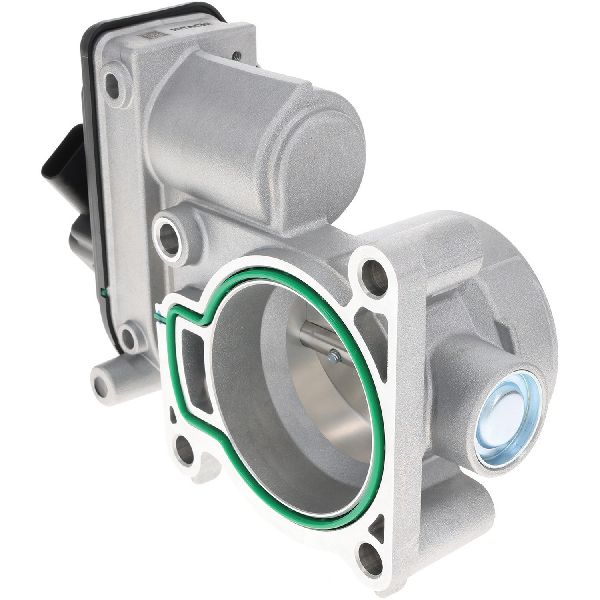
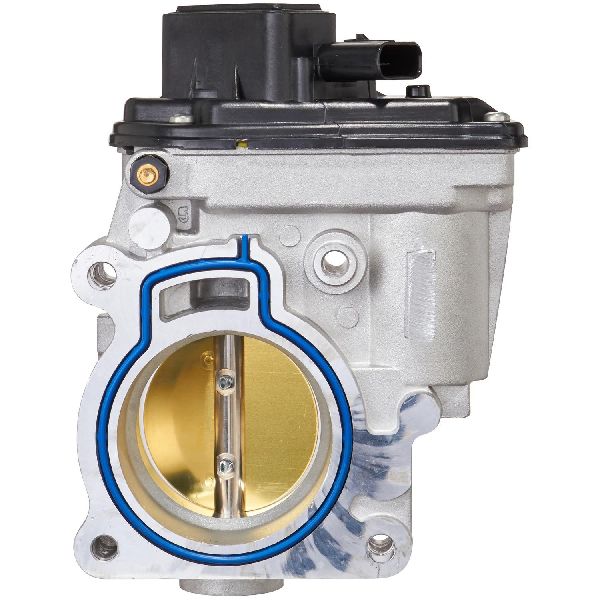
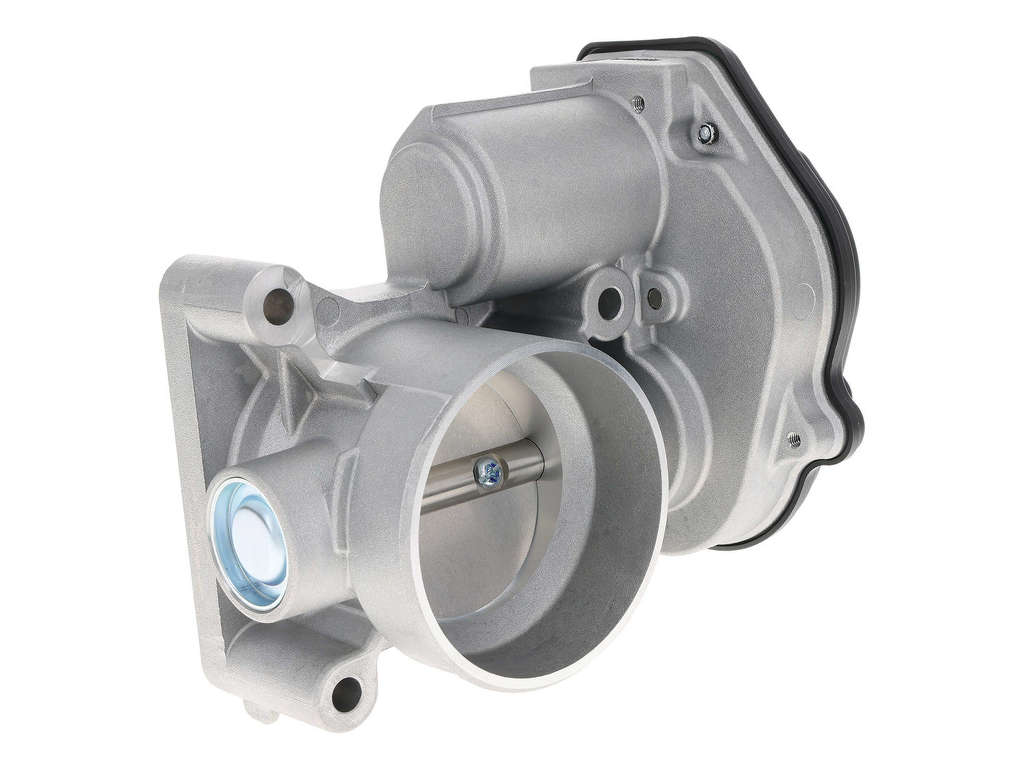
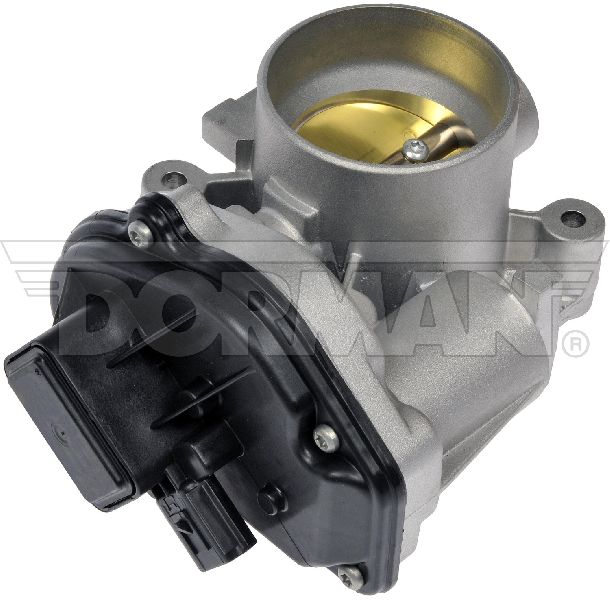
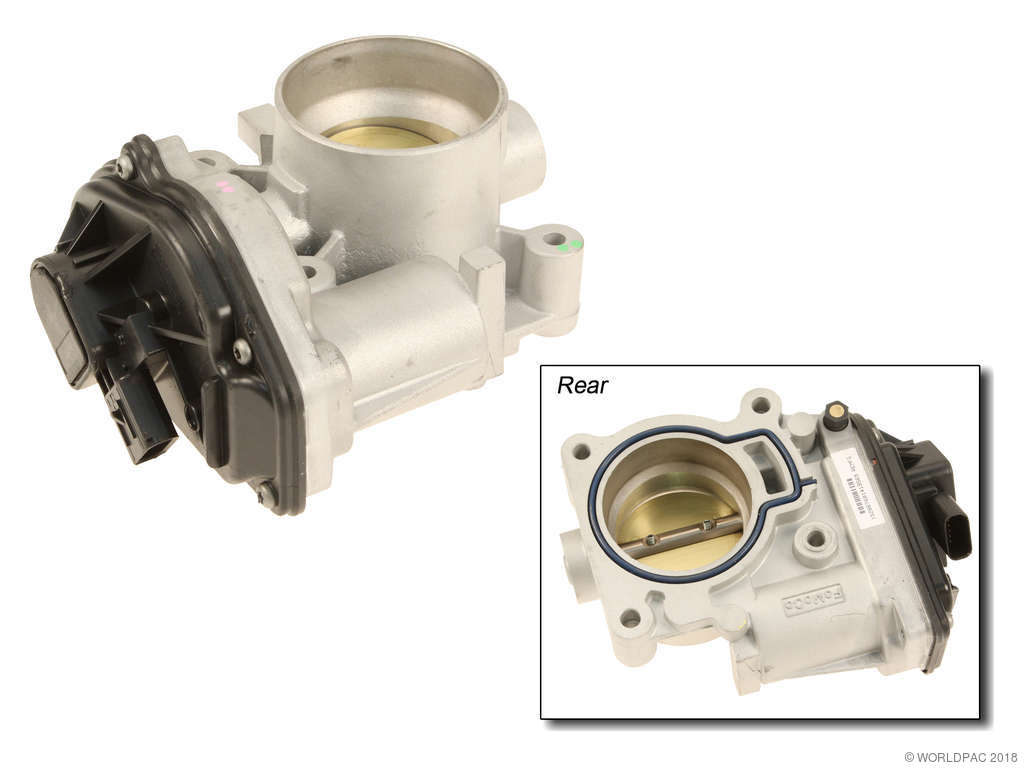
This code means the throttle body is stuck open. On a 2010-2011 Focus, this is almost always a faulty electronic throttle body assembly due to a known manufacturing defect. Cleaning it may provide a temporary fix, but replacement with part #8S4Z-9E926-B is the permanent solution. Expect to pay $100-$250 for a new throttle body.
- P2111 on a 2010-2011 Focus is a critical safety issue; do not drive the vehicle until it is repaired.
- The most likely cause is a failed electronic throttle body, a known weak point on these cars due to a manufacturing defect identified by Ford.
- Before replacing the part, try cleaning the throttle body, as carbon buildup can sometimes cause the issue, though it may only be a temporary fix.
- After cleaning or replacing the throttle body, you must perform a throttle relearn procedure for the fix to be successful.
- The correct OEM replacement part number is 8S4Z-9E926-B (or Motorcraft TB-11).
What's Unique About the 2010-2011 Ford Focus
The 2010-2011 Ford Focus, along with many other Ford models from this era, was known for high failure rates of its electronic throttle body. Ford's investigation identified that improperly cured silicone gaskets from a supplier could lead to deposits on the throttle motor's commutator, preventing proper electrical contact. This widespread issue prompted Ford to issue Technical Service Bulletin (TSB) 10-21-6 for this exact code on vehicles with 2.0L engines built between 2/11/2010 and 8/2/2010. Ford also created Customer Satisfaction Program (13N03), which extended the warranty on these parts to 10 years or 150,000 miles due to the high failure rates, although this program is now expired. For this specific vehicle, the problem is rarely the wiring and is most often the throttle body unit itself.
Symptoms You May Notice
- Check Engine Light and/or a wrench-shaped warning light on the dashboard
- Vehicle enters 'Reduced Power' or 'Limp Mode,' limiting speed to around 20-30 mph
- Engine has a high idle speed
- Unresponsive or delayed throttle/gas pedal response; pedal may feel 'dead'
- Engine may stall unexpectedly, especially when coming to a stop.
- Potential for sudden, unintended acceleration surges, followed by a complete loss of power.
- Loss of power accompanied by the engine running rough, as noted in NHTSA ODI #10549764.
- Replacing the accelerator pedal position (APP) sensor. While related to throttle control, a faulty APP sensor usually throws its own specific codes (like P2135) and is not the common cause for P2111 on this vehicle. One owner reported in NHTSA ODI #11097577 that the issue persisted even after replacing the gas pedal and the throttle body.
- Assuming a PCM failure. While a damaged PCM is a theoretical cause, it is extremely rare compared to the throttle body failure.
Most Likely Causes
- Faulty Electronic Throttle Body Assembly 🔴 High Probability → Shop Fuel Injection Throttle Body Widespread electronic failures in the internal motor or position sensor were common for this part on many Ford vehicles of this era. A Ford investigation found that a supplier's improperly cured silicone gaskets caused non-conductive deposits on the motor's commutator, leading to failure. This prompted TSB 10-21-6 and warranty extension program 13N03.
How to confirm: After ruling out a dirty throttle plate, the unit is diagnosed as faulty. A scan tool can monitor commanded vs. actual throttle position to confirm a discrepancy. Given the known history, if the original throttle body is still on the car and it has over 80,000 miles, it is the prime suspect.
Typical fix: Replace the entire electronic throttle body assembly. The OEM part number is 8S4Z-9E926-B (Motorcraft part TB-11). After replacement, a throttle relearn procedure must be performed.
Est. part cost: $100-$280 - Dirty or Binding Throttle Body 🟡 Medium Probability → Shop Fuel Injection Throttle Body Carbon and oil vapor from the PCV system can build up over time, physically restricting the throttle plate from closing completely.
How to confirm: Visually inspect the throttle bore and plate for black carbon buildup. With the engine off, you can have an assistant turn the key to 'ON' and press the gas pedal to open the plate for inspection. Do NOT force the plate open by hand.
Typical fix: Clean the throttle body bore and plate thoroughly with a dedicated throttle body cleaner and a soft cloth or brush. Some owners report success with this method, but for many, it is only a temporary fix if the internal electronics are already failing.
Est. part cost: $5-$15 - Wiring or Connector Issue ⚪ Low Probability
How to confirm: Inspect the wiring harness and connector at the throttle body for any signs of damage, corrosion, or loose pins. The red locking tab on the connector can become brittle and break. Use a multimeter to check for proper voltage and ground at the connector pins.
Typical fix: Repair the damaged wiring or clean/replace the connector.
Est. part cost: $10-$50
Diagnosis Steps
- Read the code with an OBD-II scanner to confirm P2111 is present. Owners often report P2111 appearing alongside P2135, as seen in NHTSA ODI #10732826.
- Inspect the air intake tube leading to the throttle body for any obstructions or loose connections.
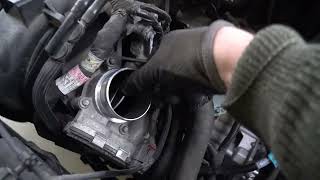
- Remove the air intake tube to visually inspect the throttle body. Check for heavy carbon buildup on the throttle plate and in the bore.
- SAFETY WARNING: Do not force the throttle plate open with your fingers or tools, as this can damage the internal plastic gears. To inspect it while cleaning, have an assistant turn the ignition to 'ON' (engine off) and press the accelerator pedal.
- If dirty, clean the throttle body thoroughly using a sensor-safe throttle body cleaner and a soft cloth or non-abrasive brush. Do not spray cleaner directly on the electronic components. 🎬 See this guide on cleaning your throttle body for a better idle.
- Inspect the electrical connector and wiring going to the throttle body. Look for any frayed wires, corrosion, or bent pins.
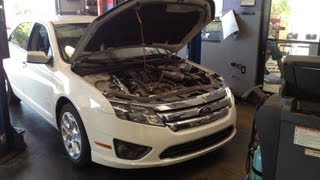
- If cleaning does not resolve the issue, the throttle body assembly is the most likely failed component and should be replaced. 🎬 Watch: How to replace the throttle body and perform the calibration. The OEM part is Ford / Motorcraft 8S4Z-9E926-B or TB-11.
- After cleaning or replacing the throttle body, perform the throttle relearn procedure. Turn the ignition to the 'ON' position (engine off), slowly press the accelerator pedal to the floor (over ~10 seconds), and then slowly release it (over ~10 seconds). Turn the key off, then start the vehicle. The check engine light may turn off on its own.
- Clear any remaining codes with the scanner and test drive the vehicle to see if the code returns.
Parts You'll Likely Need
- Electronic Throttle Body Assembly
(OEM #8S4Z-9E926-B)— This is the most common failure point for code P2111 on this specific vehicle, often due to internal electronic failure as acknowledged by Ford's TSB and warranty extension.
Trusted brands: Motorcraft (OEM), Bosch, Hitachi, Dorman
OEM price range: $180-$280
Aftermarket price range: $100-$180
Related Codes That Often Appear With This One
- P2112 — This code means 'Throttle Actuator Control System - Stuck Closed'. It's the opposite of P2111 but points to the same failing component: the electronic throttle body.
- P2110 — This code, 'Throttle Actuator Control System - Forced Limited RPM,' is often set alongside P2111 or P2112. It indicates the PCM has put the engine into 'limp mode' because of the throttle fault.
- P2135 — This code for 'Throttle Position Sensor/Switch A/B Voltage Correlation' is frequently reported by owners alongside P2111, as documented in NHTSA ODI #10558482.
- P0122 — This code for 'Throttle Position Sensor/Switch A Circuit Low Input' can sometimes appear with P2111, as the TPS is integrated into the throttle body assembly.
Technical Service Bulletins (TSBs) & Recalls
- TSB 10-21-6: Addresses DTC P2111 or P2112, or lower than desired engine idle speed/fluctuations, on 2010-2011 Focus 2.0L engines. Recommends throttle body replacement for affected vehicles.
Platform-Specific Known Issues
- Ford issued TSB 10-21-6 for this code on the 2010-2011 Focus, acknowledging issues with the throttle body causing DTCs P2111 or P2112. The TSB applies to 2.0L engines built between 2/11/2010 and 8/2/2010 and recommends replacement.
- A wider Customer Satisfaction Program (13N03) extended the warranty for electronic throttle bodies on many Ford models, including the Focus, to 10 years or 150,000 miles due to high failure rates. This program is now expired for these model years.
- The root cause was traced to a manufacturing variability issue with silicone gaskets from a Tier-Four supplier, which caused deposits on the throttle motor's commutator.
Mechanic-Grade Diagnostic Values
- Throttle Position Sensor (TPS) Signal Voltage — expected: Approximately 0.5V - 0.7V at idle (throttle closed), sweeping smoothly up to approximately 4.5V at wide-open throttle (WOT).. Failure: Voltage that is erratic, jumps, has dead spots, or does not return to the correct idle voltage indicates a failing sensor.
Scan Tool Commands That Help
- FORScan / Ford IDS: Reset KAM (Keep Alive Memory) — This function should be used after cleaning or replacing the throttle body. It clears the PCM's learned adaptations for idle and throttle position, forcing it to relearn the new baseline values from the clean or new part. This is the professional equivalent of the battery-disconnect procedure.
- Ford IDS (Integrated Diagnostic System): Live Data Graphing (TP1, TP2, APP1, APP2) — For advanced diagnosis, a technician can use the IDS to simultaneously graph the voltage signals from the two throttle position sensors (TP1, TP2) and the two accelerator pedal position sensors (APP1, APP2). This allows for visual identification of signal dropouts, glitches, or correlation errors that might not be obvious from reading raw data alone.
Wiring & Ground Locations
- Throttle Body Connector (C140) — Directly on the electronic throttle body assembly, where the engine wiring harness connects.. This is the primary connection point for all power, ground, and signal wires for the throttle actuator motor and position sensors. A poor connection, corrosion, or broken locking tab here can cause intermittent or total failure, mimicking a bad throttle body.
- PCM Connector Pin 60 (Wire RE134) — At the main Powertrain Control Module (PCM) electrical connector.. In at least one documented case, a lack of voltage on this specific wire, which is part of the throttle body circuit, was the root cause of the failure. This indicates that a wire break between the PCM and the throttle body can be a rare but possible cause.
- Main Chassis Ground — A primary ground connection point is located near the engine compartment fuse box, to the right of the battery.. A poor engine or PCM ground can cause a host of electrical issues, including erratic sensor readings and incorrect actuator operation. Verifying this ground is clean and tight is a crucial step in diagnosing any electronic fault.
Real Owner Repair Stories
- YouTube user 'Verus H.' (2011 Ford Focus) — Limp mode, wrench icon, check engine light, codes P2111 and P2135.
❌ Tried (didn't work) Initial diagnosis pointed towards replacing the entire throttle body.
✅ What actually fixed it The owner disassembled the Hall effect sensor on the side of the throttle body. He found corrosion and oxidation on the circuit board traces underneath. After desoldering the board, thoroughly cleaning the corrosion off the pads with flux and a soldering wick, and reassembling, the codes were resolved and the car operated normally. - Reddit user post (2010 Ford Focus 2.0L) — Throttle body codes, car starts in limp mode with no acceleration, erratic shaking and vibration.
❌ Tried (didn't work) Replacing the throttle body did not fix the issue., Testing wires showed one wire to the throttle body harness was not getting voltage.
✅ What actually fixed it The owner identified that wire RE134 at pin 60 of the PCM connector had no voltage. The final fix involved repairing this specific wire connection between the PCM and the throttle body connector. - NHTSA ODI #10595772 — An owner reported that after contacting a service technician, codes P2135 and P2111 were identified as throttle body codes. The failure reportedly occurred 27 times during their ownership.
OEM Part Supersession History
8S4Z-9E926-A→8S4Z-9E926-B— The original part was prone to premature failure due to internal electronic issues, as documented in TSB 10-21-6. The 'B' revision is the corrected version.
Heads up: While the 'A' version will physically fit, it is the failure-prone part and should be avoided. Always install the 'B' revision or a quality aftermarket equivalent.
Model Year Variations Within This Range
- 2010-2011: There are no significant differences between the 2010 and 2011 model years regarding the 2.0L engine and electronic throttle body system that would affect the diagnosis or repair of code P2111. Both years use the same engine, platform, and are covered by the same TSB.
Diagnostic Flowchart
Used vs. New Parts: Buying Guide for This Vehicle
When a used part is the smart pick: For this specific failure, buying a used throttle body from a junkyard is NOT recommended. The part has a known, widespread manufacturing defect that led to a TSB and a warranty extension. A used part is highly likely to be the original failure-prone version (8S4Z-9E926-A) or one that is already near the end of its service life.
What to inspect on the donor part:
- If forced to consider used, verify the part number is the updated 8S4Z-9E926-B.
- Avoid any part that shows signs of heavy carbon buildup or external corrosion.
OEM-only on this vehicle (don't cheap out):
- While not strictly 'OEM-only', purchasing a new OEM (Motorcraft) part with number 8S4Z-9E926-B is the safest and most reliable repair to ensure you are getting the revised, non-defective component.
Aftermarket brands forum-validated for this vehicle:
- Dorman: A well-known aftermarket brand. Some of their 'OE FIX' models replace the original wear-prone mechanical position sensors with more durable non-contact Hall Effect sensors.
- Bosch
- Hitachi
Brands owners have reported issues with on this vehicle:
- Avoid unbranded, no-name parts from online marketplaces, as their quality control and use of updated components are highly questionable.
Real Owner Stories
Aggregated from forums and TSBs cited above. Mileages and costs reflect what owners reported in those sources.
2010 Ford Focus
Symptoms: While driving at various speeds, the engine stalled and the throttle body control and check engine warning lights came on. The vehicle could be restarted.
What fixed it: A dealer diagnosed and replaced the throttle body control. When the failure recurred, the dealer then diagnosed and replaced the computer system.
Source hint: CarComplaints.com
2010-2011 Ford Focus 2.0L
Symptoms: The owner experienced acceleration lag.
What fixed it: The owner resolved the issue by cleaning the throttle body, re-installing it, and performing the throttle relearn procedure.
Source hint: Ford Focus Club - 'Throttle Body Cleaning + Maintenance????'
Documented NHTSA Reports
NHTSA ODI #11097577
Symptoms: An owner reported that the vehicle enters limp mode on a daily basis at random times. A scan tool revealed codes P2111 and P2135.
What fixed it: The owner noted that the issue persisted even after replacing both the gas pedal and the throttle body.
NHTSA ODI #10558482
Symptoms: A report describes a complete loss of power at normal speeds. A check at an auto parts store confirmed codes P2135 (TPS Voltage Correlation) and P2111 (Throttle Actuator Stuck Open).
Related OBD-II Codes
Frequently Asked Questions
My 2010 Ford Focus has a P2111 code. Does Ford's TSB 10-21-6 apply to my car?
I heard there was an extended warranty for the throttle body on my 2011 Focus. Is it still active?
What is the exact part number for the replacement throttle body on a 2010 Focus 2.0L?
Can I just clean the throttle body to fix the P2111 code instead of replacing it?
Is there a special procedure required after I replace the throttle body on my Focus?
Why is this P2111 code and throttle body failure so common on these Ford Focus models?
Helpful Videos
We Have This Part in Stock


The information in this article is provided for general reference and educational purposes only. Vehicle specifications, procedures, and part compatibility can vary by production date, trim level, and region. Always consult your vehicle's factory service manual and verify part numbers before purchasing or performing repairs. Safety-critical components such as airbags, seat belts, and braking systems should be installed by a qualified professional.
- Ford Focus:
- 🧭 Diagnostic Flowchart
- 🎬 Helpful Videos
- 🛍️ Shop This Part
- What's Unique About the 2010-2011 Ford Focus
- Symptoms You May Notice
- Most Likely Causes
- Diagnosis Steps
- Parts You'll Likely Need
- Related Codes That Often Appear With This One
- Technical Service Bulletins (TSBs) & Recalls
- Platform-Specific Known Issues
- Mechanic-Grade Diagnostic Values
- Scan Tool Commands That Help
- Wiring & Ground Locations
- Real Owner Repair Stories
- OEM Part Supersession History
- Model Year Variations Within This Range
- Used vs. New Parts: Buying Guide for This Vehicle
- Real Owner Stories
- 2010 Ford Focus
- 2010-2011 Ford Focus 2.0L
- Documented NHTSA Reports
- NHTSA ODI #11097577
- NHTSA ODI #10558482
- Related OBD-II Codes
- Frequently Asked Questions
- 🎟️ Get 5% Off