

P2111 on 2016 Ford Fusion: Throttle Actuator Stuck Open Causes and Fixes
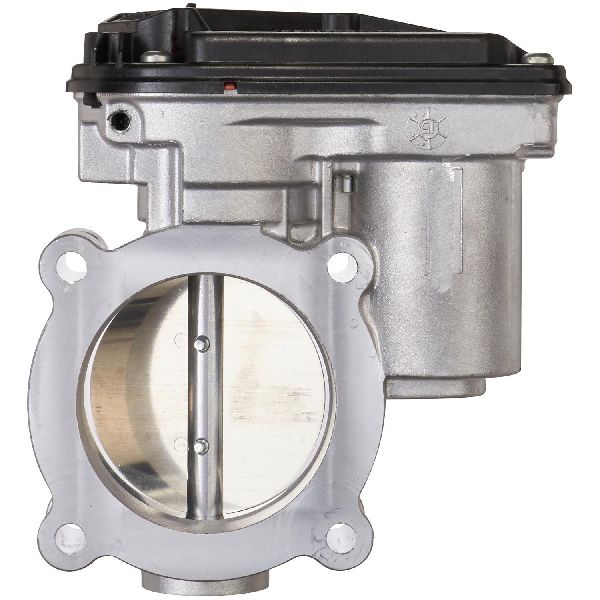
On a 2016 Ford Fusion, code P2111 is almost always caused by a failed electronic throttle body. This will put the car into a low-power 'limp mode'. The fix is to replace the entire throttle body assembly, which costs about $80-$200 for an aftermarket part and is a DIY-friendly job. The OEM part number for many Fusions is DS7Z-9E926-D.
- Code P2111 on a 2016 Fusion almost certainly means the electronic throttle body has failed and needs to be replaced.
- This is a known issue acknowledged by Ford through customer satisfaction programs (17B28, 16B32); it is an internal electronic failure, not just dirt.
- Do not drive the vehicle extensively; it will be in a low-power 'limp mode' and can be a safety hazard.
- Replacement is a DIY-friendly job that can be done in about an hour with basic tools. The common OEM part number is DS7Z-9E926-D.
- After replacing the part, a throttle 'relearn' procedure is mandatory for the fix to be successful.
What's Unique About the 2016-2016 Ford Fusion
The electronic throttle body (ETB) is a well-documented failure point on this generation of Ford Fusion and many other Ford models from the same era. Ford issued Customer Satisfaction Programs (like 17B28 and 16B32) specifically for certain 2016 Fusions because the ETB's internal motor contacts could become contaminated, leading to increased electrical resistance and failure. This means the problem is rarely just dirt that can be cleaned away; it's typically an internal electronic failure of the part itself, making replacement the only reliable fix. The issue was so widespread that Ford eventually updated program 16B32 to state that all affected vehicles should receive an ETB replacement, superseding previous instructions that only called for a PCM reprogram.
Symptoms You May Notice
- Sudden and significant loss of engine power
- Vehicle enters 'limp mode' (also called Failure Mode Effects Management or FMEM)
- Inability to accelerate past a low speed (e.g., 20 mph)
- Check Engine Light is on
- Wrench warning light is on
- Rough or unstable idle
- Engine dies while driving
- Replacing the Accelerator Pedal Position (APP) Sensor. A faulty pedal sensor would typically generate its own specific codes (like P2138) rather than P2111.
- Assuming the throttle body just needs cleaning. The underlying issue is an internal electronic fault due to contamination of the motor contacts, not simple carbon buildup on the throttle plate.
Most Likely Causes
- Faulty Electronic Throttle Body (ETB) Assembly 🔴 High Probability → Shop Fuel Injection Throttle Body Ford issued Customer Satisfaction Program 17B28 for 2016 Fusions built at the Hermosillo plant from September 1, 2015, through March 30, 2016, due to internal ETB motor contact contamination causing this exact failure. The failure is electronic, not just carbon buildup. Program 16B32 also covered this issue on a wider range of Ford vehicles.
How to confirm: While a scan tool can monitor commanded vs. actual throttle position, the presence of code P2111 (often with P2112) on this specific vehicle is a very strong indicator that the throttle body itself has failed, as acknowledged by Ford's own service actions.
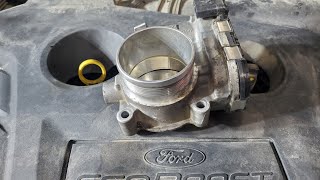
Typical fix: Replace the entire electronic throttle body assembly. Cleaning the old unit is unlikely to provide a permanent fix.
Est. part cost: $80-$200
Rare But Worth Checking
- Wiring Harness or Connector Issue: Check the wiring harness and connector at the throttle body for any visible damage, corrosion, or loose pins before replacing the part. A poor connection can mimic a failed component.
- Powertrain Control Module (PCM) Fault: → Shop Engine Control Module (ECM) This is extremely rare. The PCM should only be considered a potential cause after the throttle body has been replaced and all wiring has been confirmed to be in good condition. Early versions of TSB 16B32 involved a PCM reprogram, but this was later superseded by instructions to replace the ETB itself, indicating the hardware was the true root cause.
Diagnosis Steps
- Read all fault codes from the PCM using an OBD-II scanner. Note if P2112 or U0401 are also present.
- Visually inspect the electrical connector and wiring going to the electronic throttle body. Look for any signs of damage, corrosion, or loose connections.
- Given the high failure rate and specific Customer Satisfaction Programs (17B28, 16B32) for this model, if codes P2111 and/or P2112 are present, the most direct and effective step is to replace the electronic throttle body assembly.
- After replacing the throttle body, perform a throttle relearn procedure. This often involves disconnecting the battery for 15 minutes to clear the Keep Alive Memory (KAM), or a specific pedal procedure.
- A common manual relearn procedure is: Turn the key to the 'ON' position (engine off), slowly press the accelerator pedal all the way to the floor over 10 seconds, then slowly release it over 10 seconds. Turn the key off.
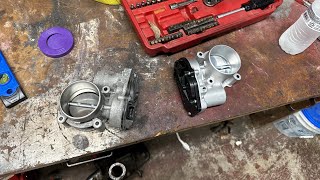
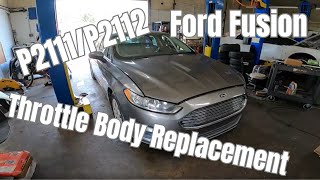
- Start the engine and let it idle for 10-15 minutes without touching the throttle or turning on accessories like the A/C. This allows the PCM to learn the new idle trims. 🎬 See: How to fix code P2111 and perform the calibration
- Clear all fault codes and take the vehicle for a test drive to ensure the issue is resolved.
Parts You'll Likely Need
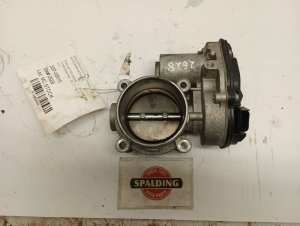
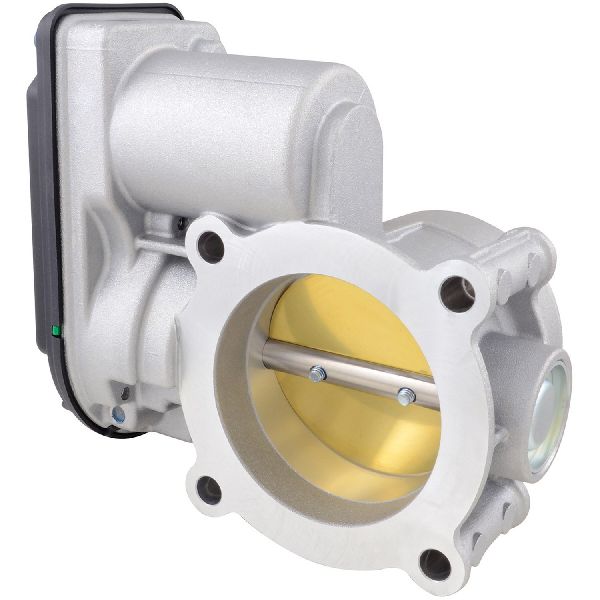
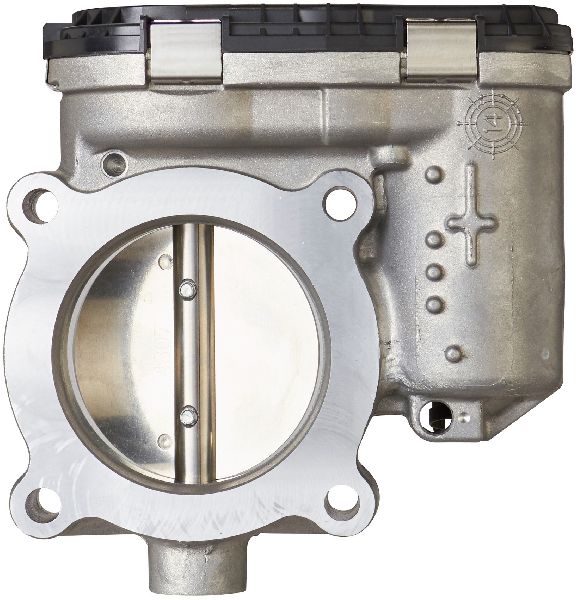
- Electronic Throttle Body Assembly
(OEM #DS7Z-9E926-D)— This is the primary cause of code P2111 on the 2016 Fusion due to a known issue with internal electronic components failing. This part number is widely listed for the 2.5L and other engines in the Fusion and its platform mates.
Trusted brands: Motorcraft, Bosch, Dorman, ECCPP
OEM price range: $180-$300
Aftermarket price range: $80-$200
Related Codes That Often Appear With This One
- P2112 — This code means 'Throttle Actuator Control System - Stuck Closed.' It is the direct companion to P2111 and points to the same root cause: a failing electronic throttle body. Ford's Customer Satisfaction Programs for this issue explicitly mention both P2111 and P2112.
- U0401 — This code means 'Invalid Data Received From ECM/PCM.' It can appear with P2111, indicating a communication breakdown between the main computer and the throttle body, further confirming the throttle body's electronic failure.
Technical Service Bulletins (TSBs) & Recalls
- Customer Satisfaction Program 17B28: Electronic Throttle Body Replacement for certain 2016 Fusion vehicles. Addresses DTCs P2111 and P2112.
- Customer Satisfaction Program 16B32: Electronic Throttle Body Repair/Replacement for various models including the 2016 Fusion.
- TSB 10-21-6: Addresses P2111/P2112 on earlier 2010-2011 Fusions, indicating a history of throttle body issues on the platform.
Platform-Specific Known Issues
- Ford issued Customer Satisfaction Program 17B28 for certain 2016 Fusions due to the electronic throttle body's internal motor contacts developing contamination, causing increased electrical resistance and failure. This program covered free replacement until September 30, 2018.
- A similar program, 16B32, also addressed this issue on 2016 Fusions and other models, highlighting the widespread nature of the problem. It initially involved a PCM reprogram but was updated to a full ETB replacement.
- A Customer Satisfaction Program is different from a recall; it has an expiration date and is intended to fix a known issue to improve customer satisfaction, not necessarily a safety defect.
Mechanic-Grade Diagnostic Values
- Throttle Body Connector Pin 4 - Power — expected: 12 volts with key on. Failure: No or low voltage indicates a wiring or PCM power supply issue.
- Throttle Body Connector Pin 2 - Power — expected: 4.5 to 5.0 volts with key on. Failure: No or low voltage points to a problem with the 5V reference circuit from the PCM.
- Throttle Body Connector Pin 3 - Ground — expected: Near 0 volts (good ground connection). Failure: Voltage reading above 0V indicates a poor ground, which can cause erratic operation.
- Throttle Position Sensor (TPS) Signal Voltage — expected: Should be less than 1.0V with throttle closed and rise to over 4.5V at wide-open throttle (WOT).. Failure: Voltage that is jumpy, has dead spots when opening the throttle, or is out of range indicates a failed TPS.
- Live Scan Tool Data - Desired vs. Actual Throttle Position — expected: The two values should track each other closely, within 1-2 degrees.. Failure: A difference of more than 5 degrees between desired and actual position will set a fault code.
Scan Tool Commands That Help
- Ford IDS (Integrated Diagnostic System): TPS Calibration Module / KAM Reset — This is the dealer-level tool used to perform a forced throttle body calibration and reset the Keep Alive Memory (KAM) after a new throttle body is installed. This ensures the PCM learns the new part's exact closed position and range.
Wiring & Ground Locations
- C175B — The main 6-pin electrical connector on the electronic throttle body assembly.. This is the single connection point for all power, ground, and signal wires for the throttle actuator motor and the dual throttle position sensors. A poor connection, corrosion, broken locking tab, or damaged pins at this connector can directly cause P2111.
- Engine Bay Fuse Box - F70 — In the under-hood fuse box.. This 15A fuse provides power to the Powertrain Control Module (PCM). While not a common failure point, a blown fuse here would cause a no-start and multiple codes, including potential communication errors with the throttle body.
- Engine Bay Fuse Box - R13 — In the under-hood fuse box.. This is the Powertrain Control Module (PCM) relay. A faulty relay could cause intermittent power loss to the PCM, leading to various driveability issues and codes, including P2111.
- PCM Ground — Ford vehicles are known for having ground connection points on the chassis that were painted prior to assembly. Over time, this can cause poor ground connections.. An unstable ground for the PCM can cause erratic behavior and false codes. While not the most likely cause for P2111 on this specific vehicle (where the ETB is the known culprit), it's a key check for any hard-to-diagnose electronic issue.
Real Owner Repair Stories
- Reddit user in r/fordfusion (2016 Fusion SE 2.5L, 35k miles) — Sudden loss of all acceleration on the freeway. After restart, could not drive above 20 mph before the issue reoccurred. Service engine light and airbag light came on. Codes P2111 and P2112 were present.
❌ Tried (didn't work) The user went straight to the most likely cause based on online research.
✅ What actually fixed it The owner purchased a Dorman-brand throttle body for $85 and replaced it themselves in under 30 minutes. After installation and clearing the codes with an OBD scanner, the problem was resolved.
OEM Part Supersession History
9L8Z-9E926-A→DS7Z-9E926-A, then DS7Z-9E926-D— Part design was updated to address the internal contamination and electronic failure issues.
Heads up: The newer part (DS7Z-9E926-D) is the recommended replacement for all earlier versions and fits a wide range of Ford vehicles from 2009-2016+.
Diagnostic Flowchart
Other Known Issues on This Vehicle
Issues unrelated to this code that are worth knowing about as an owner of this generation:
- Degraded Shifter Cable Bushing 🔴 High — Widespread issue affecting 2013-2016 models, leading to multiple recalls. The bushing degrades over time due to heat and humidity. (Ref: Recalls 18S20, 19S16, and a large 2022 recall (NHTSA 22V-413) covering nearly 3 million vehicles.)
- Coolant Intrusion into Cylinders (1.5L EcoBoost) 🔴 High — A well-documented design flaw in the engine block allows coolant to leak into cylinders, causing misfires, smoke, and eventual engine failure. (Ref: TSB 19-2346, TSB 20-2100, TSB 19-2139. No recall, but service bulletins describe short block replacement as the fix.)
- Steering Gear Bolt Corrosion 🔴 High — In regions using road salt, bolts securing the power steering gear motor can corrode and break, causing a sudden loss of power steering assist. (Ref: Recall 19S26 (NHTSA 19V-632).)
- Steering Wheel Detachment 🔴 High — The main steering wheel retaining bolt can loosen over time, potentially allowing the steering wheel to detach from the column while driving. (Ref: Recall 18S08.)
- Swollen Lug Nuts 🟡 Low — Very common across many Ford models. The two-piece lug nuts have a chrome cap that swells from corrosion, making the factory lug wrench unusable.
Used vs. New Parts: Buying Guide for This Vehicle
When a used part is the smart pick: For this specific part on this vehicle, a used part is NEVER a smart choice. The throttle body is a known high-failure item due to an internal design flaw, not simple wear. A used part from a junkyard is highly likely to have the same defect and will fail soon, if it doesn't arrive already broken.
What to inspect on the donor part:
- Not applicable. Do not buy a used throttle body for this repair.
OEM-only on this vehicle (don't cheap out):
- While not strictly OEM-only, using a new OEM (Motorcraft) or a reputable new aftermarket part is critical. Avoid used parts entirely.
Aftermarket brands forum-validated for this vehicle:
- Dorman
- Bosch
- Hitachi
Brands owners have reported issues with on this vehicle:
- No-name, unbranded parts from online marketplaces. Given the critical safety function of this part (preventing unintended acceleration), it is not worth the risk to save a few dollars on a part of unknown quality.
Real Owner Stories
Aggregated from forums and TSBs cited above. Mileages and costs reflect what owners reported in those sources.
2016 Ford Fusion SE 2.5L — 35000 miles
Symptoms: Sudden loss of all acceleration while driving at 70mph; front airbag icon and 'see Manual' message appeared on display. After restart, car would not go above 20mph before the issue reoccurred with the service engine light and airbag icon. Codes P2111 and P2112 were present.
What fixed it: Replaced the throttle body with a part costing $85. The installation took less than 30 minutes and was 'plug and play' followed by clearing codes with an OBD device.
Cost: $85-$85
Source hint: owner_reports
2016 Ford Fusion
Symptoms: Sudden power loss and limp mode, with codes P2111 and P2112.
What fixed it: Replacing the throttle body with a Dorman part; the job was completed in under an hour.
Source hint: Reddit r/fordfusion
2016 Ford Fusion
Symptoms: Sudden limp mode and P2111/P2112 codes.
What fixed it: Replacing the throttle body with OEM part DS7Z-9E926-D.
Source hint: fordfusionforum.com
Related OBD-II Codes
Frequently Asked Questions
Does Customer Satisfaction Program 17B28 apply to my 2016 Ford Fusion?
Can I just clean the throttle body on my 2016 Fusion to fix P2111?
What is the difference between Customer Satisfaction Programs 17B28 and 16B32 for my Fusion?
Is there a specific part number I should look for when replacing the throttle body?
How do I perform the throttle relearn procedure after replacing the part?
Will Ford still replace my throttle body for free under Program 17B28?
Helpful Videos
Used OEM Parts in Stock
New Aftermarket Parts Available


The information in this article is provided for general reference and educational purposes only. Vehicle specifications, procedures, and part compatibility can vary by production date, trim level, and region. Always consult your vehicle's factory service manual and verify part numbers before purchasing or performing repairs. Safety-critical components such as airbags, seat belts, and braking systems should be installed by a qualified professional.
- Ford Fusion:
- 🧭 Diagnostic Flowchart
- 🎬 Helpful Videos
- 🛍️ Shop This Part
- What's Unique About the 2016-2016 Ford Fusion
- Symptoms You May Notice
- Most Likely Causes
- Rare But Worth Checking
- Diagnosis Steps
- Parts You'll Likely Need
- Related Codes That Often Appear With This One
- Technical Service Bulletins (TSBs) & Recalls
- Platform-Specific Known Issues
- Mechanic-Grade Diagnostic Values
- Scan Tool Commands That Help
- Wiring & Ground Locations
- Real Owner Repair Stories
- OEM Part Supersession History
- Other Known Issues on This Vehicle
- Used vs. New Parts: Buying Guide for This Vehicle
- Real Owner Stories
- 2016 Ford Fusion SE 2.5L — 35000 miles
- 2016 Ford Fusion
- 2016 Ford Fusion
- Related OBD-II Codes
- Frequently Asked Questions
- 🎟️ Get 5% Off