

P2111 on 2016 Ford Transit: Throttle Body Failure Causes and Fixes
On a 2016 Ford Transit, code P2111 almost always means the electronic throttle body has failed. This is a very common, well-documented issue that will put the van in 'limp mode'. The fix is to replace the entire throttle body assembly, which costs between $100 and $250 for the part. Ford issued a Customer Satisfaction Program (16B32) for this exact problem.
- P2111 on a 2016 Transit means the electronic throttle body has almost certainly failed.
- This is a critical safety issue that puts the van in a low-power 'limp mode'; do not continue to drive.
- The correct fix is to replace the entire throttle body assembly; cleaning is not effective.
- Ford acknowledged this as a widespread defect with a Customer Satisfaction Program (16B32), which has since expired.
- After replacement, a throttle 'relearn' procedure is necessary for the van to run correctly.
What's Unique About the 2016-2016 Ford Transit
The 2016 Ford Transit is part of a generation of Ford vehicles known for a high rate of electronic throttle body (ETB) failures. Ford acknowledged this widespread problem by issuing Customer Satisfaction Program 16B32 🎬 Watch: Understanding Ford's electronic throttle body failure for 2016 Transits built at the Kansas City Assembly Plant between September 1, 2015, and May 21, 2016. The program identified that contamination of the ETB's internal motor contacts was the root cause, leading to increased electrical resistance and erratic behavior. Because this is a known design or manufacturing flaw, P2111 on a 2016 Transit is almost never a diagnostic mystery; it points directly to the throttle body itself.
Symptoms You May Notice
- Sudden and severe loss of engine power (entering 'limp mode')
- Wrench light illuminated on the dashboard
- Check Engine Light is on
- Vehicle will not accelerate properly
- High or fluctuating engine idle speed
- Vehicle may stall
- Replacing the Accelerator Pedal Position (APP) Sensor. The P2111 code specifically indicates a discrepancy at the throttle body itself, not an issue with the signal from the driver's pedal. A failing pedal sensor would set different codes.
- Cleaning the throttle body. While cleaning a dirty throttle plate can resolve some idle issues, it will not fix the internal electronic fault that causes P2111 on these vehicles.
Most Likely Causes
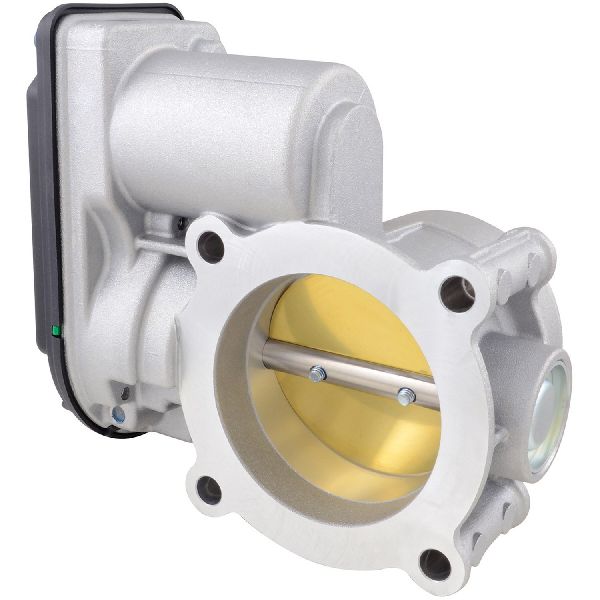
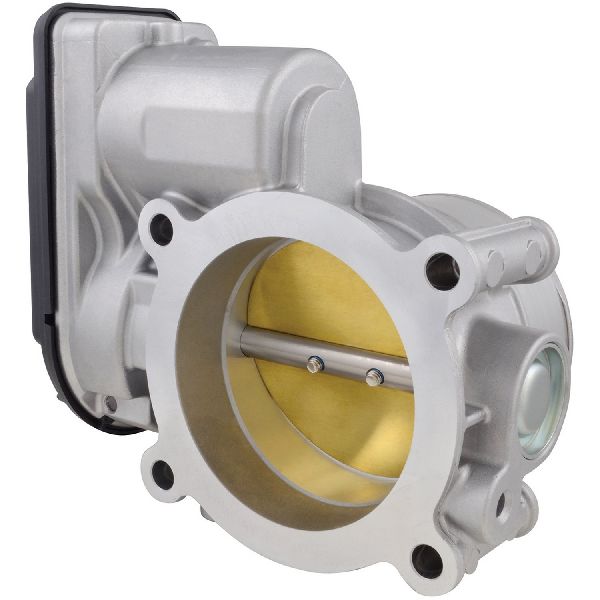
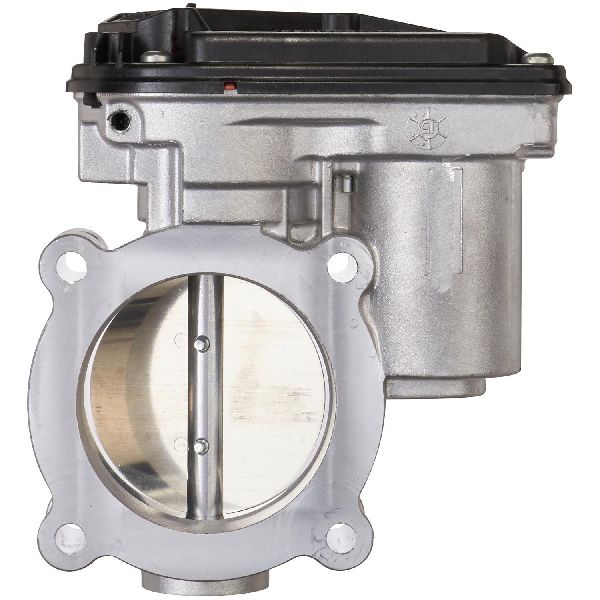
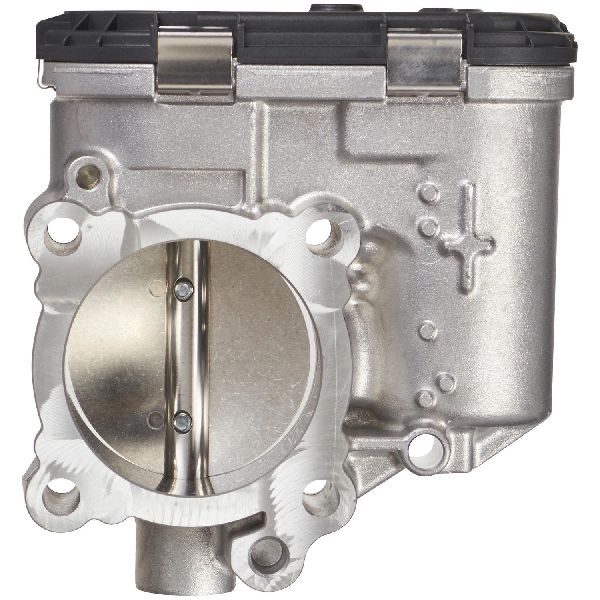
- Defective Electronic Throttle Body (ETB) 🔴 High Probability → Shop Fuel Injection Throttle Body Ford issued Customer Satisfaction Program 16B32 for this specific issue on 2016 Transits, citing internal contamination of the throttle body motor contacts. This is a well-documented, widespread failure on this and other Ford models of the era, including the F-150, Explorer, and Flex that share similar engine platforms.
How to confirm: Given the known issue, the presence of code P2111 combined with limp mode is near-certain confirmation. A technician can use a scan tool to compare the commanded throttle position to the actual throttle position; a mismatch confirms the fault. Visually inspecting the old part may reveal oil contamination inside the electronic housing, a common finding.
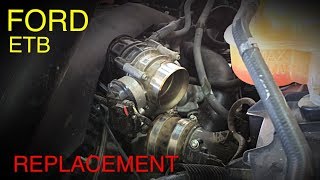
Typical fix: Replace the entire electronic throttle body assembly. Cleaning is not a reliable long-term fix for this specific internal electronic failure. A throttle relearn procedure is required after installation. The replacement is straightforward, typically requiring only an 8mm or 10mm socket and about an hour of labor. 🎬 Watch: Step-by-step throttle body replacement walkthrough
Est. part cost: $100-$250
Rare But Worth Checking
- Wiring Harness or Connector Issue: While far less common than ETB failure, check the wiring and connector at the throttle body for any visible damage, corrosion, or loose pins before replacing the part. A poor connection can mimic a failed component.
- Powertrain Control Module (PCM) Fault: → Shop Engine Control Module (ECM) This is extremely rare. The PCM should only be considered a potential cause after a new, known-good throttle body fails to resolve the issue.
Diagnosis Steps
- Confirm the presence of code P2111 using an OBD-II scanner.
- Note if the vehicle is in 'limp mode' with a wrench light, which is the classic symptom.
- Visually inspect the electrical connector and wiring harness going to the electronic throttle body for any signs of damage or corrosion.
- Given the extremely high probability of throttle body failure on this specific vehicle, the most practical step is to replace the electronic throttle body assembly.
- After installing the new throttle body, clear all diagnostic trouble codes. Disconnecting the battery during the repair will also clear the codes.
- Perform the throttle body relearn procedure. 🎬 See: How to calibrate and fix code P2111 A common method is to turn the ignition to the 'ON' position (engine off), slowly press the accelerator pedal to the floor over 10 seconds, slowly release it over 10 seconds, and then turn the ignition off. Wait a minute before starting the engine.
- Start the engine and verify that the idle is stable and the check engine light does not return. The light may go off on its own after a successful relearn.
Parts You'll Likely Need
- Electronic Throttle Body Assembly
(OEM #Motorcraft TB-2 (for 3.7L V6), Motorcraft TB-10 (for 3.5L EcoBoost))— This is the root cause of code P2111 in the vast majority of cases for the 2016 Transit due to a known manufacturing defect.
Trusted brands: Motorcraft, Bosch, Hitachi, Dorman OE FIX
OEM price range: $150-$250
Aftermarket price range: $100-$180
Related Codes That Often Appear With This One
- P2112 — This code means 'Throttle Actuator Control System - Stuck Closed'. It is the companion code to P2111 and is caused by the exact same internal throttle body failure. Ford's Customer Satisfaction Program 16B32 and TSB 10-21-6 list both codes together.
- P2104 — This code for 'Throttle Actuator Control System - Forced Idle' is often set alongside P2111. It indicates the PCM has detected a critical throttle fault and has initiated the 'limp home mode' as a safety response.
Technical Service Bulletins (TSBs) & Recalls
- Customer Satisfaction Program 16B32: Acknowledges internal electronic throttle body contamination causing P2111/P2112 and instructed dealers to replace the part free of charge. The program expired Sept 30, 2017.
- TSB Bulletin #TSB 16-0139: Notes that vehicles may exhibit an intermittent loss of power and/or an illuminated powertrain malfunction (wrench) lamp with diagnostic trouble codes P2111, P2112, and/or P2119 stored in the PCM memory.
- TSB 10-21-6: An older bulletin for various 2010-2011 Ford models that also recommends replacing the throttle body in response to codes P2111 or P2112, showing a pattern of this failure.
Platform-Specific Known Issues
- Ford Customer Satisfaction Program 16B32 was issued for 2016 Ford Transits (built 9/1/2015 - 5/21/2016) due to internal contamination of the electronic throttle body, which causes codes P2111 and P2112 and forces the vehicle into limp mode. This program expired on September 30, 2017, so repairs are now owner-funded.
Mechanic-Grade Diagnostic Values
- Throttle Body Connector Pin 2 Voltage (Key On, Engine Off) — expected: 4.5 - 5.0 Volts (VREF). Failure: Voltage significantly lower than 4.5V or 0V indicates a wiring or PCM issue.
- Throttle Body Connector Pin 3 Ground — expected: Good continuity to chassis ground (< 1 Ohm). Failure: High resistance or an open circuit indicates a bad ground connection.
- Throttle Body Connector Pin 4 Voltage (Key On, Engine Off) — expected: 12 Volts (Battery Voltage). Failure: Low or no voltage indicates a problem with the power supply circuit.
- Live Data: Commanded Throttle Angle vs. Actual Throttle Angle — expected: Values should match closely as the accelerator pedal is pressed and released.. Failure: A significant discrepancy between the commanded and actual values confirms a fault in the throttle body or its circuit.
Scan Tool Commands That Help
- Ford IDS (or equivalent high-end bidirectional scanner): Throttle Actuator Test / Output Control — With the key on and engine off, this command allows a technician to directly order the throttle plate to specific angles (e.g., 25%, 50%). It's used to definitively confirm if the throttle body is physically sticking or electronically unresponsive, by comparing the commanded position to the actual position PID.
- Ford IDS (or equivalent high-end bidirectional scanner): Clear/Reset All Adaptations (KAM Reset) — This should be performed after replacing the throttle body. It clears the Powertrain Control Module's learned values for idle and throttle position, forcing it to relearn with the new part. This is more comprehensive than just disconnecting the battery.
Wiring & Ground Locations
- C175B — The main 6-pin electrical connector on the electronic throttle body assembly.. This is the single connection point for all power, ground, and signal wires for the throttle actuator motor and the dual throttle position sensors. A poor connection, corrosion, broken locking tab, or damaged pins at this connector can cause P2111.
- G104 — Lower left rear of the engine.. This is a primary engine ground point. While a fault here is less common than the throttle body itself failing, a poor or corroded connection at G104 can cause a variety of sensor and actuator issues, including erratic throttle body operation.
Real Owner Repair Stories
- NHTSA ODI #11054607 — An owner reported a problem losing speed in multiple vehicles where the fault in all of them showed code P2111, with some failures occurring at less than 4500km and 5200km.
- Ford F150 Forum (2011 Ford Mustang GT (similar electronic throttle body system)) — Check engine light with codes P2111, P2112, and P2104.
❌ Tried (didn't work) Tested voltages to the Throttle Position Sensor (TPS) and Accelerator Pedal Position (APP) sensor, which were normal., Tested the DC motor, which worked.
✅ What actually fixed it The user did not state the final fix, but confirmed that testing individual components did not immediately reveal the fault, which is common when the failure is intermittent and internal to the sealed throttle body unit. - YouTube User Comment (2016 Ford Transit) — P2111 code, limp mode.
✅ What actually fixed it Replaced the throttle body. The user noted the inside of the old throttle body had significant carbon buildup, but the root cause was the known electronic failure.
OEM Part Supersession History
AT4Z-9E926-B→Motorcraft TB-2— The original part number was prone to internal contamination and failure. The superseding Motorcraft part is the recommended replacement.
Model Year Variations Within This Range
- 2016 models built between 9/1/2015 and 5/21/2016: These vehicles were subject to Ford's Customer Satisfaction Program 16B32 for the defective throttle body. Vehicles built outside this range may still experience the failure but were not covered by the specific program.
Diagnostic Flowchart
Other Known Issues on This Vehicle
Issues unrelated to this code that are worth knowing about as an owner of this generation:
- Driveshaft Flexible Coupling (Giubo) Failure 🔴 High — Common enough to trigger a major safety recall (NHTSA 19S38, superseding 17S15). Can fail at mileages as low as 30,000 miles. (Ref: Recall 19S38)
- Brake Vacuum Pump Failure 🔴 High — On EcoBlue diesel engines, the 'wet' timing belt can degrade, clogging oil passages and starving the vacuum pump of oil, leading to failure and loss of brake assist. On gas engines, the pump can fail mechanically on its own.
- Transmission Problems 🟠 Medium — Reports of rough shifting, slipping, or premature failure are noted for the 6-speed automatic transmission used in this generation.
- Premature Tire Wear / Alignment Issues 🟡 Low — Vans, especially those under constant load, are prone to front tire edge wear and alignment drift, requiring frequent rotations and suspension checks.
Used vs. New Parts: Buying Guide for This Vehicle
When a used part is the smart pick: For this specific failure, a used part is NEVER a smart choice. The original part has a known, widespread manufacturing defect that causes the P2111 code. Buying a used part from a 2015-2017 donor vehicle likely means you are buying another defective part that will fail soon, if it hasn't already.
What to inspect on the donor part:
- Do not purchase a used throttle body for this repair.
OEM-only on this vehicle (don't cheap out):
- While not strictly 'OEM-only', using a new OEM Motorcraft part is the most reliable option. Some aftermarket brands have specifically engineered solutions to address the original flaw, but cheap, no-name aftermarket parts should be avoided.
Aftermarket brands forum-validated for this vehicle:
- Dorman OE FIX: Dorman specifically markets some of their throttle bodies with a 'Sensor Shield' designed to prevent the moisture and oil intrusion that caused the original part to fail.
- Bosch
- Hitachi
Brands owners have reported issues with on this vehicle:
- Unbranded, low-cost throttle bodies from online marketplaces. These often have poor quality control and may fail quickly or not work correctly out of the box.
Real Owner Stories
Aggregated from forums and TSBs cited above. Mileages and costs reflect what owners reported in those sources.
2016 Ford Transit 6-cyl — 1864 miles
Symptoms: Losing speed, fault code P2111.
What fixed it: Service from a local Transit dealer (part of a fleet of 14 vans experiencing the same issue).
Source hint: CarComplaints.com - 2016 Ford Transit Engine Problems
2016 Ford Transit — 170245 miles
Symptoms: Vehicle goes into 'limp' mode while on highway losing the ability to control the acceleration. The van has to coast to a stop, turn off the engine, then restart.
What fixed it: The throttle body was replaced twice.
Source hint: CarComplaints.com - 2016 Ford Transit Engine Problems
2016 Ford Transit 3.5L
Symptoms: P2111 fault code and limp mode.
What fixed it: Replacing the throttle body; the technician found the old unit's electronics housing was filled with motor oil.
Source hint: Diesel Technician Society
2015 Ford F-150 3.5L EcoBoost
Symptoms: Limp mode failure; vehicle fell within the build dates for CSP 16B32 but had missed the 2017 deadline.
What fixed it: Replacement of the electronic throttle body (shared engine platform with Transit).
Source hint: Ford F150 Forum - 'F150 Throttle body issue- 16B32'
Related OBD-II Codes
Frequently Asked Questions
Does Ford Customer Satisfaction Program 16B32 still cover my 2016 Transit's throttle body replacement?
Can I just clean the throttle body on my Transit to fix the P2111 code?
What are the classic symptoms of throttle body failure on a 2016 Ford Transit?
Is there a specific procedure I need to follow after replacing the throttle body myself?
Are there other major mechanical issues I should watch for on my 2016 Transit besides the P2111 code?
Helpful Videos
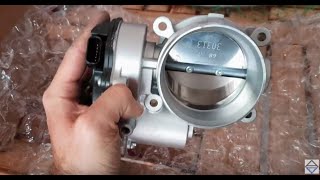
Used OEM Parts in Stock
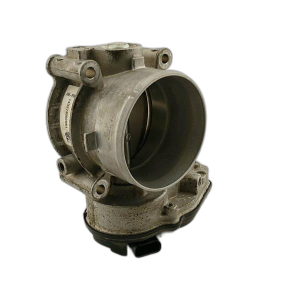
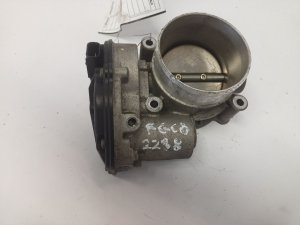
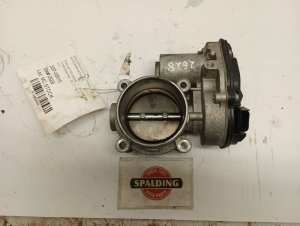
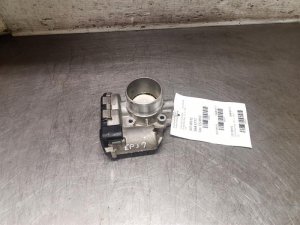
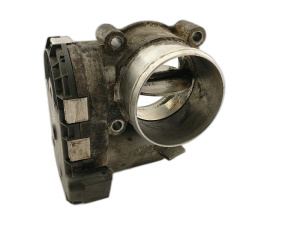
New Aftermarket Parts Available


The information in this article is provided for general reference and educational purposes only. Vehicle specifications, procedures, and part compatibility can vary by production date, trim level, and region. Always consult your vehicle's factory service manual and verify part numbers before purchasing or performing repairs. Safety-critical components such as airbags, seat belts, and braking systems should be installed by a qualified professional.
- Ford Transit:
- 🧭 Diagnostic Flowchart
- 🎬 Helpful Videos
- 🛍️ Shop This Part
- What's Unique About the 2016-2016 Ford Transit
- Symptoms You May Notice
- Most Likely Causes
- Rare But Worth Checking
- Diagnosis Steps
- Parts You'll Likely Need
- Related Codes That Often Appear With This One
- Technical Service Bulletins (TSBs) & Recalls
- Platform-Specific Known Issues
- Mechanic-Grade Diagnostic Values
- Scan Tool Commands That Help
- Wiring & Ground Locations
- Real Owner Repair Stories
- OEM Part Supersession History
- Model Year Variations Within This Range
- Other Known Issues on This Vehicle
- Used vs. New Parts: Buying Guide for This Vehicle
- Real Owner Stories
- 2016 Ford Transit 6-cyl — 1864 miles
- 2016 Ford Transit — 170245 miles
- 2016 Ford Transit 3.5L
- 2015 Ford F-150 3.5L EcoBoost
- Related OBD-II Codes
- Frequently Asked Questions
- 🎟️ Get 5% Off