

P2111 on 2007-2016 Lexus ES350: Throttle Body Stuck Open Causes and Fixes
On a 2007-2016 Lexus ES350, code P2111 is almost always caused by a dirty and sticking electronic throttle body. A thorough cleaning often fixes it for under $20 in supplies. If cleaning doesn't work, replacing the throttle body assembly is the next step, costing around $150-$350 for an aftermarket part. This is a critical code that triggers a 'limp mode', making the car unsafe to drive in traffic.
- P2111 on the ES350 is a critical code that will put your car in a severely power-limited 'limp mode' and should be addressed immediately.
- The most probable cause is a dirty throttle body sticking
What's Unique About the 2007-2016 Lexus ES350
The 2GR-FE 3.5L V6 engine is widely used across both Toyota and Lexus lineups, including the Camry, Avalon, Highlander, and RX350. This means the issue of carbon buildup causing a sticky throttle plate and triggering code P2111 is a well-documented problem across this entire engine family. For the ES350, the fix is rarely complex; it almost always comes down to the throttle body itself, either needing a simple cleaning or a complete replacement. The underlying electronic control system is generally very reliable.
Generation note: The 2007-2016 range covers two generations of the ES350: the fifth generation (2007-2012) and the start of the sixth generation (2013-2016). However, both generations in this range use the same 2GR-FE 3.5L V6 engine and a similar electronic throttle body design, so the causes and fixes for P2111 are consistent across these years.
Symptoms You May Notice
- Check Engine Light is on
- VSC and/or ABS warning lights may also illuminate
- Vehicle enters 'limp mode' with drastically reduced engine power and speed
- Rough or surging idle, sometimes climbing above 1,200 RPM
- Vehicle maintains speed even after lifting off the accelerator pedal
- Potential stalling when the vehicle is stopped, or idle dropping very low (below 500 RPM) just before the code sets
- Reduced engine braking, making the car feel like it's harder to stop
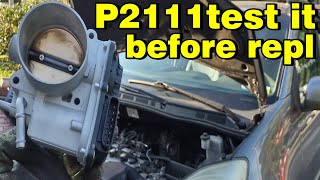
- Replacing the Accelerator Pedal Position (APP) Sensor. The P2111 code specifically points to a problem at the throttle body itself—it's not correctly responding to the computer's commands. A faulty pedal sensor would generate different trouble codes. 🎬 Watch: Understanding P2111 causes and fixes
Most Likely Causes
- Dirty Throttle Body 🔴 High Probability → Shop Fuel Injection Throttle Body Carbon and oil vapor from the PCV (Positive Crankcase Ventilation) system can accumulate around the throttle plate and bore over time, causing it to bind and not close properly. This is a very common issue on the 2GR-FE engine family.
How to confirm: Remove the air intake hose from the throttle body and visually inspect for a ring of black carbon buildup around the throttle plate and where it seats in the bore. The plate may feel sticky or sluggish when moved by hand (with the ignition off).
Typical fix: Thoroughly clean the throttle body bore and plate with a dedicated throttle body cleaner and a soft, lint-free cloth or brush. Do not spray cleaner directly into the electronic components. An idle relearn procedure may be required after cleaning.
Est. part cost: $10-$20 - Failed Throttle Body Assembly 🟡 Medium Probability → Shop Fuel Injection Throttle Body The internal electric motor or plastic gears that control the throttle plate can wear out or fail over time, leading to an inability to close the plate correctly. This is the next logical cause if a thorough cleaning does not resolve the code.
How to confirm: If the P2111 code returns immediately or shortly after a thorough cleaning and an ECU reset, the throttle body assembly itself is very likely faulty. A diagnostic scan tool can also be used to command the throttle plate open and closed; failure to respond indicates a bad unit.
Typical fix: Replace the entire electronic throttle body assembly.
Est. part cost: $150-$600
Rare But Worth Checking
- Wiring Harness or Connector Issue: While less common than a dirty or failed throttle body, damage to the wiring harness going to the throttle body or a corroded/loose connector pin can interrupt the signal from the ECM, causing this code.
- Powertrain Control Module (PCM) Fault: → Shop Engine Control Module (ECM) In very rare cases, the fault may lie within the engine computer itself, possibly due to a software glitch or internal failure. This should only be considered after all other possibilities, especially the throttle body and its wiring, have been definitively ruled out.
Diagnosis Steps
- Scan the vehicle for any other stored trouble codes to get a full picture of the issue.
- Disconnect the negative battery terminal to ensure safety and reset the ECU.
- Remove the engine covers and the air intake duct connected to the throttle body.
- Visually inspect the throttle body bore and plate for heavy carbon buildup.
- If dirty, thoroughly clean the throttle plate and bore using a dedicated throttle body cleaner and a soft rag or brush. Manually (and gently) move the plate to clean all surfaces. Avoid spraying cleaner directly into the electronic motor housing.
- Inspect the electrical connector and wiring harness leading to the throttle body for any signs of damage, corrosion, or loose pins.
- Reassemble the air intake and reconnect the battery.
- Perform an idle relearn procedure. While several methods exist, a common one is to start the engine, let it warm up to operating temperature, then let it idle with no accessories on for 5-10 minutes.
- Clear any remaining trouble codes with a scanner.
- Test drive the vehicle, including stop-and-go traffic. If the P2111 code does not return, the cleaning was successful.
- If the code returns quickly, the throttle body assembly is likely faulty and requires replacement.
Parts You'll Likely Need
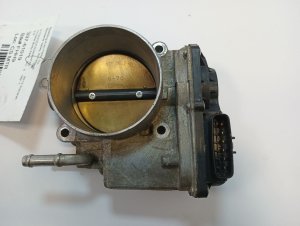
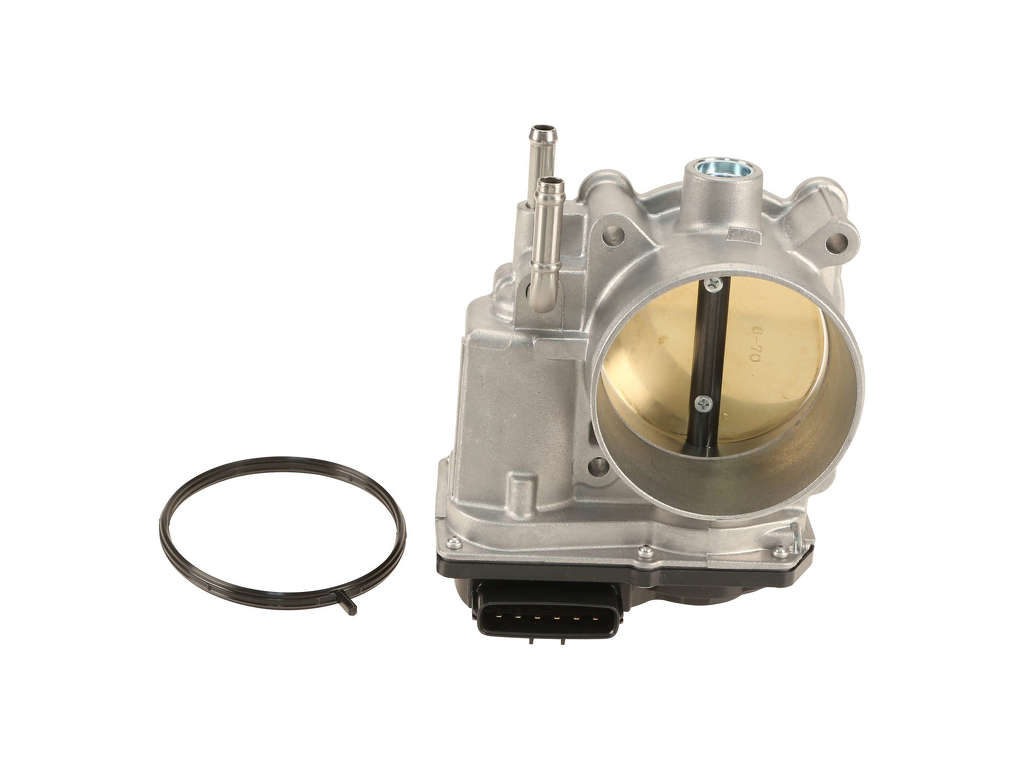
- Electronic Throttle Body Assembly
(OEM #22030-31030)— This is the complete unit that fails. If cleaning does not solve the P2111 code, the internal motor or sensor has likely failed, requiring replacement of the entire assembly.
Trusted brands: Denso (OEM supplier), Aisin, Dorman, Hitachi
OEM price range: $400-$600
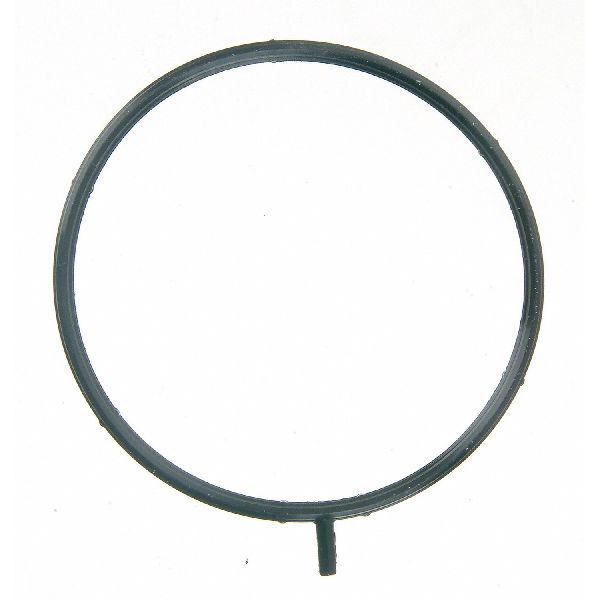
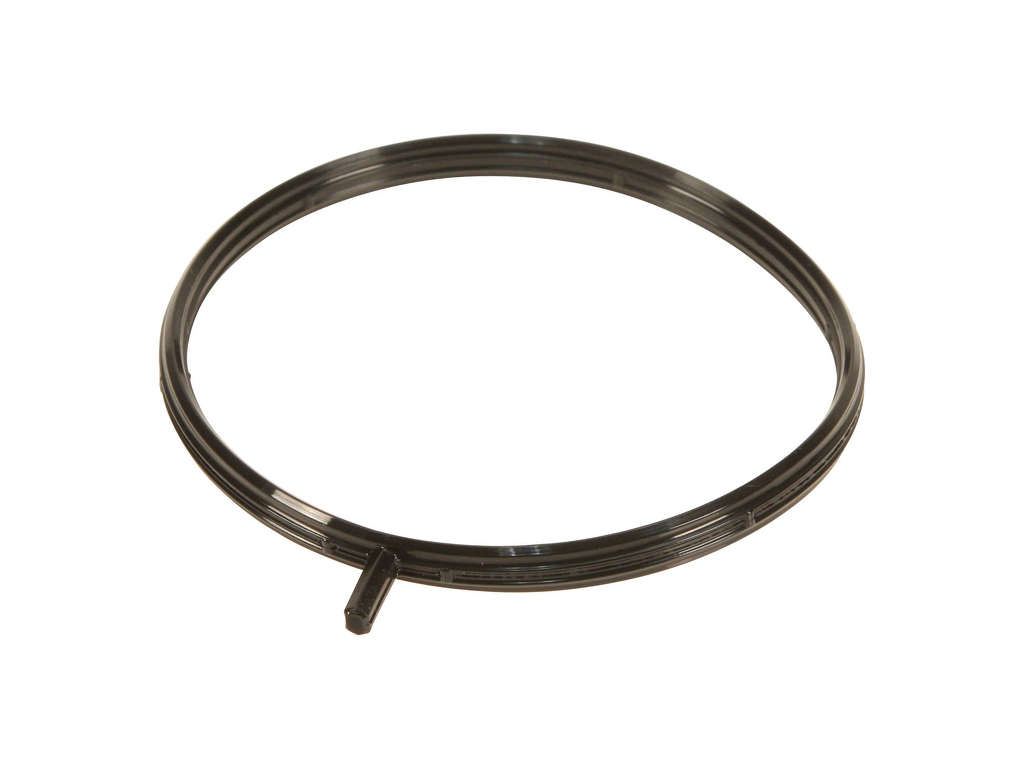
Aftermarket price range: $150-$350 - Throttle Body Gasket
(OEM #22271-0P020)— It is best practice to replace the gasket whenever the throttle body is removed from the intake manifold to ensure there are no vacuum leaks. The OEM throttle body does not typically come with a new gasket.
Trusted brands: Fel-Pro, Mahle, Denso, OEM Toyota/Lexus
OEM price range: $10-$20
Aftermarket price range: $5-$15
Related Codes That Often Appear With This One
- P2102 — This code indicates a problem with the throttle actuator control motor circuit being low. It can appear alongside P2111 if there's an electrical failure within the throttle body assembly.
- P0121 — This code relates to the Throttle Position Sensor's performance. If the throttle plate is physically stuck open (causing P2111), the sensor will report a position that doesn't match what the ECM expects, which can trigger P0121 as a secondary code.
- P2112 — This is the opposite of P2111, indicating the throttle is stuck closed. Seeing both codes could point to an erratic throttle body motor or a significant wiring issue.
Platform-Specific Known Issues
- Idle Relearn: After cleaning or replacing the throttle body and reconnecting the battery, the ES350's idle may be high (1500-2000 RPM). The ECU needs to relearn the new closed-throttle position. This can sometimes be achieved by letting the car idle for several minutes after it's fully warmed up. If that doesn't work, a specific procedure involving ignition cycles or putting the car in drive with the brake on for several minutes may be required. 🎬 See how to perform the idle relearn procedure
Technical Service Bulletins (TSBs) & Recalls
- Bulletin #L-SB-0021-15: Manufacturer records indicate that some Lexus vehicles may exhibit a MIL "ON" condition with DTC P2111 and/or P0A0F, particularly after a cold soak.
- Bulletin #L-SB-0012-16: This bulletin describes a possible engine stall condition while the vehicle is stopped, accompanied by a MIL "ON" condition with DTC P2111. Manufacturer notes indicate that the Hybrid Vehicle ECU logic was modified and affected parts were changed to address this.
- Bulletin #LSB001216: A manufacturer service bulletin specifically addresses the MIL "ON" code P2111 for the Throttle Actuator Control System - Stuck Open.
- Bulletin #L-SB-0032-25: Manufacturer records note that vehicles may exhibit a MIL ON condition with P2111 and P0505. The throttle body assembly with motor and ventilation hoses no. 2 and no. 3 have been modified to address this.
Mechanic-Grade Diagnostic Values
- Throttle Control Motor Resistance — expected: 0.3 - 100 Ω at 20°C (68°F) between terminals M+ and M- on the throttle body connector.. Failure: Resistance outside this range indicates a faulty internal motor. Some failed units have been measured as high as 170+ ohms.
- Throttle Position Sensor #1 (VTA1) Voltage — expected: 0.5V - 1.2V with throttle fully closed; 3.2V - 4.8V with throttle fully open (Key On, Engine Off).. Failure: Voltage is stuck, erratic, or does not change smoothly as the throttle plate moves. This can be viewed on a scan tool's live data.
- Throttle Position Sensor #2 (VTA2) Voltage — expected: 2.0V - 2.9V with throttle fully closed; 4.6V - 5.5V with throttle fully open (Key On, Engine Off).. Failure: This is a redundant sensor. If its readings do not correlate correctly with VTA1, the ECM will set a fault code.
- TPS Supply Voltage — expected: 4.5V - 5.5V at the throttle body connector between power (VC) and ground (E2) pins with Key On, Engine Off.. Failure: Voltage outside this range points to a problem with the ECM or the wiring harness, not necessarily the throttle body itself.
Hidden / Shadow Codes Worth Checking
- Freeze Frame Data: While not a hidden code, the Freeze Frame Data is a critical snapshot of sensor readings (engine temp, speed, load, etc.) stored at the exact moment the P2111 DTC was set. This data is invaluable for diagnosing intermittent issues, such as whether the fault only occurs when the engine is hot. (see via Accessible using a professional scan tool like Toyota Techstream or some high-end consumer OBD-II scanners.)
Scan Tool Commands That Help
- Toyota Techstream: Active Test: Control the Throttle Actuator — This is the definitive test for a suspected faulty throttle body. It allows the technician to bypass the pedal and command the throttle motor to open and close directly. If the plate fails to move as commanded or the VTA1/VTA2 sensor readings don't respond correctly, it confirms a bad throttle body assembly.
- Toyota Techstream: Utility: All Readiness — After cleaning or replacing the throttle body, this function can be used to check the DTC judgment result to confirm if the system is now 'NORMAL' or if a fault is still detected, verifying the repair was successful.
Wiring & Ground Locations
- Engine Harness Grounds (x2) — On the 2GR-FE, there are two primary grounding points for the engine harness located on top of the valve covers. Each ground wire runs from a bolt on the valve cover to a grounding point on the frame/body, typically near the strut towers.. A poor or corroded engine ground can cause a host of electrical issues and spurious sensor readings. While not a common cause for P2111, verifying these grounds are clean and tight is a crucial step in diagnosing any electronic control system fault.
Real Owner Repair Stories
- ClubLexus Forum (Lexus GS350 (with same 2GR-FE engine)) — Car entered limp mode (5-10 mph max speed) with P2111 code, specifically during local stop-and-go driving. Restarting the car would temporarily fix it, but it would return at the next stop.
❌ Tried (didn't work) Cleaning the throttle body, Cleaning the MAF sensor
✅ What actually fixed it The problem persisted after cleaning, strongly indicating an internal electronic or motor failure within the throttle body assembly itself, which requires replacement of the entire unit. - Mechanic Diagnosis Video (on Toyota Sienna with 2GR-FE) (Toyota Sienna 3.5L V6) — Check Engine Light with codes P2111 and P2112, vehicle in limp mode. The problem was intermittent and would typically occur after the engine reached normal operating temperature.
❌ Tried (didn't work) Initial resistance test of the throttle body motor when the engine was cold, which passed.
✅ What actually fixed it A later resistance test, performed when the fault was active, showed a reading of 172 ohms, well outside the 0.3-100 ohm specification. This confirmed an intermittent internal failure of the motor windings. Replacing the throttle body assembly resolved the issue.
"I Checked Everything" — The Actual Cause
- A smoke test is not a relevant diagnostic procedure for DTC P2111. This code indicates a fault within the electronic control system or mechanical operation of the throttle body, not a vacuum or evaporative emissions leak.
When the Usual Fixes Don't Work
- While cleaning the throttle body is the most common fix, there are numerous documented cases where the P2111 code returned shortly after cleaning. This almost always indicates that the root cause is not carbon buildup but rather an intermittent failure of the internal electronic motor or position sensor. In these cases, which often occur when the engine gets hot in traffic, replacement of the entire throttle body assembly is the only permanent solution.
OEM Part Supersession History
22030-31030→22030-0P050— Standard part number evolution and potential minor internal revisions.
Heads up: Both part numbers are generally listed as compatible for the 2007-2016 ES350, but it is always best to verify with a VIN at a dealership parts counter.22271-31040→22271-0P020— Updated part number for the throttle body gasket.
Heads up: The new part number (22271-0P020) is the correct replacement for the original.
Model Year Variations Within This Range
- 2007-2016: No significant variations have been identified for the P2111 fault within this model year range. The 2GR-FE engine and its electronic throttle control system remained consistent across the 5th (XV40) and early 6th (XV60) generations of the ES350, meaning the causes and repair procedures are the same.
Diagnostic Flowchart
Other Known Issues on This Vehicle
Issues unrelated to this code that are worth knowing about as an owner of this generation:
- VVT-i Rubber Oil Line Rupture 🔴 High — Common on earlier models (approx. 2007-2010). The rubber portion of the line degrades and can burst, leading to rapid oil loss and catastrophic engine failure if not shut down immediately. (Ref: Limited Service Campaign (LSC) 90K / TSB-0094-09. Toyota/Lexus offered a free replacement with an all-metal line, but the campaign has expired. It is a critical preventative maintenance item.)
- Melting / Sticky Dashboard 🟡 Low — Very common on 2007-2008 models, especially in hot, humid climates. The dashboard material degrades, becoming shiny, sticky, or cracking. (Ref: Lexus Warranty Enhancement Program (ZE6) extended coverage for this cosmetic issue, but the program has since expired.)
- Water Pump Failure 🟠 Medium — The water pump on the 2GR-FE is a known wear item and can fail, typically between 80,000 and 120,000 miles, causing coolant leaks and potential overheating.
- Timing Cover Oil Leak 🟠 Medium — A notable oil leak can develop from the timing chain cover gasket over time, requiring a significant amount of labor to reseal.
Used vs. New Parts: Buying Guide for This Vehicle
When a used part is the smart pick: A used OEM throttle body from a reputable salvage yard is a very sensible, cost-effective option for this repair. The part is a simple bolt-on component that does not require special programming, and its failure is typically due to wear over high mileage rather than an inherent design defect on all units.
Donor-vehicle mileage cap: roughly under 100000 miles for the part to have meaningful remaining life.
What to inspect on the donor part:
- Check for a relatively clean throttle plate and bore, indicating the donor car had regular maintenance.
- Manually actuate the throttle plate (with ignition off); it should move smoothly with no binding or gritty feeling.
- Inspect the electrical connector for any bent pins, corrosion, or cracks in the plastic housing.
- Ask for the donor vehicle's VIN to verify mileage and compatibility.
OEM-only on this vehicle (don't cheap out):
- For this specific repair, no parts are strictly 'OEM-only', but using a used OEM unit is often safer than a new, unbranded aftermarket part.
Aftermarket brands forum-validated for this vehicle:
- Denso (the original equipment manufacturer)
- Aisin
Brands owners have reported issues with on this vehicle:
- Cheap, unbranded throttle bodies from online marketplaces. These often have lower quality internal motors and sensors that can fail prematurely or have incorrect calibration, leading to idle or performance issues.
Real Owner Stories
Aggregated from forums and TSBs cited above. Mileages and costs reflect what owners reported in those sources.
2007-2016 Lexus ES350 2GR-FE 3.5L V6
Symptoms: Dashboard lit up with CEL, VSC, and ABS lights; car entered limp mode with surging RPM when idling and in gear. The owner also noticed the car maintained speed after lifting off the throttle in the weeks prior.
What fixed it: The owner report suggests cleaning as the first step, followed by replacement if the flap is unable to close due to mechanical failure.
Source hint: ClubLexus - https://www.clublexus.com/forums/ls-4th-gen-2007-2017/907920-p2111-code-throttle-actuator-cel-please-help.html
2006-2011 Lexus GS350 (2GR-FE)
Symptoms: Experienced P2111 specifically during stop-and-go traffic. The issue persisted even after the owner attempted to clean both the throttle body and the MAF sensor.
What fixed it: Full replacement of the throttle body assembly because the internal motor was the likely culprit.
Source hint: ClubLexus - https://www.clublexus.com/forums/gs-3rd-gen-2006-2011/832729-p2111-code-throttle-actuator-control-system-stuck-open-help.html
Related OBD-II Codes
Frequently Asked Questions
Why did my Lexus ES350's VSC and ABS lights come on at the same time as the Check Engine Light for P2111?
My 2007 ES350 is idling at 2,000 RPM after I cleaned the throttle body. Is this normal?
Is there a TSB for the rubber VVT-i oil line on my 2GR-FE engine?
Can I just clean the throttle body on my ES350 to fix P2111, or do I need to replace it?
Is the sticky dashboard on my 2008 Lexus ES350 related to the P2111 code?
What should I use to clean the throttle body on my 2GR-FE V6?
Helpful Videos


Used OEM Parts in Stock
New Aftermarket Parts Available


The information in this article is provided for general reference and educational purposes only. Vehicle specifications, procedures, and part compatibility can vary by production date, trim level, and region. Always consult your vehicle's factory service manual and verify part numbers before purchasing or performing repairs. Safety-critical components such as airbags, seat belts, and braking systems should be installed by a qualified professional.
- Lexus ES350:
- 🧭 Diagnostic Flowchart
- 🎬 Helpful Videos
- 🛍️ Shop This Part
- What's Unique About the 2007-2016 Lexus ES350
- Symptoms You May Notice
- Most Likely Causes
- Rare But Worth Checking
- Diagnosis Steps
- Parts You'll Likely Need
- Related Codes That Often Appear With This One
- Platform-Specific Known Issues
- Technical Service Bulletins (TSBs) & Recalls
- Mechanic-Grade Diagnostic Values
- Hidden / Shadow Codes Worth Checking
- Scan Tool Commands That Help
- Wiring & Ground Locations
- Real Owner Repair Stories
- "I Checked Everything" — The Actual Cause
- When the Usual Fixes Don't Work
- OEM Part Supersession History
- Model Year Variations Within This Range
- Other Known Issues on This Vehicle
- Used vs. New Parts: Buying Guide for This Vehicle
- Real Owner Stories
- 2007-2016 Lexus ES350 2GR-FE 3.5L V6
- 2006-2011 Lexus GS350 (2GR-FE)
- Related OBD-II Codes
- Frequently Asked Questions
- 🎟️ Get 5% Off