

P2111 on 2018-2022 Lexus LC 500: Throttle Stuck Open Causes and Fixes
On a 2018-2022 Lexus LC 500, code P2111 is almost always caused by a faulty electronic throttle body assembly. Lexus issued a broad Technical Service Bulletin (L-SB-0032-25) for this known issue across all vehicles with the 2UR-GSE V8 engine, and the fix involves replacing the throttle body and two ventilation hoses with modified parts. Expect a shop repair cost of over $1,100.
- P2111 on a Lexus LC 500 means the throttle is stuck open and is a critical safety issue that will put the car in limp mode.
- This is a known problem acknowledged by Lexus in TSB L-SB-0032-25, which affects not just the LC 500 but all vehicles with the 2UR-GSE V8 engine.
- The definitive fix is to replace the entire throttle body assembly AND two specific ventilation hoses with new, modified parts from Lexus, not just clean the old parts.
- This is an expensive repair, with the OEM part alone costing nearly $1,000.
- Do not misdiagnose this as a faulty gas pedal sensor; the problem is at the engine's throttle body.
What's Unique About the 2018-2022 Lexus LC
This issue is well-documented by Lexus not just for the LC 500, but for the entire 2UR-GSE engine family, which includes the RC F, GS F, and IS 500. The manufacturer released Technical Service Bulletin L-SB-0032-25 acknowledging that the original throttle body assembly and related ventilation hoses could fail and cause this code. The official remedy is to replace the original units with redesigned, modified parts, making this a known hardware design flaw rather than a random failure.
Diagnostic Flowchart
Tap your situation to follow the diagnostic path that matches what you're seeing on this vehicle.
Generation note: This issue is not specific to one generation of a single model, but rather to the 2UR-GSE engine platform. TSB L-SB-0032-25 covers vehicles from model year 2008 (IS F) through 2025+ (LC 500, RC F, IS 500).
Symptoms You May Notice
- Check Engine Light is on
- Vehicle enters 'limp mode' with drastically reduced engine power, sometimes limited to 5-10 mph
- Unstable, rough, or high idle speed
- Vehicle maintains speed after letting off the accelerator pedal, a symptom of the throttle plate being stuck open
- Potential engine stalling, especially during stop-and-go driving
- Multiple warning lights on the dashboard, including VSC and ABS in some cases
- Temporary resolution after shutting the car off and restarting it
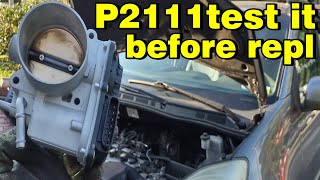
- Replacing the Accelerator Pedal Position (APP) Sensor. This sensor reports the driver's request to the ECM; P2111 indicates the throttle body is failing to follow the ECM's command, meaning the fault is at the throttle body itself. 🎬 Watch: Common causes and fixes for a stuck open throttle motor.
Most Likely Causes
- Faulty Throttle Body Assembly 🔴 High Probability → Shop Fuel Injection Throttle Body Lexus issued TSB L-SB-0032-25 for all 2UR-GSE engines, including the 2018-2025 LC 500, indicating the original throttle body assembly is prone to an internal failure that causes it to stick open. The fix is a modified part, confirming a known design flaw.
How to confirm: A technician can use a bidirectional scan tool (like Toyota's Techstream) to command the throttle plate to open and close. If it fails to respond correctly, is audibly sticking, or a visual inspection shows it is binding, the unit is faulty. Given the TSB, if the vehicle is in the affected range and presents with P2111, the throttle body is the primary suspect.
Typical fix: Replace the entire throttle body assembly with the updated OEM part specified by the TSB. The TSB also mandates replacing Ventilation Hose No. 2 and No. 3 at the same time with modified versions. A throttle body initialization (relearn) procedure must be performed after replacement.
Est. part cost: $900-$1000 - Heavy Carbon Buildup ⚪ Low Probability While possible on any engine, it's a much less likely cause than the known hardware failure on this specific model. Forum discussions with owners who have experienced this code report that their throttle bodies were perfectly clean upon inspection, pointing away from carbon as the cause.
How to confirm: Remove the intake air duct and visually inspect the throttle bore and plate for thick carbon deposits that could physically prevent the plate from closing.
Typical fix: Clean the throttle body bore and plate carefully with a dedicated throttle body cleaner and a soft cloth. An idle relearn procedure may be needed afterward. However, for this specific TSB-related issue, cleaning is unlikely to be a permanent fix.
Est. part cost: $10-$20
Rare But Worth Checking
- Wiring Harness or Connector Issue: Damage to the wiring leading to the throttle body could interrupt signals, but this is uncommon without evidence of rodent damage or previous improper repairs.
- Faulty Powertrain Control Module (PCM): → Shop Engine Control Module (ECM) This is extremely rare. The PCM should only be considered after definitively ruling out the throttle body and wiring, especially given the existence of a TSB pointing directly to the throttle body.
Diagnosis Steps
- Read all Diagnostic Trouble Codes (DTCs) with an OBD-II scanner. Note if P0505 is also present, as this strongly points to the TSB condition.
- Check the vehicle's VIN against TSB L-SB-0032-25 to confirm it falls within the scope of the known issue.
- Inspect the wiring harness and connector at the electronic throttle body for any signs of damage, corrosion, or loose pins.
- Remove the air intake tube from the throttle body.
- Visually inspect the throttle bore and plate for heavy carbon buildup or any foreign objects. Owners with this specific issue often report the throttle body is clean.
- With the ignition on (engine off), have an assistant slowly press and release the accelerator pedal. Observe the throttle plate for smooth movement (Note: some systems may not allow this test).
- Use a professional bidirectional scan tool to command the throttle actuator motor to open and close via the 'Active Test' function. This is the most definitive test to confirm a faulty throttle body.
- If the throttle body fails the scan tool test or is audibly/visibly sticking, it must be replaced along with the two ventilation hoses per the TSB.
- Perform a throttle body initialization/relearn procedure after replacement.
Parts You'll Likely Need
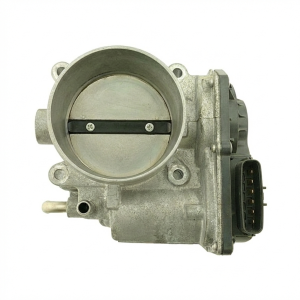
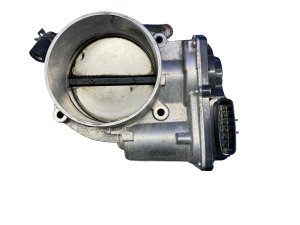
- Throttle Body Assembly with Motor
(OEM #Varies (VIN Specific))— This is the primary component identified by Lexus in TSB L-SB-0032-25 as the root cause. The TSB specifies a 'modified' part, so the replacement will have a different part number than the original. The correct part must be looked up in the Lexus Electronic Parts Catalog using the vehicle's VIN.
Trusted brands: Lexus (Genuine OEM)
OEM price range: $929-$979
Aftermarket price range: Not Recommended - Ventilation Hose No. 2 and No. 3
(OEM #Varies (VIN Specific))— TSB L-SB-0032-25 explicitly states that these hoses were also modified along with the throttle body and must be replaced at the same time to fully address the condition.
Trusted brands: Lexus (Genuine OEM)
OEM price range: $50-$100
Aftermarket price range: Not Recommended
Related Codes That Often Appear With This One
- P0505 — This code for 'Idle Control System' is explicitly mentioned alongside P2111 in TSB L-SB-0032-25, as the stuck-open throttle directly impacts the engine's ability to control its idle speed.
Technical Service Bulletins (TSBs) & Recalls
- L-SB-0032-25: Addresses a MIL ON condition with DTC P2111 and/or P0505. It applies to a wide range of vehicles with 2UR-GSE engines, including the 2018-2025 LC 500/LC 500c, 2015-2025 RC F, 2016-2020 GS F, 2022-2025 IS 500, and 2008-2014 IS F. It states that the throttle body assembly and two ventilation hoses have been modified to correct the issue.
Platform-Specific Known Issues
- A known issue documented in Lexus Technical Service Bulletin L-SB-0032-25 affects all 2018-2025 LC 500 and LC 500c models with the 2UR-GSE engine. It points to an internal failure of the throttle body, requiring replacement with a modified part and two modified ventilation hoses.
Mechanic-Grade Diagnostic Values
- Throttle Control Motor Resistance — expected: 0.3 - 100 Ω at 20°C (68°F). Failure: Resistance outside of the specified range indicates a faulty motor.
- Throttle Position Sensor Resistance (between terminals VC and ETA) — expected: 1.25 - 2.35 kΩ at 20°C (68°F). Failure: Resistance outside of this range suggests a faulty sensor.
- Scan Tool Live Data: THROTTLE POS #1 Voltage (Key On, Engine Off) — expected: 0.5V - 1.2V (Throttle Fully Closed) | 3.2V - 4.8V (Throttle Fully Open). Failure: Voltage readings that are erratic, stuck, or do not correspond to the physical throttle plate position.
- Scan Tool Live Data: THROTTLE POS #2 Voltage (Key On, Engine Off) — expected: 2.0V - 2.9V (Throttle Fully Closed) | 4.6V - 5.0V+ (Throttle Fully Open). Failure: Voltage readings that are erratic, stuck, or do not correspond to the physical throttle plate position. This sensor's voltage moves inversely to sensor #1.
Hidden / Shadow Codes Worth Checking
- Freeze Frame Data: While not a hidden code, it is critical data stored with the P2111 DTC. It captures a snapshot of engine parameters (RPM, speed, temperature, etc.) at the exact moment the fault occurred, which helps determine the conditions leading to the failure. (see via Accessible via any standard OBD-II scanner or professional tool like Techstream under the DTC information menu.)
Scan Tool Commands That Help
- Toyota Techstream: Active Test: Control the Throttle Actuator — This is the most definitive diagnostic step. It allows the technician to directly command the throttle motor to open and close while observing the live data from the position sensors. If the throttle plate does not move as commanded, or the sensor values do not change correctly, it confirms a failure in the throttle body assembly.
Wiring & Ground Locations
- Throttle Body Connector — Directly on the electronic throttle body assembly, where the main engine harness connects.. This is the primary connection for both the actuator motor (pins M+, M-) and the dual throttle position sensors. Any corrosion, moisture, or backed-out pins in this connector will directly cause a loss of control or feedback, leading to P2111.
- ECM Ground Points (e.g., E01, E02, E03) — Typically located on the engine block, cylinder heads, or nearby chassis points. Exact locations must be verified with a model-specific wiring diagram.. The ECM relies on clean, solid ground connections to accurately control the throttle motor and interpret sensor data. A poor ground can introduce electrical noise or voltage drops, potentially causing the ECM to misinterpret the throttle's position or fail to control it properly.
OEM Part Supersession History
Varies by VIN→Varies by VIN— Design modification to prevent internal failure.
Heads up: The TSB explicitly states that a 'modified' throttle body and ventilation hoses are the required fix. The replacement part will have a different, updated part number from the original. It is critical to use the vehicle's VIN in the official Lexus Electronic Parts Catalog to source the correct, most current part number. Using an incorrect part, even if it fits physically, may not resolve the issue.
Model Year Variations Within This Range
- 2018-2022: No significant variations related to this specific fault have been identified within this model year range. The issue is tied to the 2UR-GSE engine platform and its original-spec throttle body, which was used across the entire range as per TSB L-SB-0032-25.
Helpful Videos

Used OEM Parts in Stock
New Aftermarket Parts Available

The information in this article is provided for general reference and educational purposes only. Vehicle specifications, procedures, and part compatibility can vary by production date, trim level, and region. Always consult your vehicle's factory service manual and verify part numbers before purchasing or performing repairs. Safety-critical components such as airbags, seat belts, and braking systems should be installed by a qualified professional.
- Lexus LC:
- 🧭 Diagnostic Flowchart
- 🎬 Helpful Videos
- 🛍️ Shop This Part
- What's Unique About the 2018-2022 Lexus LC
- Symptoms You May Notice
- Most Likely Causes
- Rare But Worth Checking
- Diagnosis Steps
- Parts You'll Likely Need
- Related Codes That Often Appear With This One
- Technical Service Bulletins (TSBs) & Recalls
- Platform-Specific Known Issues
- Mechanic-Grade Diagnostic Values
- Hidden / Shadow Codes Worth Checking
- Scan Tool Commands That Help
- Wiring & Ground Locations
- OEM Part Supersession History
- Model Year Variations Within This Range
- 🎟️ Get 5% Off