

P2111 on 2010-2011 Lincoln MKS 3.7L: Throttle Body Failure Causes, Symptoms, and Fixes
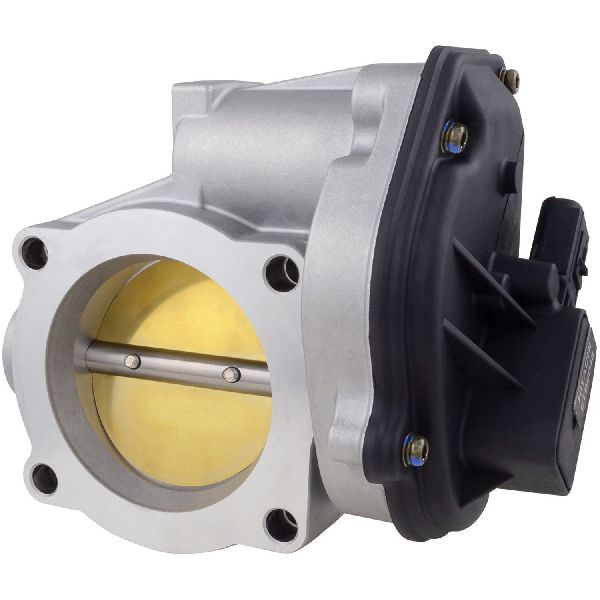
On a 2010-2011 Lincoln MKS with the 3.7L engine, the P2111 code is almost always caused by a failing electronic throttle body, a widespread and well-documented issue. This failure triggers a sudden and dangerous 'limp mode'. The only reliable fix is to replace the entire throttle body assembly. The part costs around $80-$160 for aftermarket or ~$250 for OEM, and the replacement is a straightforward DIY job for many.
- P2111 on a 2010-2011 MKS almost certainly means you need a new electronic throttle body.
- The most common symptom is a sudden, dangerous loss of power ('limp mode') while driving.
- Do not waste time or money cleaning the old throttle body; the fault is electronic and internal, not due to dirt.
- Replacement is a DIY-friendly job that takes less than an hour for most people, requiring only basic hand tools.
- After replacing the part, a simple tool-free 'relearn' procedure is necessary to ensure a stable idle and proper operation.
What's Unique About the 2010-2011 Lincoln MKS
The 3.7L 'Cyclone' V6 engine used in the 2010-2011 Lincoln MKS shares a well-documented and widespread issue with its electronic throttle body (ETB). The problem was so common that Ford/Lincoln issued Technical Service Bulletin (TSB) 10-21-6 and later a Customer Satisfaction Program (13N03) for this exact issue. The failure is typically not due to dirt or carbon buildup that can be cleaned, but rather an internal electronic fault caused by contamination on the throttle motor's internal contacts, making replacement the only reliable solution.
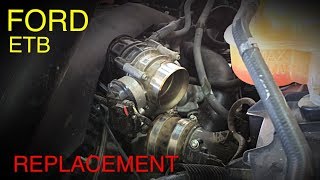
🎬 Watch: Understanding why these Ford electronic throttle bodies fail.Symptoms You May Notice
- Sudden and severe loss of engine power as the vehicle enters 'limp mode'.
- Wrench icon (powertrain fault) or Check Engine Light illuminated on the dashboard.
- Rough, unstable, or surging idle.
- Hesitation or complete lack of response when pressing the accelerator pedal.
- Engine may stall when coming to a stop.
- In some cases, the vehicle may not start.
- Cleaning the Throttle Body: For this specific failure mode (limp mode caused by internal electronics), cleaning carbon buildup from the throttle plate will not solve the problem. The issue is electrical contamination inside the sealed motor housing, not physical obstruction of the plate.
- Replacing the Accelerator Pedal Position (APP) Sensor: While the APP sensor is part of the throttle control system, it typically generates its own specific trouble codes and is not the common cause for P2111 on this vehicle.
Most Likely Causes
- Failing Electronic Throttle Body (ETB) 🔴 High Probability → Shop Fuel Injection Throttle Body The original equipment throttle bodies on this platform have a known high failure rate due to internal electronic contact contamination. This was officially acknowledged by Ford's TSB 10-21-6 and Customer Satisfaction Program 13N03.
How to confirm: Scan the vehicle for codes P2111 or P2112, which are the primary indicators. Visually inspect the throttle body connector for damage, but the fault is almost always internal to the unit itself, making replacement the most effective diagnostic step after confirming the code and checking the wiring.
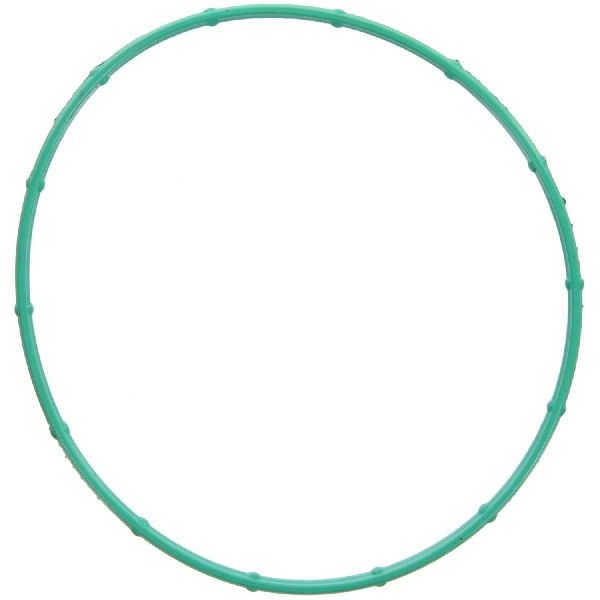
Typical fix: Replace the entire electronic throttle body assembly. 🎬 Watch: How to replace the throttle body and calibrate it. The gasket is a reusable O-ring, so a new one is often not required. After installation, a throttle relearn procedure is required to calibrate the new part.
Est. part cost: $80-$160
Rare But Worth Checking
- Wiring Harness or Connector Issue: While rare for this specific, well-known issue, damage to the wiring or a loose/corroded connection at the throttle body can mimic a failed component. Always inspect the harness for chafing, corrosion, or backed-out pins before replacing parts.
- Powertrain Control Module (PCM) Fault: → Shop Engine Control Module (ECM) This is extremely unlikely and should be considered a last resort. A PCM failure would typically present with multiple, unrelated codes and erratic behavior beyond just the throttle system. This should only be considered after a new throttle body fails to resolve the issue.
Diagnosis Steps
- Use an OBD-II scanner to confirm P2111 is the primary code stored. Check for other related codes like P2112.
- Inspect the wiring harness and electrical connector at the throttle body. Look for any signs of damage, corrosion, or loose pins. Ensure the connector is fully seated.
- If the wiring appears intact, the most probable cause is the throttle body itself. Given the high failure rate documented in TSB 10-21-6 and Customer Satisfaction Program 13N03, replacement is the standard fix.
- Replace the electronic throttle body assembly. This typically involves removing the air intake tube and four 8mm bolts.
- Perform the throttle body relearn procedure. There are several described methods, but a common tool-free procedure is: Turn the key to the 'ON' position (engine off). Slowly press the accelerator pedal all the way to the floor and slowly release it. Repeat this process. Turn the key off for at least one minute. Then, start the engine and allow it to idle for several minutes to fully recalibrate. 🎬 See this video for a detailed throttle body calibration walkthrough.
- Clear all codes with the scanner and perform a test drive to ensure the issue is resolved. The check engine light may even go off on its own after a successful relearn.
Parts You'll Likely Need
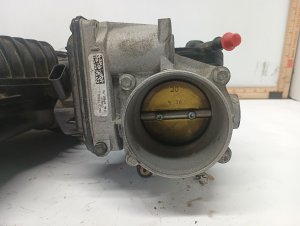
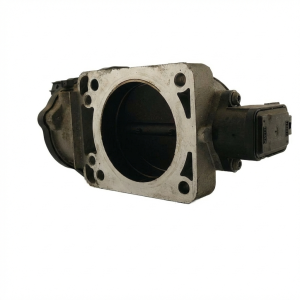
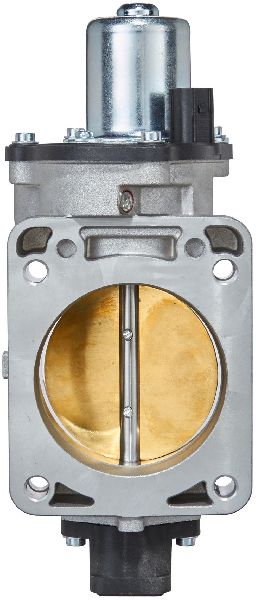
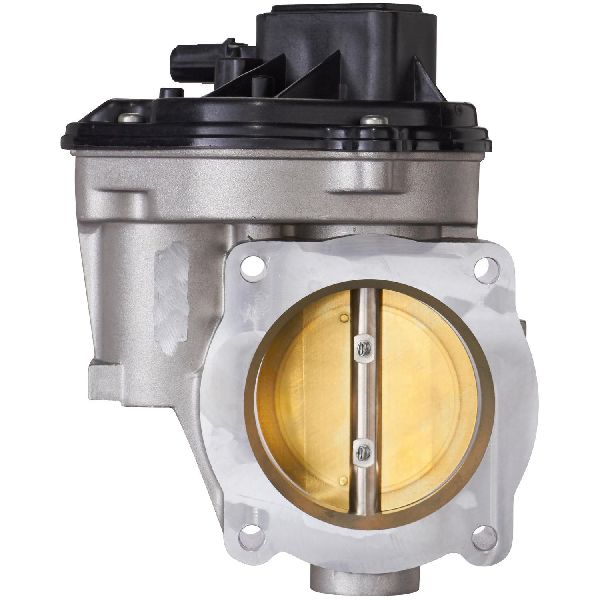
- Electronic Throttle Body Assembly
(OEM #7T4Z-9E926-FA (supersedes 7T4Z-9E926-EA))— This is the complete component that fails internally, causing the P2111 code and limp mode. It is a known weak point on this vehicle and its platform mates.
Trusted brands: Motorcraft (OEM), Bosch, Hitachi, Cardone
OEM price range: $240-$270
Aftermarket price range: $80-$160
Related Codes That Often Appear With This One
- P2112 — This code means 'Throttle Actuator Control System - Stuck Closed' and points to the exact same failing electronic throttle body. It is very common to see either P2111 or P2112, as both indicate a loss of control over the throttle plate's position.
Technical Service Bulletins (TSBs) & Recalls
- TSB 10-21-6: Issued October 21, 2010, this TSB directly addresses DTCs P2111 and P2112 or idle speed concerns on 2010-2011 MKS 3.7L models. It advises replacing the throttle body for vehicles with an engine build date between 3/1/2010 and 8/3/2010.
- Customer Satisfaction Program 13N03: This program extended the warranty on the throttle body to 10 years/150,000 miles due to a high failure rate from internal contact contamination. This program has expired but serves as official acknowledgment of the defect.
Platform-Specific Known Issues
- The original equipment electronic throttle bodies on these vehicles are prone to internal contamination of the electrical contacts, leading to intermittent signals and triggering limp mode. This was addressed by Ford's Customer Satisfaction Program 13N03, which extended the warranty to 10 years or 150,000 miles. This program has since expired, leaving owners to cover the cost.
- A Reddit user with a 2013 Lincoln MKS described the classic failure: while driving uphill, the wrench light came on, the vehicle started shaking, lost all acceleration, and smelled of gas. After a restart, the car drove fine, but the stored code was P2111.
Mechanic-Grade Diagnostic Values
- Throttle Position Sensor 1 (TP1) and 2 (TP2) circuit resistance to ground — expected: Greater than 10,000 ohms. Failure: A resistance reading below 10,000 ohms indicates a short to ground in the TP sensor circuit.
- Live Data: Throttle Position (TP) Percentage with key on, engine off — expected: Around 19% at rest (pedal up), increasing to over 77% when the pedal is fully depressed.. Failure: Values that are erratic, do not change smoothly, or are stuck at a certain percentage indicate a sensor or actuator fault.
- Throttle Actuator Control Motor (TACM) circuit voltage — expected: Typically operates within a 0.5V to 4.5V range.. Failure: Voltage outside of this range can trigger a P2111 code.
Scan Tool Commands That Help
- Ford IDS (Integrated Diagnostic System): KAM (Keep Alive Memory) Reset — This function should be used after replacing the throttle body to clear all learned fuel trim and throttle position values from the PCM. This forces the computer to relearn the parameters of the new part, which is more thorough than a simple battery disconnect.
- Ford IDS (or equivalent bidirectional scanner): Throttle Body Calibration/Relearn — After a KAM reset or part replacement, this function guides the PCM through the process of finding the new closed and wide-open throttle positions. It is the most reliable method to prevent idle or performance issues.
Wiring & Ground Locations
- C134 — The main 6-pin electrical connector on the Electronic Throttle Body itself.. This is the single connection point for all power and signal wires to the throttle body. The pins for TACM+, TACM-, TP1, TP2, ETCREF (5V reference), and ETCRTN (Signal Return/Ground) are located here. Corrosion or backed-out pins in this connector can cause P2111.
- G105 — Located on the left front of the engine compartment.. This is a primary ground point for multiple engine sensors. A loose or corroded G105 can create a floating ground, causing erratic voltage readings for the throttle position sensors and potentially triggering false codes.
Real Owner Repair Stories
- Ford F150 Forum (2012 Ford F-150 XLT 3.7L with 180,900 miles) — Vehicle went into limp mode three times, throwing code P2111. Also experienced sluggish performance, decreasing fuel economy, and clunking from the drivetrain.
❌ Tried (didn't work) Initially, the owner just cycled the key, which temporarily cleared the limp mode but not the underlying issue.
✅ What actually fixed it The owner removed the throttle body and found it had a 1/16-inch thick layer of gunk built up. A thorough cleaning with CRC Throttle Body cleaner resolved the P2111 code and limp mode. It also fixed the clunking, smoothed out the engine, and significantly improved MPG. This suggests that while electronic failure is common, severe carbon buildup can also cause a mechanical 'stuck open' condition.
OEM Part Supersession History
7T4Z-9E926-EA→7T4Z-9E926-FA— Revision to address the high failure rate of the original part.
Model Year Variations Within This Range
- 2010: According to TSB 10-21-6, vehicles with a 3.7L engine build date between March 1, 2010, and August 3, 2010, are specifically called out as being affected by the faulty throttle body issue requiring replacement. Vehicles built outside this range should undergo standard diagnostics first.
Diagnostic Flowchart
Used vs. New Parts: Buying Guide for This Vehicle
When a used part is the smart pick: For this specific repair, buying a used OEM throttle body from a junkyard is NOT recommended. The original parts have a well-documented high failure rate due to an internal design flaw. A used part is likely to have the same defect and fail soon after installation.
What to inspect on the donor part:
- Not applicable, as used parts are not advised for this component.
OEM-only on this vehicle (don't cheap out):
- While not strictly 'OEM-only', a new Motorcraft (Ford's OEM brand) part is the safest bet for guaranteed compatibility and the latest design revisions. However, given the original's poor track record, a reputable aftermarket part is a very reasonable alternative.
Aftermarket brands forum-validated for this vehicle:
- Bosch
- Hitachi
- Cardone (Remanufactured or New)
Brands owners have reported issues with on this vehicle:
- Avoid unbranded, no-name parts from online marketplaces. These often have poor quality control and may fail prematurely or cause idle/performance issues even if they work initially.
Real Owner Stories
Aggregated from forums and TSBs cited above. Mileages and costs reflect what owners reported in those sources.
2013 Lincoln MKS — 96000 miles
Symptoms: While driving uphill, the wrench light came on, the vehicle started shaking, lost all acceleration, and smelled of gas. After restarting the car, the light was off and it drove completely fine, but a P2111 code was stored.
What fixed it: The owner did not report a final fix. The dealership stated they could not diagnose the intermittent issue unless the warning light was currently active.
Source hint: Reddit r/MechanicAdvice
Ford F-150 (3.7L)
Symptoms: Owner experienced symptoms consistent with a P2111 code, leading to a diagnosis of a faulty electronic throttle body.
What fixed it: Replacement of the throttle body was the confirmed fix.
Source hint: Ford F150 Forum
Related OBD-II Codes
Frequently Asked Questions
I heard there was a warranty extension for the throttle body on my 2010 MKS. Can I still get it fixed for free?
Does Ford's TSB 10-21-6 for code P2111 apply to my 2011 Lincoln MKS?
My MKS went into limp mode with a wrench light, but it drove fine after I restarted it. Could it still be the throttle body?
Is it safe to buy a used throttle body from a junkyard for my MKS?
Do I need to buy a new gasket when replacing the throttle body on my 3.7L MKS?
What do I need to do immediately after installing a new throttle body on my Lincoln MKS?
Helpful Videos

Used OEM Parts in Stock
New Aftermarket Parts Available


The information in this article is provided for general reference and educational purposes only. Vehicle specifications, procedures, and part compatibility can vary by production date, trim level, and region. Always consult your vehicle's factory service manual and verify part numbers before purchasing or performing repairs. Safety-critical components such as airbags, seat belts, and braking systems should be installed by a qualified professional.
- Lincoln MKS:
- 🧭 Diagnostic Flowchart
- 🎬 Helpful Videos
- 🛍️ Shop This Part
- What's Unique About the 2010-2011 Lincoln MKS
- Symptoms You May Notice
- Most Likely Causes
- Rare But Worth Checking
- Diagnosis Steps
- Parts You'll Likely Need
- Related Codes That Often Appear With This One
- Technical Service Bulletins (TSBs) & Recalls
- Platform-Specific Known Issues
- Mechanic-Grade Diagnostic Values
- Scan Tool Commands That Help
- Wiring & Ground Locations
- Real Owner Repair Stories
- OEM Part Supersession History
- Model Year Variations Within This Range
- Used vs. New Parts: Buying Guide for This Vehicle
- Real Owner Stories
- 2013 Lincoln MKS — 96000 miles
- Ford F-150 (3.7L)
- Related OBD-II Codes
- Frequently Asked Questions
- 🎟️ Get 5% Off