

P2111 on 2016 Lincoln MKX: Throttle Body Failure Causes and Fixes
On a 2016 Lincoln MKX, code P2111 is almost always caused by a failed electronic throttle body. This triggers a sudden, low-power 'limp mode'. The only reliable fix is to replace the entire throttle body assembly, which costs around $100-$250 for the part. Cleaning is not a permanent solution.
- P2111 on a 2016 Lincoln MKX means the electronic throttle body has almost certainly failed due to a known design flaw.
- The vehicle will enter a low-power 'limp mode' and is not safe to drive in traffic.
- Do not waste time or money cleaning the throttle body; the problem is internal contamination of the electronics and requires replacement of the entire assembly.
- This is a common, well-documented problem, and the repair is straightforward for a DIYer with basic tools. A relearn procedure is required after replacement.
What's Unique About the 2016-2016 Lincoln MKX
The 2016 Lincoln MKX, like many other Ford and Lincoln vehicles from this era, has a well-documented history of electronic throttle body (ETB) failures. The issue was so widespread that Ford issued Customer Satisfaction Program 13N03, which extended the warranty on the throttle body to 10 years or 150,000 miles for many affected models. The key thing for owners to understand is that this failure is typically electronic and internal to the throttle body itself, caused by contamination on the internal motor contacts, not by simple carbon buildup. This means that cleaning the throttle body is almost never a permanent fix for the P2111 code on this vehicle.
Symptoms You May Notice
- Sudden and severe loss of engine power (entering 'limp mode')
- Check Engine light is on
- Wrench warning light may be illuminated on the dashboard
- Poor or no acceleration
- Vehicle will not exceed a very low speed
- High or erratic idle
- Engine may stall
- Cleaning the throttle body. Technicians or owners may attempt to clean carbon buildup from the throttle plate, but this does not address the internal electronic failure that causes P2111 on this vehicle.
- Replacing the accelerator pedal sensor. While a pedal sensor can cause acceleration issues, it typically generates different trouble codes and is not the common cause for P2111 on this platform.
Most Likely Causes
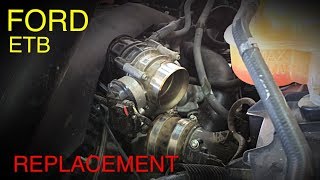
- Failed Electronic Throttle Body (ETB) 🔴 High Probability → Shop Fuel Injection Throttle Body This is a widely recognized failure point on many Ford/Lincoln platforms from this period due to contamination of the internal electronic motor contacts, leading to increased electrical resistance. This was the subject of Ford's Customer Satisfaction Program 13N03. 🎬 Watch: Understanding Ford's electronic throttle body failure
How to confirm: The presence of code P2111 or its companion code P2112 is a very strong indicator. A scan tool can monitor commanded vs. actual throttle position, but these codes are typically definitive enough to warrant replacement. The 'Wrench' light is also a key indicator of a throttle body fault on these vehicles.
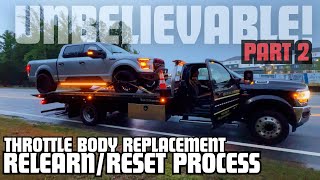
Typical fix: Replace the entire electronic throttle body assembly. Cleaning the old unit is not an effective repair for this internal electronic fault. After replacement, a throttle body relearn procedure must be performed. 🎬 See this throttle body replacement and relearn walkthrough
Est. part cost: $100-$250
Rare But Worth Checking
- Wiring Harness or Connector Issue: While less common than outright ETB failure, a damaged wire or loose/corroded connector pin at the throttle body can cause identical symptoms. Always inspect the connector and harness for damage before replacing parts, especially if other engine work was recently performed.
- Powertrain Control Module (PCM) Fault: → Shop Engine Control Module (ECM) This is extremely rare. The PCM is a robust component. Always eliminate the throttle body and wiring as causes before considering a PCM issue.
- Failing Battery or Low System Voltage: The electronic throttle body is sensitive to system voltage. A weak or failing battery can sometimes cause erratic behavior and trigger a P2111 code. It's good practice to have the battery and charging system tested before replacing more expensive components.
Diagnosis Steps
- Confirm the presence of code P2111 (or P2112) using an OBD-II scanner. Note if the 'Wrench' light is also on.
- Visually inspect the wiring harness and electrical connector leading to the electronic throttle body. Look for any signs of damage, corrosion, or loose pins.
- If the wiring appears intact, the most probable cause is a failed electronic throttle body.
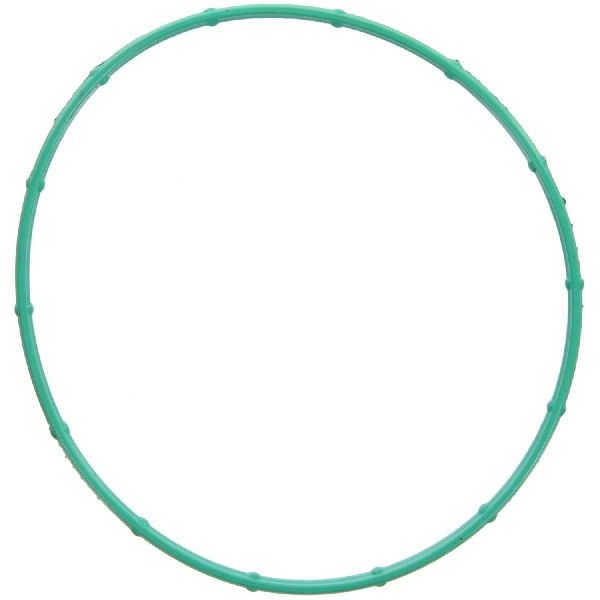
- Replace the electronic throttle body assembly and the associated gasket if it is not reusable.
- After installation, perform the throttle body relearn procedure. This can often be done without special tools by disconnecting the battery to clear the PCM's adaptive memory, then letting the vehicle idle for 10-15 minutes to recalibrate. A more robust method involves a specific pedal calibration sequence. 🎬 Watch: Step-by-step P2111 fix and calibration procedure
- Clear the diagnostic trouble codes with the scanner and perform a test drive to ensure the issue is resolved.
Parts You'll Likely Need
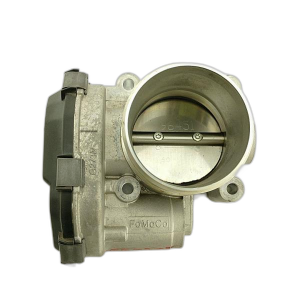
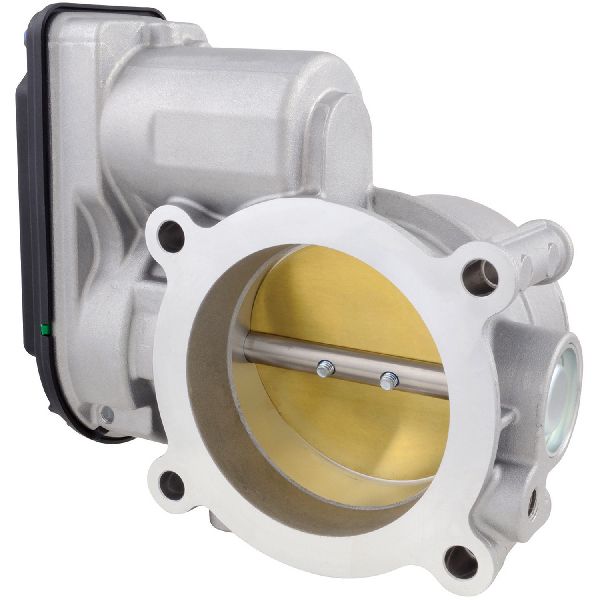
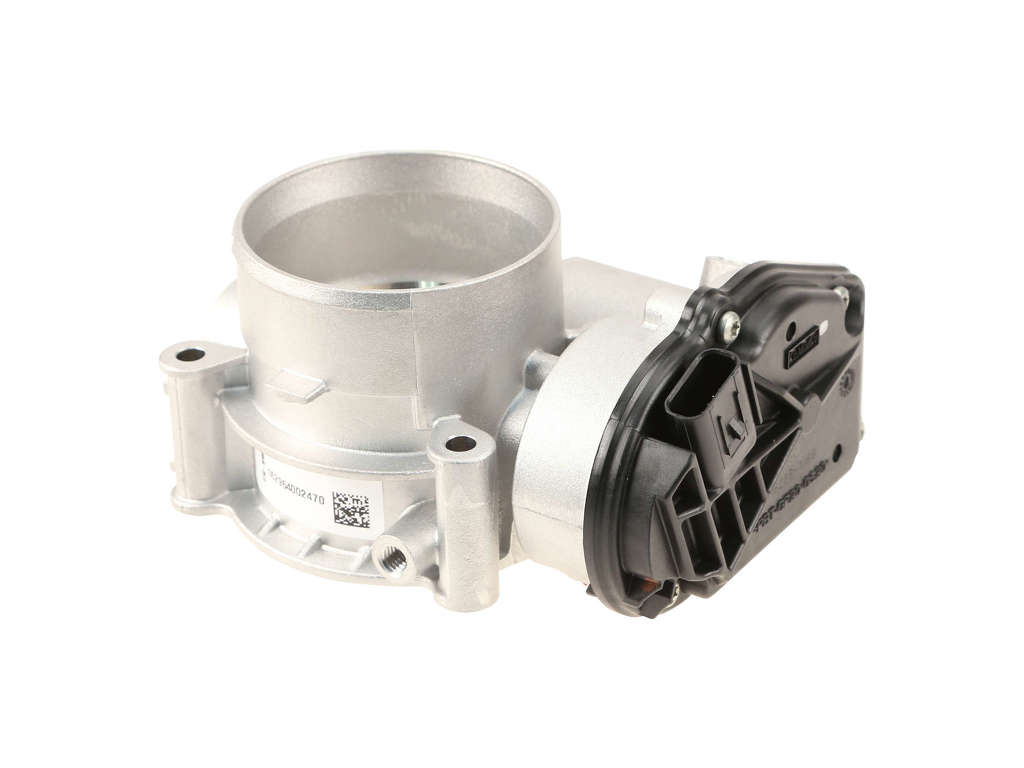
- Electronic Throttle Body Assembly
(OEM #AT4Z-9E926-B (for 3.7L V6), GB8Z-9E926-A (for 2.7L V6))— This is the root cause of code P2111 in the vast majority of cases for the 2016 Lincoln MKX due to a common internal electronic failure. The specific part number depends on the engine.
Trusted brands: Motorcraft, Bosch, Hitachi, Standard Motor Products
OEM price range: $200-$350
Aftermarket price range: $100-$200
Related Codes That Often Appear With This One
- P2112 — P2112 means 'Throttle Actuator Control System - Stuck Closed'. Both P2111 and P2112 point to the same root cause: a failing electronic throttle body that has lost precise control of the throttle plate.
- P2104 — P2104 stands for 'Throttle Actuator Control System - Forced Idle'. This code indicates the PCM has forced the engine to idle as part of the fail-safe response to a throttle control problem, often appearing alongside P2111.
Technical Service Bulletins (TSBs) & Recalls
- TSB 10-21-6: While issued for earlier models (up to 2011), this TSB is highly relevant as it identifies the exact same issue (P2111/P2112 codes) on the same engine families (3.7L V6) and prescribes replacing the throttle body as the fix, demonstrating the long history of this problem.
Platform-Specific Known Issues
- The electronic throttle body on this platform is a known high-failure item. Ford/Lincoln previously offered extended warranty coverage under Customer Satisfaction Program 13N03 for this exact issue, highlighting how common the problem is. This program covered the part for 10 years or 150,000 miles, but has since expired for most 2016 models.
- The specific cause identified by Ford is contamination on the internal motor contacts of the throttle body, leading to intermittent electrical connectivity and loss of control.
Mechanic-Grade Diagnostic Values
- Throttle Position Sensor (TP) Voltage at Connector C1752 — expected: With the key on, engine off, and connector plugged in: Pin 4 (VREF) should have a steady 5 volts. Pin 2 (SIGRTN) should have close to 0 volts (ground). The two signal pins (TP1 and TP2, typically pins 3 and 1) should show opposing voltages that sweep smoothly without dropouts as the throttle is manually (or electronically) opened and closed. For example, one may sweep from ~0.7V to ~4.5V while the other sweeps from ~4.5V to ~0.7V.. Failure: No 5V reference, no ground, or any voltage reading on the signal wires that is erratic, jumps, or has dead spots during a slow sweep indicates a fault in the wiring or the throttle body's internal sensors.
Scan Tool Commands That Help
- Ford IDS / FORScan: KAM (Keep Alive Memory) Reset — This should be performed after replacing the electronic throttle body to clear all learned adaptive values from the PCM, forcing it to start fresh with the new component.
- Ford IDS / FORScan / High-End Bidirectional Scanner: Throttle Body Actuator Test / ETC Self-Test — Use this to command the throttle plate to specific angles (e.g., 0%, 25%, 50%, 75%) while monitoring live data for 'Commanded Throttle Position' vs. 'Actual Throttle Position'. If the actual position does not match the commanded position or moves erratically, it confirms a fault within the throttle body assembly.
- Scan Tool or Manual Procedure: Throttle Body Relearn / Calibration — This is mandatory after replacing the throttle body or performing a KAM reset. It teaches the PCM the new closed and wide-open positions of the throttle plate.
Wiring & Ground Locations
- Throttle Body Connector (C1752) — The 6-pin electrical connector attached directly to the electronic throttle body assembly at the front of the engine.. This is the primary point for all power, ground, and signal communication between the PCM and the throttle body. A loose pin, corrosion, or wire damage here will directly cause P2111 and related codes.
- Ground Points G103 / G104 — Located on the left side (driver's side) of the engine compartment, typically on the inner fender or near the shock tower.. These are major chassis and engine ground points. The PCM and its sensors rely on a clean ground connection. A loose or corroded ground here can introduce electrical noise and voltage irregularities, potentially causing erratic throttle body behavior.
- Fuse F7 (20A) - Engine Compartment Fuse Box — In the engine compartment fuse box, located near the battery.. This fuse is listed as 'Powertrain control module - vehicle - power 1'. A fault with this fuse or its circuit would cut power to the PCM, which controls the throttle body.
Real Owner Repair Stories
- Lincoln Nautilus Forum user (2016 Lincoln MKX) — Check engine light came on, car stalled, entered 'limp mode' where it would only drive at 3 MPH. A wrench light also appeared.
❌ Tried (didn't work) Driving the vehicle was not possible.
✅ What actually fixed it The dealer diagnosed a failed throttle body. Replacing the electronic throttle body assembly resolved the issue, and the problem did not recur. - Walmart Business Supplies Reviewer (Juan) (2013 Ford Explorer XLT, 65k miles (Same 3.7L engine family and throttle body design)) — Vehicle suddenly went into 'limping mode' with code P2111.
✅ What actually fixed it Replacing the throttle body assembly fixed the issue. The reviewer noted the installation took 15 minutes and was a perfect fit. - Ford F150 Forum user (2013 Ford F-150 EcoBoost (similar ETB failure mode)) — Heard a 'loud pop' when accelerating, then the engine lost power. Restarting temporarily fixed it, but the issue returned quickly.
❌ Tried (didn't work) Restarting the engine was only a temporary solution.
✅ What actually fixed it The vehicle was towed to the dealer, who diagnosed and replaced the throttle body under an extended warranty.
OEM Part Supersession History
AT4Z-9E926-A→AT4Z-9E926-B— The original part was prone to internal electronic failure. The superseded part is the updated, more reliable version from Ford/Motorcraft.
Heads up: The new part is a direct replacement for the old one. Always prefer purchasing AT4Z-9E926-B for the 3.7L V6 engine.
Diagnostic Flowchart
Other Known Issues on This Vehicle
Issues unrelated to this code that are worth knowing about as an owner of this generation:
- Power Transfer Unit (PTU) Failure (AWD Models) 🔴 High — Common, especially on vehicles over 60,000 miles. The 'lifetime' fluid overheats due to proximity to the exhaust, leading to breakdown and gear failure. (Ref: TSB 19-2017 addresses fluid leaks, a primary symptom.)
- Internal Water Pump Failure (3.7L V6) 🔴 High — A known design flaw on the 3.7L Cyclone engine where the timing-chain-driven water pump can fail and leak coolant directly into the engine oil, causing catastrophic engine damage if not caught early.
- SYNC 3 Infotainment Glitches/Failure to Update 🟡 Low — Owners frequently report issues with the SYNC 3 system, including unresponsiveness, Bluetooth connectivity problems, and significant difficulty performing over-the-air or USB updates, especially from early versions like v1.0. (Ref: No specific TSB, but Lincoln provides troubleshooting steps like soft resets and key cycles.)
- Exhaust Fumes in Cabin 🟠 Medium — Some owners report a sulfur or exhaust smell inside the cabin, particularly during acceleration. This may be due to improperly sealed body seams or vents in the rear of the vehicle. (Ref: A TSB reportedly exists which involves sealing body panels and replacing vents.)
Used vs. New Parts: Buying Guide for This Vehicle
When a used part is the smart pick: For this specific failure (P2111), a used part from a junkyard is NEVER a smart choice. The failure is due to an inherent design flaw (internal electronic contamination) and not simple wear. A used part is highly likely to have the same defect or fail soon after installation.
What to inspect on the donor part:
- Not applicable. Do not buy a used electronic throttle body for this repair.
OEM-only on this vehicle (don't cheap out):
- Electronic Throttle Body Assembly
Aftermarket brands forum-validated for this vehicle:
- Motorcraft (OEM)
- Bosch
- Hitachi (Often an OE supplier)
Brands owners have reported issues with on this vehicle:
- Unbranded, low-cost units from online marketplaces. Forum and mechanic consensus often warns that the initial savings are lost when the part fails prematurely, requiring the job to be done twice.
Real Owner Stories
Aggregated from forums and TSBs cited above. Mileages and costs reflect what owners reported in those sources.
2016 MKX — 4300 miles
Symptoms: The check engine light came on yesterday and the car stalled driving down the street from my house.
What fixed it: Replacement of the Throttle Body.
Source hint: Lincoln Nautilus Forum - 'Throttle Body - 2016 MKX'
2016 Lincoln MKX Reserve 3.7L V6 AWD — 46000 miles
Symptoms: Owner reports concerns about the vehicle suddenly dying in traffic at high speed, a symptom identified by other owners as a throttle body problem.
What fixed it: Identified as a throttle body problem requiring replacement, though this owner was seeking preventative advice.
Source hint: Lincoln Nautilus Forum - 'edmunds.com - MKX throttle body concerns'
2011-2017 Ford Mustang (3.7L) — ~100000 miles
Symptoms: Sudden limp mode caused by throttle body failure.
What fixed it: Replacement of the electronic throttle body.
Source hint: Platform mate data for 3.7L Mustang owners
Related OBD-II Codes
Frequently Asked Questions
Does Customer Satisfaction Program 13N03 still cover my 2016 Lincoln MKX throttle body replacement?
Can I just clean the throttle body on my MKX to fix the P2111 code?
Is there a specific TSB for the 3.7L engine regarding these throttle codes?
What does the 'Wrench' light on my dashboard mean in relation to P2111?
How do I perform the throttle body relearn procedure after I replace the part?
Are there other major issues I should watch for on my 2016 MKX 3.7L besides the throttle body?
Helpful Videos

Used OEM Parts in Stock
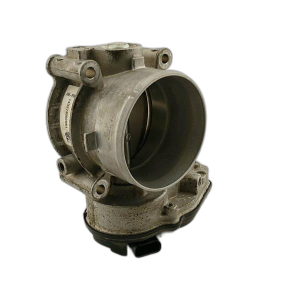
New Aftermarket Parts Available


The information in this article is provided for general reference and educational purposes only. Vehicle specifications, procedures, and part compatibility can vary by production date, trim level, and region. Always consult your vehicle's factory service manual and verify part numbers before purchasing or performing repairs. Safety-critical components such as airbags, seat belts, and braking systems should be installed by a qualified professional.
- Lincoln MKX:
- 🧭 Diagnostic Flowchart
- 🎬 Helpful Videos
- 🛍️ Shop This Part
- What's Unique About the 2016-2016 Lincoln MKX
- Symptoms You May Notice
- Most Likely Causes
- Rare But Worth Checking
- Diagnosis Steps
- Parts You'll Likely Need
- Related Codes That Often Appear With This One
- Technical Service Bulletins (TSBs) & Recalls
- Platform-Specific Known Issues
- Mechanic-Grade Diagnostic Values
- Scan Tool Commands That Help
- Wiring & Ground Locations
- Real Owner Repair Stories
- OEM Part Supersession History
- Other Known Issues on This Vehicle
- Used vs. New Parts: Buying Guide for This Vehicle
- Real Owner Stories
- 2016 MKX — 4300 miles
- 2016 Lincoln MKX Reserve 3.7L V6 AWD — 46000 miles
- 2011-2017 Ford Mustang (3.7L) — ~100000 miles
- Related OBD-II Codes
- Frequently Asked Questions
- 🎟️ Get 5% Off