

P2111 on 2010-2011 Lincoln MKZ 3.5L: Throttle Body Stuck Open Causes and Fixes
On a 2010-2011 Lincoln MKZ, code P2111 is almost always caused by a failed electronic throttle body. This common issue causes the vehicle to suddenly enter a low-power 'limp mode'. The only reliable fix is to replace the entire throttle body assembly, which costs around $100-$200 for the part. Cleaning the old unit is ineffective.
- P2111 on your Lincoln MKZ means the electronic throttle body has failed.
- This will cause the car to enter a dangerous low-power 'limp mode'; do not continue to drive.
- The only correct fix is to replace the entire throttle body assembly; do not waste time or money trying to clean the old one.
- After installing the new part, a simple accelerator pedal procedure is required to calibrate it.
- This is a very common, well-documented problem, and the repair is straightforward for a DIYer with basic tools.
What's Unique About the 2010-2011 Lincoln MKZ
The electronic throttle body on this generation of Lincoln MKZ and its Ford platform-mates (like the Fusion Sport, Edge, and MKX) is a well-documented weak point. The failure is typically not due to dirt or carbon buildup that can be cleaned, but rather an internal electronic fault within the sealed motor housing where motor contacts become contaminated. Ford acknowledged this with Technical Service Bulletin (TSB) 10-21-6, which directly points to throttle body replacement as the solution for the 2010-2011 MKZ with the 3.5L engine. Additionally, manufacturer TSB Bulletin #TSB 16-0139 notes that vehicles may exhibit an intermittent loss of power and/or an illuminated powertrain malfunction (wrench) lamp with diagnostic trouble codes P2111, P2112, and/or P2119 stored in the PCM memory.
Symptoms You May Notice
- Sudden and drastic loss of engine power (entering 'limp mode' or 'wrench light' mode)
- Wrench icon or Check Engine Light illuminated on the dashboard
- Little to no response when pressing the accelerator pedal
- Engine may stall, or idle roughly, but often just idles with no ability to accelerate
- Rough or fluctuating idle speed
- Cleaning the throttle body. Technicians and owners often attempt to clean the throttle body first, but for this specific P2111 issue on this platform, the problem is internal and electronic, so cleaning provides no benefit.
- Replacing the accelerator pedal position sensor. While a faulty pedal sensor can cause throttle-related symptoms, the combination of sudden limp mode and code P2111 on this vehicle almost always points directly to the throttle body.
Most Likely Causes
- Failed Electronic Throttle Body 🔴 High Probability → Shop Fuel Injection Throttle Body The original equipment throttle bodies on this platform have a high failure rate due to an internal electronic design flaw. 🎬 Watch: Why these Ford electronic throttle bodies fail Contamination develops on the internal motor contacts within the sealed housing, causing increased electrical resistance and communication failure with the PCM.
How to confirm: Confirm the presence of code P2111 (or P2112) with an OBD-II scanner. Given the known history of this part, if the code is present and symptoms match, the throttle body is the overwhelming suspect. Diagnosis of wiring or PCM failure should only be considered after replacing the throttle body fails to resolve the issue.
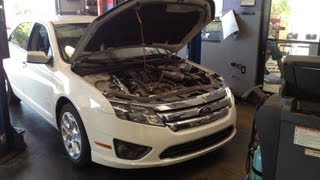
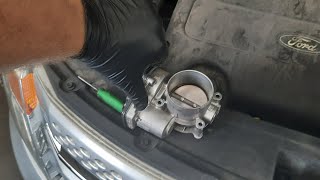
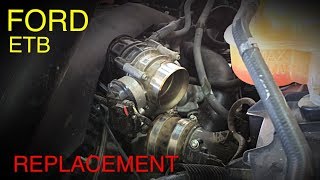
Typical fix: Replace the entire electronic throttle body assembly. 🎬 See this step-by-step throttle body replacement walkthrough Cleaning the old unit is not an effective repair for this specific internal electronic failure mode.
Est. part cost: $90-$200
Rare But Worth Checking
- Wiring Harness Issue: A damaged wire or poor connection at the throttle body connector could mimic a failed component. It's worth visually inspecting the harness for any obvious signs of damage, corrosion, or loose pins, but this is much less common than the throttle body itself failing.
- Powertrain Control Module (PCM) Fault: → Shop Engine Control Module (ECM) In very rare cases, the PCM itself could be at fault. However, this should be considered a last resort after all other possibilities, especially the throttle body, have been eliminated.
Diagnosis Steps
- Confirm the presence of code P2111 using an OBD-II scanner.
- Check for any other accompanying codes. Note that P2112 is common and points to the same issue.
- Visually inspect the wiring harness and connector at the throttle body for any obvious damage, corrosion, or loose pins.
- Given the extremely high probability, the most practical step is to replace the electronic throttle body assembly.
- After replacement, clear the codes with the scanner, though the light may go off on its own after the relearn procedure.
- Perform the throttle body relearn/calibration procedure: Turn the ignition to the 'ON' position (engine off). Slowly press the accelerator pedal all the way to the floor (take about 10 seconds). Slowly release the pedal completely (take about 10 seconds). Turn the ignition 'OFF'.
- Start the engine and verify that the check engine light is off and the throttle responds correctly.
Parts You'll Likely Need
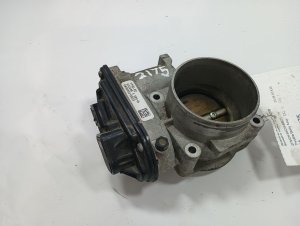
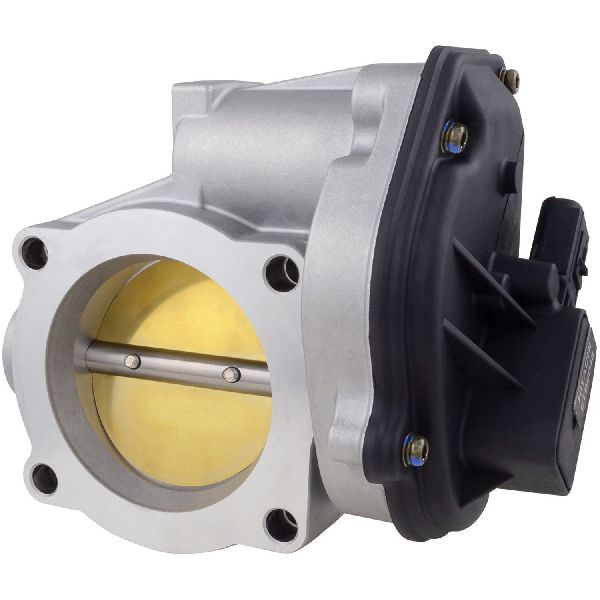
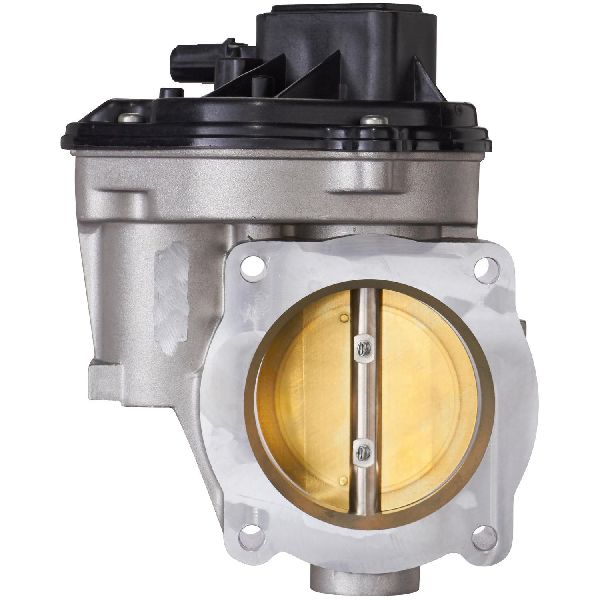
- Electronic Throttle Body Assembly
(OEM #7T4Z-9E926-FA)— This is the known failure point for code P2111 on this vehicle, as documented in Ford's own service bulletins.
Trusted brands: Motorcraft, Bosch, Hitachi, Dorman
OEM price range: $150-$250
Aftermarket price range: $90-$180 - Throttle Body Gasket
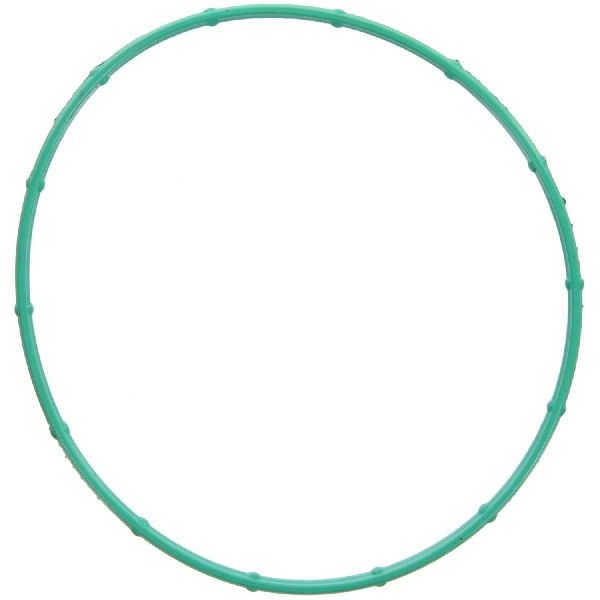
(OEM #9L8Z-9E936-A)— While the original gasket is often a reusable O-ring style, it is best practice to replace it to ensure a perfect seal and prevent vacuum leaks. It is an inexpensive part that provides peace of mind.
Trusted brands: Motorcraft, Fel-Pro
OEM price range: $5-$15
Aftermarket price range: $3-$10
Related Codes That Often Appear With This One
- P2112 — P2112 is 'Throttle Actuator Control System - Stuck Closed'. It's the companion code to P2111 and indicates the same root cause: a failing electronic throttle body. TSB 10-21-6 groups these two codes together as requiring the same repair.
Technical Service Bulletins (TSBs) & Recalls
- TSB 10-21-6: Addresses DTCs P2111 or P2112, low/fluctuating idle, and recommends throttle body replacement for 2010-2011 MKZ 3.5L vehicles built within a specific date range.
- TSB Bulletin #TSB 16-0139: Notes that vehicles may exhibit an intermittent loss of power and/or an illuminated wrench lamp with DTCs P2111, P2112, and/or P2119 stored in the PCM.
Platform-Specific Known Issues
- Ford issued Technical Service Bulletin TSB 10-21-6 for this exact issue, covering the 2010-2011 Lincoln MKZ 3.5L. The prescribed action is to replace the throttle body.
- Ford also had a customer satisfaction program (13N03) that extended the warranty on this part to 10 years or 150,000 miles, but this has expired for all 2010-2011 vehicles. This was a warranty extension, not a safety recall.
Mechanic-Grade Diagnostic Values
- Throttle Actuator Control (TAC) System Voltage — expected: 0.5V - 4.5V. Failure: Voltage outside of this range can trigger the P2111 code.
- Throttle Position Sensor (TPS) Resistance Sweep — expected: A smooth, linear change in resistance (in ohms) as the throttle plate is manually moved from closed to wide-open.. Failure: Jumps, dropouts, or no change in resistance indicates a faulty internal sensor. A known good unit showed a reset to ~8 ohms when closed.
- Scan Tool Live Data Graphing (APP vs. TP) — expected: Using a tool like Ford IDS, graph the two Accelerator Pedal Position sensor voltages (APP1, APP2) and the two Throttle Position sensor voltages (TP1, TP2). The TP sensor voltages should respond smoothly and logically to changes in the APP sensor voltages as the pedal is pressed.. Failure: Glitches, spikes, or a lack of response in the TP voltage traces when the APP voltages are changing smoothly points to a faulty throttle body.
Scan Tool Commands That Help
- Ford IDS (or equivalent professional scan tool): Actuator Test Mode / Output State Control — To command the throttle plate to open and close while monitoring its position sensor data. This directly tests the functionality of the throttle motor and sensors, confirming if it is physically sticking or failing to respond.
- Ford IDS (or equivalent professional scan tool): PCM Reset / Clear PCM Adaptive Memory — This should be performed after replacing the throttle body to clear learned values from the old, faulty part before starting the relearn procedure.
Wiring & Ground Locations
- Powertrain Control Module (PCM) — Located in the engine bay, behind the battery and battery tray. The battery and tray must be removed for access.. The PCM is the computer that controls the electronic throttle body. In rare cases of a wiring issue or PCM failure, a technician would need to access the PCM and its connectors for testing the circuits (TACM+, TACM-) running to the throttle body.
- Throttle Body Connector — Directly on the electronic throttle body assembly.. This is a 6-pin connector that provides power, ground, and signal lines to the throttle body. A visual inspection for corrosion, moisture, or backed-out pins is a critical first step before condemning the throttle body itself.
OEM Part Supersession History
7T4Z-9E926-FA→7T4Z-9E926-EA, 7T4Z-9E926-FC— Likely an internal revision by Ford to improve the reliability of the electronic components that were prone to failure.
Model Year Variations Within This Range
- 2010-2011: TSB 10-21-6, which recommends immediate throttle body replacement for P2111, officially applies only to vehicles with a 3.5L engine built between March 1, 2010, and August 3, 2010. Vehicles built outside this range require normal diagnostics per the PC/ED manual, even though the failure mode is likely the same.
Diagnostic Flowchart
Used vs. New Parts: Buying Guide for This Vehicle
When a used part is the smart pick: Buying a used electronic throttle body from a junkyard is strongly discouraged for this vehicle. The failure is due to a well-known internal design flaw, not just simple wear. A used part is highly likely to have the same defect and could fail unpredictably, presenting a significant safety risk. It should only be considered as a last resort for budget reasons.
What to inspect on the donor part:
- Verify the donor vehicle was not in a major front-end collision.
- Check the connector pins for any signs of corrosion or damage.
- Note that the critical internal electronic failure is not visually inspectable.
OEM-only on this vehicle (don't cheap out):
- Electronic Throttle Body
Aftermarket brands forum-validated for this vehicle:
- Motorcraft (OEM) is the safest choice.
- Dorman (e.g., 977-592) is a widely available aftermarket alternative, and the brand is sometimes known for improving on OEM designs, though quality can be variable.
Brands owners have reported issues with on this vehicle:
- Unbranded, low-cost units from online marketplaces should be avoided due to the critical safety function of this part.
Real Owner Stories
Aggregated from forums and TSBs cited above. Mileages and costs reflect what owners reported in those sources.
Ford Fusion (platform-mate)
Symptoms: Experienced a service light and front air bag icon illuminating along with a loss of acceleration.
What fixed it: The owner discovered P2111/P2112 codes and planned to replace the throttle body themselves.
Source hint: Reddit r/fordfusion - Thread title: 'Has anyone experienced this with their fusion? Service light and front air bag icon with lost of acceleration...'
Ford Edge (platform-mate)
Symptoms: The vehicle would enter limp mode, but the fault would seem to clear after restarting the vehicle because the throttle body actuator would reset itself.
What fixed it: The discussion centered on throttle body failure, with replacement being the solution for the intermittent limp mode issue.
Source hint: Ford Edge Forum - Thread title: 'Throttle Body Service or Failure'
Ford (various models)
Symptoms: The electronic throttle body malfunctioned, putting the car into 'limp home mode' and illuminating the wrench light.
What fixed it: The owner was inquiring about Consumer Satisfaction Program 13N03, which covered the replacement of the faulty electronic throttle body by the dealer.
Source hint: Reddit r/Ford - Thread title: 'Does anyone here have experience with Consumer Satisfaction Program 13N03?'
Lincoln MKX (platform-mate)
Symptoms: A failed throttle body was diagnosed with trouble code P2111 present, indicating the electronic throttle actuator control system was stuck open.
What fixed it: NHTSA ODI #11203702 describes the diagnosis of the failed throttle body as the cause of the P2111 code.
Lincoln MKS
Symptoms: Sudden loss of power and deceleration occurring intermittently, setting a P2111 code every time with no warning.
What fixed it: As reported in NHTSA ODI #11435536, the vehicle would just shut down, and the owner could drive for days between incidents without knowing when it would happen again.
Documented NHTSA Reports
NHTSA ODI #11429278 describes a situation where a vehicle experienced a sudden loss of power on the highway, and a diagnostic device pulled a single DTC P2111. Another report, NHTSA ODI #11233887, notes that the vehicle loses all power, creating an extremely unsafe condition and stalling, which is linked to the same P2111 and P2112 fault patterns.
Related OBD-II Codes
Frequently Asked Questions
Was there a recall for the P2111 throttle body issue on my 2010-2011 Lincoln MKZ?
Does Ford's TSB 10-21-6 apply to my 3.5L MKZ?
Can I just clean the throttle body to fix the P2111 code and limp mode?
My MKZ suddenly lost all power and the wrench light came on. Is this the P2111 problem?
What's the best replacement throttle body to buy for my MKZ?
After I replace the throttle body, is there a special procedure I need to follow?
My scanner shows both P2111 and P2112. Do I have two separate problems?
Helpful Videos
Used OEM Parts in Stock
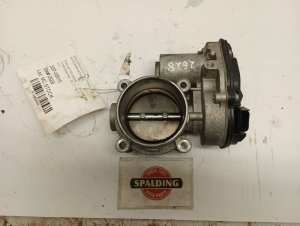
New Aftermarket Parts Available



The information in this article is provided for general reference and educational purposes only. Vehicle specifications, procedures, and part compatibility can vary by production date, trim level, and region. Always consult your vehicle's factory service manual and verify part numbers before purchasing or performing repairs. Safety-critical components such as airbags, seat belts, and braking systems should be installed by a qualified professional.
- Lincoln MKZ:
- 🧭 Diagnostic Flowchart
- 🎬 Helpful Videos
- 🛍️ Shop This Part
- What's Unique About the 2010-2011 Lincoln MKZ
- Symptoms You May Notice
- Most Likely Causes
- Rare But Worth Checking
- Diagnosis Steps
- Parts You'll Likely Need
- Related Codes That Often Appear With This One
- Technical Service Bulletins (TSBs) & Recalls
- Platform-Specific Known Issues
- Mechanic-Grade Diagnostic Values
- Scan Tool Commands That Help
- Wiring & Ground Locations
- OEM Part Supersession History
- Model Year Variations Within This Range
- Used vs. New Parts: Buying Guide for This Vehicle
- Real Owner Stories
- Ford Fusion (platform-mate)
- Ford Edge (platform-mate)
- Ford (various models)
- Lincoln MKX (platform-mate)
- Lincoln MKS
- Documented NHTSA Reports
- Related OBD-II Codes
- Frequently Asked Questions
- 🎟️ Get 5% Off