

P2111 on 2007-2015 Mazda CX-9: Throttle Actuator Stuck Open Causes and Fixes
This code means the throttle body is stuck open, causing limp mode and poor performance. The most common fix is cleaning or replacing the electronic throttle body assembly. Cleaning is a temporary fix at best; replacement is usually required. The part can cost between $150 and $450.
- P2111 on a 2007-2015 Mazda CX-9 means the throttle body is stuck open, which will trigger a 'limp mode' and make the vehicle unsafe to drive in normal traffic.
- Before spending money, the first step should always be to inspect and clean the throttle body, as carbon buildup is a very common cause.
- If cleaning doesn't work, the entire throttle body assembly likely needs to be replaced. Be cautious with cheap remanufactured parts, as they may not be reliable.
- After cleaning or replacing the throttle body, a 'relearn' procedure is often necessary for the engine to idle correctly.
- This is a DIY-friendly repair for those with basic tools, with the most common fix being a simple cleaning or a bolt-off, bolt-on replacement of the throttle body.
What's Unique About the 2007-2015 Mazda CX-9
The first-generation Mazda CX-9 uses a 3.7L V6 engine (a Ford Cyclone engine) with an electronic throttle body known to be susceptible to carbon and oil sludge buildup. This accumulation can cause the throttle plate to become sticky or physically obstructed, leading directly to the P2111 code. While the issue is common across many 'drive-by-wire' systems, the specific throttle body used on this platform and its Ford/Lincoln siblings is known for a high failure rate of the internal electronics, often making cleaning an ineffective long-term solution.
Symptoms You May Notice
- Check Engine Light is on
- Wrench light (throttle control malfunction indicator) is on
- Vehicle enters 'limp mode' with drastically reduced power
- Poor or no acceleration
- Unstable or high idle
- In some cases, the engine may stall or fail to start
- Engine RPM limited, will not rev up
- Replacing the accelerator pedal position (APP) sensor. While the APP sensor is part of the overall throttle control system, a failure there typically sets different codes. The P2111 code specifically points to a discrepancy at the throttle body itself.
Most Likely Causes
- Dirty or Sticking Throttle Body 🔴 High Probability → Shop Fuel Injection Throttle Body The MZI 3.7L V6 engine's PCV (Positive Crankcase Ventilation) system can introduce oil vapor and fuel into the intake, which bakes onto the throttle body over time, causing a sticky residue that impedes plate movement.
How to confirm: Remove the air intake hose connected to the throttle body. Visually inspect the throttle plate and bore for black carbon/oil buildup. Gently push the plate with your finger (with the engine off); it should move smoothly and snap back without sticking. If it feels gritty or hangs up, it needs cleaning.
Typical fix: Clean the throttle body bore and plate with a dedicated throttle body cleaner and a soft cloth or brush. A throttle relearn procedure is required after cleaning. While this may work, it is often a temporary fix if the internal electronics are the root cause.
Est. part cost: $5-$15 - Failed Throttle Body Assembly Very High Probability → Shop Fuel Injection Throttle Body This is the most common cause. The internal electric motor or position sensor within the throttle body assembly fails electronically. This is a well-documented, widespread issue on the Ford Cyclone engine family, including the 3.7L in the CX-9. Remanufactured units from some brands have a high rate of repeat failure.
How to confirm: If cleaning the throttle body does not resolve the issue, and the wiring is confirmed to be good, the assembly itself is faulty. A diagnostic scan tool can command the throttle open and closed to observe its response. A failure to respond correctly confirms a bad throttle body. Restarting the car may temporarily clear the fault, but it will return.
Typical fix: Replace the entire throttle body assembly. It is highly recommended to use an OEM or high-quality aftermarket part (e.g., Hitachi, Bosch). A new gasket should be used.
Est. part cost: $150-$450 - Wiring or Connector Issue ⚪ Low Probability Vibrations and heat in the engine bay can cause wires to chafe or the connector at the throttle body to become loose or corroded over time.
How to confirm: Visually inspect the wiring harness leading to the throttle body for any signs of damage, melting, or chafing. Unplug the connector and check for corrosion, moisture, or bent pins.
Typical fix: Repair the damaged section of wire or clean/replace the connector pigtail.
Est. part cost: $10-$50
Rare But Worth Checking
- Faulty Powertrain Control Module (PCM): → Shop Engine Control Module (ECM) This is very rare. Before condemning the PCM, all other possibilities (throttle body, wiring) must be exhaustively ruled out. A forum user on Mazdas247 reported suspecting a bad ECM after replacing the throttle body five times with remanufactured units, highlighting the importance of using quality parts before suspecting the PCM.
- Low Battery Voltage: While less common, a failing battery or alternator can cause low system voltage, which may trigger various electronic-related codes, including P2111. It is a good practice to test the battery and charging system to rule this out.
Diagnosis Steps
- Read the codes with an OBD-II scanner and confirm P2111 is present. Note any other codes, as they provide critical context.
- Turn the vehicle off. Remove the air intake ducting from the throttle body.
- Visually inspect the throttle plate and bore for heavy carbon buildup.
- With your finger, gently push the throttle plate open. It should move smoothly and snap shut when released. If it's sticky or gritty, it needs cleaning.
- If dirty, clean the throttle body thoroughly using a dedicated throttle body cleaner and a soft rag or brush. Do not spray harsh chemicals directly on the electrical connector.
- Inspect the electrical connector and wiring harness at the throttle body for any signs of damage, corrosion, or loose connections.
- After cleaning or replacement, clear the codes and perform a throttle body relearn procedure. A common procedure for Fords/Mazdas is to turn the ignition to 'ON' (engine off), slowly press the accelerator pedal to the floor and slowly release it, then turn the ignition off. Start the engine and let it idle to confirm the fix.
- If the code returns immediately after cleaning and a relearn, the throttle body assembly itself has almost certainly failed electronically and requires replacement.
Parts You'll Likely Need
- Electronic Throttle Body Assembly
(OEM #CA38-13-640)— This is the complete unit that fails, either due to internal motor/sensor failure or because it's too contaminated to be cleaned effectively. It is the primary fix for a persistent P2111 code.
Trusted brands: Mazda (OEM), Hitachi, Bosch, Cardone (Note: some forum users report repeated failures with remanufactured units)
OEM price range: $350-$450
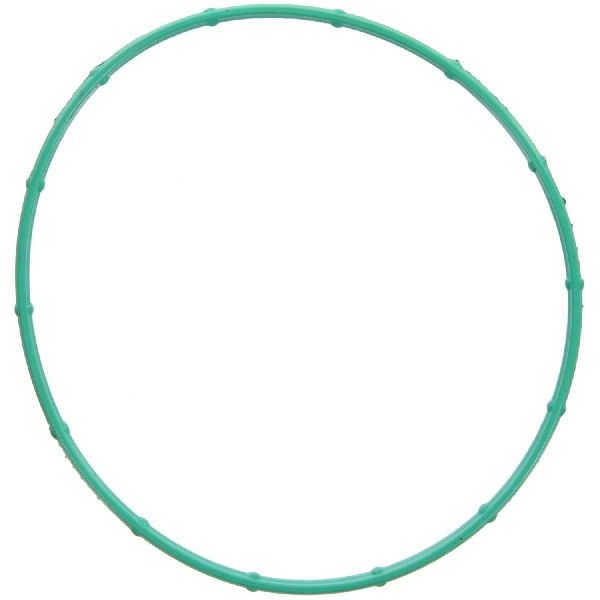
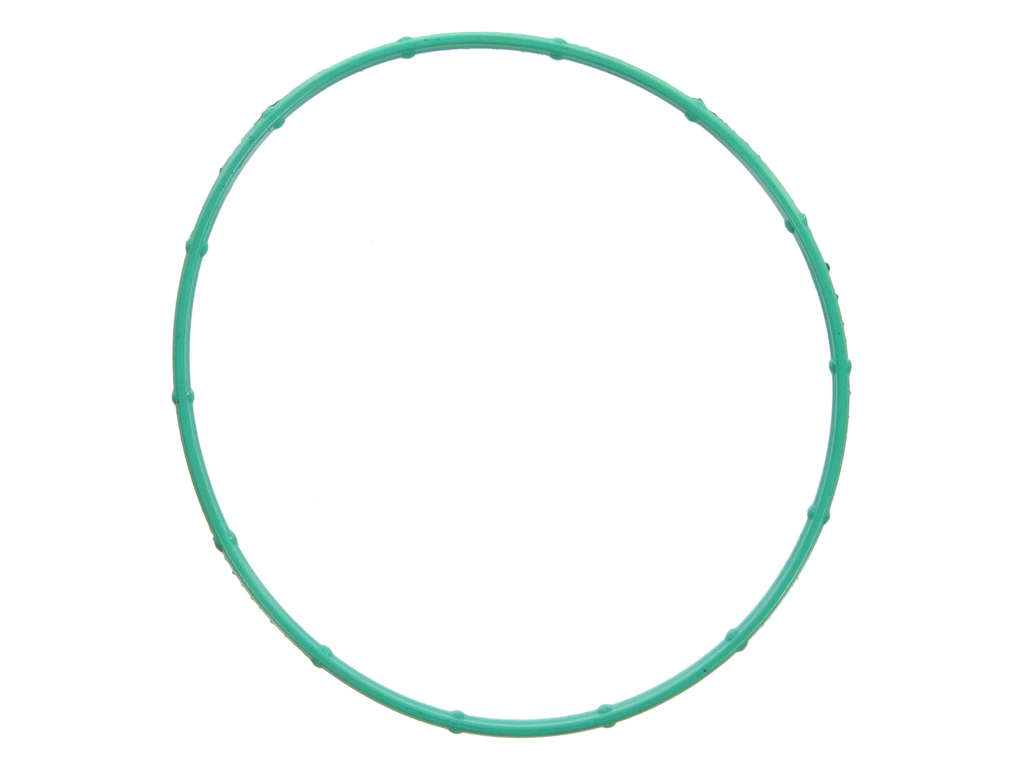
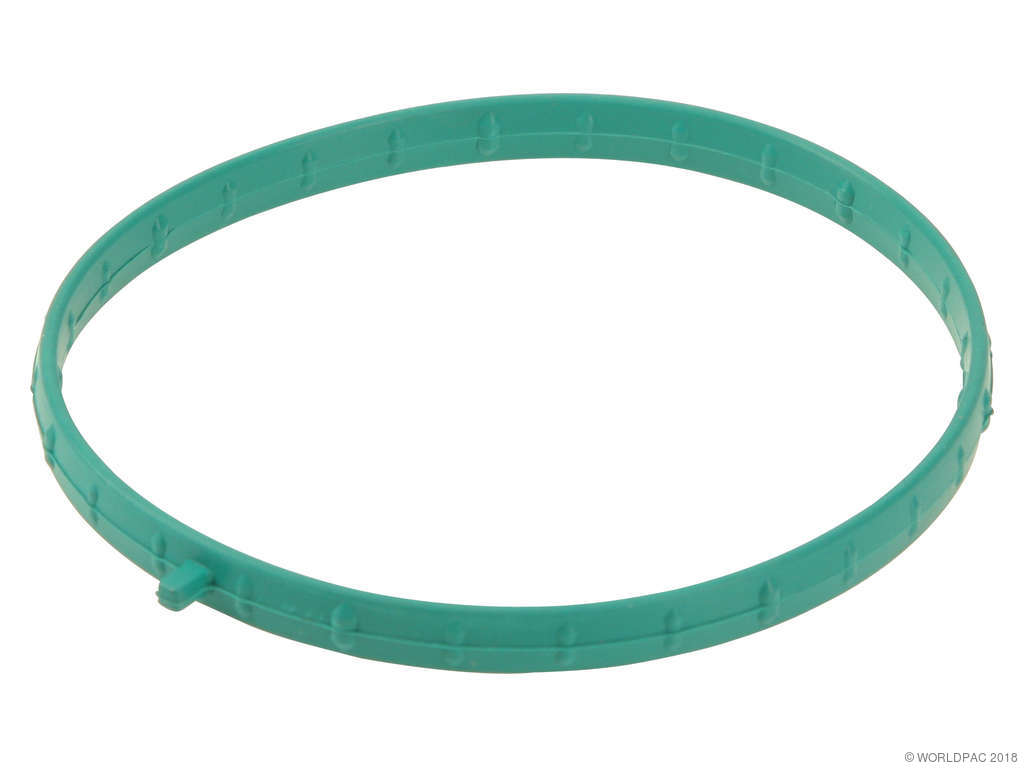
Aftermarket price range: $150-$300 - Throttle Body Gasket
(OEM #L3G2-13-655)— The gasket should always be replaced when the throttle body is removed to ensure there are no vacuum leaks.
Trusted brands: Fel-Pro, Mahle, Mazda (OEM)
OEM price range: $10-$20
Aftermarket price range: $5-$15
Related Codes That Often Appear With This One
- P2104 — This code indicates 'Throttle Actuator Control System - Forced Idle'. The PCM sets this code to force the engine to idle as a safety measure when it detects a critical fault like P2111.
- P2110 — This code means 'Throttle Actuator Control System - Forced Limited RPM'. It's another fail-safe mode triggered by the PCM in response to the throttle body fault.
- P2112 — This is the opposite of P2111, indicating 'Throttle Actuator Control System - Stuck Closed'. It can sometimes appear alongside P2111 if the throttle body is failing intermittently and getting stuck in both directions.
Technical Service Bulletins (TSBs) & Recalls
- Ford TSB 10-21-6: While for Ford/Lincoln models, this TSB is highly relevant as it covers the same 3.7L engine and P2111/P2112 codes. It recommends replacing the throttle body on vehicles built within a specific date range (March to August 2010), confirming a known hardware issue.
- Mazda TSB 01-007/13: This TSB for the Mazda Tribute also mentions P2111 as a possible related code to P2135 (Throttle Position Sensor Correlation) and recommends throttle body replacement, showing a pattern of similar fixes across Mazda platforms.
- Bulletin #01-007-13-2767: This manufacturer bulletin notes that a Check Engine Light or Wrench Light may be accompanied by DTC P2135, and that P2111 (Throttle Actuator Control System - Stuck Open) may also be present.
Mechanic-Grade Diagnostic Values
- Throttle Position Sensor 1 (TP1) and 2 (TP2) Voltage — expected: Voltage should change smoothly as the accelerator pedal is operated. Specific voltage at idle vs. wide-open throttle varies, but one sensor (TP1) typically sweeps from low to high voltage (~0.5V to ~4.5V) while the other (TP2) sweeps from high to low (~4.5V to ~0.5V) as a cross-check.. Failure: No change in voltage, erratic jumps, or voltage not matching the commanded throttle position indicates a fault.
- Continuity Check between Throttle Body and PCM — expected: Continuity (near 0 ohms) should exist between the corresponding pins.. Failure: No continuity (OL) indicates an open circuit in the harness. Continuity to power or ground on a signal wire indicates a short circuit.
- Throttle Motor Resistance (for 2007 3.5L engine) — expected: 1 - 900 ohms between terminals A and B.. Failure: Resistance outside this range indicates a faulty throttle motor.
Scan Tool Commands That Help
- Mazda M-MDS (or equivalent like FORScan): PID Data Monitoring (TP1, TP2) — Use this to watch the live voltage output of both throttle position sensors simultaneously while operating the pedal or running an actuator test. This can reveal glitches or a sensor that is not responding.
- Professional Scan Tool (Mazda IDS, Autel, Snap-on, etc.): Throttle Actuator Test (Bidirectional Control) — This command allows the technician to directly order the throttle plate to open and close. If the plate fails to move as commanded while sensor data is monitored, it confirms a failure in the throttle body motor or a mechanical jam.
- Factory or Advanced Aftermarket Scan Tool: Throttle Body Relearn / Reset Adaptive Values — Use this after replacing the throttle body, especially if the manual relearn procedure fails. In some cases, the PCM's learned adaptation values are too far out of range for a manual reset to work, and a scan tool is required to force the reset.
Wiring & Ground Locations
- Throttle Body Connector Pins to PCM — The throttle body is on the top rear of the engine. The PCM is located elsewhere in the engine bay. Specific pin-to-pin checks are required.. A service manual for the 2008 3.7L specifies checking continuity from Throttle Body terminal C to PCM terminal 2AD, D to 2D, E to 2AH, and F to 2Z. A break in any of these wires will cause throttle control failure and trigger codes.
- G11 — Behind the left side of the dashboard.. This is a major ground point for interior and dash components. While not directly for the throttle body, a poor ground here can cause a host of strange electrical issues and potentially affect modules that communicate with the PCM.
- G13 — At the left 'C' pillar.. This is a body ground point. Poor grounding can lead to floating voltages and unpredictable behavior from electronic modules, which can indirectly contribute to control system faults.
Real Owner Repair Stories
- Mazdas247 Forum User 'EMT' (2008 Mazda CX-9) — Check Engine Light and Wrench Light on, vehicle enters limp mode. Codes P2101, P2104, P2110, P2111, and P2112 all present.
❌ Tried (didn't work) Replacing the throttle body with a Cardone remanufactured unit. The problem would be fixed for a few weeks to a month, then return., This cycle was repeated FIVE times with different remanufactured throttle bodies.
✅ What actually fixed it The user did not post a final resolution, but the critical lesson was the repeated failure of remanufactured throttle bodies. The strong implication is that only a new OEM or high-quality OEM-equivalent (Hitachi, Bosch) part is a reliable fix, or that a deeper issue like a faulty PCM was destroying the replacement parts. The user suspected the PCM might be the ultimate cause. - NHTSA ODI #10567410 — An owner of a related Mazda model reported that the vehicle became unresponsive while the engine was still running, requiring a shutdown and restart in the middle of the road. A service technician found stored code P2111 for the throttle actuator control system being stuck open.
OEM Part Supersession History
CA38-13-640→CA01-13-640B, TK21-13-640— Standard part revision and updates by the manufacturer.
Heads up: While the 3.7L engine is a Ford design, throttle bodies from other Ford models (like the Mustang or Fusion) are not directly compatible due to differences in electronic programming and connector orientation.
Model Year Variations Within This Range
- 2007 vs 2008-2015: The 2007 model year used a 3.5L V6 engine. From 2008 onwards, the CX-9 used the 3.7L V6. While both are Ford Cyclone family engines, the throttle body and associated part numbers may differ. This guide focuses on the 3.7L V6.
- 2010 & 2013: The CX-9 received facelifts for the 2010 and 2013 model years, primarily affecting aesthetics and interior features. The core powertrain, including the 3.7L engine and electronic throttle body, remained mechanically unchanged, so the P2111 fault applies consistently across the 2008-2015 range.
Diagnostic Flowchart
Other Known Issues on This Vehicle
Issues unrelated to this code that are worth knowing about as an owner of this generation:
- Internal Water Pump Failure 🔴 High — A well-known and feared issue for the 3.7L V6. Failure can occur without warning, often between 80,000 and 150,000 miles. When the pump's internal seal fails, it leaks coolant directly into the engine oil. (Ref: No recall, but it is a widely discussed catastrophic failure mode. Failure to catch it early (by checking for 'milky' oil) leads to complete engine destruction.)
- AWD Transfer Case (PTU) Failure 🔴 High — Common on AWD models. The Power Transfer Unit (PTU) is located near the hot exhaust, causing its fluid to break down, leading to overheating, seal leaks, and eventual gear failure. (Ref: Mazda issued a warranty extension (SSP 92) for certain 2010-2014 models, covering PTU replacement up to 7 years or 90,000 miles due to this issue.)
- Brake Booster Failure 🟠 Medium — Owners report a hard brake pedal and a hissing sound when braking. The issue was prevalent enough to trigger a NHTSA investigation for 2010-2011 models. (Ref: Mazda issued a Special Service Program (SSP) extending the warranty on the brake booster for 2007-2013 models due to a deteriorating internal diaphragm.)
Used vs. New Parts: Buying Guide for This Vehicle
When a used part is the smart pick: A used throttle body is a significant gamble for this repair due to the high rate of electronic failure. It should only be considered as a low-cost, potentially temporary measure if the budget does not allow for a new part. The risk of premature failure is high.
Donor-vehicle mileage cap: roughly under 80000 miles for the part to have meaningful remaining life.
What to inspect on the donor part:
- Source from a vehicle with documented lower mileage.
- Inspect the connector pins for any signs of corrosion, moisture, or damage.
- Choose a part from a vehicle involved in a rear-end collision, which makes it more likely the engine was running properly before the accident.
- Avoid parts that show excessive external corrosion or physical damage.
OEM-only on this vehicle (don't cheap out):
- Electronic Throttle Body Assembly
Aftermarket brands forum-validated for this vehicle:
- Hitachi (Often the OEM supplier)
- Bosch
Brands owners have reported issues with on this vehicle:
- Cardone (remanufactured): Multiple forum reports detail repeated, premature failures of these units for this specific application.
Real Owner Stories
Aggregated from forums and TSBs cited above. Mileages and costs reflect what owners reported in those sources.
2008 CX-9
Symptoms: Vehicle would intermittently fail and then recover after a few minutes. The failure frequency increased over time until it wouldn't recover at all. Both the check engine light and wrench light were on.
What fixed it: The owner had to replace the throttle body multiple times; the story highlights that using remanufactured parts led to five failures in a single year.
Source hint: Mazdas247.com (URL: https://www.mazdas247.com/forum/index.php?threads/2008-cx9-has-codes-p2101-p2104-p2110-p2111-and-p2112.123871925/)
NHTSA Reported Incident
Symptoms: An owner reported that the vehicle became unresponsive while driving, though the engine remained running. The driver had to shut down and restart the car in the middle of the road.
What fixed it: A service inspection revealed stored code P2111, indicating the throttle actuator control system was stuck open. The vehicle was reported to be less than 5 years old with under 32,000 miles at the time.
Source hint: NHTSA ODI #10567410
Related OBD-II Codes
Frequently Asked Questions
Is there a TSB for the P2111 code on my 2010 Mazda CX-9?
Can I just clean the throttle body on my MZI 3.7L V6 to fix this?
Does the Mazda CX-9 share this throttle body issue with any other vehicles?
What is the 'wrench light' that appeared with my Check Engine Light?
Is there a specific relearn procedure I need to do after replacing the throttle body?
Should I use a remanufactured throttle body to save money?
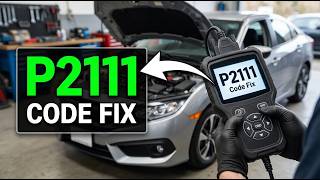
Helpful Videos

We Have This Part in Stock


The information in this article is provided for general reference and educational purposes only. Vehicle specifications, procedures, and part compatibility can vary by production date, trim level, and region. Always consult your vehicle's factory service manual and verify part numbers before purchasing or performing repairs. Safety-critical components such as airbags, seat belts, and braking systems should be installed by a qualified professional.
- Mazda CX-9:
- 🧭 Diagnostic Flowchart
- 🎬 Helpful Videos
- 🛍️ Shop This Part
- What's Unique About the 2007-2015 Mazda CX-9
- Symptoms You May Notice
- Most Likely Causes
- Rare But Worth Checking
- Diagnosis Steps
- Parts You'll Likely Need
- Related Codes That Often Appear With This One
- Technical Service Bulletins (TSBs) & Recalls
- Mechanic-Grade Diagnostic Values
- Scan Tool Commands That Help
- Wiring & Ground Locations
- Real Owner Repair Stories
- OEM Part Supersession History
- Model Year Variations Within This Range
- Other Known Issues on This Vehicle
- Used vs. New Parts: Buying Guide for This Vehicle
- Real Owner Stories
- 2008 CX-9
- NHTSA Reported Incident
- Related OBD-II Codes
- Frequently Asked Questions
- 🎟️ Get 5% Off