

P2111 on 2010-2011 Mercury Milan 2.5L: Throttle Body Failure Causes and Fixes
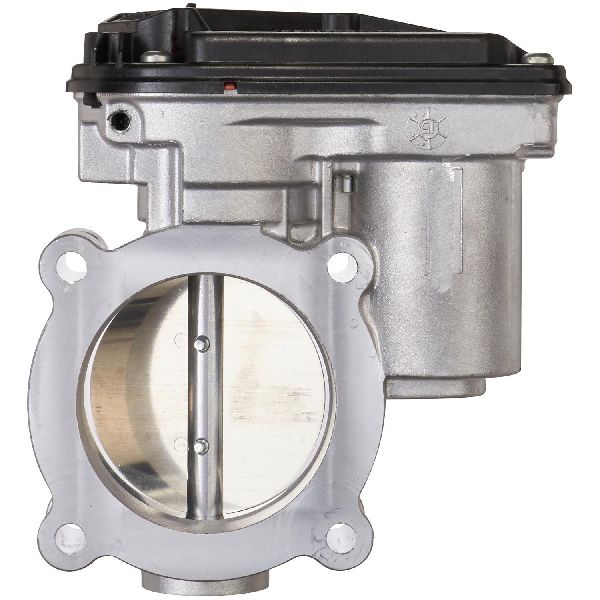
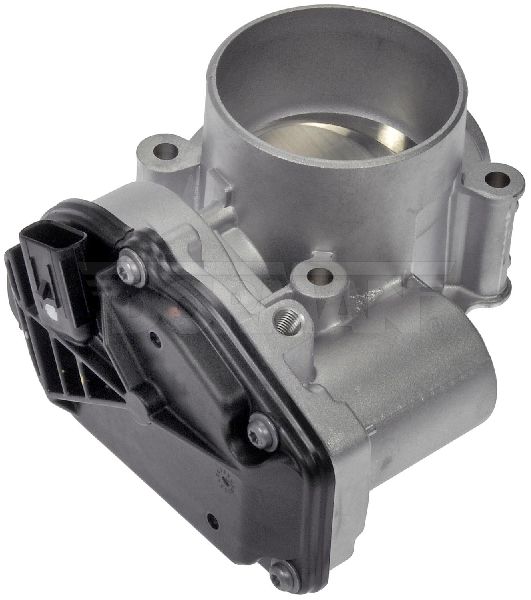
On a 2010-2011 Mercury Milan with the 2.5L engine, the diagnostic trouble code P2111 almost always means the electronic throttle body has failed. This failure is due to a well-documented design flaw causing contamination on internal motor contacts. It triggers a dangerous low-power 'limp mode'. The only reliable fix is to replace the entire throttle body assembly with an updated part (OEM #DS7Z-9E926-D), which costs about $90-$200 for the part and is a straightforward DIY job for many.
- P2111 on a 2010-2011 Milan means the electronic throttle body has failed; this is a very common and well-documented problem caused by an internal design flaw.
- The vehicle will enter a 'limp mode' with severely limited power, which is a serious safety issue in traffic.
- Do not waste time or money cleaning the throttle body or replacing the gas pedal sensor; the correct fix is to replace the entire throttle body assembly.
- After replacement, a simple, tool-free recalibration procedure is required to make the new part work correctly.
- An updated OEM part (Motorcraft DS7Z-9E926-D) or a quality aftermarket equivalent should be used to permanently solve the problem.
What's Unique About the 2010-2011 Mercury Milan
The 2010-2011 Mercury Milan, along with its platform mates the Ford Fusion and Ford Escape, is notorious for a high rate of electronic throttle body (ETB) failures. The problem was so widespread that the NHTSA opened an investigation (PE13003) after receiving numerous complaints about sudden power loss. This led Ford to issue a Technical Service Bulletin (TSB 10-21-6) and a Customer Satisfaction Program (13N03) that extended the warranty on this specific part to 10 years or 150,000 miles. The official cause was identified as "contamination on the internal motor contacts of the Throttle Body, resulting in intermittent electrical connectivity." While the warranty program has expired, its existence confirms that a P2111 code on this car is rarely a diagnostic mystery and almost always points directly to a defective throttle body.
Symptoms You May Notice
- Sudden and dramatic loss of engine power
- Vehicle enters 'limp mode' (will not accelerate, RPMs may be limited to around 900)
- Wrench light or Check Engine Light illuminates on the dashboard
- Engine may sputter or run rough when trying to accelerate
- In some cases, the vehicle may stall, though the limp mode is more common
- Restarting the car may temporarily resolve the issue, but it will almost certainly return
- Replacing the Accelerator Pedal Position (APP) Sensor. The P2111 code specifically points to a fault at the throttle body itself (the actuator), not the pedal sensor that tells the computer what the driver wants.
- Cleaning the Throttle Body. While cleaning a dirty throttle body can solve some idling issues, it will not fix the internal electronic failure that causes P2111 on this vehicle. The failure is within the sealed motor housing, not carbon buildup on the throttle plate.
Most Likely Causes
- Defective Electronic Throttle Body (ETB) 🔴 High Probability → Shop Fuel Injection Throttle Body The original electronic throttle bodies on these models have a confirmed design flaw. Internal motor contacts develop contamination and high resistance, leading to intermittent electrical connection and loss of control over the throttle plate. Ford and its suppliers later modified the ETB motor's internal components, surface finish, and material composition to improve durability.
How to confirm: Given the known issue documented by Ford's own Customer Satisfaction Program (13N03) and NHTSA investigation PE13003, if the vehicle is in limp mode with code P2111 (and possibly P2112), the throttle body is the presumptive culprit. A scan tool can monitor commanded vs. actual throttle position to confirm a discrepancy, but for this specific vehicle, this step is often considered redundant.
Typical fix: Replace the entire electronic throttle body assembly with a new, updated part (OEM part number DS7Z-9E926-D).
Est. part cost: $90-$200
Rare But Worth Checking
- Wiring Harness or Connector Issue: While far less common than ETB failure, the wiring leading to the throttle body can become chafed, damaged, or have corrosion on the connector pins. It's worth a quick visual inspection before replacing the part, paying close attention to harness routing near bends.
- Powertrain Control Module (PCM) Fault: → Shop Engine Control Module (ECM) In very rare instances, the PCM itself can fail and be unable to correctly control the throttle body. This should only be considered after a new throttle body fails to resolve the issue and the wiring has been confirmed to be in good condition. A PCM fault can sometimes cause other unrelated codes or symptoms as well.
Diagnosis Steps
- Scan the PCM for trouble codes to confirm P2111 and check for other related codes like P2112 or P2104.
- Given the extremely high probability of throttle body failure on this specific vehicle, the most practical step is to replace the electronic throttle body assembly.
- Before replacement, perform a quick visual inspection of the throttle body electrical connector and nearby wiring for any obvious signs of damage, corrosion, or loose connections.
- Replace the electronic throttle body. This typically involves removing the air intake duct, disconnecting the electrical connector, and removing four 8mm bolts.
- After installing the new throttle body, perform the throttle body relearn/calibration procedure. For many Fords, this can be done without a scan tool: turn the key to the 'ON' position (engine off) for a few seconds, turn it off, and then start the vehicle. Let the vehicle idle for 10-15 minutes with the A/C on to allow the PCM to relearn idle trims.
- Clear all DTCs with a scan tool and start the vehicle to confirm the fix. Test drive to ensure normal throttle response has returned.
Parts You'll Likely Need
- Electronic Throttle Body Assembly
(OEM #DS7Z-9E926-D)— This is the root cause of code P2111 in over 95% of cases for this vehicle. The original part is prone to internal failure, and this updated OEM part number is designed to be more reliable.
Trusted brands: Motorcraft, Bosch, Hitachi, Dorman, Standard Motor Products (SMP)
OEM price range: $150-$220
Aftermarket price range: $90-$180
Related Codes That Often Appear With This One
- P2112 — This code means 'Throttle Actuator Control System - Stuck Closed.' P2111 and P2112 are two sides of the same coin, indicating a complete failure of the throttle body to respond to PCM commands. They are often logged together and are caused by the same internal ETB motor contact failure.
- P2104 — This code means 'Throttle Actuator Control System - Forced Idle.' It is a secondary code that confirms the PCM has put the engine into a fail-safe mode because of the primary fault detected by P2111 or P2112.
- P2110 — This code, 'Throttle Actuator Control System - Forced Limited RPM,' is another fail-safe mode indicator. It confirms the PCM is actively restricting engine speed due to the detected throttle control fault.
Technical Service Bulletins (TSBs) & Recalls
- TSB 10-21-6: Addresses codes P2111 and P2112 caused by a faulty electronic throttle body on various Ford and Mercury vehicles, including the 2009-2011 Milan.
- Customer Satisfaction Program 13N03: Not a TSB, but a Ford program extending the ETB warranty to 10 years/150,000 miles due to the high failure rate from internal contamination.
Platform-Specific Known Issues
- Ford issued Technical Service Bulletin TSB 10-21-6 regarding intermittent stalling, lack of power, and codes P2111/P2112, identifying the cause as a faulty electronic throttle body.
- Ford initiated Customer Satisfaction Program 13N03, which extended the warranty coverage for the ETB on affected vehicles to 10 years or 150,000 miles. The program documents explicitly state the cause is contamination on the internal motor contacts. This program has expired but serves as official acknowledgment of the defect.
- The NHTSA conducted a Preliminary Evaluation, PE13003, investigating the throttle body failures across 725,000 Ford and Mercury vehicles, including the Milan. The investigation confirmed the high failure rate and limp mode symptoms. NHTSA ODI Investigation #PE13003 noted that approximately 50 percent of claims are associated with diagnostic trouble codes P2111 and P2112.
Mechanic-Grade Diagnostic Values
- Electronic Throttle Body Motor Resistance — expected: 2 - 15 Ohms between the two motor pins (TAC+ and TAC-).. Failure: A reading of OL (Over Limit / infinite resistance) indicates an open circuit in the motor. A near-zero reading indicates a short. Either requires replacement.
- Throttle Body Connector - Reference Voltage (VREF / ETCREF) — expected: 4.5 - 5.5 Volts with Key On, Engine Off (KOEO) between the VREF pin and ground.. Failure: Voltage significantly lower than 4.5V or absent points to a wiring issue or a problem with the PCM's 5V reference circuit.
- Throttle Position Sensor (TPS) Signal Voltage — expected: With the connector plugged in and back-probing the signal wire, voltage should be ~0.5-1.0V at closed throttle and sweep smoothly up to ~4.5V at wide-open throttle.. Failure: Voltage that is stuck, jumpy, or has dead spots during the sweep indicates a failed internal TPS, requiring throttle body replacement.
Scan Tool Commands That Help
- Ford IDS (or equivalent professional scanner): PCM Reset / Clear KAM (Keep Alive Memory) — This function should be performed after installing a new throttle body to clear the old learned adaptive values from the PCM's memory, ensuring the system relearns the new component's parameters correctly.
- Ford IDS (or equivalent professional scanner): Actuator Test Mode / Output State Control — Allows a technician to command the throttle plate to open and close while monitoring live data. If the plate doesn't move as commanded, it confirms a failure of the throttle body motor or its circuitry.
Wiring & Ground Locations
- G102 — Located on the left rear of the engine compartment.. This is a primary engine ground. A loose or corroded G102 can cause erratic voltage and sensor readings for multiple engine components, including the electronic throttle body, potentially mimicking a component failure.
- ETB Connector — The 6-pin electrical connector on the electronic throttle body assembly itself.. This is the single point of connection for power, ground, and all command/signal lines between the PCM and the throttle body. Corrosion on pins or damage to the connector pigtail is a known, though less common, cause of P2111.
Real Owner Repair Stories
- 2CarPros Forum User (2011 Ford Escape 2.5L with 327,000 miles) — P2111 code, limp mode.
❌ Tried (didn't work) Replacing the purge valve., Replacing the entire throttle body assembly.
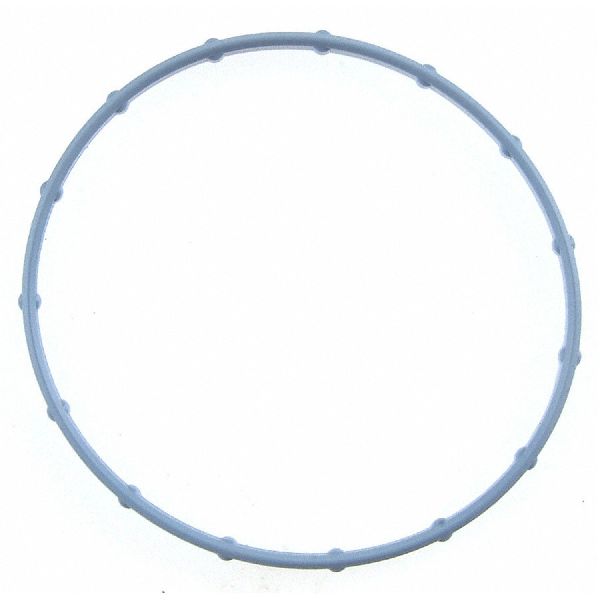
✅ What actually fixed it The user found damaged wiring at the MAP sensor and purge valve connectors. After repairing these, the P2111 code appeared. The user suspected that manipulating the very tight factory wiring harness to the throttle body during other repairs caused a break or short in the throttle body's own wiring, which then had to be repaired to resolve the P2111 code. - NHTSA ODI #10514960 — An owner reported that after experiencing issues, the dealership checked and found error code P2111 and replaced the throttle and gasket, noting it is a common issue in Milans and Fusions.
- NHTSA ODI #10533392 — A driver reported a diagnosis of P2111 (faulty throttle body) but was told by a mechanic that the part was on a national back order. The faulty part was identified as 9L8E-9F991-BC.
OEM Part Supersession History
9L8Z-9E926-A→DS7Z-9E926-A, then finally DS7Z-9E926-D— The original part (9L8Z) was prone to internal electronic failure due to contamination on motor contacts. The subsequent revisions, culminating in DS7Z-9E926-D, feature improved internal materials and design to increase reliability and prevent the failure that causes P2111.
Diagnostic Flowchart
Other Known Issues on This Vehicle
Issues unrelated to this code that are worth knowing about as an owner of this generation:
- Harsh/Delayed Shifting (6F35 Transmission) 🟠 Medium — Commonly reported. Owners describe harsh shifts or a 'flare' between gears, especially when cold. Can sometimes be caused by worn valve body bores or require PCM reprogramming.
- Electronic Power Steering (EPAS) Failure 🔴 High — A widely reported issue where the power steering can suddenly fail, making the vehicle extremely difficult to steer. This was a major safety concern. (Ref: Multiple recalls, including 15S18, were issued to address EPAS problems.)
- Mysterious Coolant Consumption 🟡 Low — The 2.5L Duratec engine is known to consume coolant over time without an obvious external leak. The cause is often speculated to be engine block porosity. It typically requires topping off the coolant periodically.
- Swelling/Deforming Lug Nuts 🟡 Low — Extremely common across many Ford models of this era. The two-piece lug nuts have a chrome cap that swells and deforms, making it impossible to use the factory lug wrench. The only fix is replacement with solid one-piece lug nuts.
Used vs. New Parts: Buying Guide for This Vehicle
When a used part is the smart pick: For this specific repair, a used part is almost NEVER a smart choice. The P2111 code is caused by a well-known design defect in the original part. A used throttle body from a 2010-2011 Milan or Fusion donor vehicle is highly likely to have the same defect and will fail soon, if it hasn't failed already.
What to inspect on the donor part:
- The only scenario where a used part is viable is if you can personally verify it is the updated OEM part (DS7Z-9E926-D) that was previously installed on a newer vehicle as a replacement.
- Do not buy a used part with the original part number (9L8Z-9E926-A).
- Inspect the connector pins for any signs of corrosion, and the housing for cracks.
OEM-only on this vehicle (don't cheap out):
- Electronic Throttle Body
Aftermarket brands forum-validated for this vehicle:
- Motorcraft (OEM)
- Bosch
- Standard Motor Products (SMP)
- Hitachi
Brands owners have reported issues with on this vehicle:
- Unbranded, no-name parts from online marketplaces should be avoided. While some may work, failure rates are higher, and they may not have the improved internal components of the updated OEM design.
Real Owner Stories
Aggregated from forums and TSBs cited above. Mileages and costs reflect what owners reported in those sources.
2010 Mercury Milan — 60000 miles
Symptoms: While driving 40 mph, the vehicle decelerated without manual force and stalled with the illumination of the maintenance light.
What fixed it: The throttle assembly was replaced.
Source hint: CarComplaints.com - 2010 Mercury Milan Vehicle Speed Control Problems
2010 Mercury Milan 6-cyl
Symptoms: Electronic throttle body failed while driving on the interstate. Car lost all throttle control, idled down to 1000 RPM, and rapidly decelerated in heavy traffic.
What fixed it: Replacement of the electronic throttle body.
Source hint: CarComplaints.com - 2010 Mercury Milan Vehicle Speed Control Problems
2010 Mercury Milan
Symptoms: About a mile from the house, while making a turn and accelerating into busy traffic, the engine suddenly cut out.
What fixed it: Replacement of the electronic throttle body.
Source hint: Ford Truck Enthusiasts Forums thread titled '2009-12: Extended Throttle Body warranty may be useless'
2010 Ford Fusion SE 2.5L
Symptoms: Owner reported getting both P2111 and P2112 codes; discussion confirmed the part was likely 'DOA' or failed internally.
What fixed it: Replacement of the throttle body, as cleaning is not a viable fix for these codes.
Source hint: fordfusion.net discussion titled 'O.T. Ford 2010 Fusion SE 2.5L throttle body problem'
2010 Mercury Milan
Symptoms: An owner reported that the engine dies repeatedly within minutes of the first failure, both at highway speeds and at idle. Codes P2111 and P0685 were found.
What fixed it: Research confirmed the codes were related to throttle body failure.
Source hint: NHTSA ODI #10533052
2010 Mercury Milan — 38000 miles
Symptoms: The car became unsafe and unable to continue driving. Ford service pulled code P2111 and stated the throttle body was shot.
What fixed it: Replacement of the throttle body assembly.
Source hint: NHTSA ODI #10468066
Related OBD-II Codes
Frequently Asked Questions
Is there a Ford program that covers the throttle body replacement on my 2010 Mercury Milan?
Does TSB 10-21-6 apply to the 2.5L Mercury Milan?
Can I just clean the throttle body to fix the P2111 code?
What did the NHTSA investigation PE13003 conclude about my vehicle?
How do I perform the throttle body relearn procedure after replacing the part?
What is the estimated cost for the replacement part?
Helpful Videos

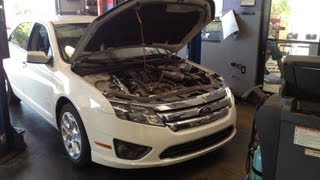

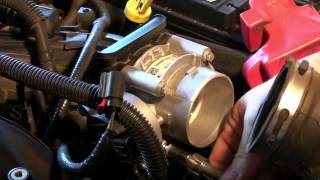
Used OEM Parts in Stock
New Aftermarket Parts Available

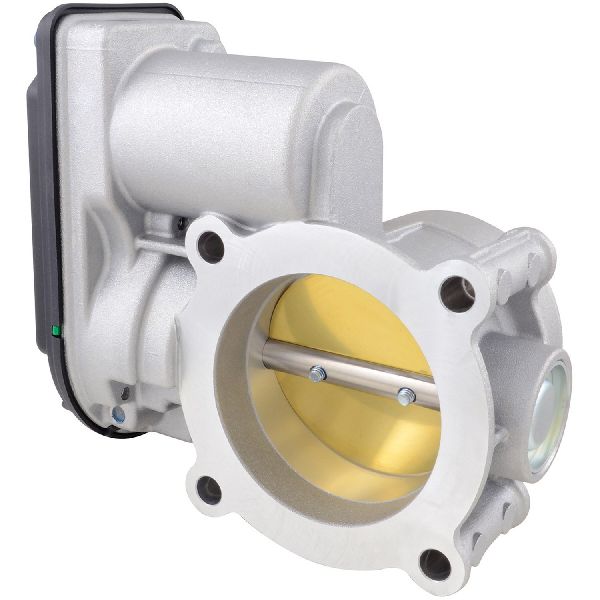

The information in this article is provided for general reference and educational purposes only. Vehicle specifications, procedures, and part compatibility can vary by production date, trim level, and region. Always consult your vehicle's factory service manual and verify part numbers before purchasing or performing repairs. Safety-critical components such as airbags, seat belts, and braking systems should be installed by a qualified professional.
- Mercury Milan:
- 🧭 Diagnostic Flowchart
- 🎬 Helpful Videos
- 🛍️ Shop This Part
- What's Unique About the 2010-2011 Mercury Milan
- Symptoms You May Notice
- Most Likely Causes
- Rare But Worth Checking
- Diagnosis Steps
- Parts You'll Likely Need
- Related Codes That Often Appear With This One
- Technical Service Bulletins (TSBs) & Recalls
- Platform-Specific Known Issues
- Mechanic-Grade Diagnostic Values
- Scan Tool Commands That Help
- Wiring & Ground Locations
- Real Owner Repair Stories
- OEM Part Supersession History
- Other Known Issues on This Vehicle
- Used vs. New Parts: Buying Guide for This Vehicle
- Real Owner Stories
- 2010 Mercury Milan — 60000 miles
- 2010 Mercury Milan 6-cyl
- 2010 Mercury Milan
- 2010 Ford Fusion SE 2.5L
- 2010 Mercury Milan
- 2010 Mercury Milan — 38000 miles
- Related OBD-II Codes
- Frequently Asked Questions
- 🎟️ Get 5% Off