

P2111 on 2003-2009 Toyota 4Runner 4.0L: Throttle Body Stuck Open Causes and Fixes
On a 2003-2009 4Runner, code P2111 almost always points to a dirty or failing electronic throttle body. A thorough cleaning often resolves the issue. If not, the entire throttle body assembly needs to be replaced. This is a common issue for the 1GR-FE engine and will put the vehicle into a dangerous low-power 'limp mode'.
- P2111 will put your 4Runner in a dangerous, low-power 'limp mode'; do not drive it except to a safe location off the road.
- The most likely cause is a simple buildup of carbon inside the throttle body, which you can clean yourself with basic tools and a can of throttle body cleaner for under $20.
- Always inspect and clean the throttle body before considering replacement. This is the most common and cheapest solution.
- If cleaning doesn't fix the code, the entire throttle body assembly likely needs to be replaced. The internal electronics are not serviced separately.
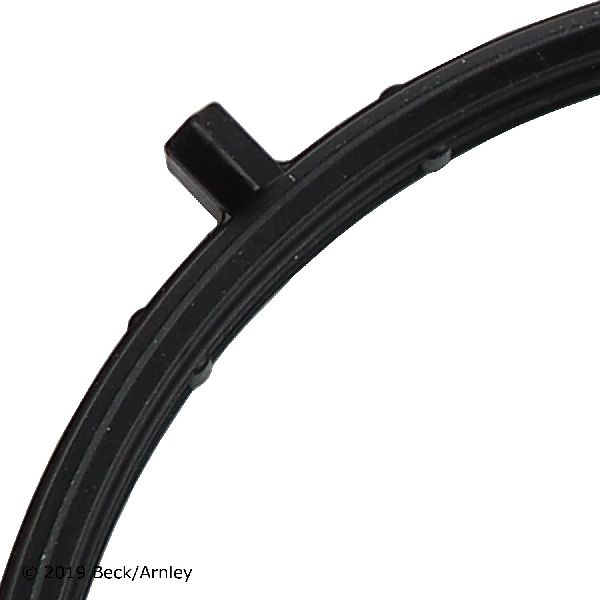
- Always replace the throttle body gasket (Part # 22271-0P010) when removing the throttle body to prevent future vacuum leaks.
What's Unique About the 2003-2009 Toyota 4Runner
The 1GR-FE V6 engine used in the 4th generation 4Runner is generally robust, but like many modern engines, it is susceptible to carbon buildup in the throttle body. This buildup, often from the PCV (Positive Crankcase Ventilation) system, can cause the throttle plate to become sticky, leading to the P2111 code. While some newer Toyota models with the same engine have specific TSBs for this code (e.g., T-SB-0087-11 for the 2010-11 FJ Cruiser), the 2003-2009 4Runner does not have a specific bulletin, making it a general maintenance or wear-and-tear issue for this platform. Owners report that regular cleaning can prevent the problem.
Symptoms You May Notice
- Check Engine Light is on
- TRAC OFF light is on
- Vehicle enters 'limp mode' (severely reduced engine power, slow acceleration, may not exceed walking speed)
- Unresponsive or delayed throttle pedal
- Engine may idle high or erratically
- Possible stalling at low speeds or when stopping
- On some models, a "Brake Override Malfunction" message may appear on the dash
- Replacing the accelerator pedal position sensor (APPS). While the APPS is part of the overall system, a failure there typically generates its own specific set of codes (e.g., P2121, P2122, P2127). P2111 points directly to a problem at the throttle body itself.
Most Likely Causes
- Dirty/Sticking Throttle Body 🔴 High Probability → Shop Fuel Injection Throttle Body Carbon and oil vapor from the PCV system can accumulate in the throttle body over time, creating a sticky black ring that causes the throttle plate to bind and not close properly. This is the most common cause by a wide margin.
How to confirm: Remove the air intake hose from the throttle body and visually inspect the throttle plate and bore for a ring of black carbon buildup. With the engine off, manually push the plate to feel for any binding, scraping, or sticking. It should move smoothly.
Typical fix: Thoroughly clean the throttle body bore and both sides of the throttle plate using a dedicated throttle body cleaner and a soft, lint-free cloth or brush. Do not use your fingers to manipulate the plate while the ignition is on. Disconnecting the battery's negative terminal for 15 minutes after cleaning will reset the ECM's learned idle and throttle values.
Est. part cost: $10-$20 for cleaner and a gasket - Failed Throttle Body Assembly 🟡 Medium Probability → Shop Fuel Injection Throttle Body The internal electronic motor or position sensor within the throttle body can fail with age and heat cycles. These components are integrated and not sold separately, so the entire assembly must be replaced. This is the next logical step if a thorough cleaning does not resolve the code.
How to confirm: If a thorough cleaning does not resolve the code and the wiring is confirmed to be good, the throttle body assembly itself is the likely point of failure. A professional scan tool can monitor commanded vs. actual throttle position to confirm a discrepancy, but for most DIYers, this is a process of elimination. The internal motor can also be tested for resistance.
Typical fix: Replace the entire throttle body assembly and the corresponding gasket. A relearn procedure is generally not required, but disconnecting the battery for a reset is recommended.
Est. part cost: $150-$600
Rare But Worth Checking
- Wiring Harness or Connector Issue: While less common, damage to the wiring harness going to the throttle body (from chafing, heat, or rodents) can cause an open or short, triggering the code. Always inspect the harness and connector for damage before replacing parts. Wiggling the harness while monitoring sensor data can sometimes reveal an intermittent connection issue.
- Foreign Object Obstruction: In rare instances, debris can get past the air filter and physically jam the throttle plate. An NHTSA report for a similar Toyota model with P2111 found a piece of plastic from the manufacturing process had become lodged in the throttle body.
- Faulty Engine Control Module (ECM): → Shop Engine Control Module (ECM) In very rare cases, the driver circuit within the ECM that controls the throttle motor can fail. This should only be considered after all other possibilities (throttle body, wiring) have been definitively ruled out by a professional.
Diagnosis Steps
- Scan the vehicle for all stored trouble codes. If other codes are present, address them first, but P2111 is often a standalone code.
- Visually inspect the wiring harness and connector at the throttle body for any signs of damage, corrosion, or loose connections.
- Remove the air intake duct from the throttle body.
- Inspect the throttle bore and plate for heavy carbon buildup. A black, sticky ring is the most common culprit.
- With the ignition OFF, gently push the throttle plate open and closed with your finger to check for any sticking or binding. It should move smoothly against spring tension and snap back cleanly.
- If dirty, disconnect the negative battery terminal. Remove the throttle body (typically four 10mm bolts) for easier and more thorough cleaning.
- Thoroughly clean the throttle body bore and both sides of the plate using a dedicated throttle body cleaner and a soft rag. Replace the throttle body gasket.
- Reinstall the throttle body, reconnect the electrical connector and intake duct, and then reconnect the negative battery terminal.
- Start the engine. It may idle high or rough for a minute as it relearns. Let it idle for several minutes to stabilize.
- Clear the codes with a scanner and perform a test drive. If the code returns after a thorough cleaning, the throttle body assembly (including the motor and sensor) is likely faulty and requires replacement.
Parts You'll Likely Need
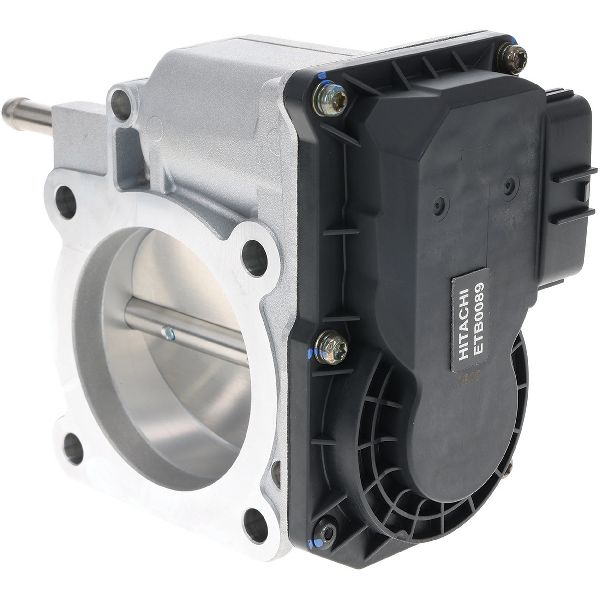
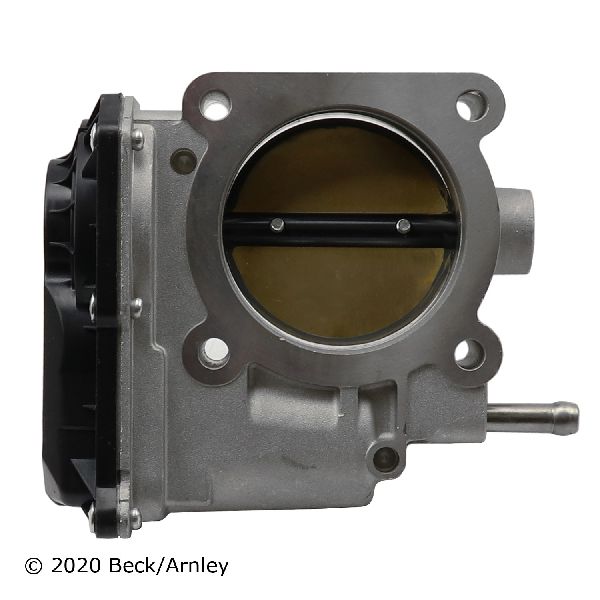
- Throttle Body Assembly
(OEM #22030-0P010 (Supersedes 22030-31010))— This is the most common fix when cleaning fails. The internal motor or sensor fails, and the entire unit must be replaced.
Trusted brands: Toyota (OEM), Aisin, Hitachi
OEM price range: $350-$500
Aftermarket price range: $150-$350 - Throttle Body Gasket
(OEM #22271-0P010)— This should always be replaced whenever the throttle body is removed for cleaning or replacement to prevent vacuum leaks.
Trusted brands: Toyota (OEM), Fel-Pro, Mahle
OEM price range: $10-$20
Aftermarket price range: $5-$15 - Throttle Body Cleaner — Required for the most common and first-step repair attempt: cleaning the carbon buildup that causes the throttle plate to stick.
Trusted brands: CRC, Berryman, WD-40
Aftermarket price range: $10-$15
Related Codes That Often Appear With This One
- P2112 — This code means 'Throttle Actuator Control System - Stuck Closed'. It's the opposite of P2111 but relates to the same component. Seeing either code, or both intermittently, strongly points to a problem with the throttle body's movement or the sensor tracking it.
Technical Service Bulletins (TSBs) & Recalls
- T-SB-0087-11 (Canada): While not for the 2003-2009 4Runner specifically, this TSB was issued for the 2010-2011 4Runner and FJ Cruiser with the same 1GR-FE engine. It addresses an intermittent MIL ON with DTCs P2111 and/or P2112. The official repair procedure is to replace the throttle body assembly, which corroborates that this is a known failure pattern for this component family.
Platform-Specific Known Issues
- Owner Experience: Cleaning Solves the Problem: A user on 4Runners.com reported getting the P2111 code, limp mode, and TRAC OFF lights while idling. Upon inspection, they found a 'carbon like dirt ring keeping the throttle plate open a hair.' After cleaning it off, all codes and lights returned to normal without needing a manual reset, demonstrating that a simple cleaning can be a complete fix.
- Owner Experience: Cleaning Fails, Replacement Required: Another owner on 4Runners.com experienced the P2111 code and 'Brake Override Malfunction' message, which would temporarily clear by restarting the car. A dealer cleaned the throttle body, but the issue returned intermittently, especially when creeping in traffic. The final solution was to replace the entire throttle body assembly, as the internal electronics were likely failing.
- Owner Experience: Intermittent Failure in Heat: A Reddit user with a 5th Gen 4Runner (same engine family) reported P2111 and limp mode would only occur after driving for about 10 miles in the heat. They cleaned the throttle body themselves and noted it wasn't very dirty, suggesting a potential heat-related electronic failure within the throttle body assembly itself.
Mechanic-Grade Diagnostic Values
- Throttle Control Motor Resistance — expected: 0.3 to 100 Ω at 20°C (68°F). Failure: A resistance reading outside of this range indicates a faulty motor.
- Throttle Position Sensor 1 (VTA1) Voltage — expected: 0.5V to 1.1V with throttle fully released; 3.3V to 4.9V with throttle fully depressed.. Failure: Voltage outside these ranges, or that doesn't change smoothly, indicates a sensor fault.
- Throttle Position Sensor 2 (VTA2) Voltage — expected: 2.1V to 3.1V with throttle fully released; 4.6V to 5.0V with throttle fully depressed.. Failure: VTA2 should have a different voltage from VTA1; if they are nearly identical (within 0.02V), it indicates a short circuit.
- ECM Reference Voltage (VC) at Throttle Body Connector — expected: 4.5V to 5.5V with ignition ON, engine OFF.. Failure: No voltage or low voltage indicates a wiring or ECM issue upstream of the throttle body.
Scan Tool Commands That Help
- Toyota Techstream: Active Test: "Control the Throttle Actuator" — This function allows a technician to command the throttle motor to open and close to specific angles, directly testing its mechanical and electrical function without engine load. It's used to verify if the throttle body responds correctly to ECM commands, helping to isolate a sticky mechanism from a wiring or sensor issue.
- Toyota Techstream: Check Mode (1-trip detection) — For intermittent faults, a technician can put the ECM into 'Check Mode'. This increases the sensitivity of the diagnostic monitor, allowing it to set a fault code on a single drive cycle (1-trip logic) rather than the usual two. This is useful for capturing fleeting issues that don't occur often enough to set a code in normal mode.
Wiring & Ground Locations
- Throttle Body Connector (E5) — Directly on the electronic throttle body assembly, on the driver's side of the intake manifold.. This 6-pin connector is the single interface for the throttle motor (pins M+, M-) and the dual throttle position sensors (VTA1, VTA2, VC, E2). All voltage and resistance tests are performed at this connector or its corresponding pins at the ECM.
- Engine Ground Points (EA, EB) — On the 1GR-FE, primary engine grounds are typically located on the cylinder heads, near the back, and on the intake manifold. Specifically, look for bolts securing wire looms directly to the metal of the engine.. A poor engine ground can cause floating voltages and erratic behavior in sensor readings, including the throttle position sensor. The ECM relies on a stable ground reference (E2) for accurate throttle angle measurement. While not a common cause, it's a critical check for intermittent electronic issues.
Real Owner Repair Stories
- Tacoma World Forum User (2013 Toyota Tacoma 4.0L 1GR-FE) — Vehicle would not accelerate, Check Engine Light on, code P2111 retrieved. Occurred after 30 minutes of highway driving.
❌ Tried (didn't work) Dealer initially could not reproduce the problem., Dealer suggested a throttle body cleaning for $350, which the owner declined as unlikely to be the root cause of a hard electronic fault.
✅ What actually fixed it After significant back-and-forth with the dealership and Toyota corporate, the throttle body assembly was replaced, which resolved the issue. The owner suspected the original throttle body may have been faulty from the beginning. - YouTube video (Repairs101) (Toyota Sienna 3.3L (different engine, but same diagnostic principle)) — Intermittent P2111 and P2112 codes, vehicle enters limp mode (10 mph max), especially when hot.
❌ Tried (didn't work) Initial resistance test of the throttle motor passed when the engine was cold.
✅ What actually fixed it A subsequent resistance test when the component was hot (or had failed more completely) showed a reading of over 170 ohms, far outside the spec of 0.3-100 ohms. Replacing the entire throttle body assembly fixed the problem permanently. No relearn procedure was needed.
OEM Part Supersession History
22030-31010→22030-0P010— Standard part revision for improved reliability or manufacturing process change. The newer part is the correct service replacement.
Model Year Variations Within This Range
- 2003-2009 (Single VVT-i): The 1GR-FE engine in the 2003-2009 4Runner uses a single VVT-i system on the intake camshafts and has an ACIS (Acoustic Control Induction System) valve in the intake manifold. Later versions of the 1GR-FE (2010+) feature Dual VVT-i and omit the ACIS. While the throttle body function is the same, part numbers and intake manifold designs differ, so parts are not interchangeable with later model years.
Diagnostic Flowchart
Other Known Issues on This Vehicle
Issues unrelated to this code that are worth knowing about as an owner of this generation:
- Premature Frame Rust/Corrosion 🔴 High — Very common, especially in regions using road salt. Can become structurally unsafe, leading to control arm failure or rendering the vehicle irreparable. (Ref: While other Toyota trucks (Tacoma, Tundra, Sequoia) were covered by a warranty enhancement program or recall for frame rust, the 4th Gen 4Runner was notably excluded, despite widespread owner complaints and a dismissed class-action lawsuit.)
- Head Gasket Failure 🔴 High — A known potential failure on the 1GR-FE, typically occurring after 150,000 miles. It often manifests as a misfire on a cold start, coolant loss, or milky oil. The failure is frequently reported near cylinder 6.
- Seized Brake Calipers 🟠 Medium — The front and rear brake caliper pistons are known to seize, particularly the front lower pistons. This is due to corrosion building up behind the piston seals. Symptoms include the vehicle pulling to one side, a burning smell from a wheel, and uneven brake pad wear.
- Leaking Water Pump 🟡 Low — Water pumps are considered a wear-and-tear item, but on the 1GR-FE, they can sometimes fail prematurely, with some reports as early as 40,000-50,000 miles, though failure over 100,000 miles is more typical. A slow leak is the most common symptom.
Used vs. New Parts: Buying Guide for This Vehicle
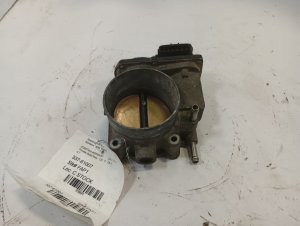
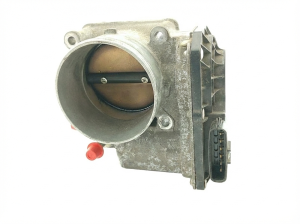
When a used part is the smart pick: A used throttle body from a reputable auto recycler can be a cost-effective option, as this part is not a high-frequency failure item and is often replaced due to misdiagnosis. Given the high cost of a new OEM unit, a used part is a reasonable gamble if the donor vehicle information is available.
Donor-vehicle mileage cap: roughly under 120000 miles for the part to have meaningful remaining life.
What to inspect on the donor part:
- Verify the part is from a 2003-2009 4Runner, 2007-2009 FJ Cruiser, or 2005-2015 Tacoma with the 4.0L V6 to ensure compatibility.
- Inspect the throttle bore. While some carbon is expected, avoid units that are excessively black and gummy, as this may indicate a tired engine with high blow-by.
- Manually (with power off) move the throttle plate. It should feel smooth with consistent spring tension and no gritty or binding spots.
- Check the electrical connector for any bent, corroded, or broken pins.
OEM-only on this vehicle (don't cheap out):
- Engine Control Module (ECM)
Aftermarket brands forum-validated for this vehicle:
- Aisin (often the OEM supplier)
- Hitachi
Brands owners have reported issues with on this vehicle:
- Unbranded, no-name parts from online marketplaces should be avoided. Failure of this component puts the vehicle into a dangerous limp mode, so reliability is critical.
Real Owner Stories
Aggregated from forums and TSBs cited above. Mileages and costs reflect what owners reported in those sources.
2003-2009 Toyota 4Runner 1GR-FE
Symptoms: P2111 code, limp mode, and TRAC OFF lights while idling. Found a 'carbon like dirt ring keeping the throttle plate open a hair.'
What fixed it: Cleaning off the carbon dirt ring from the throttle plate and bore.
Source hint: 4Runners.com thread titled 'Error Code 2111'
2003-2009 Toyota 4Runner 1GR-FE
Symptoms: P2111 code and 'Brake Override Malfunction' message. The issue would temporarily clear by restarting the car but returned intermittently when creeping in traffic.
What fixed it: Replacement of the entire throttle body assembly after cleaning failed to provide a permanent fix.
Source hint: 4Runners.com thread titled 'Error Code 2111'
2010-2014 Toyota 4Runner 1GR-FE — ~10 miles
Symptoms: P2111 and limp mode would only occur after driving for about 10 miles in the heat. Throttle body was inspected and was not very dirty.
What fixed it: The owner suggested a heat-related electronic failure within the throttle body assembly itself.
Source hint: Reddit user with a 5th Gen 4Runner (same engine family) in vehicle_specific_issues
Related OBD-II Codes
Frequently Asked Questions
Does T-SB-0087-11 apply to my 2003-2009 Toyota 4Runner?
Why is my TRAC OFF light on alongside the P2111 code?
Can I just clean the throttle body on my 1GR-FE to fix this?
Is there a specific message I might see on the dash besides the Check Engine Light?
Should I replace the gasket if I remove the throttle body for cleaning?
Will disconnecting the battery help after I clean the throttle body?
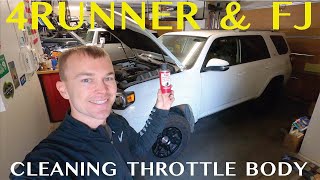
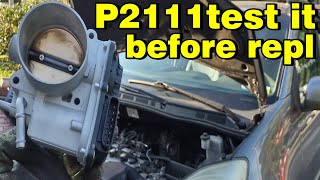
Helpful Videos


Used OEM Parts in Stock
New Aftermarket Parts Available




The information in this article is provided for general reference and educational purposes only. Vehicle specifications, procedures, and part compatibility can vary by production date, trim level, and region. Always consult your vehicle's factory service manual and verify part numbers before purchasing or performing repairs. Safety-critical components such as airbags, seat belts, and braking systems should be installed by a qualified professional.
- Toyota 4Runner:
- 🧭 Diagnostic Flowchart
- 🎬 Helpful Videos
- 🛍️ Shop This Part
- What's Unique About the 2003-2009 Toyota 4Runner
- Symptoms You May Notice
- Most Likely Causes
- Rare But Worth Checking
- Diagnosis Steps
- Parts You'll Likely Need
- Related Codes That Often Appear With This One
- Technical Service Bulletins (TSBs) & Recalls
- Platform-Specific Known Issues
- Mechanic-Grade Diagnostic Values
- Scan Tool Commands That Help
- Wiring & Ground Locations
- Real Owner Repair Stories
- OEM Part Supersession History
- Model Year Variations Within This Range
- Other Known Issues on This Vehicle
- Used vs. New Parts: Buying Guide for This Vehicle
- Real Owner Stories
- 2003-2009 Toyota 4Runner 1GR-FE
- 2003-2009 Toyota 4Runner 1GR-FE
- 2010-2014 Toyota 4Runner 1GR-FE — ~10 miles
- Related OBD-II Codes
- Frequently Asked Questions
- 🎟️ Get 5% Off