

P2111 on 2007-2011 Toyota Camry Hybrid: Causes for Throttle Stuck Open
On a 2007-2011 Toyota Camry Hybrid, code P2111 almost always means the throttle body is sticking due to carbon buildup. A thorough cleaning often fixes it, but if not, replacing the throttle body assembly is the solution. This is a well-documented issue also affecting its platform-mate, the Lexus HS250h.
- P2111 on a 2007-2011 Camry Hybrid is a critical code that makes the vehicle unsafe to drive.
- The most probable cause is a dirty throttle body that is sticking open; a thorough cleaning is the first and most cost-effective step.
- If cleaning doesn't solve the problem, the entire throttle body assembly (OEM Part # 22030-28070 or its successor 22030-0H031) must be replaced.
- A known TSB (T-SB-0012-16) exists for this issue, confirming it's a recognized problem for this vehicle and its Lexus HS250h platform-mate.
- This is a manageable DIY repair for those with basic tools, potentially saving hundreds in labor costs. A 'relearn' procedure is usually as simple as an ECU reset via battery disconnect and a few minutes of idling.
What's Unique About the 2007-2011 Toyota CAMRY HYBRID

For the XV40 generation Camry Hybrid with the 2AZ-FXE engine, this issue is common enough that Toyota released a Technical Service Bulletin (T-SB-0012-16). The TSB specifically notes that a P2111 code may be accompanied by a lack of acceleration or the engine stalling when the vehicle is stopped. This indicates a known tendency for the throttle body to become sticky over time, leading to this specific failure mode. The issue is also documented on its Lexus counterpart, the HS250h.
Diagnostic Flowchart
Tap your situation to follow the diagnostic path that matches what you're seeing on this vehicle.
Symptoms You May Notice
- Check Engine Light is on
- Vehicle enters 'limp mode' (reduced engine power)
- Engine stalls when coming to a stop
- No throttle response or delayed acceleration (pressing the gas pedal does nothing)
- Unstable, high, or fluctuating idle
- Vehicle may surge forward without driver input
- Replacing the accelerator pedal position sensor. While related to the throttle system, a faulty pedal sensor will typically set its own specific trouble codes (e.g., P0122) and is a less common failure point for this symptom.
Most Likely Causes

- Dirty or Sticking Throttle Body 🔴 High Probability → Shop Fuel Injection Throttle Body As identified in TSB T-SB-0012-16, carbon and oily gunk from the PCV system can build up in the throttle body bore and on the throttle plate itself. This buildup prevents the plate from closing fully, causing the ECM to detect a 'stuck open' condition. This is a very common issue on many modern electronically-controlled throttle bodies.
How to confirm: Remove the intake air duct from the throttle body and visually inspect the throttle plate and bore for black carbon deposits. With the ignition off, check if the plate moves smoothly by hand. Any binding or stickiness confirms the issue. A scan tool may also show a throttle position percentage higher than expected at idle (e.g., above 16-18%).
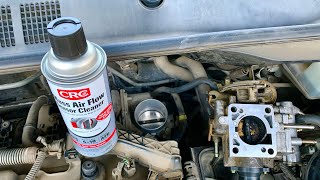
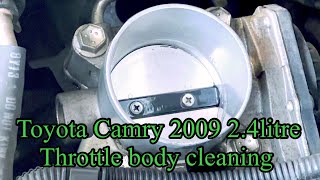
Typical fix: Clean the throttle body thoroughly with a dedicated throttle body cleaner and a soft, lint-free cloth or brush. 🎬 See a quick demonstration of the throttle body cleaning process. Do not spray cleaner directly into the intake manifold. Ensure the area where the plate seats is perfectly clean. After cleaning, a simple ECU reset by disconnecting the negative battery terminal for a few minutes is often sufficient for the system to relearn.
Est. part cost: $5-$15 for cleaner - Failed Throttle Body Assembly 🟡 Medium Probability → Shop Fuel Injection Throttle Body The internal electric motor or the non-serviceable position sensor within the sealed throttle body unit can fail, often intermittently with heat. This prevents the throttle plate from responding correctly to the ECM's commands, requiring replacement of the entire assembly.
How to confirm: If a thorough cleaning does not fix the problem and the P2111 code returns, the throttle body itself is the likely culprit. A diagnostic test involves checking the resistance between the motor terminals on the throttle body; a reading outside the manufacturer's specification (e.g., 0.3 to 100 ohms for some Toyotas) indicates a bad motor. This failure can be intermittent, appearing only when the engine is hot.
Typical fix: Replace the entire throttle body assembly. After installation, a throttle relearn procedure may be needed, which can often be accomplished by letting the engine idle for several minutes. No special programming is typically required.
Est. part cost: $80-$700
Rare But Worth Checking
- Wiring or Connector Issue: While less common than a dirty throttle body, it's worth checking. Inspect the wiring harness and connector going to the throttle body for any signs of damage, corrosion, or loose pins.
- Foreign Object Obstruction: In a documented case on a ClubLexus forum, a small piece of plastic became lodged in the throttle body, preventing the valve from closing and triggering a P2111 code. The fix was simply removing the object and cleaning the area.
- Powertrain Control Module (PCM) Fault: → Shop Engine Control Module (ECM) This is extremely rare. The PCM should only be considered as a potential cause after all other possibilities, including the throttle body and wiring, have been definitively ruled out.
Diagnosis Steps

- Scan the vehicle for any other trouble codes. Address those first if they are present.
- Visually inspect the wiring harness and connector at the throttle body for damage, corrosion, or loose connections.
- Remove the intake boot from the throttle body.
- Inspect the throttle bore and plate for heavy carbon buildup or any foreign object obstruction.
- With the ignition off, carefully try to move the throttle plate with your finger. It should move smoothly and spring back to its resting position without sticking.
- If dirty, perform a thorough cleaning using throttle body cleaner and a soft rag. Pay special attention to the edges of the plate and the bore where it seats.
- Clean the mating surface on the intake manifold before reinstalling the throttle body.
- After cleaning or replacement, disconnect the negative battery terminal for at least 60 seconds to reset the ECU's memory.
- Reconnect the battery, start the engine, and let it idle for 3-5 minutes to allow the ECM to perform an idle relearn.
- Clear the code with a scan tool and test drive the vehicle. If the code returns after a thorough cleaning, the throttle body assembly likely needs replacement.
Parts You'll Likely Need

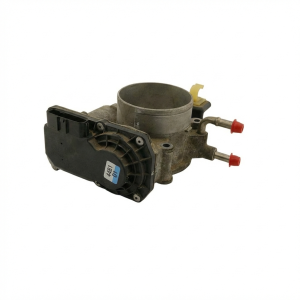
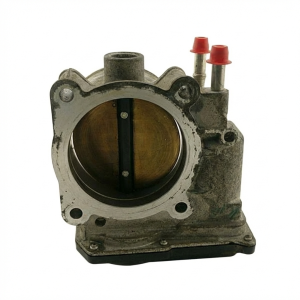
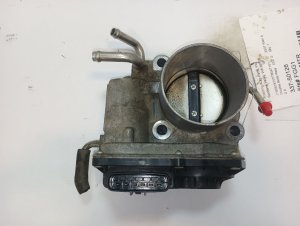
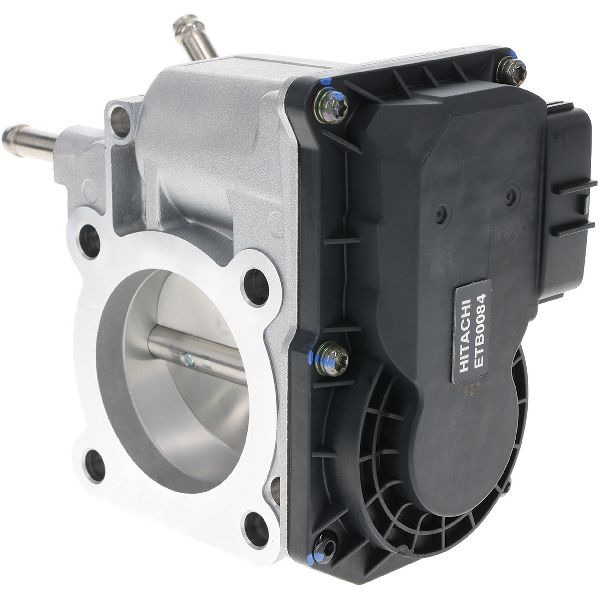
- Throttle Body Assembly
(OEM #22030-28070)— This is the most common cause of P2111 if cleaning fails. The internal motor fails or the unit cannot be cleaned effectively, requiring full replacement. The original part 22030-28070 has been superseded by 22030-0H031.
Trusted brands: Genuine Toyota, Denso, Aisin
OEM price range: $340-$600
Aftermarket price range: $80-$250
Technical Service Bulletins (TSBs) & Recalls
- T-SB-0012-16: Addresses engine stall at stop with DTC P2111 for the 2007-2011 Camry Hybrid. The procedure involves replacing the PCV valve and diagnosing the throttle body.
- L-SB-0012-16: A parallel TSB for the Lexus HS250h, which shares the same 2AZ-FXE engine, for the same P2111 and stalling issue.
Platform-Specific Known Issues
- Toyota issued Technical Service Bulletin T-SB-0012-16 for the 2007-2011 Camry Hybrid which specifically addresses an engine stall while the vehicle is stopped, accompanied by DTC P2111. The prescribed fix in the bulletin is to replace the PCV valve and follow standard diagnostic procedures for the P2111 code, which typically leads to cleaning or replacing the throttle body.
- Owners on forums like PriusChat have confirmed that cleaning the throttle body is often the first and most successful step, but if the code returns, a full replacement is necessary. A relearn procedure after replacement is often as simple as letting the car idle.
Mechanic-Grade Diagnostic Values
- Throttle Actuator Motor Resistance — expected: 0.3 to 100 ohms (when cold). Failure: A reading outside of this range, such as 172 ohms, indicates a failed motor. The failure can be intermittent and may only appear when the component is hot.
- Throttle Position Sensor Live Data (Techstream) — expected: Approximately 16% at idle. Failure: A value significantly higher than 16% at idle suggests the throttle plate is not closing properly.
- Fail-Safe Throttle Angle — expected: Approximately 6° to 16°. Failure: When a P2111 DTC is set, the ECM cuts current to the actuator, and a return spring forces the throttle plate to a fixed safe angle.
Scan Tool Commands That Help
- Toyota Techstream: Active Test: Control the Throttle Actuator — This bidirectional command allows a technician to directly command the throttle motor to open and close. This is used to verify if the throttle plate moves smoothly throughout its range or if it binds/sticks, confirming a mechanical or motor issue without having to remove the throttle body.
- Toyota Techstream: Live Data List (Data List) — Used to monitor parameters like 'Throttle Position Sensor No.1 Volt %' and 'Throttle Motor Current'. This helps confirm what the ECM is seeing. For example, you can compare the commanded throttle angle to the actual throttle angle to see if there is a discrepancy.
- OBD-II Scan Tool (with special functions): Throttle Reset / Relearn — After cleaning or replacing the throttle body, a relearn procedure is necessary. While many Toyotas will relearn automatically by idling, a scan tool can force the calibration to ensure the idle speed is set correctly immediately.
Wiring & Ground Locations
- E1 — Left side of the dash.. This is a major ground point for many components in the dash area, including circuits related to the Engine Control Module (ECM). A poor connection at E1 could potentially cause erratic behavior in the throttle control system.
- C4 — Top rear of the engine.. This is a ground point located on the engine itself, near where the throttle body is situated. The ignition coils and other critical engine sensors ground here. Ensuring this ground is clean and tight is crucial for stable sensor and actuator operation.
- Throttle Body Connector — Directly on the throttle body assembly.. The two larger pins on the connector are for the throttle actuator motor (M+ and M-). The other pins are for the dual throttle position sensors (VTA1, VTA2, VC, E2). Checking for voltage and resistance at these specific pins is the primary way to diagnose the electrical integrity of the throttle body and its circuit.
Real Owner Repair Stories
- YouTube channel 'Fixing cars and stuff' (Toyota Sienna with 3.3L engine (similar ETCS logic)) — Intermittent P2111 and P2112 codes, vehicle enters limp mode (10 mph max) when hot, but runs fine when cold.
❌ Tried (didn't work) Initial resistance test of the throttle body motor when cold showed it was within spec.
✅ What actually fixed it The mechanic re-tested the throttle body motor when the engine was hot and the problem was present. The resistance measured ~172 ohms, which is far outside the specified range of 0.3-100 ohms. The intermittent failure of the motor windings when hot was the root cause. Replacing the entire throttle body assembly resolved the issue permanently.
OEM Part Supersession History
22030-28070→22030-0H031— The part was updated by the manufacturer. While the exact reason is not officially published, supersessions often address reliability improvements or minor manufacturing changes.
Heads up: The new part number 22030-0H031 is the correct, direct replacement for 22030-28070 and is fully compatible.
Helpful Videos
Used OEM Parts in Stock
New Aftermarket Parts Available


The information in this article is provided for general reference and educational purposes only. Vehicle specifications, procedures, and part compatibility can vary by production date, trim level, and region. Always consult your vehicle's factory service manual and verify part numbers before purchasing or performing repairs. Safety-critical components such as airbags, seat belts, and braking systems should be installed by a qualified professional.
- Toyota CAMRY HYBRID:
- 🧭 Diagnostic Flowchart
- 🎬 Helpful Videos
- 🛍️ Shop This Part
- What's Unique About the 2007-2011 Toyota CAMRY HYBRID
- Symptoms You May Notice
- Most Likely Causes
- Rare But Worth Checking
- Diagnosis Steps
- Parts You'll Likely Need
- Technical Service Bulletins (TSBs) & Recalls
- Platform-Specific Known Issues
- Mechanic-Grade Diagnostic Values
- Scan Tool Commands That Help
- Wiring & Ground Locations
- Real Owner Repair Stories
- OEM Part Supersession History
- 🎟️ Get 5% Off