

P2112 on 2011-2017 Chrysler 200 2.4L: Throttle Body Stuck Closed Causes and Fixes
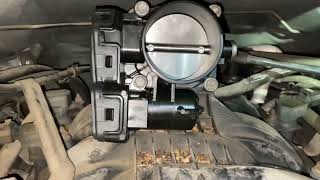
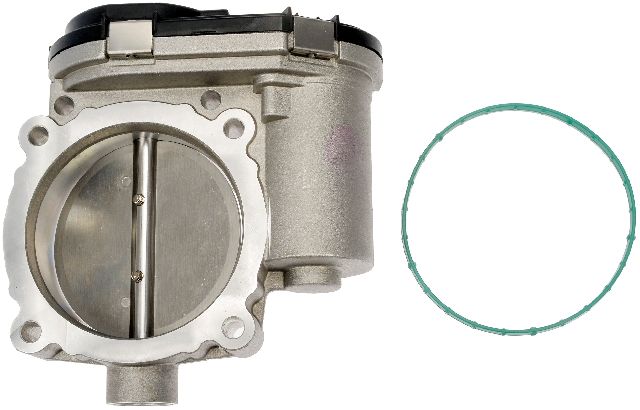
On a 2011-2017 Chrysler 200, code P2112 almost always means the electronic throttle body has failed. This triggers the 'lightning bolt' warning light and forces the car into a low-power 'limp mode'. The fix is to replace the entire throttle body assembly, which costs between $150 and $400 for the part, and then perform a throttle relearn procedure.
- P2112 on a Chrysler 200 means the car is about to go into, or is already in, a low-power 'limp mode' due to a throttle body fault.
- The most likely cause is a failed electronic throttle body; cleaning it is unlikely to be a permanent solution.
- Verify which 2.4L engine your car has (World Engine for 2011-2014, Tigershark for 2015-2017) to buy the correct replacement part.
- Replacing the throttle body is a DIY-friendly job for many, but a throttle relearn procedure is mandatory after installation.
- Do not continue to drive with this code, as the sudden loss of power is a significant safety hazard.
What's Unique About the 2011-2017 Chrysler 200
Throttle body failure is a widely documented weak point on many Chrysler products from this era that use the 2.4L engine, including the 200, Dodge Avenger, and Jeep Patriot/Compass. The failure is typically not due to simple carbon buildup, but rather an internal electronic or mechanical fault within the sealed throttle body unit, such as worn plastic gears or a failed actuator motor. This is why cleaning the throttle body often fails to resolve the issue permanently. The most common and immediate symptom is the illumination of the Electronic Throttle Control (ETC) 'lightning bolt' light, which instantly puts the car into a dangerous low-power limp mode.
Generation note: The 2011-2017 Chrysler 200 spans two generations with different 2.4L engines and throttle bodies: - 1st Gen (2011-2014): Uses the 2.4L 'World Engine'. The throttle body part number is typically 4891735AC, which has been superseded by 4891735AD. - 2nd Gen (2015-2017): Uses the 2.4L 'Tigershark' MultiAir engine. The throttle body part number is typically 4891970AD, which supersedes earlier AA, AB, and AC versions. While the parts are different and not interchangeable, the failure mode (internal electronic/mechanical failure) and symptoms (ETC light, limp mode, stalling) are virtually identical for both generations.
Symptoms You May Notice
- Electronic Throttle Control (ETC) 'lightning bolt' light illuminated on the dashboard.
- Vehicle enters 'limp mode' with severely reduced engine power and acceleration.
- Engine stalls, especially when coming to a stop or at idle.
- Rough, erratic, or unstable idle.
- Hesitation or sluggish/unresponsive gas pedal.
- Vehicle may not start.
- Check Engine Light is on.
- Replacing the accelerator pedal position (APP) sensor. While the APP sensor is part of the throttle control system, P2112 specifically points to a problem at the throttle body itself (the actuator not responding as commanded), not the pedal sending the command.
Most Likely Causes
- Failed Electronic Throttle Body Assembly 🔴 High Probability → Shop Fuel Injection Throttle Body The internal components, specifically the plastic gears and the actuator motor, are known to wear out and fail over time, which is a common issue on this platform and its relatives like the Dodge Avenger and Jeep Compass.
How to confirm: With the ignition on (engine off), listen for a buzzing or clicking from the throttle body as an assistant presses the gas pedal. An absence of sound or a grinding/clicking noise indicates failure. The presence of codes P2110, P2111, or P2112 almost always condemns the throttle body on this vehicle.
Typical fix: Replace the entire throttle body assembly. After installation, a throttle relearn procedure must be performed.
Est. part cost: $150-$490 - Heavy Carbon Buildup ⚪ Low Probability The PCV (Positive Crankcase Ventilation) system can introduce oil vapors that bake onto the throttle plate and bore, causing it to stick. This is sometimes exacerbated by the known oil consumption issues on the 2.4L Tigershark engine.
How to confirm: Remove the air intake hose from the throttle body and visually inspect the throttle plate and bore for a thick black coating that could restrict movement.
Typical fix: Clean the throttle body bore and plate thoroughly with a dedicated throttle body cleaner and a soft brush. Perform a throttle relearn procedure afterward. Note: This is often a temporary fix if the root cause is electronic failure, as many owners report the code returning shortly after cleaning.
Est. part cost: $10-$20 - Wiring or Connector Damage ⚪ Low Probability The wiring harness to the throttle body is subjected to engine vibration and heat, potentially causing wires to break or the connector pins to corrode over time. The connector itself can also become loose.
How to confirm: Visually inspect the wiring harness leading to the throttle body for any signs of chafing, breaks, or melted insulation. Unplug the connector and check for corrosion, backed-out, or bent pins. Wiggle the connector with the engine running to see if it affects idle.
Typical fix: Repair the damaged section of the wiring harness or replace the connector pigtail. Ensure the connector is fully seated with its locking tab engaged.
Est. part cost: $20-$100
Rare But Worth Checking
- Powertrain Control Module (PCM) Failure: This is very rare. Before condemning the PCM, all other possibilities, especially the throttle body and its wiring, must be exhaustively ruled out. A faulty PCM can sometimes fail to send the correct signals to the throttle body or misinterpret sensor data.
Diagnosis Steps
- Read all fault codes with an OBD-II scanner. Note if P2110, P2111, or other TPS-related codes are present, as they strongly point to the throttle body.
- Turn the ignition to the 'ON' position (engine off). Have an assistant slowly press and release the gas pedal while you listen to the throttle body. A healthy unit will emit a distinct buzzing sound as the plate moves. Grinding, clicking, or silence points to a faulty throttle body.
- Disconnect the negative battery terminal.
- Remove the air intake duct from the throttle body.
- Visually inspect the throttle plate and bore for heavy carbon buildup that could cause it to stick.
- Inspect the electrical connector and wiring harness for any visible damage, corrosion, or loose pins. Ensure the connector is securely latched.
- If no wiring issues or heavy binding from carbon is found, the throttle body assembly is almost certainly faulty and should be replaced.
- After replacement, perform a throttle relearn procedure. A common manual method is to turn the key to 'ON' (engine off) for 10 seconds, then slowly press the gas pedal to the floor and slowly release it. Turn the key 'OFF' for 10 seconds, then start the engine. Some vehicles may require a scan tool for a full calibration.
Parts You'll Likely Need
- Electronic Throttle Body Assembly (2011-2014)
(OEM #4891735AD (supersedes 4891735AC, AB, AA))— This is the primary cause of code P2112 on the 1st generation Chrysler 200 with the 2.4L World Engine due to high rates of internal electronic and mechanical failure.
Trusted brands: Mopar, Dorman, Cardone, Hitachi
OEM price range: $350-$450
Aftermarket price range: $150-$250 - Electronic Throttle Body Assembly (2015-2017)
(OEM #4891970AD (supersedes 4891970AC, AB))— This is the main point of failure for P2112 on the 2nd generation Chrysler 200 with the 2.4L Tigershark engine, which suffers from similar internal failures as the earlier models.
Trusted brands: Mopar, Dorman, Hitachi
OEM price range: $400-$490
Aftermarket price range: $200-$300 - Throttle Body Gasket
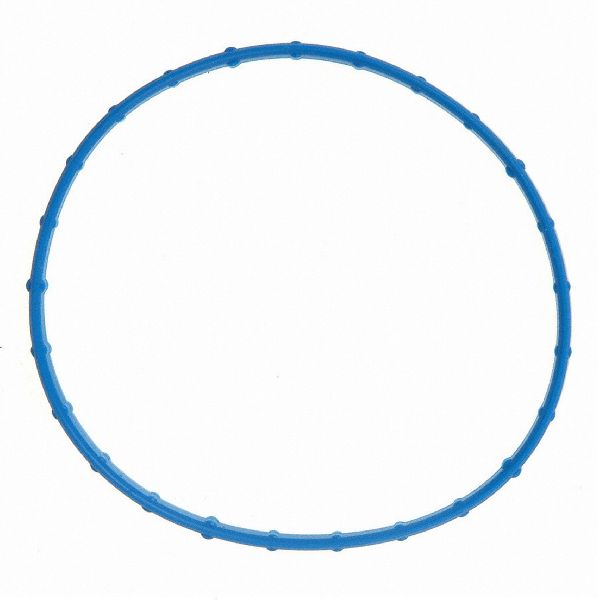
(OEM #4884551AA (for 1st Gen))— It is highly recommended to replace the gasket any time the throttle body is removed to prevent vacuum leaks. Many replacement throttle bodies include a new gasket.
Trusted brands: Mopar, Fel-Pro, Mahle
OEM price range: $10-$20
Aftermarket price range: $5-$15
Related Codes That Often Appear With This One
- P2110 — This code means 'Throttle Actuator Control System - Forced Limited RPM' and is set by the PCM as a direct result of detecting the P2112 fault, indicating limp mode has been activated.
- P2111 — This code for 'Stuck Open' can appear with P2112 as a failing throttle body's internal gears may jam in different positions at different times.
- P0121, P0221, P2135 — These codes relate to the throttle position sensors (TPS) housed within the throttle body assembly. A failure of these internal sensors will trigger these codes alongside the actuator fault.
Technical Service Bulletins (TSBs) & Recalls
- TSB 09-003-20 REV. A: While for 2020 Jeep models, this TSB acknowledges a batch of defective 2.4L throttle bodies, showing a history of manufacturing issues with this component type from the manufacturer.
- TSB 09-006-20 REV. B: Details the official oil consumption test for the 2.4L Tigershark engine, an issue that can contribute to carbon buildup on the throttle body.
Platform-Specific Known Issues
- Throttle body failure is listed as one of the top 5 most common problems for the first-generation (2011-2014) Chrysler 200.
- For the second-generation (2015-2017) models, a PCM software recall (U59 / NHTSA 18V-332) was issued to address an issue where cruise control could not be cancelled, which involves reprogramming the PCM that controls the throttle. While not a direct fix for P2112, ensuring this recall is complete is important for overall throttle system software health.
Mechanic-Grade Diagnostic Values
- Throttle Body Connector Pin Voltages (Tigershark 2.4L) — expected: Pin 1 (5V Supply): ~5V; Pin 2 (TP Sensor 2 Signal) & Pin 5 (TP Sensor 1 Signal): Voltage sweeps smoothly as throttle moves; Pin 3 (ETC Motor -) & Pin 4 (ETC Motor +): Varying voltage during actuation.. Failure: No voltage on Pin 1 points to a PCM or wiring issue. Signal voltage stuck or not changing on Pins 2/5 indicates internal sensor failure. No voltage on Pins 3/4 during commanded actuation indicates a PCM driver or wiring fault.
- Throttle Body Connector Pinout (World Engine 2.4L - Typical) — expected: Pin 1: ETC Motor (-), Pin 2: TP Sensor 2 Signal, Pin 3: 5V Supply, Pin 4: Sensor Ground, Pin 5: TP Sensor 1 Signal, Pin 6: ETC Motor (+).. Failure: Testing with a multimeter should confirm ~5V on the supply pin, good ground, and signal voltages that are not shorted to ground.
- Resistance of ETC Motor Windings — expected: A low resistance value, typically between 3-10 ohms, when measured across the two ETC motor pins on the throttle body.. Failure: An open circuit (infinite resistance) or a short circuit (near zero ohms) indicates a failed motor within the throttle body assembly.
Scan Tool Commands That Help
- wiTECH or high-level aftermarket scanner: ETC Learn / ETC Re-Learn Initiation — This function is mandatory after replacing the throttle body. It commands the PCM to learn the new throttle plate's closed, open, and partial-open positions. Failure to perform this step can result in persistent codes, incorrect idle, and poor throttle response even with a new part.
- wiTECH or high-level aftermarket scanner: Throttle Body Actuator Test / Functional Test — During diagnosis, this allows a technician to command the throttle plate to open and close with the key on, engine off. It's used to verify if the motor is responding to PCM commands and to listen for abnormal grinding or binding noises that indicate mechanical failure.
Wiring & Ground Locations
- Throttle Body 6-Pin Connector — Plugged directly into the electronic throttle body assembly.. This single connector is the interface for all power, ground, and sensor signals. Corrosion on the pins, a loose connection, or damage to the pigtail wiring is a common cause of intermittent or total failure of the throttle control system.
- G101 / G103 — Typically located at the rear of the cylinder head on the 2.4L engine.. These are primary engine ground points. While not exclusively for the throttle body, a loose or corroded engine ground can cause a host of unpredictable electronic issues, including erratic sensor readings and incorrect voltages that could lead the PCM to misdiagnose a throttle fault.
- G301 / G302 — G301 is often at the right side kick panel, G302 at the left kick panel area.. These are major body and interior ground distribution points. A fault here is less likely to cause a specific P2112 code but could contribute to a wide range of bizarre electrical problems if other seemingly unrelated systems are also malfunctioning.
Real Owner Repair Stories
- DodgeForum user (2012 Dodge Avenger 2.4L (same platform)) — ETC 'lightning bolt' light on, P2112 code stored, vehicle in limp mode.
❌ Tried (didn't work) Initial diagnosis pointed directly to the common failure.
✅ What actually fixed it Replacing the electronic throttle body assembly and performing the relearn procedure resolved all symptoms. - YouTube Commenter / Forum Aggregation (2015 Chrysler 200 S) — Sudden loss of power on highway, flashing cruise control light, limp mode activation, codes P2111 and P2112.
❌ Tried (didn't work) Replaced OEM throttle body #1, Replaced OEM throttle body #2
✅ What actually fixed it The issue was ultimately traced to a faulty Totally Integrated Power Module (TIPM). The internal relays that control power to various components, including potentially the ETC system, were failing. Replacing the TIPM provided a final resolution after multiple throttle body replacements did not.
When the Usual Fixes Don't Work
- While the vast majority of P2112 codes on this platform are fixed by replacing the throttle body, there are documented cases where the problem persists. In these instances, the root cause was found to be a failing Totally Integrated Power Module (TIPM). The TIPM's internal relays can fail, causing inconsistent power delivery to the throttle control system. The PCM interprets this power issue as a throttle body fault, leading to a misdiagnosis. If a second throttle body fails to resolve the code, the TIPM should be professionally tested.
OEM Part Supersession History
4891735AC, 4891735AB, 4891735AA→4891735AD— Revisions to improve reliability and address internal electronic failures.4891970AC, 4891970AB→4891970AD— Revisions to improve the longevity of the internal motor and position sensors for the Tigershark engine.
Model Year Variations Within This Range
- 2011-2014: Uses the 2.4L World Engine with throttle body P/N 4891735AD. The physical location and removal procedure may differ slightly from the later generation.
- 2015-2017: Uses the 2.4L Tigershark MultiAir engine with throttle body P/N 4891970AD. The intake manifold design and throttle body placement are different from the first generation.
Diagnostic Flowchart
Other Known Issues on This Vehicle
Issues unrelated to this code that are worth knowing about as an owner of this generation:
- Excessive Oil Consumption (2.4L Tigershark) 🔴 High — Widespread on 2015-2017 models. Owners report consuming a quart of oil every 1,000-2,000 miles. Caused by a piston ring design defect. (Ref: TSB 09-006-20 REV. B details the official consumption test. A warranty extension (XB1) was issued for some vehicles.)
- 9-Speed Transmission Failure/Erratic Behavior 🔴 High — Very common on 2015-2017 models. Manifests as harsh shifting, lurching, unexpected shifts to neutral, or complete failure. (Ref: Multiple software-related recalls (e.g., U59) and TSBs were issued to address shift quality.)
- Engine Stalling While Driving 🔴 High — Reported on both generations. Can be linked to the throttle body failure (P2112), but also to the excessive oil consumption issue on Tigershark engines causing low oil pressure shutdown, or other electrical faults.
- Clogged Heater Core (1st Gen) 🟠 Medium — A common complaint on 2011-2014 models, resulting in little to no heat from the vents. Often caused by casting sand from the engine block or degraded coolant clogging the core.
- Active Head Restraint (AHR) Random Deployment 🟠 Medium — Affects both generations. The plastic brackets inside the headrest can become brittle and break, causing the headrest to deploy without a collision. (Ref: Subject of a class-action lawsuit.)
Used vs. New Parts: Buying Guide for This Vehicle
When a used part is the smart pick: A used throttle body is NOT recommended for this repair. The electronic throttle body is a known high-failure component on this platform. The risk of purchasing a used part that is already near the end of its service life is extremely high, negating any potential cost savings.
Donor-vehicle mileage cap: roughly under 40000 miles for the part to have meaningful remaining life.
What to inspect on the donor part:
- Not applicable as used parts are strongly discouraged.
OEM-only on this vehicle (don't cheap out):
- While not strictly 'OEM-only', a new Mopar (OEM) throttle body is the safest choice to ensure you get the latest revised part with the highest chance of long-term reliability.
Aftermarket brands forum-validated for this vehicle:
- Dorman (specifically notes design improvements on some models)
- Hitachi
- Standard Motor Products (SMP)
- Bosch
Brands owners have reported issues with on this vehicle:
- Unbranded, 'white-box' parts from online marketplaces with no warranty or brand recognition.
Real Owner Stories
Aggregated from forums and TSBs cited above. Mileages and costs reflect what owners reported in those sources.
2012 Dodge Avenger 2.4L
Symptoms: Electronic Throttle Control (ETC) light illuminated and P2112 code present.
What fixed it: Replaced the throttle body assembly and performed the relearn procedure.
Source hint: DodgeForum.com: 'p2112' thread
2012 Chrysler 200 3.6L
Symptoms: Vehicle entered limp mode and triggered a P2111 code.
What fixed it: Replacement of the throttle body assembly.
Source hint: 200Forums.com: 'P2111 Code Help'
2015-2017 Chrysler 200 2.4L Tigershark
Symptoms: Consuming a quart of oil every 1,000-2,000 miles.
What fixed it: TSB 09-006-20 REV. B details the official oil consumption test; some vehicles received a warranty extension (XB1) for piston ring defects.
Source hint: TSB 09-006-20 REV. B
Related OBD-II Codes
Frequently Asked Questions
My 2015 Chrysler 200 2.4L is consuming a lot of oil; could this be causing my P2112 code?
Is there a recall for the throttle issues on my 2016 Chrysler 200?
I heard Dorman makes an improved throttle body for the 2.4L engine. Is this true?
Can I just clean the throttle body on my 2012 Chrysler 200 to fix P2112?
How do I perform the throttle relearn on my Chrysler 200 after replacing the part?
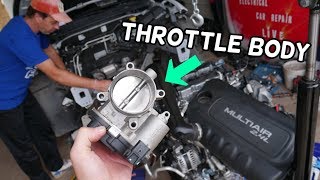
Helpful Videos


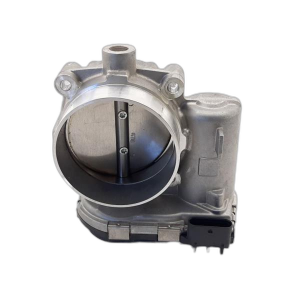
Used OEM Parts in Stock
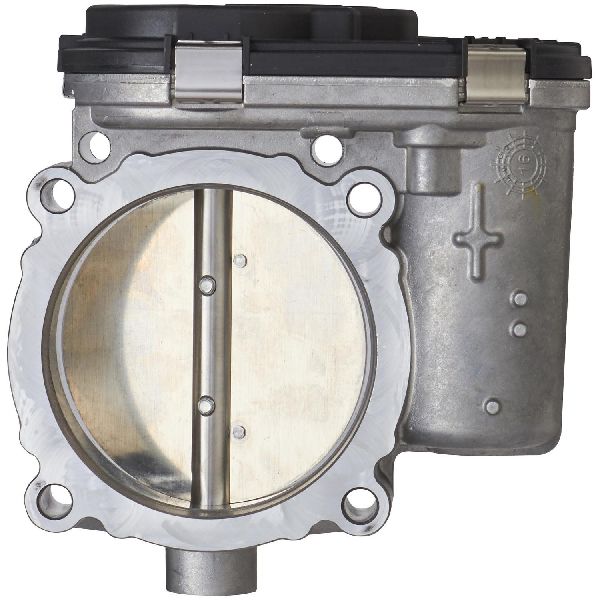
New Aftermarket Parts Available


The information in this article is provided for general reference and educational purposes only. Vehicle specifications, procedures, and part compatibility can vary by production date, trim level, and region. Always consult your vehicle's factory service manual and verify part numbers before purchasing or performing repairs. Safety-critical components such as airbags, seat belts, and braking systems should be installed by a qualified professional.
- Chrysler 200:
- 🧭 Diagnostic Flowchart
- 🎬 Helpful Videos
- 🛍️ Shop This Part
- What's Unique About the 2011-2017 Chrysler 200
- Symptoms You May Notice
- Most Likely Causes
- Rare But Worth Checking
- Diagnosis Steps
- Parts You'll Likely Need
- Related Codes That Often Appear With This One
- Technical Service Bulletins (TSBs) & Recalls
- Platform-Specific Known Issues
- Mechanic-Grade Diagnostic Values
- Scan Tool Commands That Help
- Wiring & Ground Locations
- Real Owner Repair Stories
- When the Usual Fixes Don't Work
- OEM Part Supersession History
- Model Year Variations Within This Range
- Other Known Issues on This Vehicle
- Used vs. New Parts: Buying Guide for This Vehicle
- Real Owner Stories
- 2012 Dodge Avenger 2.4L
- 2012 Chrysler 200 3.6L
- 2015-2017 Chrysler 200 2.4L Tigershark
- Related OBD-II Codes
- Frequently Asked Questions
- 🎟️ Get 5% Off