

P2112 on 1997-2014 Ford E-Series 4.6L V8: Throttle Body Stuck Closed Causes and Fixes
On a Ford E-Series with a 4.6L V8 and Electronic Throttle Control (approx. 2005-2014), code P2112 means the electronic throttle body is stuck closed. This is almost always caused by a failed throttle body assembly, which must be replaced. Cleaning is not an effective fix for this internal electronic failure. Expect to pay $150-$250 for a new Motorcraft part. The vehicle will enter a dangerous 'limp mode' with no acceleration.
- P2112 on a 2005-2014 E-Series 4.6L V8 means the electronic throttle body has failed and is stuck closed.
- The vehicle will enter a 'limp mode' with severely reduced power and is not safe to drive.
- The most common and likely fix is to replace the entire electronic throttle body assembly.
- Check TSB 10-21-6 if you have a 2010 model, as it specifically addresses this issue.
- After replacement, a Keep Alive Memory (KAM) reset should be performed.
What's Unique About the 1992-2014 Ford E-Series
This code only applies to E-Series vans equipped with Electronic Throttle Control (ETC), which Ford began using on the 4.6L 2V V8 around the 2005 model year. Earlier models (approx. 1997-2004) used a mechanical throttle cable and cannot set this code. The electronic throttle body assembly is a known high-failure item across many Ford platforms from this era. Ford issued Technical Service Bulletin (TSB) 10-21-6 for 2010 E-Series vans with the 4.6L 2V engine that experience P2112, indicating a known issue with the throttle body on certain production runs.
Generation note: The 1992-2014 range covers the fourth generation of the Ford E-Series. However, the 4.6L 2V V8 engine was introduced in 1997. More importantly, this code only applies to models with Electronic Throttle Control (ETC), which were produced from approximately 2005 to 2014. Vans from 1997-2004 with the 4.6L engine use a mechanical throttle with an Idle Air Control (IAC) valve and will not set this code.
Symptoms You May Notice
- Check Engine Light and/or Wrench Light illuminated
- Vehicle enters 'limp home' mode with drastically reduced engine power
- Little to no throttle response when pressing the accelerator pedal
- Engine stalls, especially when trying to accelerate from a stop
- Unstable or fluctuating idle speed
- Warning messages on the dash such as "Engine Malfunction" or "Hill Assist Not Available"
- Replacing the Accelerator Pedal Position (APP) Sensor. While the APP sensor is part of the throttle control system, a failure there typically sets different codes (e.g., P2120-P2134). P2112 points specifically to a discrepancy at the throttle body itself.
- Cleaning the throttle body. While cleaning carbon buildup can solve some idle issues, it will not fix the internal electronic or motor fault that causes P2112 and limp mode.
Most Likely Causes
- Failed Electronic Throttle Body Assembly 🔴 High Probability → Shop Fuel Injection Throttle Body The internal electronics or motor of the throttle body assembly are a common failure point, often due to wear or contamination of the internal contacts. Ford TSB 10-21-6 specifically addresses this code on 2010 E-Series with the 4.6L 2V engine, recommending throttle body replacement for a specific range of engine build dates. This is a widespread issue affecting many Ford models from the mid-2000s. NHTSA ODI Investigation #PE13003 notes that approximately 50 percent of related claims are associated with codes P2111 and P2112, describing factors where the ETB motor may fail.
How to confirm: With the key on and engine off, use a scan tool to command the throttle plate open and closed. Observe if the plate moves smoothly and if the reported position (TP1/TP2 PIDs) matches the commanded position. If it fails to move, moves erratically, or you hear grinding noises, the throttle body has failed. A failure can also be intermittent, where the throttle plate position suddenly drops off without being commanded to do so, triggering the code.
Typical fix: Replace the entire electronic throttle body assembly and the gasket. 🎬 Watch: Step-by-step Ford Econoline throttle body replacement guide. Cleaning a failed electronic unit is not an effective repair for P2112, as the issue is internal to the motor or sensors, not carbon buildup. After replacement, a PCM 'Keep Alive Memory' (KAM) reset is required to clear learned values. This can be done by disconnecting the negative battery terminal for at least 15 minutes. 🎬 Watch: How to perform the electronic throttle body calibration.
Est. part cost: $150-$250 - Wiring or Connector Issue ⚪ Low Probability The wiring harness to the throttle body is located in the engine bay and is subject to heat, vibration, and potential corrosion, which can lead to damaged wires or poor connections over time. Fretting corrosion on the connector pins is a known issue on some Ford platforms. In one instance, NHTSA ODI #11324912 reported that roadside service found damaged wiring behind the accelerator pedal associated with this code.
How to confirm: Visually inspect the wiring harness and the connector at the throttle body for any signs of damage, corrosion, or loose pins. Use a multimeter to check for proper voltage and ground at the connector according to the vehicle's wiring diagram. Wiggle the harness with the engine running to see if the fault can be induced.
Typical fix: Repair the damaged section of the wiring harness or clean/replace the connector. In some cases, a pigtail connector replacement is necessary.
Est. part cost: $10-$50
Rare But Worth Checking
- Powertrain Control Module (PCM) Failure: This is very rare. Before suspecting the PCM, all other possibilities, especially the throttle body itself and its wiring, must be exhaustively ruled out. A PCM failure will often be accompanied by other seemingly unrelated trouble codes.
- Environmental Contamination: A manufacturer service bulletin for other Ford models, TSB Bulletin #SSM 50597, notes that P2112 may be due to water or ice buildup in the intake manifold behind the throttle body.
Diagnosis Steps
- Connect a scan tool and confirm P2112 is the primary code. Note any other codes present, such as P2104 or P2111.
- Check for relevant Technical Service Bulletins (TSBs). TSB 10-21-6 applies to 2010 E-Series with the 4.6L 2V engine built between 5/7/2010 and 8/2/2010. If the vehicle falls in this range, throttle body replacement is the prescribed fix.
- Visually inspect the throttle body connector and wiring harness for obvious damage, corrosion, or loose connections.
- With the Key On, Engine Off (KOEO), use the bidirectional controls of a capable scan tool to command the throttle plate to open and close. Observe the physical movement of the throttle plate.
- While commanding movement, monitor the live data for Commanded Throttle Position vs. Actual Throttle Position (TP1/TP2). If the plate doesn't move, moves erratically, or the actual position does not match the commanded position (a difference of >6 degrees), the throttle body assembly is faulty and must be replaced.
- If the throttle body appears to function correctly with the scan tool, the issue may be intermittent. Wiggle the wiring harness while observing the live data to see if you can induce a fault.
- If the throttle body and wiring are confirmed to be good, the final and least likely cause is a fault within the Powertrain Control Module (PCM). This requires advanced diagnostics.
Parts You'll Likely Need
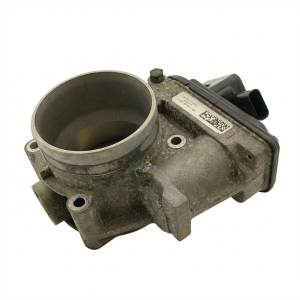
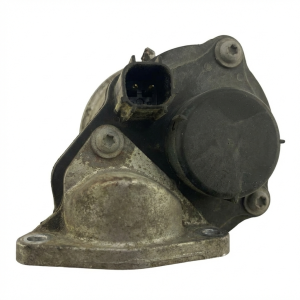
- Electronic Throttle Body Assembly
(OEM #8L3Z-9E926-A (Motorcraft))— This is the most common failure point for code P2112. The internal motor or position sensors fail, requiring replacement of the complete assembly. Part numbers can vary by specific year, so always verify with VIN. Other potential part numbers include 3L5E9F991AC, 3L5E9F991AD, 3L5U9F991AE.
Trusted brands: Motorcraft
OEM price range: $150-$250
Aftermarket price range: $100-$180 - Throttle Body Gasket — A new gasket should always be used when replacing the throttle body to prevent vacuum leaks. It is often sold separately.
Trusted brands: Motorcraft, Fel-Pro
OEM price range: $5-$15
Aftermarket price range: $3-$10
Related Codes That Often Appear With This One
- P2104 — P2104 (Throttle Actuator Control System - Forced Idle) is often set with P2112. It indicates the PCM has entered a fail-safe mode and is intentionally limiting the engine to idle speed due to the fault detected by P2112.
- P2111 — P2111 (Throttle Actuator Control System - Stuck Open) is the companion code to P2112. Both can be triggered by a faulty throttle body, and Ford's TSB 10-21-6 lists both codes as symptoms of the same underlying issue.
Technical Service Bulletins (TSBs) & Recalls
- TSB 10-21-6: DTC P2111 OR P2112, OR LOWER THAN DESIRED ENGINE IDLE SPEED, ENGINE IDLE SPEED FLUCTUATES WITH OR WITHOUT DTCS.
- TSB Bulletin #SSM 50597: Notes that codes P2111, P2112, and/or P2119 may be due to water or ice buildup in the intake manifold behind the throttle body.
Platform-Specific Known Issues
- TSB 10-21-6 was issued for 2010 Ford E-Series with the 4.6L 2V engine (among other models) for setting P2111 or P2112, often accompanied by idle fluctuations. The fix is to replace the throttle body if the engine build date is between May 7, 2010, and August 2, 2010.
Mechanic-Grade Diagnostic Values
- Throttle Position Sensor (TPS) Voltage at Closed Throttle (Key On, Engine Off) — expected: ~0.5V to 1.31V. Failure: Voltage is outside the expected range, or does not change smoothly when the throttle is opened. A reading of 1.18V has been observed to cause a fault on similar platforms.
- Throttle Position Sensor (TPS) Voltage at Wide Open Throttle (Key On, Engine Off) — expected: ~4.5V to 4.8V. Failure: Voltage does not reach the expected range or does not sweep smoothly up from the closed position value.
- VREF (Reference Voltage) at TPS Connector — expected: 5V. Failure: Voltage is significantly lower or absent, indicating a wiring or PCM issue upstream of the sensor.
- Throttle Actuator Control (TAC) Motor Supply Voltage — expected: 12V (Battery Voltage) with key on. Failure: No voltage or intermittent voltage suggests a problem with the power supply wiring, fuse, or PCM relay.
Scan Tool Commands That Help
- Ford IDS / Professional Scan Tool: Throttle Actuator Command / Actuator Test Mode — Use this bidirectional control with Key On, Engine Off to command the throttle plate to open and close. This directly tests the throttle body's motor and sensors, bypassing the accelerator pedal. If the plate fails to move as commanded or the reported position PIDs don't match the command, it confirms a faulty throttle body.
- Ford IDS / Professional Scan Tool: KAM (Keep Alive Memory) Reset — This function should be performed after replacing the throttle body. It clears all the learned adaptive values for fuel and throttle position that the PCM has stored over time. Failing to do this can result in improper idle or throttle response with the new part.
- Manual Procedure: Throttle Relearn Procedure — After a KAM reset or battery disconnect, this procedure helps the PCM quickly learn the new closed and wide-open throttle positions. With the key on (engine off), slowly press the accelerator pedal to the floor and slowly release it. Turn the key off, wait 10 seconds, then start the engine.
Wiring & Ground Locations
- Throttle Body Connector (C146) — The 6-pin electrical connector plugged directly into the electronic throttle body assembly.. This is the single point of connection for all power, ground, and signal wires for the throttle actuator motor and the two internal throttle position sensors. Corrosion, bent pins, or damaged wires here are a primary point of failure.
- G104 — On the left (driver's side) front fender apron, often located behind or near the battery.. This is a primary ground point for the Powertrain Control Module (PCM). A loose or corroded connection at G104 can cause erratic voltage and false codes from any system the PCM controls, including the electronic throttle.
Real Owner Repair Stories
- Ford F150 Forum user 'co_heil_F150' (2016 Ford F-150 3.5L EcoBoost, 48,000 miles) — Sudden loss of power while pulling into traffic, engine would only idle forward. Wrench light and Check Engine Light came on, code P2112 was stored.
❌ Tried (didn't work) The user went straight to part replacement based on the code.
✅ What actually fixed it The user replaced the entire electronic throttle body assembly and gasket, which resolved the issue. The OEM parts cost approximately $81 ($78 for the throttle body, $3 for the gasket) and the repair took 15 minutes to perform. - YouTube channel 'Fix It All' (Ford F-150 (year not specified)) — Advanced Trac warning light, loss of throttle response, had to pull over, shut off, and restart the truck to get it to move. Eventually, it threw code P2112.
❌ Tried (didn't work) Taking it to shops that could not pull any codes initially.
✅ What actually fixed it A new throttle body assembly was installed. The repair was described as very simple, involving removing the air intake tube and four bolts. The total cost was $111 for the part and it took 20 minutes. - NHTSA ODI #11278674 — An owner reported that a dealership diagnosed P2112 as a throttle actuator control system stuck closed. The technician pinpointed the fault to the throttle body, replaced the unit, and cleared the codes to fix the vehicle.
- NHTSA ODI #11523404 — An owner experienced a wrench light on the dash and power loss four times over two months before receiving a P2112 code. Replacing the throttle body was the reported fix.
OEM Part Supersession History
8L3Z-9E926-A→8L3Z-9E926-B, then 8L3Z-9E926-C— Standard part revision and improvement by the manufacturer.
Heads up: Part number 8L3Z-9E926-C is the latest revision and replaces the previous versions including 6L3Z-9E926-A. Always verify the correct part number for the specific vehicle's VIN, but 8L3Z-9E926-C is the most common service part for this application.
Diagnostic Flowchart
Other Known Issues on This Vehicle
Issues unrelated to this code that are worth knowing about as an owner of this generation:
- Spark Plug Ejection 🔴 High — Common on 2-valve modular engines (4.6L, 5.4L) from approx. 1997-2003 due to insufficient thread engagement in the aluminum heads. Can occur at any mileage.
- Cracked Plastic Intake Manifold 🔴 High — Very common on 1996-2001 models with the all-plastic intake. The front coolant crossover can crack, causing a massive coolant leak and overheating. Later designs with an aluminum crossover (2002+) are more durable but can still develop gasket leaks. (Ref: A class-action lawsuit was settled, but the warranty extension has expired.)
- Leaking Intake Manifold Gaskets 🟠 Medium — Common across all years, especially on higher mileage vehicles. Can cause coolant loss, overheating, vacuum leaks, and poor engine performance.
- Leaking Fuel Injectors 🟠 Medium — A known issue, particularly on 2005 models, where an injector can stick open, potentially causing white smoke or other running issues. (Ref: Ford had a program to replace injectors on some 2005 models.)
Used vs. New Parts: Buying Guide for This Vehicle
When a used part is the smart pick: Buying a used electronic throttle body is generally not recommended for this repair. The failure is due to internal electronic and motor wear, which is not visible externally. A used part from a donor vehicle is likely to have similar wear and could fail soon after installation, repeating the dangerous limp mode situation.
Donor-vehicle mileage cap: roughly under 50000 miles for the part to have meaningful remaining life.
What to inspect on the donor part:
- If buying used is unavoidable, source from the lowest-mileage vehicle possible.
- Check the connector pins for any signs of corrosion, discoloration, or damage.
- Manually (gently) move the throttle plate to feel for any binding or roughness, although this is not a reliable test of the electronics.
OEM-only on this vehicle (don't cheap out):
- Electronic Throttle Body Assembly
Aftermarket brands forum-validated for this vehicle:
- Motorcraft (OEM)
Brands owners have reported issues with on this vehicle:
- While many aftermarket options exist, forum discussions frequently recommend sticking with the OEM Motorcraft part to avoid potential compatibility, calibration, or premature failure issues that can occur with cheaper alternatives.
Real Owner Stories
Aggregated from forums and TSBs cited above. Mileages and costs reflect what owners reported in those sources.
2016 Ford F-150
Symptoms: Sudden power loss while driving.
What fixed it: DIY throttle body replacement.
Cost: $78-$500
Source hint: Ford F150 Forum - Community of Ford Truck Fans: A thread titled 'Throttle Body Failure Code P2112'
2015 Ford F-150
Symptoms: Intermittent limp mode when accelerating on an incline; temporarily resolved by restarting the truck.
What fixed it: Throttle body replacement (confirmed as the likely solution by community members).
Source hint: Ford F150 Forum - Community of Ford Truck Fans: In a thread titled 'Limp mode/P2112 While Driving?'
2010 Ford E-Series 4.6L 2V
Symptoms: DTC P2111 or P2112, or lower than desired engine idle speed, or engine idle speed fluctuates.
What fixed it: Replace the throttle body (for engines built between 5/7/2010 and 8/2/2010).
Source hint: TSB 10-21-6
2016 Ford F-150
Symptoms: Limp mode with a P2112 code.
What fixed it: New throttle body.
Source hint: Ford Truck Enthusiasts Forums: A 2016 F-150 owner reports limp mode with a P2112 code
Related OBD-II Codes
Frequently Asked Questions
Does TSB 10-21-6 apply to my 2010 Ford E-Series with the 4.6L 2V engine?
Can I just clean the throttle body on my E-Series to fix the P2112 code?
Is there a specific procedure I need to follow after replacing the throttle body on my 4.6L V8?
Why is my E-Series van showing 'Hill Assist Not Available' along with the P2112 code?
Are there other common engine issues I should look out for on my 4.6L 2V E-Series?
Should I buy a used throttle body from a salvage yard to save money?
Helpful Videos


We Have This Part in Stock

The information in this article is provided for general reference and educational purposes only. Vehicle specifications, procedures, and part compatibility can vary by production date, trim level, and region. Always consult your vehicle's factory service manual and verify part numbers before purchasing or performing repairs. Safety-critical components such as airbags, seat belts, and braking systems should be installed by a qualified professional.
- Ford E-Series:
- 🧭 Diagnostic Flowchart
- 🎬 Helpful Videos
- 🛍️ Shop This Part
- What's Unique About the 1992-2014 Ford E-Series
- Symptoms You May Notice
- Most Likely Causes
- Rare But Worth Checking
- Diagnosis Steps
- Parts You'll Likely Need
- Related Codes That Often Appear With This One
- Technical Service Bulletins (TSBs) & Recalls
- Platform-Specific Known Issues
- Mechanic-Grade Diagnostic Values
- Scan Tool Commands That Help
- Wiring & Ground Locations
- Real Owner Repair Stories
- OEM Part Supersession History
- Other Known Issues on This Vehicle
- Used vs. New Parts: Buying Guide for This Vehicle
- Real Owner Stories
- 2016 Ford F-150
- 2015 Ford F-150
- 2010 Ford E-Series 4.6L 2V
- 2016 Ford F-150
- Related OBD-II Codes
- Frequently Asked Questions
- 🎟️ Get 5% Off