

P2112 on 2007-2010 Ford Edge 3.5L: Throttle Body Stuck Closed Causes and Fixes
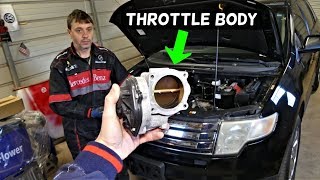
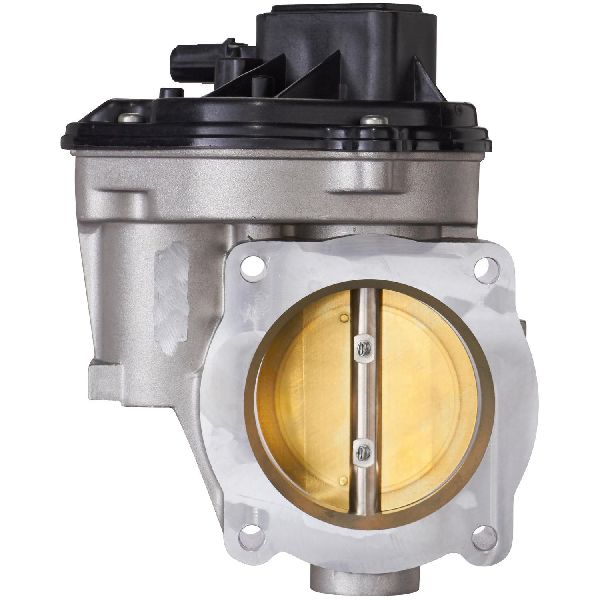
On a 2007-2010 Ford Edge, code P2112 almost always means the electronic throttle body has failed. This is a widespread, well-documented issue causing sudden power loss (limp mode). The only reliable fix is to replace the entire throttle body assembly, which costs around $100-$250 for the part. Cleaning the unit will not solve this internal electronic fault.
- P2112 on a 2007-2010 Edge almost certainly means the electronic throttle body has failed internally.
- This is a very common, well-documented problem that Ford acknowledged with an extended warranty program (13N03) which has now expired.
- Do not attempt to fix this by cleaning the throttle body; the issue is electronic, and replacement of the entire assembly is the only reliable fix.
- The correct OEM replacement part is 7T4Z-9E926-FA, which supersedes an earlier version.
- The issue is shared with other Ford/Lincoln vehicles using the same 3.5L/3.7L engine, such as the Lincoln MKX and Ford Flex.
What's Unique About the 2007-2010 Ford Edge
The 3.5L Cyclone V6 used in the first-generation Ford Edge has a notorious and well-documented history of premature electronic throttle body (ETB) failures. The problem was so common that Ford issued Customer Satisfaction Program 13N03, which extended the warranty on the throttle body to 10 years or 150,000 miles for many Ford models. The official reason cited by Ford was contamination on the internal motor contacts of the throttle body, which results in intermittent electrical connectivity. While the warranty program has expired for these model years, it confirms that the throttle body assembly itself is the overwhelming cause of P2112, not a simple sensor or wiring issue.
Symptoms You May Notice
- Sudden loss of engine power (entering 'limp mode').
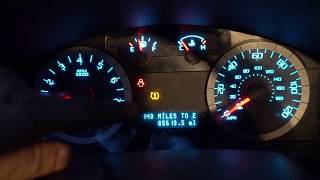
- Wrench light illuminated on the dashboard.
- Check Engine Light illuminated.
- Inability to accelerate or very sluggish response.
- Engine may stall when coming to a stop.
- Rough or unstable idle.
- Engine may start but will not accelerate.
- Cleaning the throttle body. While cleaning a dirty throttle body can solve some idle issues, it will not fix the internal electronic fault that causes P2112 and limp mode on this vehicle. The failure is electrical, not due to carbon buildup blocking the plate.
- Replacing the accelerator pedal position (APP) sensor. While the APP sensor is part of the throttle control system, it is rarely the cause of this specific code on this platform. The throttle body itself is the known weak point, as confirmed by multiple Ford service actions.
Most Likely Causes
- Failed Electronic Throttle Body (ETB) Assembly 🔴 High Probability → Shop Fuel Injection Throttle Body A known manufacturing and design flaw led to contamination of the internal electrical contacts, causing intermittent connectivity and eventual failure. This was acknowledged by Ford's Customer Satisfaction Program 13N03 and TSB 10-21-6. Some reports suggest the root cause was improperly cured silicone gaskets from a supplier leading to deposits on the motor's commutator.
How to confirm: Scan for code P2112, often accompanied by P2111. The primary symptom is the vehicle suddenly entering 'limp mode' with the wrench light on. Cleaning the throttle body is not a reliable fix for this internal electronic failure. Replacement is the only definitive solution.
Typical fix: Replace the entire electronic throttle body assembly. After replacement, a 'Keep Alive Memory' (KAM) reset or throttle relearn procedure must be performed. This can often be done by disconnecting the battery for 15 minutes, then reconnecting and letting the engine idle for a period to relearn its parameters. 🎬 Watch: How to perform the official Ford throttle calibration procedure.
Est. part cost: $100 - $250
Rare But Worth Checking
- Wiring Harness or Connector Damage: While far less common than ETB failure, check the wiring harness and connector at the throttle body for any signs of corrosion, backed-out pins, or physical damage before replacing the part.
- Powertrain Control Module (PCM) Fault: In very rare cases, the driver circuit within the PCM that controls the throttle body can fail. This should only be considered after a new throttle body fails to resolve the issue and all wiring has been confirmed to be intact.
Diagnosis Steps
- Confirm the presence of code P2112 🎬 See this video for a deep dive into diagnosing P2112. using an OBD-II scanner. Check for other related codes like P2111.
- Observe symptoms. If the vehicle is in 'limp mode' with the wrench light on, a failed throttle body is highly probable.
- Visually inspect the electrical connector and wiring going to the throttle body. Look for any signs of damage, corrosion, or loose pins.
- If wiring appears intact, the most effective and time-saving step is to replace the electronic throttle body assembly.
- After replacing the throttle body, perform a throttle relearn procedure. This typically involves disconnecting the battery for at least 15 minutes to clear the Keep Alive Memory (KAM), then reconnecting it, starting the engine, and letting it idle for 10-15 minutes to relearn its parameters.
Parts You'll Likely Need
- Electronic Throttle Body Assembly
(OEM #7T4Z-9E926-FA)— This is the direct cause of code P2112 in the vast majority of cases for this vehicle due to a well-documented internal electronic failure. The part number 7T4Z-9E926-FA supersedes the earlier 7T4Z-9E926-EA.
Trusted brands: Motorcraft, Hitachi, Standard Motor Products, Dorman
OEM price range: $180-$250
Aftermarket price range: $100-$180
Related Codes That Often Appear With This One
- P2111 — This code for 'Throttle Actuator Control System - Stuck Open' is the direct companion to P2112. Both codes point to the same internal failure of the electronic throttle body and are often listed together in Ford TSBs.
- P2110 — This code, 'Throttle Actuator Control System - Forced Limited RPM,' is set when the PCM intentionally puts the vehicle into limp mode as a result of detecting the fault indicated by P2111 or P2112.
Technical Service Bulletins (TSBs) & Recalls
- 13N03: Customer Satisfaction Program extending the warranty on the Electronic Throttle Body due to contamination of internal contacts.
- 10-21-6: Technical Service Bulletin addressing idle fluctuation and codes P2111/P2112, recommending throttle body replacement for certain 2010 models with the 3.5L engine.
- TSB 16-0139: A manufacturer service bulletin notes that vehicles may exhibit an intermittent loss of power and/or an illuminated wrench lamp with diagnostic trouble codes P2111, P2112, and/or P2119 stored in the PCM memory.
Platform-Specific Known Issues
- Ford Customer Satisfaction Program 13N03 was issued to extend the warranty on the electronic throttle body to 10 years/150,000 miles due to a high failure rate. This program has since expired for all 2007-2010 models, but it serves as official acknowledgment of the defect.
- TSB 10-21-6 also addressed idle fluctuations and throttle body-related codes (P2111/P2112) for some 2010 models, recommending throttle body replacement.
Mechanic-Grade Diagnostic Values
- Throttle Position Sensor (TPS) Voltage Sweep — expected: A smooth sweep from approximately 0.5-0.9V at closed throttle to ~4.5V at wide-open throttle (WOT).. Failure: Voltage that is erratic, has flat spots, drops out, or reads below ~0.5V at idle indicates a worn or faulty internal sensor. A live data scanner is required to perform this test.
- Throttle Actuator Control (TAC) Motor Resistance — expected: Between 2 and 25 ohms.. Failure: A reading outside this range (e.g., open circuit or short) indicates a failed motor inside the throttle body assembly. This test is performed with a multimeter on the two motor pins of the disconnected throttle body.
- Voltage Drop Test on TAC Motor Circuit — expected: Less than 0.5V drop between the PCM supply voltage and the voltage measured at the motor connector with the ignition on.. Failure: A voltage drop greater than 0.5V points to high resistance in the wiring or a corroded connector between the PCM and the throttle body.
- Alternator AC Ripple Voltage — expected: Less than 0.5V AC across the battery terminals with the engine running.. Failure: A reading above ~0.5V AC could indicate a failing alternator diode is creating electrical noise that interferes with sensor signals, potentially causing erroneous throttle codes.
Hidden / Shadow Codes Worth Checking
- Mode $06, TID $81-$84: While not a hidden code, Mode $06 data on a capable scanner can show test results for the Electronic Throttle Control (ETC) monitor. It provides raw data on tests for throttle angle correlation and response that can reveal marginal failures before a hard code is set. (see via A professional-grade OBD-II scanner with Mode $06 capability.)
Scan Tool Commands That Help
- Ford IDS (Integrated Diagnostic System): PCM Reset / Clear KAM — This function is used after replacing the throttle body to clear the Powertrain Control Module's adaptive memory, forcing it to relearn idle and throttle position values.
- Ford IDS (Integrated Diagnostic System): Throttle Plate Sweep Test — This is a bidirectional command that allows the technician to command the throttle plate to move through its full range of motion while observing its response on live data. It's used to confirm if the throttle motor is physically stuck or responding incorrectly.
- Ford IDS (Integrated Diagnostic System): Live Data Graphing (TP1, TP2, APP1, APP2) — Graphing the throttle position and accelerator pedal position sensor voltages simultaneously helps diagnose whether the fault lies in the pedal or the throttle body. For P2112, this is used to confirm the throttle plate position (TP1/TP2) is not responding to the pedal command (APP1/APP2).
Wiring & Ground Locations
- C175T — The electrical connector on the Electronic Throttle Body itself.. This is the primary connection point for all power, ground, and signal wires between the PCM and the throttle body. It should be the first place to check for corrosion, backed-out pins, or damage.
- G108 — A primary engine and PCM ground point, typically located on the engine block or cylinder head, near the front of the engine compartment.. A poor ground at this location can cause a voltage drop to the PCM and its controlled components, including the throttle body, leading to erratic behavior and false codes.
- Battery-to-Chassis Ground — The main ground strap from the negative battery terminal to the vehicle's chassis, often near the battery tray or on the strut tower.. Corrosion or looseness at this main ground can cause widespread electrical issues, including insufficient voltage for the throttle actuator motor to operate correctly, potentially triggering a P2112 code.
Real Owner Repair Stories
- F-150 Forum (2016 Ford F-150 3.5L EcoBoost, 48,000 miles (Different vehicle but same code and common Ford issue)) — Sudden loss of power, would only idle forward, check engine light illuminated.
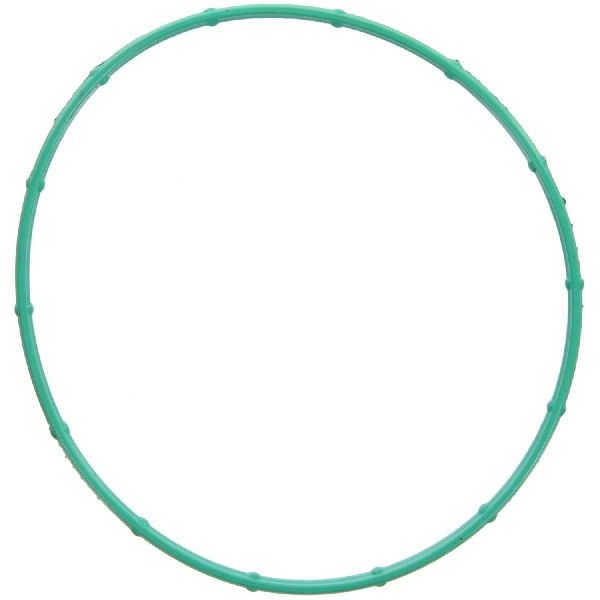
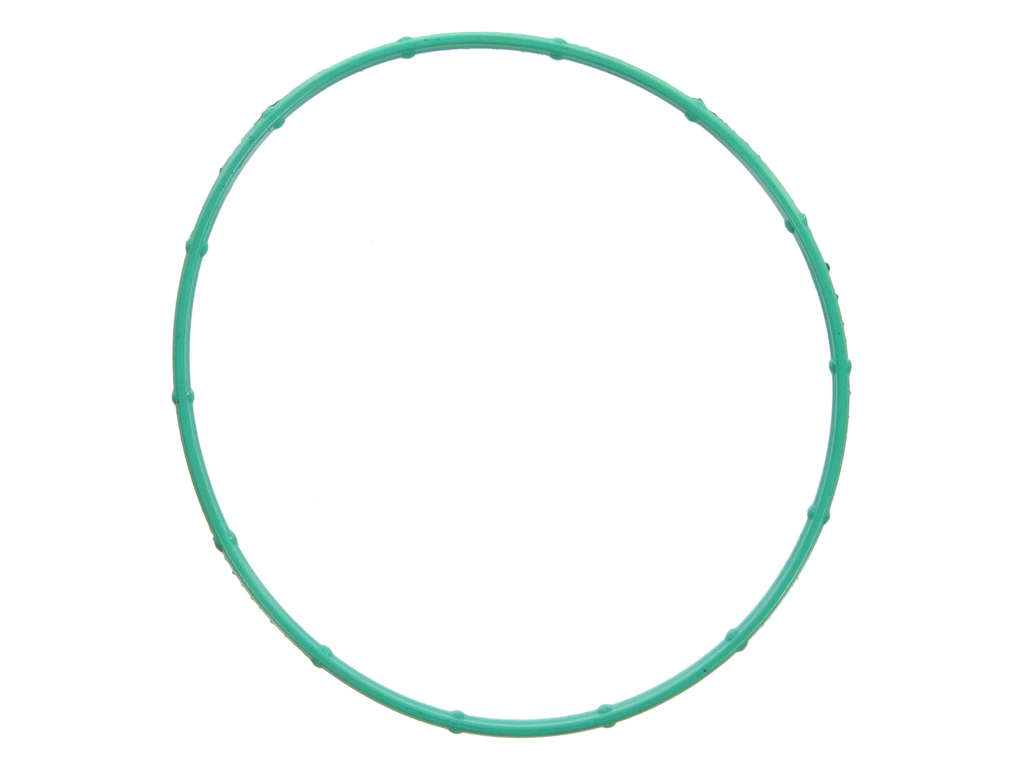
✅ What actually fixed it Scanned code P2112. Replaced the entire throttle body assembly and gasket. The repair took approximately 15 minutes and resolved the issue.
OEM Part Supersession History
7T4Z-9E926-EA→7T4Z-9E926-FA— The original part was prone to premature failure due to internal contamination. The superseding part is the revised version intended to address this issue.
Diagnostic Flowchart
Other Known Issues on This Vehicle
Issues unrelated to this code that are worth knowing about as an owner of this generation:
- Internal Water Pump Failure 🔴 High — A significant design flaw. Failure can occur at any mileage, often after 60,000 miles. When the pump's internal seal fails, it leaks coolant directly into the engine oil, leading to catastrophic engine damage if not caught immediately.
- Power Transfer Unit (PTU) Failure (AWD Models) 🔴 High — Very common. The PTU is located near the hot exhaust, which cooks the 'lifetime' fluid, causing it to break down and leading to gear/bearing failure. Symptoms include a burning gear oil smell and grinding noises. Failure often requires a costly replacement of the entire unit. (Ref: TSB 19-2017 for fluid leaks on some models.)
- Door Ajar Sensor Malfunction 🟡 Low — Extremely common. The sensor inside the door latch fails, causing the 'Door Ajar' light to stay on, preventing doors from locking automatically and leaving the dome light on, which can drain the battery. (Ref: TSB 14-0011 and TSB 18-2013 were issued for later models but describe the same issue.)
- Brake Booster Failure 🟠 Medium — A prevalent issue where the internal diaphragm can tear, leading to a loss of power brake assist and a hard pedal feel.
- Transmission Hard Shifting / Failure 🟠 Medium — Early model years (2007-2008) were particularly known for transmission issues, including slipping, rough shifting, and sometimes complete failure requiring a rebuild or replacement.
Used vs. New Parts: Buying Guide for This Vehicle
When a used part is the smart pick: For this specific failure, buying a used part from a junkyard is STRONGLY DISCOURAGED. The original throttle body has a well-documented, high failure rate due to a design/manufacturing defect. A used part is highly likely to have the same defect and will either be already failed or have a very short remaining service life.
What to inspect on the donor part:
- Not applicable, as a used part is not recommended regardless of condition.
OEM-only on this vehicle (don't cheap out):
- While not strictly 'OEM-only', using a new OEM (Motorcraft) or a reputable new aftermarket part is the only reliable repair. Avoid used parts entirely.
Aftermarket brands forum-validated for this vehicle:
- Motorcraft (OEM)
- Hitachi
- Standard Motor Products (SMP)
- Dorman (specifically their 'OE FIX' versions which may feature design improvements like enhanced shaft seals to prevent contamination)
Brands owners have reported issues with on this vehicle:
- Unknown, no-name, or unbranded parts from online marketplaces. Given the critical nature of this component and the high failure rate of the original design, opting for the cheapest available part is a significant gamble.
Real Owner Stories
Aggregated from forums and TSBs cited above. Mileages and costs reflect what owners reported in those sources.
2010 Ford Edge 3.5L
Symptoms: The Service Engine Soon light came on and the user pulled codes P2111 and P2112. The vehicle may have experienced intermittent idle speed issues or fluctuations.
What fixed it: The owner replaced the unit with a new OEM Ford throttle body (P/N 7T4Z-9E926-FA).
Source hint: Ford Edge Forum thread 'Throttle Body Service or Failure - 3.5L - Ford Edge Forum'
2013 Ford Edge
Symptoms: Engine goes to idle with no warning while turning, accelerating, or cruising. Wrench light and Check Engine Light appear with codes P2111 and P2112 occurring at the same time.
What fixed it: The owner was informed the issue is the electronic throttle body.
Source hint: NHTSA complaint
2007-2010 Ford Edge
Symptoms: Intermittent failure where the vehicle enters 'limp mode' with the wrench light active; however, dealers sometimes had difficulty diagnosing it if the light was not currently on.
What fixed it: Replacement of the electronic throttle body under the 13N03 warranty extension.
Source hint: Ford Truck Enthusiasts Forums
Empirical Owner Reports (NHTSA)
An owner reported experiencing a sudden loss of power while making a left turn through traffic, noting trouble codes P2111 and P2112 (NHTSA ODI #10781028). Another report describes the vehicle entering limp mode multiple times before a "Service Engine Soon" light finally allowed for the retrieval of codes P2111 and P2112 (NHTSA ODI #10726602). One owner expressed frustration that the issue was not covered under warranty despite several others reporting the same P2111 and P2112 codes (NHTSA ODI #10611039). A particularly urgent report requested an investigation into these codes, stating the current measures will not rectify the issue (NHTSA ODI #10789777).
Related OBD-II Codes
Frequently Asked Questions
Is there a warranty extension for the throttle body on my 2007-2010 Ford Edge?
Can I just clean the throttle body to fix code P2112 on my 3.5L Cyclone engine?
Does TSB 10-21-6 apply to my 2010 Ford Edge?
What is the specific Ford part number I need to fix this issue?
What procedure is required after I install the new throttle body?
Are there other major issues I should watch for on my 2007-2010 Edge while fixing the P2112 code?
Helpful Videos


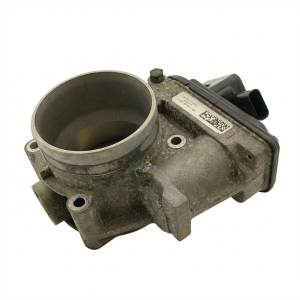
Used OEM Parts in Stock
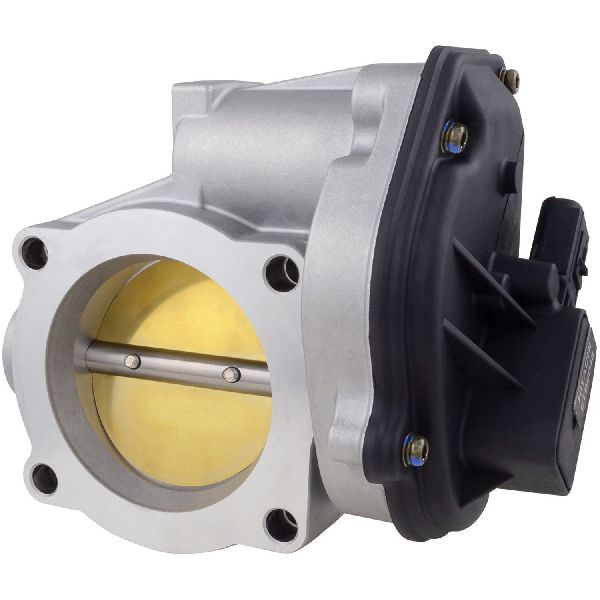
New Aftermarket Parts Available


The information in this article is provided for general reference and educational purposes only. Vehicle specifications, procedures, and part compatibility can vary by production date, trim level, and region. Always consult your vehicle's factory service manual and verify part numbers before purchasing or performing repairs. Safety-critical components such as airbags, seat belts, and braking systems should be installed by a qualified professional.
- Ford Edge:
- 🧭 Diagnostic Flowchart
- 🎬 Helpful Videos
- 🛍️ Shop This Part
- What's Unique About the 2007-2010 Ford Edge
- Symptoms You May Notice
- Most Likely Causes
- Rare But Worth Checking
- Diagnosis Steps
- Parts You'll Likely Need
- Related Codes That Often Appear With This One
- Technical Service Bulletins (TSBs) & Recalls
- Platform-Specific Known Issues
- Mechanic-Grade Diagnostic Values
- Hidden / Shadow Codes Worth Checking
- Scan Tool Commands That Help
- Wiring & Ground Locations
- Real Owner Repair Stories
- OEM Part Supersession History
- Other Known Issues on This Vehicle
- Used vs. New Parts: Buying Guide for This Vehicle
- Real Owner Stories
- 2010 Ford Edge 3.5L
- 2013 Ford Edge
- 2007-2010 Ford Edge
- Empirical Owner Reports (NHTSA)
- Related OBD-II Codes
- Frequently Asked Questions
- 🎟️ Get 5% Off