

P2112 on 2010 Ford Edge 3.5L: Throttle Body Stuck Closed Causes and Fixes
On a 2010 Ford Edge 3.5L, code P2112 is almost always caused by a failed electronic throttle body. This is a very common and well-documented issue for this vehicle, acknowledged by Ford with a warranty extension. The fix is to replace the entire throttle body assembly, which costs around $100-$250 for the part and is a straightforward DIY job for many.
- P2112 on a 2010 Edge 3.5L almost certainly means you need a new electronic throttle body.
- This is a critical failure that makes the vehicle unsafe to drive; it will enter a 'limp mode' with no acceleration.
- The repair is relatively simple and accessible for a DIYer with basic tools, taking about an hour.
- Always replace the throttle body gasket at the same time.
- Don't waste money on an accelerator pedal sensor; the fault lies at the engine's throttle body.
What's Unique About the 2010-2010 Ford Edge
The 2010 Ford Edge, along with other Ford models using the 3.5L V6, is known for a high rate of electronic throttle body (ETB) failures. The problem was so widespread that Ford issued Technical Service Bulletin (TSB) 10-21-6 and Customer Satisfaction Program 13N03. This program extended the warranty on the ETB to 10 years or 150,000 miles, acknowledging that contamination on the internal motor contacts could cause intermittent electrical connectivity and lead to this failure. This history means that if you see a P2112 code on this specific vehicle, the throttle body itself is the prime suspect, far more so than on other vehicles where wiring or computer issues might be more common.
Symptoms You May Notice
- Sudden and dramatic loss of engine power (Limp Mode)
- Vehicle will not accelerate, only idle or just above idle
- Check Engine Light is on
- Wrench warning light is on
- Engine may stall when attempting to accelerate
- Unresponsive or 'dead' accelerator pedal
- Replacing the Accelerator Pedal Position (APP) Sensor. A faulty APP sensor would generate its own specific set of codes (e.g., P0122, P0223). The P2112 code points specifically to a problem at the throttle body itself.
Most Likely Causes
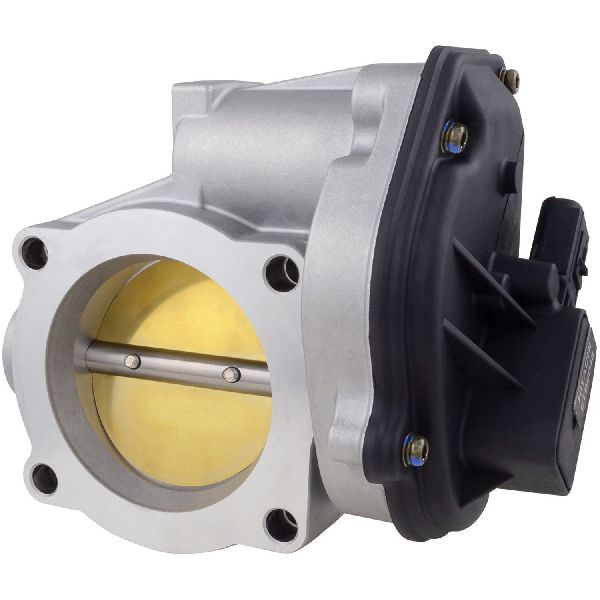
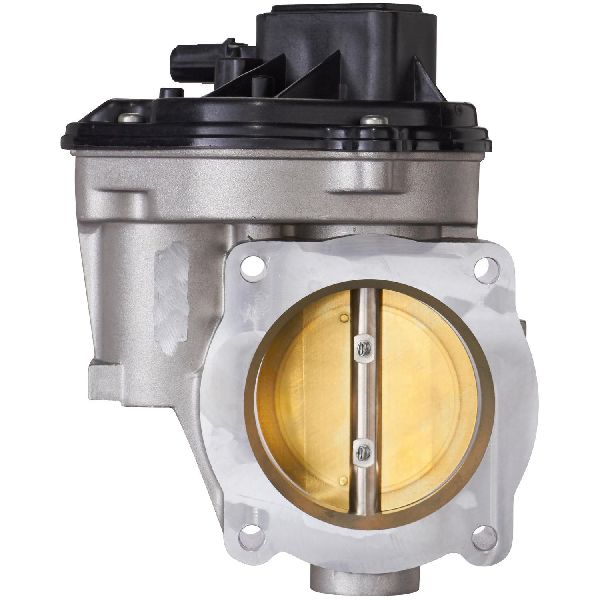
- Defective Electronic Throttle Body (ETB) 🔴 High Probability → Shop Fuel Injection Throttle Body This is a known high-failure part on this platform, acknowledged by Ford through a warranty extension program (13N03) and TSBs. The failure is often internal to the unit's electronics or the actuator motor, specifically due to contamination of the internal motor contacts. In some cases, the plastic gears inside the actuator can also wear out or break.
How to confirm: While a scan tool can monitor commanded vs. actual throttle position, the most practical confirmation for a DIYer is ruling out simple wiring issues and then replacing the throttle body, given its high failure rate. A professional would confirm by observing live data; the throttle position will fail to match the commanded position by more than 6 degrees, triggering the code.
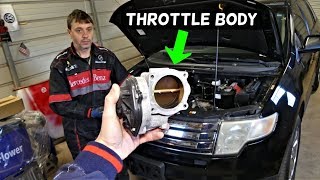
Typical fix: Replace the entire electronic throttle body assembly and the corresponding gasket. This 🎬 See this step-by-step throttle body removal and replacement guide is the definitive fix recommended by Ford and confirmed by countless owner experiences.
Est. part cost: $100-$250 - Carbon Buildup in Throttle Body ⚪ Low Probability → Shop Fuel Injection Throttle Body All engines can develop carbon buildup, which can restrict the movement of the throttle plate.
How to confirm: Visually inspect the throttle body bore and plate for heavy black carbon deposits that could cause sticking or binding.
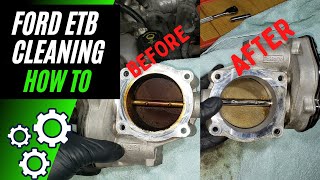
Typical fix: Clean the throttle body thoroughly with a dedicated throttle body cleaner and a soft brush or rag. Note: While cleaning can resolve some idle issues, it is very unlikely to fix a P2112 code on this platform, as the root cause is typically electronic, not mechanical binding. Many owners report that cleaning provides no improvement and replacement is ultimately required.
Est. part cost: $5-$15
Rare But Worth Checking
- Wiring or Connector Issue: A damaged wire or a corroded/loose pin in the throttle body connector (C134) can interrupt the signal between the PCM and the throttle motor. Always inspect the harness for chafing, breaks, or corrosion in the connector pins before replacing parts.
- Powertrain Control Module (PCM) Failure: This is extremely rare. A failing PCM would typically cause multiple other seemingly unrelated error codes and drivability issues. This should only be considered after all other possibilities have been exhausted.
Diagnosis Steps
- Scan for Codes: Use an OBD-II scanner to confirm P2112 is the primary code. Note any other 🎬 Watch: Understanding the P2112 throttle actuator control system fault codes that are present, especially P2111 or P2104.
- Inspect the Wiring: Visually inspect the wiring harness and connector (C134) going to the electronic throttle body. Look for any signs of damage, corrosion, or loose pins. Ensure the connector is fully seated.
- Inspect the Throttle Body: Remove the intake ducting to view the throttle plate. Check for heavy carbon buildup that could cause it to stick. While cleaning is an option, be aware it is unlikely to solve an electronic fault.
- Replace the Throttle Body: Given the extremely high probability of failure on this specific vehicle, if the wiring is intact, the next and most effective step is to replace the throttle body assembly.
- Perform Relearn Procedure: After replacement, a throttle body relearn procedure is required. A common method is to clear the PCM's Keep Alive Memory (KAM), turn the ignition to 'ON' (without starting) for 2-3 minutes, then 'OFF' for at least one minute. Then, start the engine and let it idle for 10-15 minutes to reach operating temperature without touching the accelerator. 🎬 Watch: How to perform the PCM reset and relearn
Parts You'll Likely Need
- Electronic Throttle Body Assembly
(OEM #7T4Z-9E926-FA)— This is the primary point of failure for code P2112 on this vehicle, typically due to an internal electronic or motor fault. This part number supersedes the earlier, less reliable part number 7T4Z-9E926-EA.
Trusted brands: Motorcraft, Bosch, Hitachi, Dorman
OEM price range: $150-$250
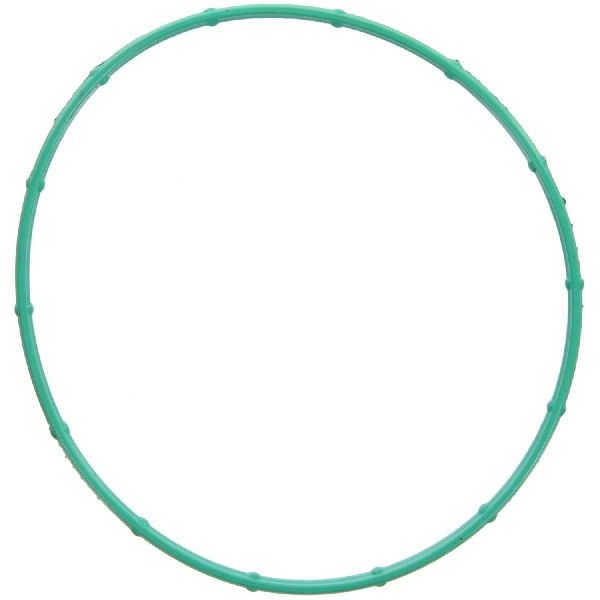
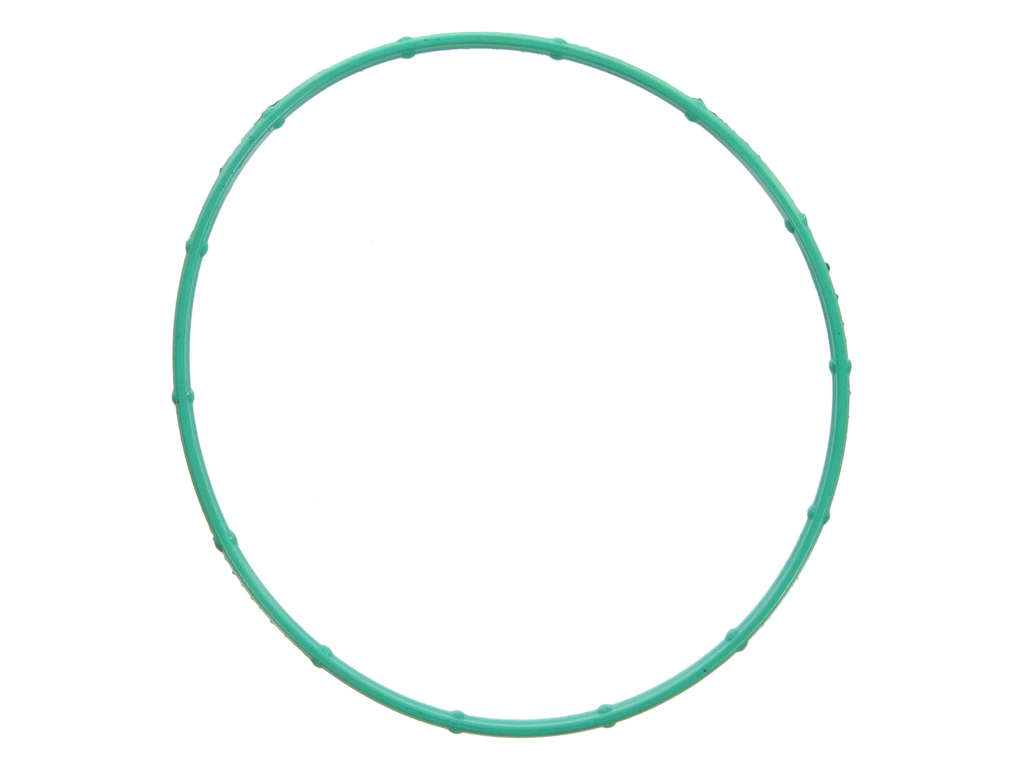
Aftermarket price range: $100-$180 - Throttle Body Gasket
(OEM #7T4Z-9E936-A)— The gasket provides a critical seal between the throttle body and the intake manifold and should always be replaced when the throttle body is removed to prevent vacuum leaks.
Trusted brands: Motorcraft, Fel-Pro, Mahle
OEM price range: $10-$20
Aftermarket price range: $5-$15
Related Codes That Often Appear With This One
- P2111 — This code means 'Throttle Actuator Control System - Stuck Open.' It's the sister code to P2112 and indicates a general failure of the throttle body's control system. It is often seen with P2112 and points to the same root cause.
- P2104 — This code means 'Throttle Actuator Control System - Forced Idle.' It is often set along with P2111 or P2112 as it indicates the PCM has entered the 'limp mode' as a result of the throttle fault.
Technical Service Bulletins (TSBs) & Recalls
- TSB 10-21-6 (Addresses P2111/P2112 by replacing the throttle body for specific build dates)
- Customer Satisfaction Program 13N03 (Extended warranty for ETB failure)
- TSB 16-0139 (Notes that vehicles may exhibit an intermittent loss of power and/or an illuminated wrench lamp with DTCs P2111, P2112, and/or P2119 stored in the PCM)
Platform-Specific Known Issues
- Ford Customer Satisfaction Program 13N03: This program extended the warranty coverage for the electronic throttle body on certain 2010-2013 Ford and Lincoln vehicles, including the Edge, to 10 years or 150,000 miles from the original warranty start date. It was created due to a high number of failures caused by contamination on the ETB's internal motor contacts.
- TSB 10-21-6: Issued October 21, 2010, this bulletin addresses DTCs P2111 and P2112 on the 2010 Edge 3.5L (among other models) for engines built between March 1, 2010, and August 3, 2010. The recommended action is to replace the electronic throttle body assembly with part number 7T4Z-9E926-FA.
Mechanic-Grade Diagnostic Values
- Ford-Specific P2112 Trigger Condition — expected: The actual throttle plate angle should be within 6 degrees of the commanded angle.. Failure: Code P2112 is set when the actual angle is more than 6 degrees lower than the commanded angle.
- Throttle Position Sensor (TPS) Voltage — expected: A smooth voltage increase from approximately 0.5V (closed throttle) to 4.5V (wide-open throttle).. Failure: Voltage that is erratic, jumps, or has dead spots when the throttle is slowly opened.
- Throttle Actuator Control (TAC) Motor Resistance — expected: Generally between 2 and 25 ohms when measured across the two motor pins on the throttle body connector.. Failure: A reading of OL (open circuit) or a value far outside the expected range indicates a failed motor.
- Throttle Actuator Supply Voltage — expected: Approximately 12V (battery voltage) at the power supply pin on the throttle body connector with Key On, Engine Off.. Failure: Low or no voltage indicates a problem in the wiring or PCM power supply, not the throttle body itself.
Scan Tool Commands That Help
- Ford IDS (Integrated Diagnostic System): PCM Reset / Clear Keep Alive Memory (KAM) — This function must be used after replacing the electronic throttle body. It erases the old learned adaptive values for idle and throttle position, forcing the PCM to learn the characteristics of the new part.
- Ford IDS (Integrated Diagnostic System): Live Data Monitoring (TP_CMD vs TP_ACTUAL) — During diagnosis, graphing the Commanded Throttle Position vs. the Actual Throttle Position can visually confirm that the throttle plate is not responding correctly, leading to the P2112 fault.
Wiring & Ground Locations
- C134 — The 6-pin electrical connector located directly on the electronic throttle body assembly.. This is the single point of connection for power, ground, and all control/feedback signals for the throttle body. Corrosion, backed-out pins, or harness damage here will directly cause P2112 and related codes.
- G110 — An engine ground located on the front of the engine.. The PCM and its sensors rely on solid ground connections to function correctly. A poor engine ground can introduce electrical noise and voltage discrepancies that could, in rare cases, affect the throttle control system's operation.
Real Owner Repair Stories
- Ford F150 Forum (2013 F-150 3.5L EcoBoost (engine family shares the same ETB issue)) — Sudden limp mode with wrench light, especially when accelerating on an incline. Shutting the truck off and restarting would temporarily clear the issue. Code P2112 was stored.
❌ Tried (didn't work) Cleaning MAP and CAC sensors., Forum members advised that cleaning the throttle body itself would not fix the underlying electronic issue.
✅ What actually fixed it The dealer replaced the electronic throttle body assembly. A separate user in the same thread confirmed this was the fix for identical symptoms. - NHTSA ODI #10781028 — An owner reported that the vehicle would suddenly go to idle at any speed, including while making a left turn through traffic. Trouble codes P2111 and P2112 were present.
- NHTSA ODI #10726602 — An owner experienced the Service Engine Soon light and pulled codes P2111 and P2112, noting that after looking into the issue, it appeared to be a very common problem.
"I Checked Everything" — The Actual Cause
- This code is electronic in nature, so a smoke test for vacuum leaks is not a relevant diagnostic step. The equivalent pattern for this fault is 'wiring and connectors check out, but the code persists.' In the vast majority of cases for the 2010 Ford Edge, this scenario points to an internal electronic failure of the throttle body itself, which cannot be identified by visual inspection or cleaning. Replacement of the throttle body assembly is the standard resolution.
OEM Part Supersession History
7T4Z-9E926-EA→7T4Z-9E926-FA— The original part was prone to internal electronic failure due to contamination on motor contacts. The superseding part is the revised, more reliable version.
Heads up: While the old part will physically fit, it is known to be unreliable. TSB 10-21-6 specifically instructs technicians to use part number 7T4Z-9E926-FA for the repair.
Model Year Variations Within This Range
- 2010 (specific build dates): According to TSB 10-21-6, 2010 Ford Edge models with the 3.5L engine built between March 1, 2010, and August 3, 2010, are specifically covered for throttle body replacement under this bulletin. Vehicles built outside these dates are not covered by this specific TSB and require standard diagnostics.
Diagnostic Flowchart
Other Known Issues on This Vehicle
Issues unrelated to this code that are worth knowing about as an owner of this generation:
- Internal Water Pump Failure 🔴 High — Common after 70,000-100,000 miles. A failed seal allows coolant to mix directly with engine oil, leading to catastrophic engine damage if not caught immediately.
- Power Transfer Unit (PTU) Leak/Failure 🔴 High — Common on AWD models. The PTU is located near the hot exhaust, which can cook the small amount of fluid, leading to seal failure, fluid leaks, and eventual gear failure.
- Door Ajar Sensor Failure 🟡 Low — Very common. The sensor within the door latch mechanism fails, causing the 'door ajar' light to stay on, the dome light to remain lit, and preventing doors from locking automatically. (Ref: TSB 14-0011 (for later models, but describes the same issue))
- Brake Booster Failure 🟠 Medium — A known issue where the diaphragm can tear, causing a hissing noise when the brake pedal is pressed and leading to reduced braking assistance. (Ref: Ford offered a warranty extension for this part.)
- Transmission Speed Sensor (TSS/OSS) Failure 🟠 Medium — A common electrical failure on the 6F50 transmission, which can cause harsh shifting, delayed engagement, or getting stuck in one gear.
Used vs. New Parts: Buying Guide for This Vehicle
When a used part is the smart pick: For this specific repair, a used part from a salvage yard is strongly discouraged. The P2112 code on this vehicle is most often caused by a well-documented design and manufacturing flaw within the electronic throttle body. A used part is highly likely to have the same defect or develop it shortly after installation.
What to inspect on the donor part:
- If forced to consider used, verify the part number is the updated '7T4Z-9E926-FA' and not the original '7T4Z-9E926-EA'.
- There are no reliable visual cues to determine the internal electronic condition of a used throttle body.
OEM-only on this vehicle (don't cheap out):
- Electronic Throttle Body Assembly
Aftermarket brands forum-validated for this vehicle:
- Motorcraft (OEM)
- Bosch
- Hitachi
Brands owners have reported issues with on this vehicle:
- While some value-oriented brands may be available, forums often advise sticking to OEM or top-tier OEM suppliers for this critical electronic component to avoid premature failure.
Real Owner Stories
Aggregated from forums and TSBs cited above. Mileages and costs reflect what owners reported in those sources.
2011 Ford Edge
Symptoms: Sudden limp mode and stalling; the vehicle received both P2111 and P2112 codes simultaneously.
What fixed it: Replacing the throttle body.
Source hint: Ford Edge Forum - 'Throttle Body Service or Failure'
2010 Ford (Platform Mate)
Symptoms: Exact symptoms of sudden power loss while accelerating into traffic.
What fixed it: Replacing the throttle body.
Source hint: Ford Truck Enthusiasts Forums - 'Extended Throttle Body warranty may be useless'
NHTSA ODI #10789777
Symptoms: An owner reported receiving codes P2111 and P2112 at the same time and requested an investigation into the safety of the issue.
What fixed it: Diagnostic codes point to the throttle body assembly.
NHTSA ODI #10611039
Symptoms: An owner noted their vehicle had codes P2111 or P2112 pertaining to the throttle body and was informed by the manufacturer that it would not be covered under warranty.
What fixed it: Information suggested the throttle body required replacement.
Related OBD-II Codes
Frequently Asked Questions
Does TSB 10-21-6 apply to my 2010 Ford Edge 3.5L?
Is there an extended warranty for the throttle body on my 2010 Edge?
Can I just clean the carbon buildup to fix the P2112 code?
What is the specific part number Ford recommends for the replacement throttle body?
Why does my Edge go into 'Limp Mode' when this code triggers?
Is it worth buying a used throttle body from a salvage yard?
Helpful Videos

Used OEM Parts in Stock
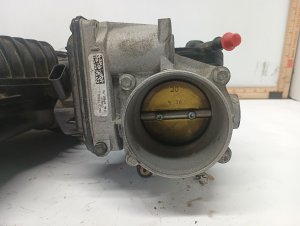
New Aftermarket Parts Available


The information in this article is provided for general reference and educational purposes only. Vehicle specifications, procedures, and part compatibility can vary by production date, trim level, and region. Always consult your vehicle's factory service manual and verify part numbers before purchasing or performing repairs. Safety-critical components such as airbags, seat belts, and braking systems should be installed by a qualified professional.
- Ford Edge:
- 🧭 Diagnostic Flowchart
- 🎬 Helpful Videos
- 🛍️ Shop This Part
- What's Unique About the 2010-2010 Ford Edge
- Symptoms You May Notice
- Most Likely Causes
- Rare But Worth Checking
- Diagnosis Steps
- Parts You'll Likely Need
- Related Codes That Often Appear With This One
- Technical Service Bulletins (TSBs) & Recalls
- Platform-Specific Known Issues
- Mechanic-Grade Diagnostic Values
- Scan Tool Commands That Help
- Wiring & Ground Locations
- Real Owner Repair Stories
- "I Checked Everything" — The Actual Cause
- OEM Part Supersession History
- Model Year Variations Within This Range
- Other Known Issues on This Vehicle
- Used vs. New Parts: Buying Guide for This Vehicle
- Real Owner Stories
- 2011 Ford Edge
- 2010 Ford (Platform Mate)
- NHTSA ODI #10789777
- NHTSA ODI #10611039
- Related OBD-II Codes
- Frequently Asked Questions
- 🎟️ Get 5% Off