

P2112 on 2011-2014 Ford Edge 3.7L: Throttle Body Failure Causes and Fix
On a 2011-2014 Ford Edge with the 3.7L V6, code P2112 almost always means the electronic throttle body has failed. This is a very common, well-documented issue that causes a sudden loss of power ('limp mode'). The fix is to replace the entire throttle body assembly, which costs about $100-$250 for the part and is a DIY-friendly job.
- P2112 on your 2011-2014 Edge 3.7L is a near-certain sign of a failed electronic throttle body, a very common and well-known defect.
- Do not attempt to fix this by cleaning the throttle body; the problem is an internal electronic fault that requires complete replacement of the part.
- This is a critical safety issue as it causes a sudden, severe loss of power. Do not drive the vehicle until it is repaired.
- Replacement is a simple, DIY-friendly job that can be done in under an hour with basic tools.
- After replacing the part, you must perform a throttle 'relearn' or 'Keep Alive Memory' reset to ensure a stable idle.
What's Unique About the 2011-2014 Ford Edge
The 2011-2014 Ford Edge, along with many other Ford and Lincoln models using the 3.5L and 3.7L V6 engines, is known for a widespread electronic throttle body (ETB) defect. The issue became so prevalent that it led to multiple class-action lawsuits and Ford issuing Customer Satisfaction Programs (like 13N03 and 16B23) that extended the warranty on this specific part. The failure is typically due to contamination of the internal electrical contacts within the ETB motor, which results in increased electrical resistance. This is a manufacturing flaw that cleaning the throttle plate cannot fix. For this specific vehicle, P2112 is not a code for a generic issue; it's the primary indicator of this well-known component failure.
Symptoms You May Notice
- Sudden and severe loss of engine power (entering 'limp mode').
- Illuminated 'wrench' light on the dashboard.
- Illuminated Check Engine Light.
- Little to no response when pressing the accelerator pedal.
- Engine runs, but will only idle or move at a very low speed.
- Restarting the engine may temporarily restore normal operation, but the issue will return.
- Rough or fluctuating idle.
- Dirty Throttle Body: Many people assume a throttle issue can be fixed by cleaning the throttle plate. While cleaning can solve idle problems caused by carbon buildup, it will not fix the internal electronic failure that triggers P2112 on this vehicle.
- Faulty Accelerator Pedal Position (APP) Sensor: A bad gas pedal can also cause limp mode, but it typically sets different trouble codes, such as P2138.
Most Likely Causes
- Failed Electronic Throttle Body (ETB) Assembly 🔴 High Probability → Shop Fuel Injection Throttle Body A widespread manufacturing defect causes contamination on the internal electrical contacts of the throttle body motor, leading to intermittent signal loss and failure. This was the subject of Ford's Customer Satisfaction Programs and multiple lawsuits.
How to confirm: Scan the vehicle's computer. The presence of code P2112, often accompanied by P2111, combined with the classic 'limp mode' symptom, is a near-certain diagnosis of a failed ETB. A 'tap test' on the throttle body motor housing with a screwdriver handle may sometimes cause the engine to stumble or the throttle plate to move, further confirming an internal electronic fault.
Typical fix: Replace the entire electronic throttle body assembly and its gasket. Cleaning the old unit will not resolve this internal electronic fault. After replacement, a throttle body relearn procedure (often as simple as letting the car idle for a few minutes after reconnecting the battery) is recommended to calibrate the new part.
Est. part cost: $100-$250
Rare But Worth Checking
- Wiring Harness or Connector Issue: While far less common than ETB failure, damage to the wiring harness leading to the throttle body or corrosion in the connector can cause identical symptoms. Always perform a quick visual inspection of the connector and nearby wiring for any obvious damage before replacing the part. Fretting corrosion on the connector pins has been noted in other Ford TSBs as a cause for similar issues.
- Powertrain Control Module (PCM) Fault: This is extremely rare. A faulty PCM can theoretically trigger false codes, but you should exhaust all other possibilities before considering PCM replacement. A PCM failure would likely present with multiple, unrelated error codes.
Diagnosis Steps
- Confirm the presence of code P2112 🎬 See how to diagnose a throttle actuator stuck closed using an OBD-II scanner.
- Note any other codes present, such as P2111.
- Verify the primary symptom is the vehicle entering 'limp mode' with a wrench light.
- Visually inspect the electrical connector at the throttle body for corrosion, damage, or loose pins.
- With the key on and engine off, have a helper slowly press the accelerator pedal while you observe the throttle plate. It should move smoothly. A 'tap test' on the motor housing can be performed here to check for intermittent response.
- Given the extremely high failure rate of this part on this specific vehicle, if symptoms and codes match, the next step is to replace the electronic throttle body assembly.
- After replacement, clear the codes and perform a throttle relearn procedure. 🎬 Watch: How to perform the critical throttle calibration procedure This typically involves disconnecting the battery for 15 minutes, reconnecting it, turning the key to the 'ON' position for a minute, then starting the engine and letting it idle for several minutes to relearn idle trims.
Parts You'll Likely Need
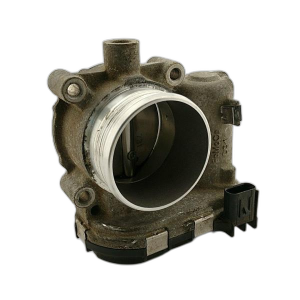
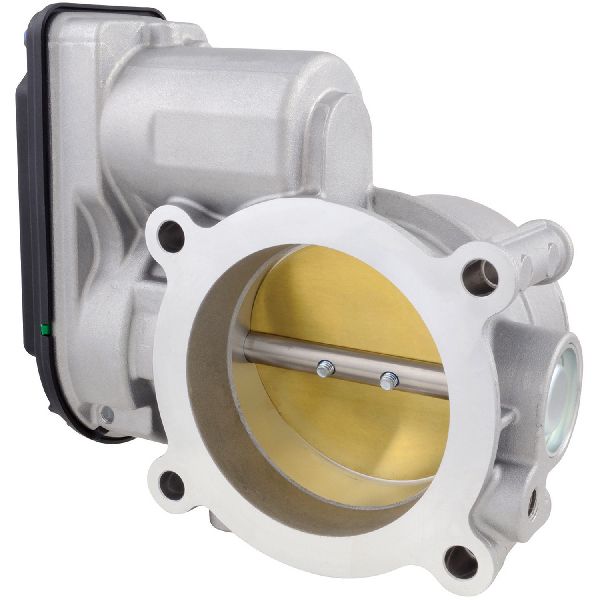
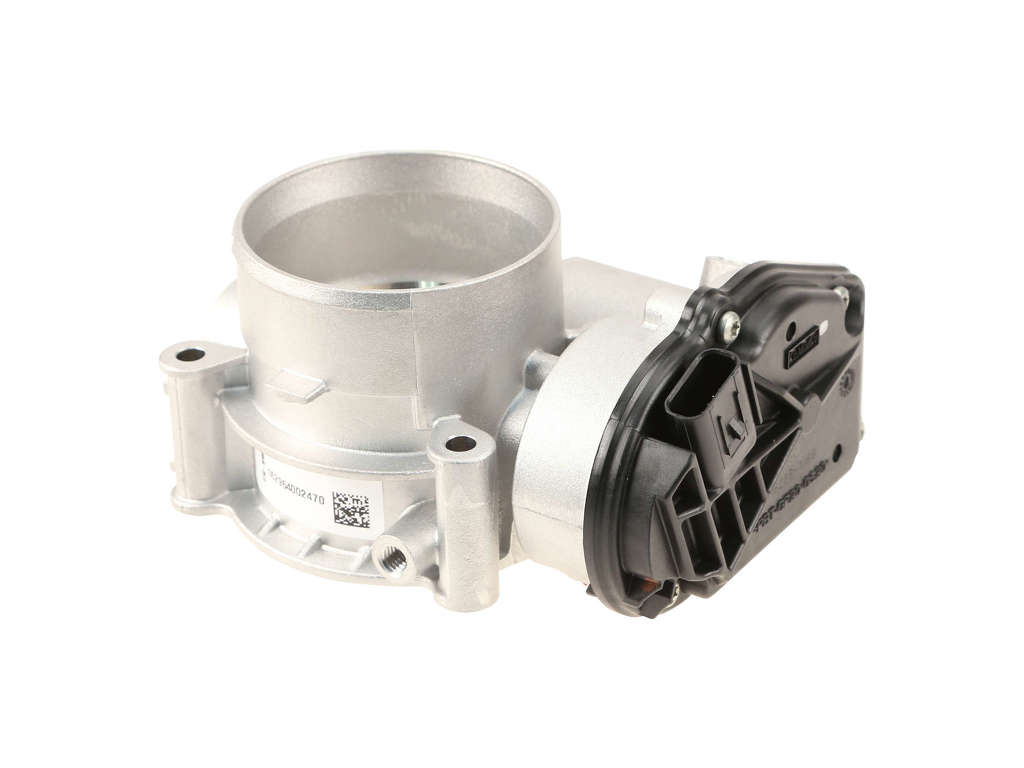
- Electronic Throttle Body Assembly
(OEM #AT4Z-9E926-B)— This is the component that fails due to a known manufacturing defect, causing code P2112 and limp mode. Replacement of the complete assembly is the only reliable fix. The part number AT4Z-9E926-B supersedes the earlier, failure-prone AT4Z-9E926-A.
Trusted brands: Motorcraft, Hitachi, Standard Motor Products (SMP), Dorman
OEM price range: $180-$275
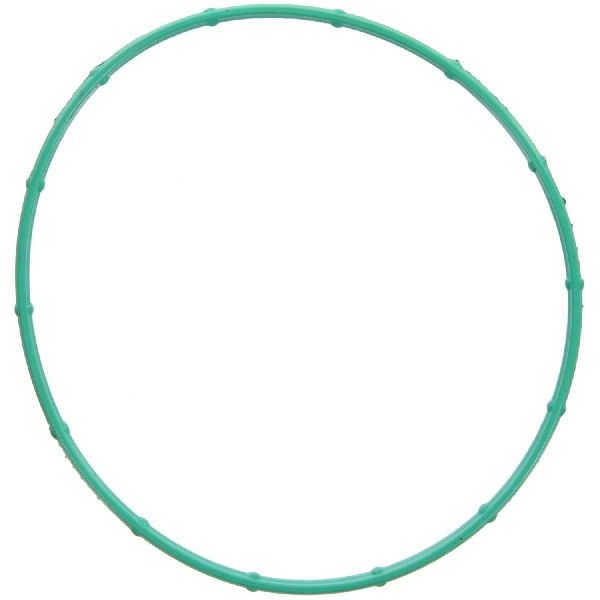
Aftermarket price range: $100-$180 - Throttle Body Gasket
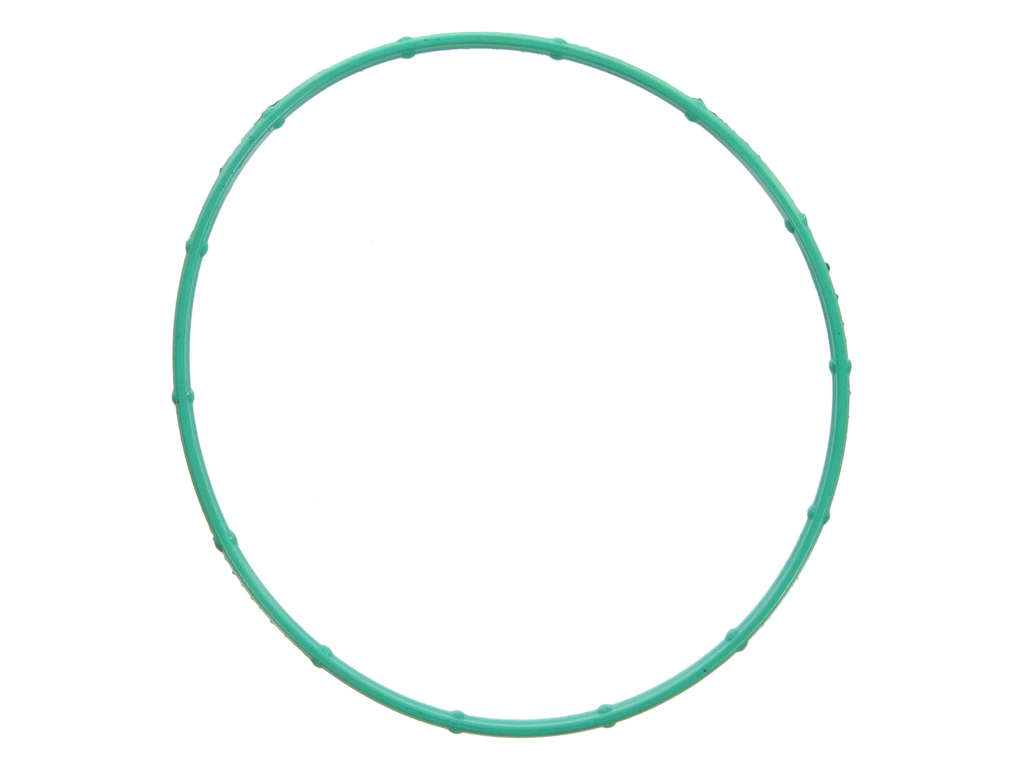
(OEM #AT4Z-9E936-A)— A new gasket is required to ensure a proper seal when replacing the throttle body. It is always recommended to replace the gasket and not reuse the old one. It is often included with a new throttle body assembly.
Trusted brands: Motorcraft, Fel-Pro, Mahle
OEM price range: $10-$20
Aftermarket price range: $5-$15
Related Codes That Often Appear With This One
- P2111 — This code means 'Throttle Actuator Control System - Stuck Open.' P2111 and P2112 are sibling codes that both point to the same internal electronic failure of the throttle body. It's common to see one or both stored when the fault occurs.
Technical Service Bulletins (TSBs) & Recalls
- TSB 10-21-6: Addresses intermittent low/fluctuating idle and DTCs P2111/P2112 on 2010-2011 Edge models with 3.5L/3.7L engines, recommending ETB replacement for engines built within a specific date range (March 1, 2010 - August 3, 2010).
- TSB 16-0139: While this TSB officially covers 2015-2016 models, it describes the identical failure mode and codes (P2111/P2112) seen in the earlier 2011-2014 range, showing the persistence of the issue across platforms.
- Customer Satisfaction Program 16B23: Provided a no-charge replacement of the ETB for certain 2011-2012 Edge models with the 3.5L or 3.7L engine. The program specifically cited contamination of internal motor contacts as the cause. This program expired on September 30, 2017.
Platform-Specific Known Issues
- This model and engine combination was part of Ford's Customer Satisfaction Program 16B23 and was named in multiple class-action lawsuits for defective electronic throttle bodies that cause sudden deceleration.
- Ford issued Technical Service Bulletin (TSB) 10-21-6 for 2010-2011 models, which included the Edge with 3.5L/3.7L engines, addressing intermittent power loss and codes P2111/P2112 by replacing the throttle body.
- A later Special Service Message (SSM 46085) advised technicians against using certain diagnostic PIDs (ETC_ACT and ETC_DSD) when diagnosing ETB concerns, indicating a known complexity in diagnostics.
Documented NHTSA Reports
- An owner reported in NHTSA ODI #10789777 that their vehicle experienced codes P2111 and P2112 at the same time and requested an investigation into the issue.
- NHTSA ODI #10726602 describes a situation where a vehicle's Service Engine Soon light came on and the owner pulled codes P2111 and P2112, noting that the issue appeared common.
- According to NHTSA ODI #10781028, an owner experienced their vehicle suddenly going to idle at any speed, including while making a turn through traffic, with trouble codes P2111 and P2112 present.
- NHTSA ODI #10611039 notes that an owner found information regarding throttle body replacement after their vehicle threw codes P2111 or P2112, but was told by the manufacturer it would not be covered under warranty.
Mechanic-Grade Diagnostic Values
- PCM Failure Threshold — expected: The measured throttle angle should be within 6 degrees of the commanded throttle angle.. Failure: P2112 sets if the measured throttle angle is more than 6 degrees lower than what the PCM is commanding.
- Throttle Position Sensor (TPS) Voltage — expected: Nominally ~0.5V when the throttle is closed and ~4.5V when the throttle is wide open. The two sensors should have opposite-sweeping voltages (e.g., one goes 0.5V to 4.5V, the other goes 4.5V to 0.5V).. Failure: A voltage reading that is erratic, does not change with throttle movement, or shows a power/ground issue where both sensors do not correlate correctly.
- Throttle Actuator Control Motor (TACM) Supply Voltage — expected: 11V - 13V with the key on.. Failure: Voltage below 11V can indicate a weak battery, poor ground, or wiring issue that could cause the actuator to perform incorrectly.
Scan Tool Commands That Help
- Ford IDS (Integrated Diagnostic Software): Clear All Faults & PCM Reset (Keep Alive Memory - KAM) — This function must be used after replacing the electronic throttle body. It clears the PCM's adaptive memory tables. After the reset, the PCM will perform a 'sweep' of the new throttle body blade to learn its new closed and open positions. Failure to do this can result in improper idle or running conditions.
- Ford IDS (Integrated Diagnostic Software): DataLogger for Throttle PIDs — For advanced diagnosis, a technician can use the DataLogger to graph the Commanded Throttle Angle vs. the Actual Throttle Position Sensor readings (TP1/TP2). A sudden drop-off in the actual reading while the commanded angle remains steady is a definitive sign of the internal throttle body failure that causes P2112.
Wiring & Ground Locations
- G101 — Located on the left side of the engine (front of engine on 2.0L models).. This is a primary engine ground that provides a ground path for the Powertrain Control Module (PCM). A poor connection at G101 could cause erratic PCM behavior and potentially trigger false throttle body codes.
- G103 / G104 — Located on the left side of the engine compartment, on the inner fender/shock tower area.. These are major chassis ground points in the engine bay. While not directly for the PCM, they ground other essential components, and corrosion in this area (common in salt-belt regions) can cause cascading electrical issues.
- C175B — This is the large, 50+ pin main engine harness connector that interfaces with the PCM.. The six wires for the electronic throttle body (two for the motor, two for each of the two position sensors) all pass through this connector. Any corrosion or pin damage within C175B can cause the exact symptoms of a failed throttle body.
Real Owner Repair Stories
- Ford F-150 Forum User (2014 Ford F-150 3.5L EcoBoost (Note: Different vehicle but uses a nearly identical ETB and experiences the same failure mode)) — Sudden loss of power, vehicle would only idle forward, check engine light on with code P2112.
❌ Tried (didn't work) The user immediately suspected the throttle body based on online research and did not attempt other fixes like cleaning.
✅ What actually fixed it Replacement of the entire electronic throttle body assembly and gasket. The user noted the repair was very simple, taking only about 15-20 minutes with basic tools. The new part cost $110 from an auto parts store.
OEM Part Supersession History
AT4Z-9E926-A→AT4Z-9E926-B— The original part number, -A, was prone to the widespread internal electronic failure. The -B revision is the updated, more reliable part specified by Ford in its customer satisfaction programs to fix the issue.
Model Year Variations Within This Range
- 2011-2014: The 2011-2014 Ford Edge Sport trim came standard with the 3.7L V6, while other trims primarily used the 3.5L V6. However, both engines use the same problematic electronic throttle body (AT4Z-9E926-B) and exhibit the same failure mode leading to code P2112.
Diagnostic Flowchart
Other Known Issues on This Vehicle
Issues unrelated to this code that are worth knowing about as an owner of this generation:
- Power Transfer Unit (PTU) Failure (AWD Models) 🔴 High — Commonly occurs between 60,000 and 120,000 miles. The unit is located near the hot exhaust with no drain plug, causing the 'lifetime' fluid to cook and break down, leading to seal and gear failure. (Ref: No recall, but a widely known design flaw. Repair costs are high, often requiring full PTU replacement.)
- Door Ajar Sensor Failure 🟡 Low — Very common across many Ford models of this era. The switch inside the door latch mechanism fails, causing the 'door ajar' warning to stay on, which prevents doors from locking automatically and can drain the battery via the interior lights. (Ref: TSB 14-0011 was issued for this problem. The common fix is to either replace the entire door latch assembly or bypass the faulty switch.)
- MyFord Touch Infotainment System Glitches 🟠 Medium — Extremely common on early systems (2011-2013). Owners report slow response, screen freezes, Bluetooth connectivity problems, and system crashes. Software updates improved stability, but many issues are hardware-related. (Ref: Multiple software updates were released by Ford to address issues. A master reset can sometimes temporarily fix problems.)
- Internal Water Pump Failure 🔴 High — A known issue on the transverse-mounted 3.5L/3.7L engines. The water pump is driven by the timing chain. When its bearing fails, it can leak coolant directly into the engine oil, leading to catastrophic engine damage if not caught immediately.
Used vs. New Parts: Buying Guide for This Vehicle
When a used part is the smart pick: A used throttle body is a very high-risk purchase for this specific vehicle and code. The failure is due to a known design/manufacturing defect, not simple wear. A used part from a salvage yard is highly likely to have the same defect and could fail at any time. It should only be considered as a temporary, emergency measure.
Donor-vehicle mileage cap: roughly under 30000 miles for the part to have meaningful remaining life.
What to inspect on the donor part:
- Verify the part number on the used unit is the updated AT4Z-9E926-B, not the original AT4Z-9E926-A.
- Inspect the electrical connector pins for any signs of green corrosion, bending, or damage.
- Ask for the VIN of the donor vehicle to check its history if possible; avoid parts from vehicles with high mileage or accident damage to the front end.
OEM-only on this vehicle (don't cheap out):
- Electronic Throttle Body
Aftermarket brands forum-validated for this vehicle:
- Motorcraft (OEM)
- Hitachi (Often an OEM supplier)
Brands owners have reported issues with on this vehicle:
- Unbranded or 'white box' parts from online marketplaces. Some technicians report issues with cheaper remanufactured units from local auto parts stores, recommending new OEM parts for reliability.
Real Owner Stories
Aggregated from forums and TSBs cited above. Mileages and costs reflect what owners reported in those sources.
2011 Ford Edge 3.5L/3.7L
Symptoms: Experienced repeated stalling and pulled codes P2111 and P2112.
What fixed it: Swapping the throttle body assembly.
Source hint: Ford Edge Forum - 'Throttle Body Service or Failure' thread
2011-2014 Ford F-150 3.7L V6
Symptoms: Sudden deceleration and entering 'limp mode' while driving.
What fixed it: Replacement of the electronic throttle body; noted as a simple DIY job.
Source hint: Ford F150 Forum - Community of Ford Truck Fans
Related OBD-II Codes
Frequently Asked Questions
Does TSB 10-21-6 apply to my 2011 Ford Edge 3.7L?
Is there a recall or program for the throttle body on my 2012 Edge 3.7L?
Can I just clean the throttle body to fix the P2112 code on my 3.7L V6?
What is the 'tap test' mentioned for diagnosing the Edge's throttle body?
Are there any other major engine issues I should watch for on my 3.7L Edge?
Does the 2011-2014 Ford Edge 3.7L require a special procedure after replacing the throttle body?
Helpful Videos

Used OEM Parts in Stock
New Aftermarket Parts Available


The information in this article is provided for general reference and educational purposes only. Vehicle specifications, procedures, and part compatibility can vary by production date, trim level, and region. Always consult your vehicle's factory service manual and verify part numbers before purchasing or performing repairs. Safety-critical components such as airbags, seat belts, and braking systems should be installed by a qualified professional.
- Ford Edge:
- 🧭 Diagnostic Flowchart
- 🎬 Helpful Videos
- 🛍️ Shop This Part
- What's Unique About the 2011-2014 Ford Edge
- Symptoms You May Notice
- Most Likely Causes
- Rare But Worth Checking
- Diagnosis Steps
- Parts You'll Likely Need
- Related Codes That Often Appear With This One
- Technical Service Bulletins (TSBs) & Recalls
- Platform-Specific Known Issues
- Documented NHTSA Reports
- Mechanic-Grade Diagnostic Values
- Scan Tool Commands That Help
- Wiring & Ground Locations
- Real Owner Repair Stories
- OEM Part Supersession History
- Model Year Variations Within This Range
- Other Known Issues on This Vehicle
- Used vs. New Parts: Buying Guide for This Vehicle
- Real Owner Stories
- 2011 Ford Edge 3.5L/3.7L
- 2011-2014 Ford F-150 3.7L V6
- Related OBD-II Codes
- Frequently Asked Questions
- 🎟️ Get 5% Off