

P2112 on 2015-2018 Ford Edge 2.0L EcoBoost: Throttle Body Stuck Closed Fixes
On a 2015-2018 Ford Edge with the 2.0L EcoBoost, code P2112 is almost always caused by a failed electronic throttle body. The vehicle will enter a 'limp mode' with severely reduced power. The fix is to replace the entire throttle body assembly, a DIY-friendly job with the part costing between $150 and $450.
- P2112 on a 2015-2018 Ford Edge 2.0L EcoBoost almost always points to a failed electronic throttle body.
- The vehicle will enter a dangerous 'limp mode' with no acceleration power, so do not continue to drive.
- While cleaning a sticking throttle plate is a possible fix, the root cause is more often an internal electronic failure requiring full replacement of the throttle body assembly.
- Replacing the throttle body is a manageable DIY task for those with basic tools, typically taking about an hour.
- Always replace the throttle body gasket at the same time to prevent future vacuum leaks.
What's Unique About the 2015-2018 Ford Edge
The 2.0L EcoBoost engine in the second-generation Ford Edge, like many direct-injection engines, uses a PCV system that can allow oil vapor and carbon to build up in the intake tract. This contamination can sometimes cause the throttle plate to stick. However, the more frequent issue on this platform is an internal electronic failure within the throttle body assembly itself, a problem seen across many Ford models. The root cause is often contamination of the internal motor contacts, which increases electrical resistance and prevents the motor from accurately positioning the throttle plate. Ford even issued customer satisfaction program 16B32 for this exact issue on certain 2015 Edge models, highlighting a known weakness in the electronic throttle body (ETB) design.
Symptoms You May Notice
- Check Engine Light and/or Wrench Light are illuminated
- Vehicle enters 'limp mode' (severely reduced engine power)
- Little to no throttle response or acceleration
- Engine may stall or refuse to start
- Unstable or rough idle
- Hesitant acceleration before limp mode occurs
- Replacing the accelerator pedal position (APP) sensor. The APP sensor tells the computer what the driver wants, but P2112 indicates a problem with the throttle body's response to that command, not the command itself.
Most Likely Causes
- Failed Electronic Throttle Body (ETB) 🔴 High Probability → Shop Fuel Injection Throttle Body The internal electronics of the throttle body motor are a known failure point on many Ford vehicles, leading to an inability to control the throttle plate. Contamination builds up on the motor contacts, causing increased electrical resistance and erratic operation, which the PCM detects as a fault.
How to confirm: Scan the vehicle for codes. P2112, especially when accompanied by P2111 or P2110, strongly indicates a failed ETB. The primary symptom will be the vehicle entering limp mode with the wrench light on. After a restart, the code may be cleared from the PCM, making it hard for a dealer to diagnose if the fault isn't currently active.
Typical fix: Replace the entire electronic throttle body assembly and the corresponding gasket. After replacement, a throttle body relearn procedure should be performed.
Est. part cost: $150-$450 - Heavy Carbon Buildup 🟡 Medium Probability The PCV system on the 2.0L EcoBoost can introduce oil and fuel vapors into the intake, which can bake onto the throttle body bore and plate, causing it to stick. This is more likely to cause an issue in extreme cold, where any moisture in the PCV vapor can freeze inside the throttle body, binding the plate.
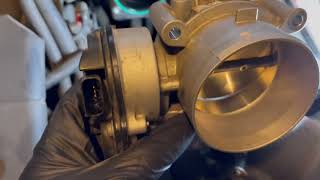
How to confirm: Remove the intake air duct from the throttle body and visually inspect the throttle plate and bore for a thick black or gummy residue that could restrict movement. Manually push the plate to feel for any binding or sticking.
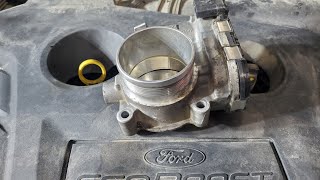
Typical fix: Clean the throttle body thoroughly with a dedicated throttle body cleaner and a soft cloth. Ensure the plate moves freely after cleaning. 🎬 See how to clean a dirty Ford throttle body If the code returns, the ETB likely has an internal electronic fault that cleaning cannot resolve.
Est. part cost: $10-$20 - Wiring or Connector Issue ⚪ Low Probability While not a platform-specific weakness, wiring can become damaged over time from heat, vibration, or improper servicing. The circuits for the throttle actuator control motor (TACM) can become open or shorted.
How to confirm: Inspect the wiring harness and connector going to the electronic throttle body for any signs of chafing, corrosion, broken wires, or loose pins. Use a multimeter to check for continuity and proper voltage on the TACM circuits.
Typical fix: Repair the damaged section of the wiring harness or clean/replace the connector.
Est. part cost: $5-$50
Rare But Worth Checking
- Powertrain Control Module (PCM) Failure: This is extremely rare. Before condemning the PCM, all other possibilities, especially the throttle body itself and its wiring, must be exhaustively ruled out. A damaged PCM is a possible but unlikely cause of P2112.
Diagnosis Steps
- Scan the PCM for any and all stored trouble codes. Note if P2111 or P2110 are present with P2112.
- With the engine off, remove the intake air tube connected to the throttle body.
- Visually inspect the throttle body bore and plate for heavy carbon or sludge buildup.
- Gently try to move the throttle plate by hand. It should move smoothly with some spring resistance and return to its resting position. If it feels stuck or gritty, it needs cleaning or replacement.
- If the throttle body is clean and moves freely, inspect the electrical connector and wiring harness for any visible damage, corrosion, or loose connections.
- Using a capable scan tool, command the throttle body to open and close while observing the live data for the throttle position sensor (TPS). The TPS reading should match the commanded position. If it does not, the throttle body has an internal fault.
- If no physical or wiring issues are found, and the scan tool test fails, the most likely cause is an internal failure of the electronic throttle body. Replacement is the recommended next step.
- After replacing the throttle body, clear all DTCs and perform a throttle body relearn procedure. This can often be done by disconnecting the battery for 15 minutes, but using a scan tool is the preferred method. 🎬 Watch: How to perform the electronic throttle body relearn
Parts You'll Likely Need
- Electronic Throttle Body Assembly
(OEM #DS7Z-9E926-C)— This is the most common cause of P2112 due to internal electronic failure, a known issue on many Ford vehicles.
Trusted brands: Motorcraft, Bosch, Standard Motor Products, Dorman
OEM price range: $408-$500
Aftermarket price range: $150-$300 - Throttle Body Gasket — The gasket should always be replaced when the throttle body is removed to prevent vacuum leaks.
Trusted brands: Motorcraft, Fel-Pro, Mahle
OEM price range: $10-$20
Aftermarket price range: $5-$15
Related Codes That Often Appear With This One
- P2111 — This code means 'Throttle Actuator Control System - Stuck Open'. It's common to see both P2111 and P2112 when the throttle body's internal electronics are failing intermittently.
- P2110 — This code, 'Throttle Actuator Control System - Forced Limited RPM', is set by the PCM when it detects a critical fault (like P2112) and intentionally puts the vehicle into limp mode to protect the engine.
Technical Service Bulletins (TSBs) & Recalls
- SSM 46085: A bulletin from Ford that revised the diagnostic manual for electronic throttle bodies (ETBs), indicating a need for updated procedures likely due to common failures.
Platform-Specific Known Issues
- While no specific recall targets the 2015-2018 Edge for P2112, Ford did issue Customer Satisfaction Program 16B32 for certain 2015 Edge and other models for electronic throttle body contamination, which can cause P2111 and P2112. This program involved replacing the electronic throttle body free of charge but expired on September 30, 2017. This indicates a known history of throttle body issues on this platform.
- Ford issued a technical service bulletin (TSB), SSM 46085, which revised the diagnostic procedures for electronic throttle bodies, suggesting the issue was widespread enough to warrant updated guidance for technicians.
Mechanic-Grade Diagnostic Values
- Throttle Actuator Control Motor (TACM) Resistance — expected: 1-900 ohms. Failure: A reading outside this range indicates a faulty motor winding within the throttle body assembly.
- Throttle Position Sensor (TPS) 1 Signal Voltage — expected: Decreases from ~5.0V (closed) to <1.0V (wide open). Failure: Voltage that is erratic, does not sweep smoothly, or is stuck at a specific value indicates a failed sensor.
- Throttle Position Sensor (TPS) 2 Signal Voltage — expected: Increases from <1.0V (closed) to >4.0V (wide open). Failure: Voltage that does not mirror TPS1's behavior or is erratic/stuck indicates a failed sensor.
Hidden / Shadow Codes Worth Checking
- Mode 6, TID $81: This Test ID within Mode 6 data relates to the Electronic Throttle Control (ETC) monitor. While it doesn't provide a specific sub-code for P2112, a failing test result under this monitor can indicate an emerging problem with the throttle body before a hard code like P2112 is set. (see via A professional scan tool or advanced DIY tool like ForScan that can display Mode 6 test results.)
Scan Tool Commands That Help
- Ford IDS / ForScan: Live Data Graphing (PIDs: TP_CMD, TP_ACT, TP1, TP2) — This is the primary diagnostic step. Graphing the commanded throttle position (TP_CMD) against the actual positions (TP_ACT, TP1, TP2) while pressing the accelerator (engine off) will visually show if the throttle plate is lagging, sticking, or not responding, confirming an internal ETB fault.
- Ford IDS / ForScan: Reset All Adaptations / KAM Reset — This command should be performed after replacing the throttle body. It clears the PCM's Keep Alive Memory (KAM), forcing it to relearn the idle and closed-throttle positions of the new component.
- Ford IDS / ForScan: KOEO (Key On, Engine Off) Self-Test — Running this test can sometimes reveal other related codes that were not immediately present. The PCM will cycle various actuators, including the throttle body, to check for response.
Wiring & Ground Locations
- G105 — Located on the left front of the engine compartment.. This is a primary engine bay ground point. A corroded or loose connection here can cause a variety of sensor and actuator issues, including erratic throttle body operation due to insufficient ground for the PCM or related circuits.
- G107 — Located on the right front of the engine compartment.. Similar to G105, this is another critical engine bay ground. Verifying that both G105 and G107 are clean and tight is a crucial step before replacing expensive components.
- ETB Connector (C134) — The 6-pin electrical connector directly on the electronic throttle body.. This is the single point of failure for all electrical signals to and from the throttle body. The pins for the motor (TACM+ and TACM-) and the two position sensors (TPS1, TPS2) should be inspected for corrosion, moisture, or damage.
Real Owner Repair Stories
- JustDoItYourself YouTube Channel (2016 Ford Edge 2.0L EcoBoost) — Engine running rough, shaking, RPMs jumping, no throttle response, check engine light on, rich exhaust smell.
❌ Tried (didn't work) The first step shown was to clean the throttle body, but the video creator ultimately decided to replace it based on the severity of the codes.
✅ What actually fixed it Replacing the electronic throttle body assembly. The scanner showed multiple codes for stuck open and stuck closed (P2111 and P2112), confirming a complete internal failure. The replacement resolved all symptoms.
OEM Part Supersession History
DS7Z-9E926-A→DS7Z-9E926-C, then DS7Z-9E926-D— The -A and -C revisions were prone to the internal electronic failures that cause P2111 and P2112. The DS7Z-9E926-D is the latest, most robust version designed to correct the original flaw.
Heads up: When replacing, it is critical to purchase the latest 'D' revision. While older 'A' or 'C' versions may be available as new-old-stock or used, they are likely to fail in the same manner as the original part.
Diagnostic Flowchart
Other Known Issues on This Vehicle
Issues unrelated to this code that are worth knowing about as an owner of this generation:
- 2.0L EcoBoost Coolant Intrusion 🔴 High — A widely documented issue for 2015-2018 models. A flaw in the engine block design allows coolant to leak into the cylinders, often leading to misfires and requiring a complete long block replacement. (Ref: TSB 19-2346)
- 6F35 Transmission Problems 🟠 Medium — The 6F35 automatic transmission can exhibit issues like harsh shifting, slipping, or complete failure. Some owners have faced costly rebuilds, sometimes just outside the powertrain warranty period.
- Cracked Flexplate 🟠 Medium — Some 2015-2018 models may develop a cracked flexplate, causing a distinct rattling noise from the transmission bellhousing area. If it fails completely, it results in a loss of power. (Ref: Customer Satisfaction Program 21B04)
- Power Transfer Unit (PTU) Leaks 🟠 Medium — The PTU, which manages the all-wheel-drive system, is prone to fluid leaks from its seals. If the fluid runs low, it can lead to overheating and complete failure of the unit, which is a costly repair. (Ref: TSB 09-25-7 (for earlier models, but issue persists))
Used vs. New Parts: Buying Guide for This Vehicle
When a used part is the smart pick: A used throttle body is generally NOT recommended for this specific repair. The failure is due to an internal design flaw and wear on the electronic contacts, not physical damage. A used part, even from a low-mileage vehicle, carries a high risk of failing soon after installation for the exact same reason.
Donor-vehicle mileage cap: roughly under 30000 miles for the part to have meaningful remaining life.
What to inspect on the donor part:
- Verify the part number is the latest revision (DS7Z-9E926-D). Do not buy an older -A or -C revision.
- Inspect the electrical connector pins for any signs of corrosion, moisture, or damage.
- Check for a clean throttle bore and plate, as this indicates the donor vehicle was well-maintained.
- Ensure the throttle plate moves smoothly by hand with no binding or gritty feeling.
OEM-only on this vehicle (don't cheap out):
- Electronic Throttle Body
Aftermarket brands forum-validated for this vehicle:
- Motorcraft (OEM)
- Bosch
- Standard Motor Products (SMP)
Brands owners have reported issues with on this vehicle:
- Unknown or unbranded 'white box' parts from online marketplaces. Forum discussions frequently warn that cheap aftermarket electronic parts often fail quickly or are dead-on-arrival.
Real Owner Stories
Aggregated from forums and TSBs cited above. Mileages and costs reflect what owners reported in those sources.
2016 Ford Edge 3.5L — 4768 miles
Symptoms: Vehicle experienced a P2112 code at very low mileage, confirming the throttle body failure issue affects second-generation Edges early in their lifespan.
What fixed it: Replacement of the electronic throttle body.
Source hint: Ford Edge Forum - 'Second Gen. 2015-16 3.5 Throttle body failure report thread' (fordedgeforum.com)
2016 Ford Edge 2.0L EcoBoost
Symptoms: Owner experienced code P2112 and noted confusion regarding the correct replacement part numbers, specifically the difference between -C and -D suffixes and their pricing.
What fixed it: Researching and sourcing the correct electronic throttle body replacement part.
Source hint: Ford Edge Forum - '2016 Edge w/2.0 throttle body issue' (fordedgeforum.com)
2022 Ford Maverick 2.0L EcoBoost
Symptoms: Experienced P2111/P2112 codes and limp mode immediately following a cold snap.
What fixed it: Discussion pointed to moisture from the PCV system freezing inside the throttle body as the cause.
Source hint: Maverick Truck Club - '2.0L EcoBoost Throttle Body Failure?' (mavericktruckclub.com)
Related OBD-II Codes
Frequently Asked Questions
Is there a recall for the throttle body on my 2015 Ford Edge?
Why does my 2.0L EcoBoost Edge lose power and show a wrench light in extreme cold?
What is SSM 46085 and how does it relate to my P2112 code?
Can I just clean the throttle body on my 2016 Edge to fix P2112?
Does the 2017-2019 Ford Escape 2.0L have the same throttle body problems as the Edge?
What should I do after replacing the throttle body on my 2.0L EcoBoost?
Helpful Videos


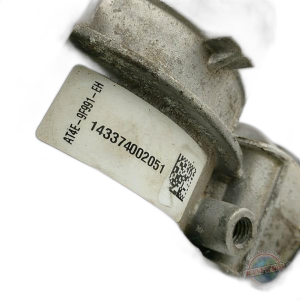
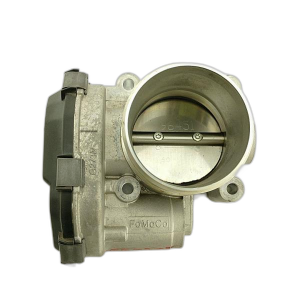
Used OEM Parts in Stock
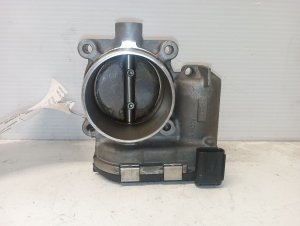
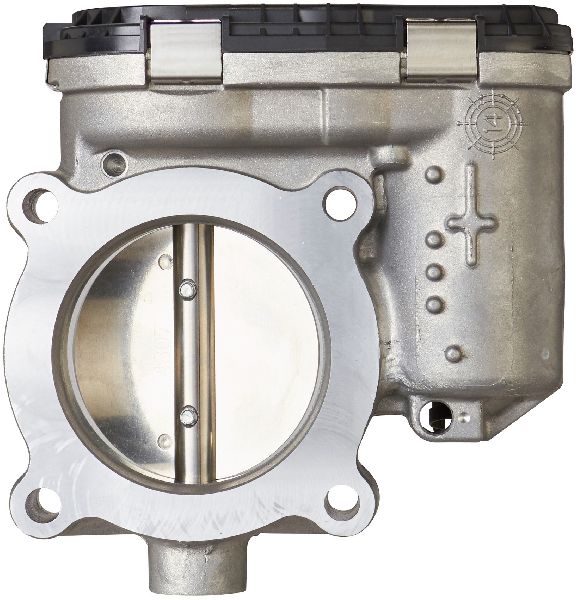
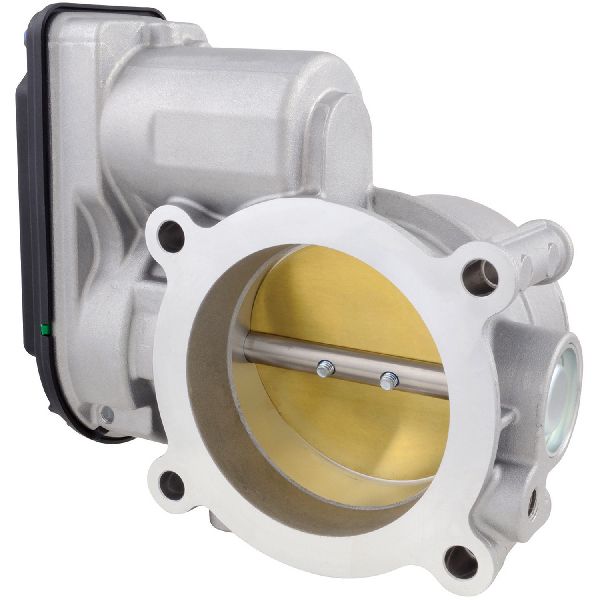
New Aftermarket Parts Available


The information in this article is provided for general reference and educational purposes only. Vehicle specifications, procedures, and part compatibility can vary by production date, trim level, and region. Always consult your vehicle's factory service manual and verify part numbers before purchasing or performing repairs. Safety-critical components such as airbags, seat belts, and braking systems should be installed by a qualified professional.
- Ford Edge:
- 🧭 Diagnostic Flowchart
- 🎬 Helpful Videos
- 🛍️ Shop This Part
- What's Unique About the 2015-2018 Ford Edge
- Symptoms You May Notice
- Most Likely Causes
- Rare But Worth Checking
- Diagnosis Steps
- Parts You'll Likely Need
- Related Codes That Often Appear With This One
- Technical Service Bulletins (TSBs) & Recalls
- Platform-Specific Known Issues
- Mechanic-Grade Diagnostic Values
- Hidden / Shadow Codes Worth Checking
- Scan Tool Commands That Help
- Wiring & Ground Locations
- Real Owner Repair Stories
- OEM Part Supersession History
- Other Known Issues on This Vehicle
- Used vs. New Parts: Buying Guide for This Vehicle
- Real Owner Stories
- 2016 Ford Edge 3.5L — 4768 miles
- 2016 Ford Edge 2.0L EcoBoost
- 2022 Ford Maverick 2.0L EcoBoost
- Related OBD-II Codes
- Frequently Asked Questions
- 🎟️ Get 5% Off