

P2112 on 2005-2012 Ford Escape: Throttle Stuck Closed Causes and Fixes
On a 2005-2012 Ford Escape, code P2112 almost always means the electronic throttle body has failed. This is a widespread, known issue that causes the vehicle to enter a 'limp mode' with sudden loss of power. The only reliable fix is to replace the entire throttle body assembly.
- P2112 on a 2005-2012 Escape is a critical code that makes the vehicle unsafe to drive.
- The cause is almost certainly a failed electronic throttle body, a known and widespread defect acknowledged by Ford.
- Simply cleaning the throttle body is not a valid repair; the entire unit must be replaced.
- Do not install a used throttle body, as the failure is due to a design flaw and a used part will likely fail again soon.
- If a new throttle body doesn't fix the issue, the next step is to inspect the wiring pins at the PCM connector (C175E).
What's Unique About the 2005-2012 Ford Escape
The 2005-2012 Ford Escape, spanning two generations, is notorious for electronic throttle body (ETB) failures that trigger code P2112. The root cause, as identified by Ford, is the potential for contamination on the internal motor contacts of the throttle body, leading to intermittent electrical connectivity. This became such a common problem, causing dangerous stalling and sudden power loss, that it prompted NHTSA investigation PE13-003 and a Customer Satisfaction Program (13N03) from Ford, which extended the warranty on the part to 10 years or 150,000 miles. The failure is typically internal to the ETB's electronics or motor, meaning that simply cleaning the throttle body is rarely a permanent fix for this specific code on this vehicle.
Generation note: This range covers the end of the first generation (2005-2007) and the entire second generation (2008-2012) Ford Escape. The electronic throttle body failure is a known issue across both generations within this year range. While the part numbers may differ slightly, the symptom, cause, and repair are virtually identical. The issue also affects the Escape's platform mates, the Mercury Mariner and Mazda Tribute.
Symptoms You May Notice
- Sudden and severe loss of engine power (Limp Mode)
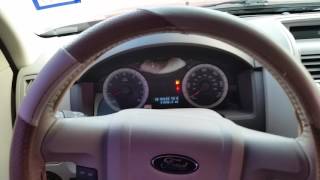
- Wrench light illuminated on the instrument cluster
- Check Engine Light on
- Unresponsive or 'dead' accelerator pedal
- Engine stalls, especially when coming to a stop or attempting to accelerate
- Vehicle unable to accelerate past a low speed (approx. 900 RPM)
- Car may run normally after being shut off and restarted, but the problem will return intermittently
- Erratic RPM gauge fluctuations and inability to accelerate beyond 50 MPH on highways (NHTSA ODI #10661256)
- Cleaning the Throttle Body
- Replacing the Accelerator Pedal Position (APP) Sensor
Most Likely Causes
- Failed Electronic Throttle Body (ETB) Assembly 🔴 High Probability → Shop Fuel Injection Throttle Body This is a well-documented, widespread failure on 2005-2012 Escapes due to internal electronic or motor faults, not just carbon buildup. The issue was so prevalent it led to an NHTSA investigation (PE13-003) and a warranty extension from Ford (Customer Satisfaction Program 13N03). NHTSA ODI Investigation #PE13003 noted that approximately 50 percent of claims were associated with DTCs P2111 and P2112, specifically identifying factors where the ETB motor may fail.
How to confirm: After confirming P2112 with a scanner, and checking the connector for damage, the most practical diagnostic step is replacing the throttle body. The failure is almost always internal to the unit itself, caused by contamination on the motor contacts.
Typical fix: Replace the entire electronic throttle body assembly and the gasket. After replacement, perform an idle relearn procedure by disconnecting the battery for 15 minutes or using a scan tool.
Est. part cost: $70-$250
Rare But Worth Checking
- Wiring Harness or Connector Issue: While less common than outright throttle body failure, check the wiring harness connector at the throttle body for corrosion, backed-out pins, or damage before replacing the part. A poor connection can mimic a failed component.
- Powertrain Control Module (PCM) Fault: In very rare instances, the PCM itself can fail and incorrectly set a P2112 code. This should only be considered after a new throttle body fails to resolve the issue and all wiring has been verified as good. Some TSBs for other models have involved PCM reflashes for similar issues. NHTSA ODI #10568554 describes a case where P2112 appeared alongside P0685, requiring replacement of the throttle body and motor assembly.
Diagnosis Steps
- Use an OBD-II scanner to confirm that P2112 is the primary code. Note any other codes, like P2111.
- Turn the ignition off. Inspect the electrical connector on the throttle body. Look for loose or corroded pins, and ensure the harness is securely plugged in.
- Inspect the wiring leading to the throttle body for any signs of damage, chafing, or breaks.
- Given the extremely high failure rate of the throttle body on this specific vehicle, the next step is typically replacement of the throttle body assembly.
- After installing the new throttle body with a new gasket, clear all DTCs with the scanner.
- Perform a throttle body relearn procedure. The simplest method is to disconnect the negative battery terminal for at least 15 minutes to reset the Keep Alive Memory (KAM). Reconnect the battery, start the engine, and let it idle for several minutes to relearn the idle and throttle positions.
- Test drive the vehicle to ensure the limp mode and code do not return.
Parts You'll Likely Need
- Electronic Throttle Body Assembly
(OEM #9L8Z-9E926-A (for 2009-2012 2.5L & 3.0L), 5L8Z-9E926-A (for 2005-2008 2.3L))— This is the root cause of code P2112 in the vast majority of cases for this vehicle due to a known design flaw involving internal motor contact contamination.
Trusted brands: Motorcraft, Dorman, Hitachi, Standard Motor Products
OEM price range: $150-$250
Aftermarket price range: $70-$150 - Throttle Body Gasket — The gasket provides the seal between the throttle body and the intake manifold. It should always be replaced when the throttle body is removed to prevent vacuum leaks.
Trusted brands: Fel-Pro, Mahle, Motorcraft
OEM price range: $5-$15
Aftermarket price range: $3-$10
Related Codes That Often Appear With This One
- P2111 — This code means 'Throttle Actuator Control System - Stuck Open.' It's common to see both P2111 and P2112 stored together, as they both indicate a malfunction in the electronic throttle body's control system and were the primary codes cited in the NHTSA investigation.
- P0443 and C1963 — An owner reported these codes appearing simultaneously with P2112 during a sudden loss of power at speeds of 55 MPH or higher (NHTSA ODI #11099930).
Technical Service Bulletins (TSBs) & Recalls
- TSB 10-21-6: Mentions DTCs P2111 and P2112 for various Ford models, including the 2010-2011 Fusion and Focus, related to idle speed fluctuations, indicating a known software and hardware issue with throttle bodies around this era.
- OASIS-SSM 32170: A service message noted in dealer records (NHTSA ODI #10552753) regarding the diagnosis and replacement of the throttle body for codes P2111 and P2112.
Platform-Specific Known Issues
- Ford issued a Customer Satisfaction Program (13N03) which extended the warranty coverage for the throttle body to 10 years or 150,000 miles from the original warranty start date. The program specifically covered 2009-2012 Escapes/Mariners. While this program has expired for most vehicles, it officially acknowledges the widespread nature of the problem.
- The NHTSA opened investigation PE13-003 into the 2009-2013 Ford Escape, Fusion, Mercury Mariner, and Milan for this throttle body issue after receiving thousands of complaints of stalling and surging, affecting an estimated 1.6 million vehicles.
Mechanic-Grade Diagnostic Values
- Throttle Position (TP) Sensor 5V Reference Voltage — expected: Approximately 5.0 volts. Failure: Voltage significantly lower than 5.0V or 0V indicates a wiring or PCM issue.
- TP Sensor 1 (TP1) and TP Sensor 2 (TP2) Voltage Sweep — expected: With the key on, engine off, manually opening the throttle plate should show one sensor's voltage rising (e.g., ~0.5V to ~4.5V) while the other sensor's voltage falls (e.g., ~4.5V to ~0.5V).. Failure: A glitch, spike, or flat line in either voltage reading during the sweep indicates a failed sensor inside the throttle body assembly.
- Scan Tool Live Data: TP_REL (Relative Throttle Position) — expected: 15-19% at idle.. Failure: A value that does not match the commanded position (TAC_PCT) by more than a few percent will trigger a fault.
- Scan Tool Live Data: TAC_PCT (Throttle Actuator Commanded %) — expected: Should closely mirror the accelerator pedal input and match the actual throttle position (TP_REL).. Failure: A large and persistent discrepancy between TAC_PCT and the actual throttle position PIDs is the direct trigger for codes P2111 and P2112.
- Alternator AC Ripple Voltage — expected: Less than 100mV AC (0.1V AC) across battery terminals with engine running.. Failure: AC voltage significantly higher than 100mV suggests failing diodes in the alternator, which can create electrical noise that disrupts the throttle body's electronics.
Scan Tool Commands That Help
- Ford IDS, Forscan, or other professional scan tools: Reset All Adaptations / Clear Transmission Adaptive Tables / KAM Reset — This must be performed after replacing the electronic throttle body. It clears the Keep Alive Memory (KAM), forcing the PCM to relearn the new throttle body's idle and off-idle positions. Failing to do this can result in an unstable idle or persistent codes even with a new part.
Wiring & Ground Locations
- C134 — The 6-pin electrical connector directly on the electronic throttle body.. This is the primary connection point. Check for corrosion, moisture, or pins that have backed out of the connector housing. A poor connection here will directly cause P2112.
- C175E — The central of the three main harness connectors on the Powertrain Control Module (PCM), typically located on the firewall.. The throttle body signals run through this connector. In rare cases where a new throttle body doesn't fix the issue, a loose or corroded pin in this connector can be the root cause, creating an intermittent open or high resistance on a TP or TAC motor circuit.
- G104 — A primary engine bay ground point, typically located on the driver's side inner fender, near the battery tray.. The PCM and its sensors require a clean ground reference. Corrosion or looseness at this ground can cause erratic voltage readings and unpredictable behavior from electronic components, including the throttle body.
Real Owner Repair Stories
- escape-city.com forum user (2009 Ford Escape) — Classic P2112 symptoms: wrench light, limp mode, no throttle response.
❌ Tried (didn't work) Cleaning the original throttle body.
✅ What actually fixed it Replacing the entire throttle body assembly with a new Dorman-branded part and performing a KAM reset resolved the issue completely. - YouTube channel FordTechMakuloco (2011 Ford Fusion (shares powertrain and issue with Escape)) — Intermittent stalling and P2112 code.
❌ Tried (didn't work) A previous shop had already replaced the throttle body, but the problem returned.
✅ What actually fixed it The technician found a backed-out pin for one of the throttle position sensor signals in the main PCM connector (C175E). Reseating the pin and ensuring a tight connection permanently fixed the problem. This highlights the need to check wiring continuity from the throttle body to the PCM if a replacement part doesn't work. - NHTSA ODI #10552753 — An owner reported that after their vehicle was out of warranty with only 34,646 miles, a dealer performed a diagnostic test finding codes P2111 and P2112.
✅ What actually fixed it The dealer replaced the throttle body and reset the KAM (Keep Alive Memory) as per OASIS-SSM 32170.
When the Usual Fixes Don't Work
- While the vast majority of P2112 codes on this platform are fixed by replacing the throttle body, there are documented cases where the issue persisted. The most notable secondary cause is a poor pin connection at the main PCM harness connector (C175E). If a new throttle body does not resolve the limp mode, a full pin-out and continuity check of the six wires between the throttle body and the PCM is the next logical step before condemning the PCM itself.
Model Year Variations Within This Range
- 2005-2008: These models, primarily with the 2.3L I4 engine, use throttle body part number 5L8Z-9E926-A or an equivalent. This part is physically different and not interchangeable with later models.
- 2009-2012: These models, with the 2.5L I4 and 3.0L V6 engines, use throttle body part number 9L8Z-9E926-A or an equivalent. This was the primary part number included in Ford's Customer Satisfaction Program 13N03. It is not backward compatible with 2005-2008 models.
Diagnostic Flowchart
Other Known Issues on This Vehicle
Issues unrelated to this code that are worth knowing about as an owner of this generation:
- Transmission Failure (6F35) 🔴 High — Widespread across multiple model years, particularly 2008-2014. Symptoms include rough shifting, hesitation, gear slipping, and complete failure, often requiring costly rebuilds or replacement.
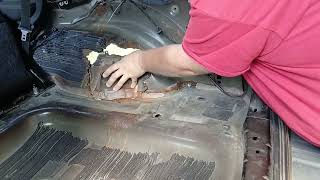
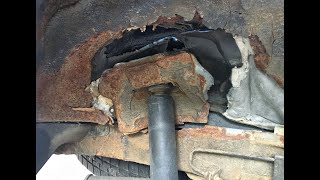
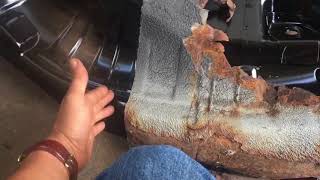
- Rusted Rear Shock Towers 🔴 High — Very common in regions that use road salt. The upper rear shock mount area in the wheel well rusts from the inside out, causing the shock to detach from the body. The passenger side typically fails first. (Ref: Aftermarket repair kits are widely available due to the frequency of this issue.)
- Electronic Power Steering (EPAS) Failure 🔴 High — Common on 2008-2012 models. Can cause a sudden loss of power steering assist, making the vehicle very difficult to steer at low speeds. Often related to a faulty torque sensor within the steering column. (Ref: Ford issued recall 14S05 for some 2008-2011 models, but not all affected vehicles were included, leading to owner complaints.)
- Swollen/Delaminating Lug Nuts 🟡 Low — Extremely common. The two-piece factory lug nuts have a chrome cap that swells and deforms over time, making it impossible to use the standard lug wrench to remove a wheel.
Used vs. New Parts: Buying Guide for This Vehicle
When a used part is the smart pick: For this specific repair, a used part from a salvage yard is NEVER a smart choice. The P2112 code is caused by a well-documented internal design and manufacturing flaw that leads to contamination and failure over time. A used part is simply a future failure waiting to happen.
What to inspect on the donor part:
- Not applicable; avoid used parts for this component.
OEM-only on this vehicle (don't cheap out):
- While not strictly 'OEM-only', using an extremely cheap, unbranded throttle body from an online marketplace is a significant risk. Stick to OEM (Motorcraft) or reputable aftermarket brands.
Aftermarket brands forum-validated for this vehicle:
- Dorman (specifically their part numbers 977-588 or 977-031, depending on year)
- Standard Motor Products (SMP)
- Hitachi
- AIP Electronics
Brands owners have reported issues with on this vehicle:
- No-name or unbranded units sold on marketplaces like Amazon or eBay without a clear brand identity or warranty are frequently cited in forums as failing prematurely.
Real Owner Stories
Aggregated from forums and TSBs cited above. Mileages and costs reflect what owners reported in those sources.
2010 Ford Escape — 82000 miles
Symptoms: Sudden loss of power and stalling; vehicle entered limp mode. Dealer diagnosed a failed throttle body.
What fixed it: Replacement of the throttle body under Customer Satisfaction Program 13N03.
Source hint: Ford Truck Enthusiasts Forums: '2010 Escape - new throttle body recall?'
2009 Ford Escape 3.0L
Symptoms: Check engine light, immediate rough idle, and no response from the gas pedal. The issue would resolve temporarily after a restart.
What fixed it: The dealership replaced the throttle body under the extended warranty.
Source hint: Ford Forums: 'No throttle response'
2010 Ford Escape
Symptoms: Feels like it's running out of gas, accelerator pedal doesn't respond, gas pedal going completely dead. Wrench light illuminated.
What fixed it: Replaced the throttle body assembly.
Source hint: youtube_comment: briansmobile1
2013 Ford Escape SE 2L
Symptoms: Repeat failures of the throttle body causing code P2112. Previous attempts to fix included replacing the pedal and wiring.
What fixed it: Replacing the throttle body (though the owner noted the part's reliability resulted in repeat failures).
Source hint: Reddit (r/fordescape): ''13 Escape SE 2L w/ P2112 Trouble Code Again Within 2 Years...'
2011 Ford Escape
Symptoms: An owner reported a diagnostic run showed codes P0685 and P2112.
What fixed it: Replacement of the throttle body and motor assembly at a cost of approximately $314.18 plus tax.
Source hint: NHTSA ODI #10568554
Related OBD-II Codes
Frequently Asked Questions
Is there a recall or warranty extension for the throttle body on my 2009-2012 Ford Escape?
My 2010 Escape is stalling and surging; did the government investigate this?
Does TSB 10-21-6 apply to the P2112 code on my Ford vehicle?
Can I just clean the carbon buildup to fix P2112 on my 2005-2012 Escape?
What is the 'wrench light' I see on my dashboard along with the P2112 code?
Does the Mercury Mariner suffer from the same P2112 throttle issues as the Escape?
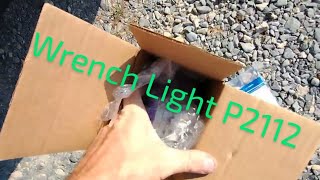
Helpful Videos

Used OEM Parts in Stock
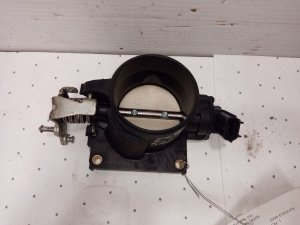
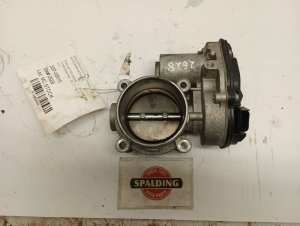
New Aftermarket Parts Available


The information in this article is provided for general reference and educational purposes only. Vehicle specifications, procedures, and part compatibility can vary by production date, trim level, and region. Always consult your vehicle's factory service manual and verify part numbers before purchasing or performing repairs. Safety-critical components such as airbags, seat belts, and braking systems should be installed by a qualified professional.
- Ford Escape:
- 🧭 Diagnostic Flowchart
- 🎬 Helpful Videos
- 🛍️ Shop This Part
- What's Unique About the 2005-2012 Ford Escape
- Symptoms You May Notice
- Most Likely Causes
- Rare But Worth Checking
- Diagnosis Steps
- Parts You'll Likely Need
- Related Codes That Often Appear With This One
- Technical Service Bulletins (TSBs) & Recalls
- Platform-Specific Known Issues
- Mechanic-Grade Diagnostic Values
- Scan Tool Commands That Help
- Wiring & Ground Locations
- Real Owner Repair Stories
- When the Usual Fixes Don't Work
- Model Year Variations Within This Range
- Other Known Issues on This Vehicle
- Used vs. New Parts: Buying Guide for This Vehicle
- Real Owner Stories
- 2010 Ford Escape — 82000 miles
- 2009 Ford Escape 3.0L
- 2010 Ford Escape
- 2013 Ford Escape SE 2L
- 2011 Ford Escape
- Related OBD-II Codes
- Frequently Asked Questions
- 🎟️ Get 5% Off