

P2112 on 2004-2005 Ford Explorer 4.0L V6: Throttle Actuator Stuck Closed Fixes
This code applies only to 2004-2005 models. P2112 almost always means the electronic throttle body has failed, forcing the engine into a low-power 'limp mode'. The fix is to replace the entire throttle body assembly. Expect to pay $150-$300 for the part.
- This guide is ONLY for the 2004-2005 Ford Explorer 4.0L V6, as earlier 2002-2003 models have a different, non-electronic throttle system.
- Code P2112 will put your vehicle into a dangerous low-power 'limp mode'; do not attempt to drive it normally.
- The most probable cause is a failed electronic throttle body assembly, which must be replaced as a complete unit.
- Before replacing the throttle body, always inspect the wiring and connector for damage, and check for heavy carbon buildup that could cause the throttle plate to stick.
What's Unique About the 2002-2005 Ford Explorer
A critical distinction for this vehicle range is that the 2002-2003 models with the 4.0L V6 engine used a mechanical throttle cable and cannot set this code. Ford switched to an Electronic Throttle Control (ETC) system, also known as 'drive-by-wire', for the 2004 and 2005 model years. Therefore, this P2112 guide is only relevant for the 2004-2005 Ford Explorer. These early electronic throttle bodies on many Ford vehicles are known for a high failure rate of the internal electronics.
Generation note: The 2002-2005 Ford Explorer is part of the third generation. However, a significant change occurred mid-generation. The 2002-2003 models use a throttle cable, while the 2004-2005 models use an electronic throttle body. This code P2112 only applies to the 2004-2005 models.
Symptoms You May Notice
- Sudden and severe loss of engine power
- Vehicle will not accelerate or respond to the gas pedal
- Engine is stuck at or just above idle RPM ('limp-home mode')
- Illuminated 'Wrench' light on the dashboard
- Check Engine Light is on
- Difficulty starting the engine
- Replacing the accelerator pedal position (APP) sensor. While the APP sensor is part of the throttle control system, P2112 specifically points to a problem at the throttle body actuator itself, not the pedal.
Most Likely Causes
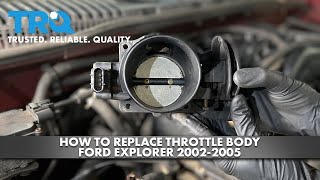
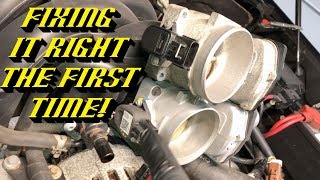
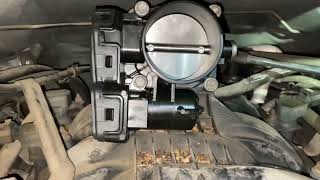
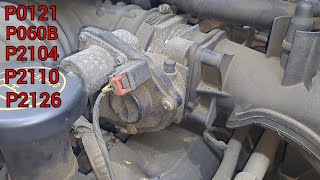
- Failed Electronic Throttle Body Assembly 🔴 High Probability → Shop Fuel Injection Throttle Body The internal electronic motor and position sensors on these early Ford electronic throttle bodies are a common failure point. Contamination can develop on the internal motor contacts, or the internal nylon gears can wear out, leading to increased electrical resistance and failure. This is a widely documented issue across many Ford models from this era. 🎬 See: Ford electronic throttle body failure diagnosis
How to confirm: After checking for wiring issues, this is the most likely component failure. Diagnosis often involves observing throttle position sensor data with a scan tool while commanding the throttle open. If the actual position doesn't match the commanded position, the unit is faulty. Ford issued a service bulletin (SSM 46085) advising technicians that certain PIDs (ETC_ACT and ETC_DSD) should not be used for diagnosing ETB concerns.
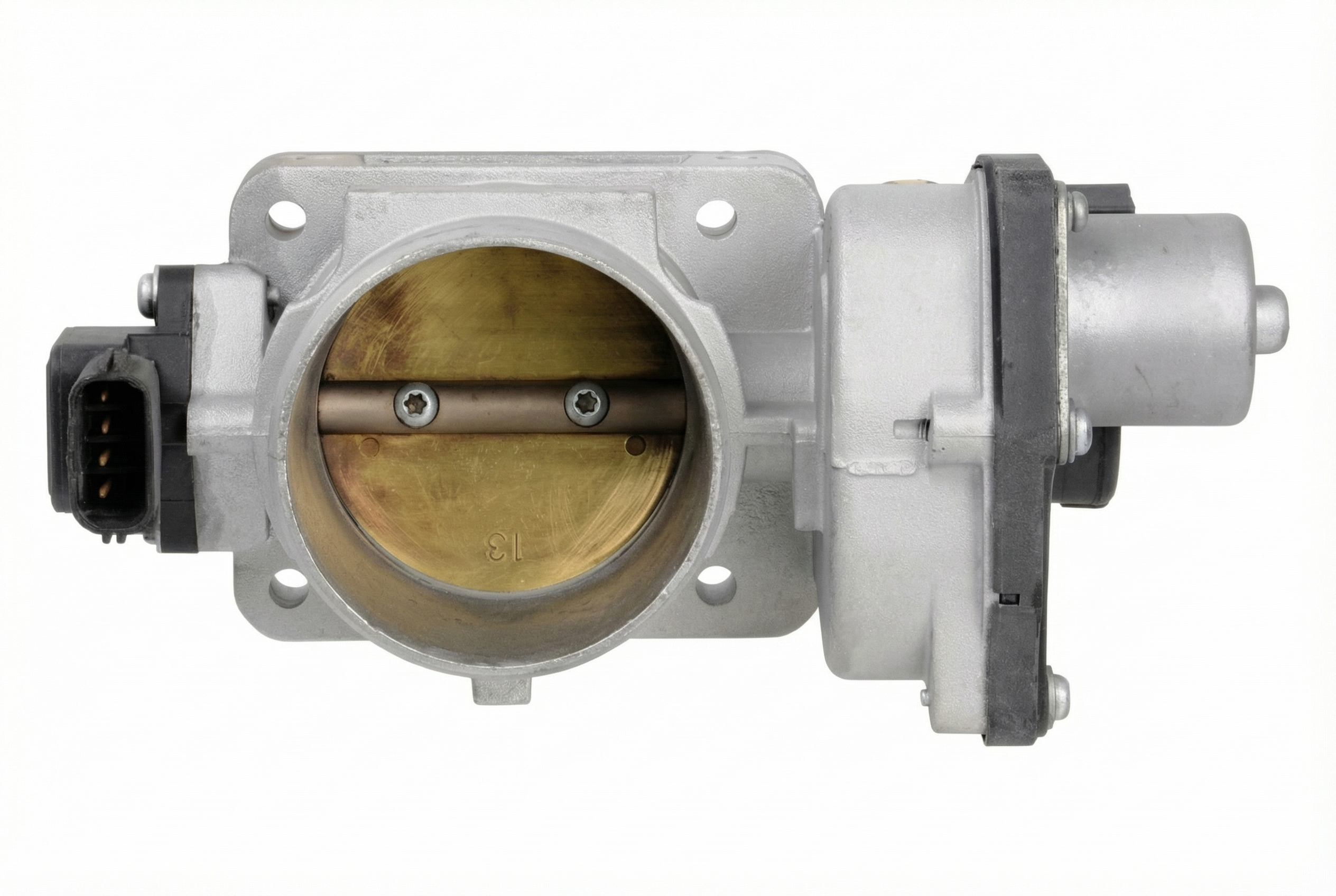
Typical fix: Replace the entire electronic throttle body assembly. It is sold as a single unit including the motor and sensor.
Est. part cost: $150-$300 - Wiring or Connector Issue 🟡 Medium Probability The wiring harness leading to the throttle body is subject to engine heat and vibration, which can cause wires to chafe, break, or corrode at the connector pins over time.
How to confirm: Visually inspect the wiring harness and the connector at the throttle body for any signs of damage, looseness, or corrosion. Perform a 'wiggle test' on the connector and harness with the engine running to see if it induces the fault. A wiring diagram indicates the throttle body connector is C175b.
Typical fix: Repair the damaged section of the wiring harness or replace the connector pigtail.
Est. part cost: $20-$50 - Heavy Carbon Buildup ⚪ Low Probability While less common to cause a 'stuck closed' code compared to a 'stuck open' one, heavy carbon deposits around the throttle plate and bore can cause the plate to bind and not open smoothly when commanded. The small servo motor may not be strong enough to overcome the resistance from the gunk.
How to confirm: Remove the air intake tube from the throttle body and visually inspect the throttle plate and bore for a thick black ring of carbon that could restrict movement.
Typical fix: Clean the throttle body thoroughly with a dedicated throttle body cleaner and a soft cloth. 🎬 Watch: How to clean your throttle body Manually (with key off) move the plate to clean all surfaces.
Est. part cost: $5-$15
Rare But Worth Checking
- Faulty Powertrain Control Module (PCM): This is very rare. The PCM should only be considered after a new throttle body and verified wiring fail to resolve the code.
Diagnosis Steps
- Verify the vehicle is a 2004 or 2005 model. This code is not applicable to 2002-2003 4.0L V6 Explorers.
- Scan for any other diagnostic trouble codes. Pay close attention to codes like P2104 or P2111, which confirm a throttle control system fault.
- With the key off, remove the air intake hose from the throttle body.
- Visually inspect the throttle plate and bore for any heavy carbon buildup or physical obstructions that could cause it to stick.
- Carefully try to move the throttle plate by hand. It should move smoothly and spring back to its resting position. If it feels stuck or gritty, cleaning is necessary.
- Inspect the electrical connector and wiring harness going to the throttle body. Look for any broken wires, corrosion on the pins, or damage to the harness.
- If the wiring looks good and the throttle body is clean and moves freely, the electronic throttle body assembly itself is the most likely cause of the failure.
- After replacing the throttle body, perform a throttle relearn procedure. This allows the PCM to learn the new throttle plate's idle and wide-open positions. A common Ford procedure is:
- Disconnect the negative battery terminal for at least 15-20 minutes to clear the PCM's memory.
- Reconnect the battery. Turn the ignition to the 'ON' position (engine off) for a few seconds.
- Start the engine and let it idle in Park for at least one minute until it reaches normal operating temperature.
- With the engine warm and idling, turn the A/C on and let it idle for at least one more minute.
- With the engine still idling and A/C on, apply the brake and shift into Drive. Hold for at least one minute.
- Drive the vehicle for at least 10 miles, using a mix of city and highway driving to allow the PCM to complete the relearning process.
Parts You'll Likely Need
- Electronic Throttle Body Assembly
(OEM #5R3Z9E926BA)— This is the most common failure for code P2112. The internal motor or sensor fails, requiring replacement of the complete assembly.
Trusted brands: Motorcraft, Standard Motor Products, Hitachi, Dorman
OEM price range: $250-$400
Aftermarket price range: $150-$300
Related Codes That Often Appear With This One
- P2104 — This code means 'Throttle Actuator Control System - Forced Idle'. It is an informational code that is often set with P2112 to indicate that the PCM has put the vehicle into limp mode because of the throttle fault.
- P2111 — This code means 'Throttle Actuator Control System - Stuck Open'. It's the counterpart to P2112 and indicates the same component (the throttle body) has failed, but in the opposite manner. Sometimes both can be stored.
- P2135 — This code, 'Throttle/Pedal Position Sensor/Switch 'A'/'B' Voltage Correlation', points to a disagreement between the two internal throttle position sensors. It's another strong indicator of internal throttle body failure.
Technical Service Bulletins (TSBs) & Recalls
- SSM 46085: A Special Service Message from Ford advising that the Powertrain Control/Emissions Diagnosis (PC/ED) manual was revised for diagnosing electronic throttle bodies (ETBs) and that certain PIDs (ETC_ACT and ETC_DSD) should not be used for diagnosis.
- TSB 10-21-6: While not for the Explorer specifically, this TSB for other Ford models discusses DTCs P2111 and P2112 and instructs dealers to replace the throttle body, indicating a known issue with the component design across the brand.
- Bulletin #TSB 16-0139: A manufacturer service bulletin notes that vehicles may exhibit an intermittent loss of power and/or an illuminated wrench lamp with diagnostic trouble codes P2111, P2112, and/or P2119 stored in memory.
Platform-Specific Known Issues
- Owners on forums frequently confirm that replacing the entire throttle body assembly is the definitive fix for the P2112 and P2104 code combination after the vehicle enters 'Engine Failsafe Mode'.
- NHTSA ODI #10621906 describes a situation where the vehicle slows down rapidly and displays a "wrench" indicator, with the dealer reporting code P2112 for a throttle body stuck closed.
Mechanic-Grade Diagnostic Values
- TPS VREF (Reference Voltage) at ETB connector — expected: 5 volts. Failure: Voltage significantly lower than 5V indicates a wiring issue or a problem with the PCM.
- TPS Signal Voltage at idle (closed throttle) — expected: Less than 1.0 volt. Failure: Voltage significantly above 1.0V at idle suggests a faulty TPS or incorrect adjustment/installation.
- TPS Signal Voltage at Wide Open Throttle (WOT) — expected: Greater than 4.25 volts. Failure: Voltage not reaching this level indicates a faulty TPS or a mechanical obstruction preventing full plate opening.
- TPS Signal Ground Circuit Resistance — expected: Less than 1.5 ohms between the TPS ground wire and the battery negative terminal.. Failure: Higher resistance indicates a poor ground connection, which can cause erratic sensor readings.
Scan Tool Commands That Help
- Ford IDS (or equivalent bidirectional scanner): KAM (Keep Alive Memory) Reset — This should be performed after replacing the throttle body. It is a more thorough reset than disconnecting the battery, as it clears all learned adaptive values (idle trims, fuel trims) and forces the PCM to relearn all parameters with the new component.
Wiring & Ground Locations
- C175b — The main 104-pin connector for the Powertrain Control Module (PCM), located at the right side of the engine bulkhead.. This is the central connector where all engine sensor and actuator circuits, including those for the electronic throttle body, terminate. Checking for corrosion or pushed-out pins here is a crucial step in diagnosing persistent or intermittent electrical faults.
- G104 / G105 — Located on the right rear of the engine compartment.. These are primary grounds for the engine management system. A loose or corroded connection at these points can cause erratic behavior and voltage drops to various components, including the electronic throttle body, potentially mimicking a component failure.
Real Owner Repair Stories
- Ford Truck Enthusiasts Forums (2005 Ford Explorer 4.0L V6) — Vehicle went into 'Engine Failsafe Mode' with wrench and service engine soon lights illuminated. Codes P2104, P2111, and P2112 were stored.
❌ Tried (didn't work) Cleaning the throttle body, Attempting to replace individual sensors on the throttle body
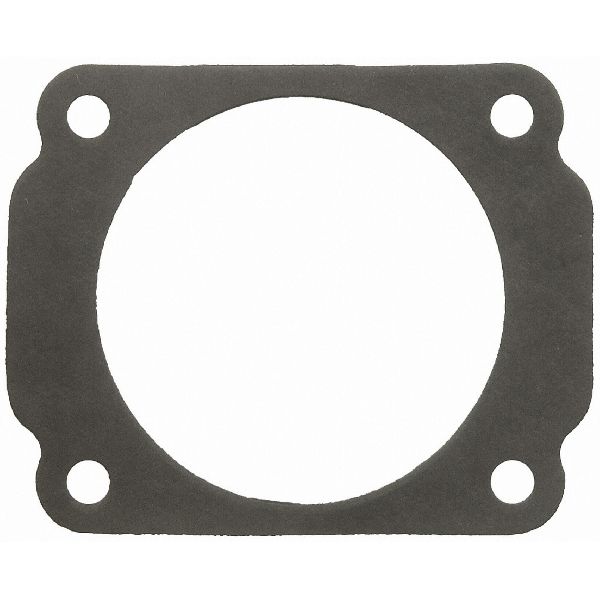
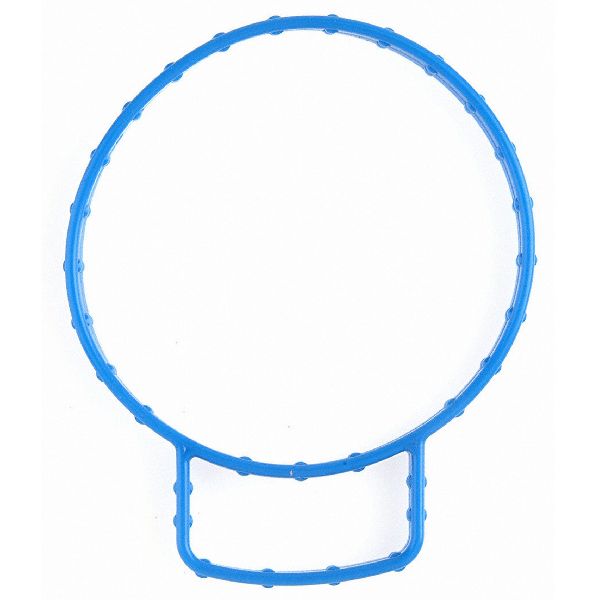
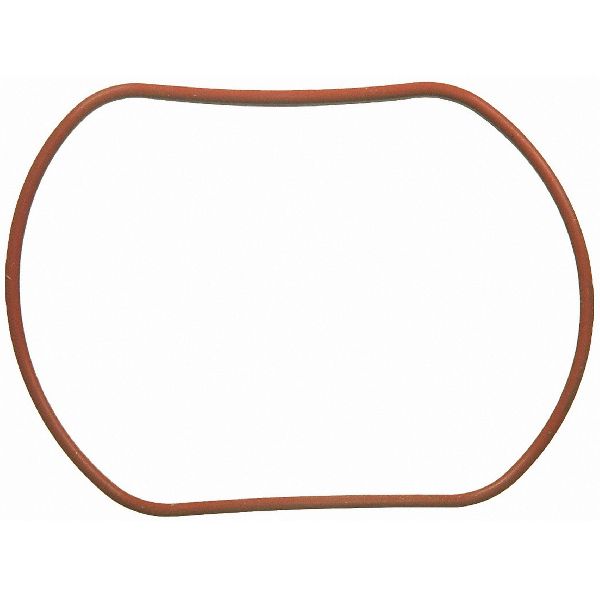
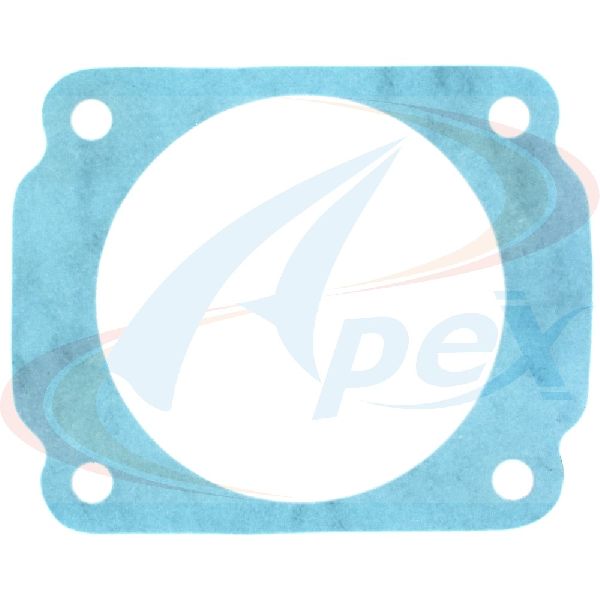
✅ What actually fixed it Replacing the entire throttle body assembly, which came as a single unit with a new TPS and actuator motor, resolved all codes and symptoms. The user also replaced the throttle body gasket. - Reddit r/FordExplorer (2004 Ford Explorer 4.0L) — Car in limp mode, would not run without foot on the gas. Codes for throttle position and idle air temp.
❌ Tried (didn't work) Changing spark plugs and wires, Changing fuel filter, Lightly cleaning the throttle body
✅ What actually fixed it A user suggested a thorough cleaning of the throttle body, noting the servo isn't strong enough to break through heavy gunk. Another user suggested checking the wiring harness to the TPS and EGR for grounding out against the engine block. While the original poster did not confirm the final fix, these were the primary suggestions from other owners who had experienced the same issue. - NHTSA ODI #10291826 (2005 Ford Explorer) — An owner reported the vehicle just died and the steering wheel locked up. A local repair shop found codes P2104 and P2112, which were related to the throttle actuator.
Documented NHTSA Reports
- NHTSA ODI #11551127 reports a sudden deceleration due to a P2112 code, noting the electronic throttle body was stuck closed.
- NHTSA ODI #11030745 describes an instant loss of power, vibration, and a sudden jerk backwards while driving at 45 MPH, with codes P2111 and P2112 stored.
OEM Part Supersession History
5R3Z9E926BA→9W7Z9E926A— This is a common supersession for Ford throttle bodies of this era, typically indicating minor revisions for improved reliability or manufacturing changes.
Model Year Variations Within This Range
- 2004-2005: These model years use the electronic throttle control (ETC) system and are susceptible to code P2112. This is the primary difference from the 2002-2003 models which used a mechanical throttle cable and cannot set this code.
Diagnostic Flowchart
Other Known Issues on This Vehicle
Issues unrelated to this code that are worth knowing about as an owner of this generation:
- Timing Chain Cassette Failure 🔴 High — Very common, often presenting as a 'rattle' noise on startup or between 2000-3000 RPM. Can occur any time after 90,000 miles. Failure can lead to catastrophic engine damage. (Ref: TSB 02-7-6)
- 5R55W/S Automatic Transmission Failure 🔴 High — Notorious for issues including solenoid pack failure, harsh shifting, delayed engagement, and flashing O/D light. Problems can start at relatively low mileage.
- Cracked Plastic Thermostat Housing 🟠 Medium — The OEM plastic thermostat housing is prone to cracking and developing coolant leaks over time, which can lead to overheating. This is a very common repair item.
- Intake Manifold Gasket Leaks 🟠 Medium — The O-ring style intake manifold gaskets degrade over time, causing vacuum leaks that lead to lean codes (P0171/P0174) and misfires (P0300). (Ref: TSB 03-16-1, TSB 04-24-18)
- Cracked Rear Liftgate Panel 🟡 Low — The plastic trim panel below the rear window is famous for developing a crack near the Ford emblem. This is a cosmetic issue but affects a very high percentage of these vehicles.
Used vs. New Parts: Buying Guide for This Vehicle
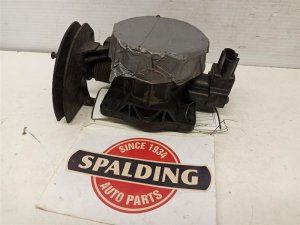
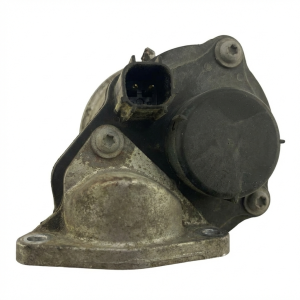
When a used part is the smart pick: A used throttle body is generally NOT recommended for this vehicle. The original parts have a known high failure rate due to internal electronics and plastic gears. A used part from a junkyard is likely to have the same defect or fail soon after installation.
Donor-vehicle mileage cap: roughly under 75000 miles for the part to have meaningful remaining life.
What to inspect on the donor part:
- Verify the part number matches or is a direct supersession of the original.
- Inspect the electrical connector pins for any signs of corrosion or damage.
- If possible, manually move the throttle plate to ensure it moves smoothly without binding and springs back firmly.
- Avoid parts from vehicles that show signs of being in a front-end collision.
OEM-only on this vehicle (don't cheap out):
- While not strictly OEM-only, using a Motorcraft replacement part is highly recommended for longevity and to avoid compatibility issues.
Aftermarket brands forum-validated for this vehicle:
- Motorcraft (OEM)
- Standard Motor Products (SMP)
- Hitachi
Brands owners have reported issues with on this vehicle:
- Unbranded, low-cost units from online marketplaces should be avoided as their internal electronics and materials are often of poor quality and can fail quickly.
Real Owner Stories
Aggregated from forums and TSBs cited above. Mileages and costs reflect what owners reported in those sources.
2005 Ford Explorer 4.0L V6
Symptoms: Experienced codes P2104, P2111, and P2112, resulting in 'Engine Fail Safe Mode'. Attempted to clean the throttle body and replace individual sensors without success.
What fixed it: Replacing the entire throttle body assembly resolved all codes and symptoms.
Source hint: Ford Truck Enthusiasts Forums - Thread: '2005 ford explorer P2104/P2112'
2004 Ford Explorer 4.0L V6
Symptoms: Triggered codes P2104 and P2112 after removing the throttle body during an EGR valve service; the truck immediately entered limp mode.
What fixed it: Checking for physical obstructions or binding of the throttle plate was identified as the key diagnostic step.
Source hint: Ford Truck Enthusiasts Forums - Thread: 'Explorer P2104 & P2112 Help'
Related OBD-II Codes
Frequently Asked Questions
I have a 2002 Ford Explorer 4.0L V6 with code P2112. Why can't I find information on it?
My Explorer is in 'Engine Failsafe Mode' with P2112 and P2104. What is the most likely fix?
Can I use PIDs ETC_ACT and ETC_DSD to diagnose my throttle body as suggested in some manuals?
Is there a TSB for P2112 that applies to Ford's electronic throttle bodies?
How do I perform a throttle relearn on my 2005 Explorer after replacing the part?
Could my P2112 code be caused by the common 4.0L SOHC timing chain issue?
Helpful Videos
Used OEM Parts in Stock
New Aftermarket Parts Available


The information in this article is provided for general reference and educational purposes only. Vehicle specifications, procedures, and part compatibility can vary by production date, trim level, and region. Always consult your vehicle's factory service manual and verify part numbers before purchasing or performing repairs. Safety-critical components such as airbags, seat belts, and braking systems should be installed by a qualified professional.
- Ford Explorer:
- 🧭 Diagnostic Flowchart
- 🎬 Helpful Videos
- 🛍️ Shop This Part
- What's Unique About the 2002-2005 Ford Explorer
- Symptoms You May Notice
- Most Likely Causes
- Rare But Worth Checking
- Diagnosis Steps
- Parts You'll Likely Need
- Related Codes That Often Appear With This One
- Technical Service Bulletins (TSBs) & Recalls
- Platform-Specific Known Issues
- Mechanic-Grade Diagnostic Values
- Scan Tool Commands That Help
- Wiring & Ground Locations
- Real Owner Repair Stories
- Documented NHTSA Reports
- OEM Part Supersession History
- Model Year Variations Within This Range
- Other Known Issues on This Vehicle
- Used vs. New Parts: Buying Guide for This Vehicle
- Real Owner Stories
- 2005 Ford Explorer 4.0L V6
- 2004 Ford Explorer 4.0L V6
- Related OBD-II Codes
- Frequently Asked Questions
- 🎟️ Get 5% Off