

P2112 on 2010-2019 Ford Taurus 3.5L: Throttle Body Stuck Closed Causes and Fixes
On a 2010-2019 Ford Taurus with the 3.5L V6, code P2112 almost always means the electronic throttle body has failed internally. This is a very common and well-documented issue that causes a sudden loss of power and puts the car in 'limp mode'. The only reliable fix is to replace the entire throttle body assembly; cleaning is ineffective.
- P2112 on a 2010-2019 Taurus 3.5L is a critical code that makes the vehicle unsafe to drive due to sudden power loss ('limp mode').
- The cause is almost certainly a failed electronic throttle body (ETB), a known, widespread problem for this vehicle acknowledged by Ford through a TSB and an extended warranty program.
- Do not waste time or money cleaning the throttle body; the failure is internal and electronic, requiring full replacement of the assembly.
- This is a DIY-friendly repair that can be completed in about an hour with basic tools (typically an 8mm or 10mm socket).
What's Unique About the 2010-2019 Ford Taurus
The sixth-generation Taurus with the 3.5L V6 is part of a large family of Ford vehicles from this era known for a high rate of electronic throttle body (ETB) failures. The issue was so widespread that Ford issued Technical Service Bulletin (TSB) 10-21-6 and Customer Satisfaction Program 13N03. The failure is typically not due to dirt or carbon buildup but an internal electronic fault within the throttle body assembly, specifically contamination on the internal motor contacts, which makes cleaning ineffective and replacement the only viable solution.
Symptoms You May Notice
- Sudden and severe loss of engine power (entering 'limp mode')
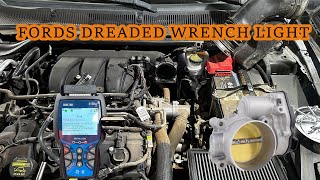
- Wrench warning light illuminated on the dashboard
- Check Engine Light is on
- Unresponsive or delayed accelerator pedal
- Rough, unstable, or low idle
- Engine may stall when coming to a stop
- Vehicle fails to start (in severe cases where the throttle cannot open at all)
- Replacing the Accelerator Pedal Position (APP) sensor. Codes P2111 and P2112 point specifically to a fault at the throttle body actuator, not the pedal sensor.
- Cleaning a throttle body that has an internal electronic failure. While cleaning can fix issues caused by carbon buildup, it will not resolve the common electronic fault that triggers P2112 on this vehicle.
Most Likely Causes
- Failed Electronic Throttle Body (ETB) Assembly 🔴 High Probability → Shop Fuel Injection Throttle Body This is a well-documented, widespread issue on many Ford vehicles from this period due to an internal electronic fault. Ford's own documents cite contamination on the throttle motor's internal electrical contacts, causing intermittent connectivity.
How to confirm: The presence of code P2112 (or its companion P2111) combined with the vehicle entering 'limp mode' is a very strong indicator. A scan tool can monitor commanded vs. actual throttle position to confirm the discrepancy. Given the high failure rate, this is the presumptive cause.
Typical fix: Replace the entire electronic throttle body assembly. Cleaning the old unit will not fix this internal electronic fault.
Est. part cost: $80-$250 - Wiring or Connector Issue ⚪ Low Probability General wear and tear, vibration, or improper servicing can lead to chafed wires or loose pins at the throttle body connector. However, this is far less common than the ETB failure itself.
How to confirm: Visually inspect the wiring harness and connector at the throttle body for any signs of damage, corrosion, or loose pins. Use a multimeter to check for proper voltage and ground at the connector according to the vehicle's wiring diagram.
Typical fix: Repair the damaged section of the wiring harness or clean/replace the connector.
Est. part cost: $10-$100
Rare But Worth Checking
- Faulty Powertrain Control Module (PCM): This is very uncommon. Before condemning the PCM, all other possibilities, especially the throttle body and its wiring, must be exhaustively ruled out. In some rare cases, a faulty driver circuit within the PCM can mimic a failed throttle body.
Diagnosis Steps
- Use an OBD-II scanner to confirm P2112 is the primary code. Check for other related codes like P2111 or P2104.
- Visually inspect the electrical connector and wiring harness leading to the electronic throttle body. Look for any chafing, corrosion, or loose pins.
- If wiring appears intact, the most probable cause is the throttle body itself. Given the extremely high failure rate on this platform, replacement is the most common and effective diagnostic step.
- After replacing the throttle body, clear the codes and perform the throttle body relearn procedure. This can often be done without a scan tool by turning the ignition to 'ON' (engine off) for a few minutes to allow the PCM to find the new closed position, then starting the engine and letting it idle for several minutes to learn the idle trim.
- A more robust non-scanner relearn procedure is: 1. Turn ignition ON (engine off) for 2 minutes. 2. Turn ignition OFF for 1 minute. 3. Start the engine and let it idle for 5 minutes in Park. 4. Drive the vehicle to allow the PCM to learn shift strategies.
- If the problem persists after replacing the throttle body, perform a detailed circuit check with a multimeter to verify power, ground, and signal integrity between the PCM and the throttle body. If the wiring is confirmed to be good, a PCM fault may be considered, though this is rare.
Parts You'll Likely Need
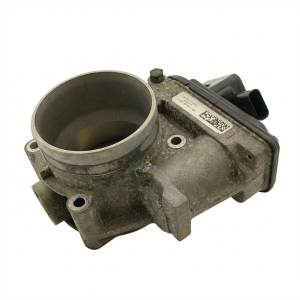
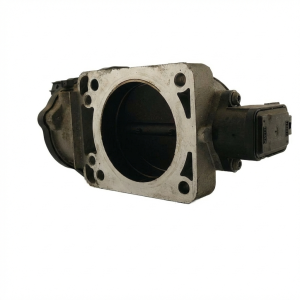
- Electronic Throttle Body Assembly
(OEM #AA5Z-9E926-A (Superseded by TB-12))— This is the component that almost always fails, causing the P2112 code due to a known internal electronic defect. The original part number has been superseded.
Trusted brands: Motorcraft, Bosch, Hitachi, Dorman
OEM price range: $200-$350
Aftermarket price range: $80-$200
Related Codes That Often Appear With This One
- P2111 — This is the companion code for 'Throttle Actuator Control System - Stuck Open.' Both codes point to the same root cause: a failing electronic throttle body assembly and are often listed together in Ford's TSBs.
- P2104 — This code for 'Throttle Actuator Control System - Forced Idle' is a status code indicating the PCM has put the vehicle into limp mode as a direct result of detecting the fault that triggered P2111 or P2112.
Technical Service Bulletins (TSBs) & Recalls
- TSB 10-21-6: Addresses DTCs P2111 and P2112 on 2010-2011 Taurus 3.5L models, recommending throttle body replacement for certain build dates.
- Customer Satisfaction Program 13N03: Extended warranty coverage for the ETB to 10 years/150,000 miles, confirming the widespread nature of the defect.
Platform-Specific Known Issues
- Ford issued TSB 10-21-6 for 2010-2011 Taurus models with the 3.5L engine (built from 3/1/2010 to 8/3/2010) that experienced codes P2111 or P2112, recommending throttle body replacement.
- Ford also initiated Customer Satisfaction Program 13N03, which extended the warranty on the electronic throttle body to 10 years or 150,000 miles for many affected models due to the high failure rate. This program has expired for all eligible vehicles.
- The official cause stated by Ford for the warranty extension was contamination on the internal motor contacts of the throttle body, leading to intermittent electrical connectivity.
Mechanic-Grade Diagnostic Values
- Throttle Actuator Control (TAC) Motor Coil Resistance — expected: 2 to 15 Ohms. Failure: A reading of less than 1 Ohm indicates a short, while an Over Limit (OL) reading indicates an open circuit.
- Throttle Position Sensor (TPS) Supply Voltage — expected: Approximately 5V (Reference Voltage - VREF). Failure: Significantly lower or no voltage indicates a wiring or PCM issue.
- Throttle Actuator Supply Voltage — expected: 11-13 Volts with ignition on. Failure: Voltage outside this range suggests a problem with the power supply circuit or PCM.
- Live Data: Commanded vs. Actual Throttle Angle — expected: Values should track each other closely.. Failure: When P2112 is set, the actual throttle angle will be more than 6 degrees lower than the commanded angle.
Scan Tool Commands That Help
- Ford IDS (Integrated Diagnostic System): Clear KAM (Keep Alive Memory) / Reset All Adaptations — This function should be performed after replacing the electronic throttle body to clear the old learned values and force the PCM to relearn the new throttle body's idle and range of motion.
- Ford IDS (Integrated Diagnostic System): Datalogger with Trigger — To diagnose an intermittent P2112, a technician can set up the datalogger to automatically record sensor data (like commanded vs. actual throttle position) the moment the DTC is triggered, capturing the fault event.
Wiring & Ground Locations
- C175B — The largest of the three main connectors at the Powertrain Control Module (PCM), located in the engine bay near the firewall.. This connector contains the circuits for the throttle actuator control motor and the throttle position sensors. A poor connection or corrosion here can directly cause P2112.
- G103 / G104 — Major chassis ground points located in the engine bay, typically on or near the driver's side frame rail or inner fender/strut tower.. These are primary ground points for the PCM and various engine sensors. A loose or corroded connection at these grounds can cause erratic sensor readings and communication faults, potentially mimicking a throttle body failure.
Real Owner Repair Stories
- Ford F150 Forum user 'co_heil_F150' (2016 Ford F-150 3.5L EcoBoost (platform mate with same engine/ETB) at 48,000 miles) — Sudden loss of power, would only 'idle' forward, check engine light came on. Occurred while pulling into traffic.
❌ Tried (didn't work) The user went straight to diagnosis and replacement.
✅ What actually fixed it Scanned the code, which returned P2112. The user replaced the entire throttle body and electronic actuator unit, which resolved the issue. They noted that a new gasket was also required.
OEM Part Supersession History
AA5Z-9E926-A→AA5Z-9E926-B— The original part was prone to internal electronic failure. The supersession is likely an updated design to improve reliability.
Heads up: The new part number AA5Z-9E926-B is a direct replacement for the original. Some sources also refer to it as TB12.
Model Year Variations Within This Range
- 2010-2012 vs 2013-2019: The Ford Taurus received a major facelift for the 2013 model year. While the 3.5L engine and the fundamental throttle body issue remained, some wiring harness routing and connector locations may differ slightly between pre-facelift (2010-2012) and post-facelift (2013-2019) models. However, the diagnostic approach for P2112 remains the same.
Diagnostic Flowchart
Other Known Issues on This Vehicle
Issues unrelated to this code that are worth knowing about as an owner of this generation:
- Internal Water Pump Failure 🔴 High — Common after 80,000 miles. Failure is often catastrophic as the timing-chain-driven pump leaks coolant directly into the engine oil, destroying the engine.
- Power Transfer Unit (PTU) Failure (AWD Models) 🔴 High — Commonly occurs from 60,000-100,000 miles. The unit is located near the hot catalytic converter, causing the fluid to break down. It has no drain plug, making service difficult and often neglected, leading to bearing failure.
- Transmission Shifting Issues / Failure 🟠 Medium — More common on earlier 2010-2013 models, but can affect all years. Symptoms include hard shifts, slipping, or complete failure.
- MyFord Touch / SYNC System Glitches 🟡 Low — Very common on 2010-2015 models. Symptoms include a frozen or black screen, unresponsiveness to touch, and random reboots. Often requires software updates or module replacement.
Used vs. New Parts: Buying Guide for This Vehicle
When a used part is the smart pick: For this specific repair, a used part from a junkyard is NEVER a smart choice. The failure is due to an internal design flaw and wear on electrical contacts, not external damage. A used part has a very high likelihood of having the same defect or developing it shortly after installation.
What to inspect on the donor part:
- Not applicable, as used parts are not recommended.
OEM-only on this vehicle (don't cheap out):
- While not strictly 'OEM-only', using a new Motorcraft (Ford's OEM brand) throttle body is the most reliable option with the highest chance of a long-term fix.
Aftermarket brands forum-validated for this vehicle:
- Bosch
- Hitachi
Brands owners have reported issues with on this vehicle:
- While brands like Dorman offer a more affordable option, some professional technicians and forum users express a preference for OEM/Motorcraft for this critical part due to the nature of the original failure. Cheaper, unbranded parts from online marketplaces carry a significant risk of premature failure.
Real Owner Stories
Aggregated from forums and TSBs cited above. Mileages and costs reflect what owners reported in those sources.
Ford Taurus Police Interceptor 3.5L V6 DOHC — 170000 miles
Symptoms: Lost acceleration for 15 or so minutes several times in a week; one day lost acceleration four times in a single mile; Check Engine light illuminated.
What fixed it: Replacement of the electronic throttle body (ETB).
Source hint: CarComplaints.com owner report
2009-2012 Ford (D3 Platform) — ~120000 miles
Symptoms: Sudden engine cutout while driving.
What fixed it: Throttle body replacement under Customer Satisfaction Program 13N03.
Source hint: Ford Truck Enthusiasts - '2009-12: Extended Throttle Body warranty may be useless'
Ford Edge 3.5L/3.7L V6 (Platform Mate)
Symptoms: Vehicle triggered both P2111 and P2112 codes simultaneously.
What fixed it: Throttle body service/replacement.
Source hint: Ford Edge Forum - 'Throttle Body Service or Failure'
Related OBD-II Codes
Frequently Asked Questions
Does TSB 10-21-6 apply to my 2011 Ford Taurus 3.5L?
Is the throttle body on my Taurus covered under a special warranty extension?
Can I just clean the throttle body to fix the P2112 code on my Taurus?
Do I need a professional scan tool to perform the relearn procedure after replacing the ETB?
Why did my Taurus suddenly lose power and display a wrench light?
Are there other major issues I should watch for on a high-mileage Taurus 3.5L?
Helpful Videos
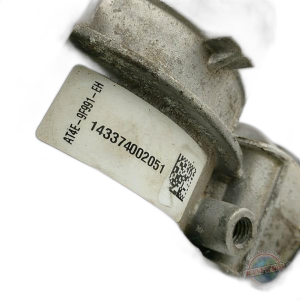
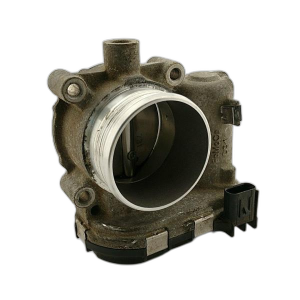
Used OEM Parts in Stock
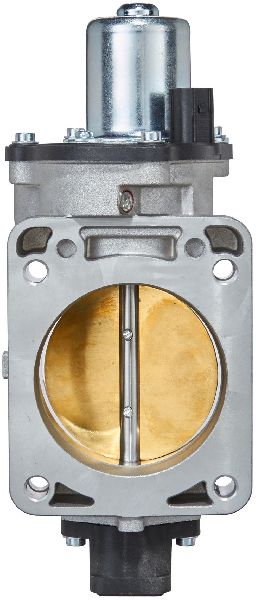
New Aftermarket Parts Available


The information in this article is provided for general reference and educational purposes only. Vehicle specifications, procedures, and part compatibility can vary by production date, trim level, and region. Always consult your vehicle's factory service manual and verify part numbers before purchasing or performing repairs. Safety-critical components such as airbags, seat belts, and braking systems should be installed by a qualified professional.
- Ford Taurus:
- 🧭 Diagnostic Flowchart
- 🎬 Helpful Videos
- 🛍️ Shop This Part
- What's Unique About the 2010-2019 Ford Taurus
- Symptoms You May Notice
- Most Likely Causes
- Rare But Worth Checking
- Diagnosis Steps
- Parts You'll Likely Need
- Related Codes That Often Appear With This One
- Technical Service Bulletins (TSBs) & Recalls
- Platform-Specific Known Issues
- Mechanic-Grade Diagnostic Values
- Scan Tool Commands That Help
- Wiring & Ground Locations
- Real Owner Repair Stories
- OEM Part Supersession History
- Model Year Variations Within This Range
- Other Known Issues on This Vehicle
- Used vs. New Parts: Buying Guide for This Vehicle
- Real Owner Stories
- Ford Taurus Police Interceptor 3.5L V6 DOHC — 170000 miles
- 2009-2012 Ford (D3 Platform) — ~120000 miles
- Ford Edge 3.5L/3.7L V6 (Platform Mate)
- Related OBD-II Codes
- Frequently Asked Questions
- 🎟️ Get 5% Off