

P2112 on 2011-2016 Hyundai Elantra: Throttle Stuck Closed Causes and Fixes
On a 2011-2016 Elantra with the 1.8L Nu engine, P2112 is almost always caused by a dirty throttle body that needs cleaning due to carbon buildup. If cleaning doesn't work, the entire electronic throttle body assembly needs to be replaced. Start with a $10 can of cleaner before spending hundreds on a new part, as this is the fix in the majority of cases.
- Always start by thoroughly cleaning the throttle body; this resolves the P2112 code in a majority of cases for this Elantra.
- After cleaning or replacing the throttle body, you must perform a relearn procedure to prevent high or erratic idle.
- Do not drive the vehicle with this code active. The 'limp mode' is a safety feature that makes the car dangerously slow for public roads.
- If cleaning fails, the entire throttle body assembly must be replaced, as the internal sensors are not sold separately.
What's Unique About the 2011-2016 Hyundai Elantra
For the fifth-generation Hyundai Elantra, this code is very frequently caused by simple carbon buildup on the throttle plate and bore, rather than an immediate electronic failure. The issue is common enough that Hyundai issued a Technical Service Bulletin (TSB 13-FL-002) advising technicians to thoroughly clean the throttle body before considering replacement for various drivability issues. This makes a very inexpensive cleaning procedure the most logical and effective first step in diagnosis.
Symptoms You May Notice
- Check Engine Light is illuminated
- Vehicle enters 'limp mode' with drastically reduced engine power
- Poor, hesitant, or no acceleration
- Unresponsive accelerator pedal
- Rough or unstable idle
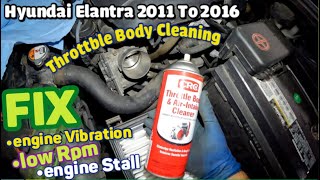
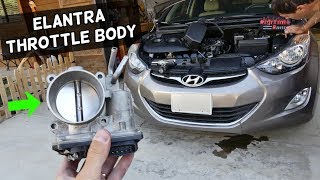
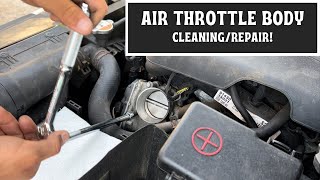
- Engine may stall, especially when coming to a stop 🎬 Watch: How to clean the throttle body to fix stalling
- Engine may not start
- Replacing the Accelerator Pedal Position Sensor (APPS) when the fault code points specifically to the throttle body actuator.
- Replacing the PCM before thoroughly diagnosing the throttle body and its circuit.
Most Likely Causes
- Dirty or Carbon-Fouled Throttle Body 🔴 High Probability → Shop Fuel Injection Throttle Body Carbon and oil residue from the Positive Crankcase Ventilation (PCV) system can build up around the throttle plate, creating a sticky grime that causes the plate to bind. This is a well-documented issue on this platform, as confirmed by Hyundai's own TSB (13-FL-002).
How to confirm: Remove the air intake hose from the throttle body and visually inspect for a ring of black carbon buildup on the throttle plate and inside the bore. The plate may feel sticky or difficult to move by hand (with ignition off).
Typical fix: Thoroughly clean the throttle plate and bore with a dedicated throttle body cleaner and a soft cloth. A throttle relearn procedure must be performed afterward to ensure a stable idle.
Est. part cost: $8-$15 - Failed Electronic Throttle Body Assembly 🟡 Medium Probability → Shop Fuel Injection Throttle Body If cleaning does not resolve the issue, the internal electric motor or the integrated, non-serviceable throttle position sensor (TPS) has likely failed. Seeing code P2135 alongside P2112 is a strong indicator of internal electronic failure.
How to confirm: The code P2112 returns immediately or shortly after a thorough cleaning and relearn procedure. Diagnostic tests with a multimeter can also check for correct voltage and resistance at the throttle body connector.
Typical fix: Replace the entire electronic throttle body assembly. The throttle position sensor is not sold separately.
Est. part cost: $150-$800
Rare But Worth Checking
- Wiring or Connector Issue: Check the wiring harness and electrical connector at the throttle body for any signs of corrosion, damage, or loose pins before replacing parts. A short or open in the Throttle Actuator Control Motor (TACM) circuit can trigger this code.
- Powertrain Control Module (PCM) Failure: This is extremely rare. The PCM should only be considered a potential cause after all other possibilities, especially the throttle body itself and its wiring, have been definitively ruled out.
Diagnosis Steps
- Scan the PCM for trouble codes and review any freeze-frame data.
- Inspect the electrical connector and wiring harness leading to the throttle body for damage, corrosion, or loose connections.
- Remove the air intake duct from the throttle body.
- With the ignition off, carefully inspect the throttle plate and bore for heavy carbon buildup.
- Thoroughly clean the throttle plate and bore using a dedicated throttle body cleaner and a soft rag. You can gently push the plate open to clean behind it. Do not spray excessive amounts of cleaner into the electronic components.
- Reassemble the air intake.
- Perform a throttle relearn procedure. A common method is to turn the ignition to 'ON' (engine off) for 15 seconds, then 'OFF' for 10 seconds. Repeat this cycle 4-5 times. Some vehicles may require a few days of driving to fully relearn on their own.
- Clear the trouble codes and start the engine. Let it idle for several minutes to allow the PCM to adjust. A high idle initially is common and should settle down.
- Test drive the vehicle. If the code P2112 returns, the electronic throttle body assembly has likely failed and requires replacement.
Parts You'll Likely Need
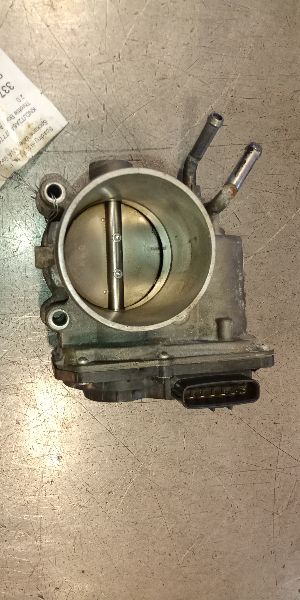
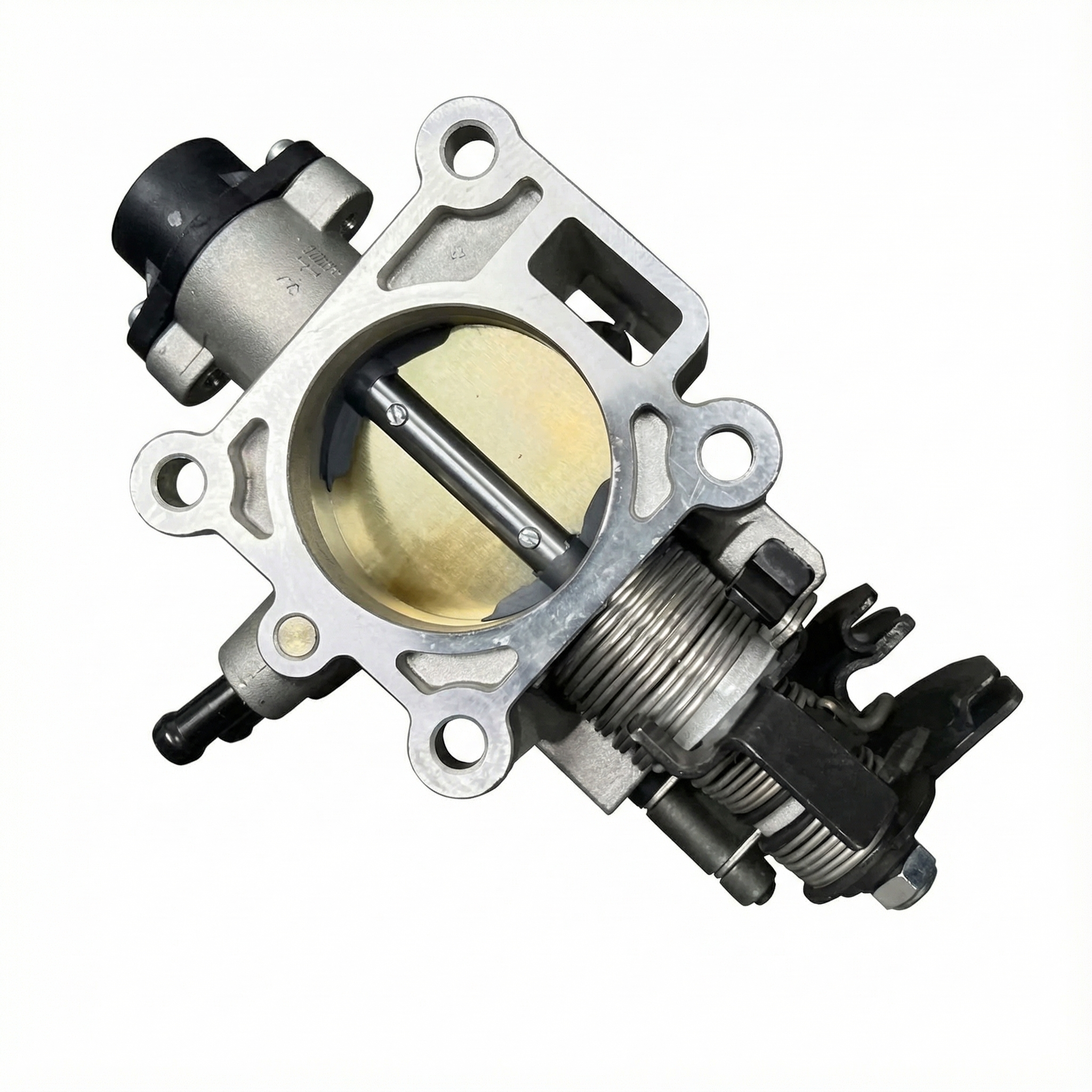
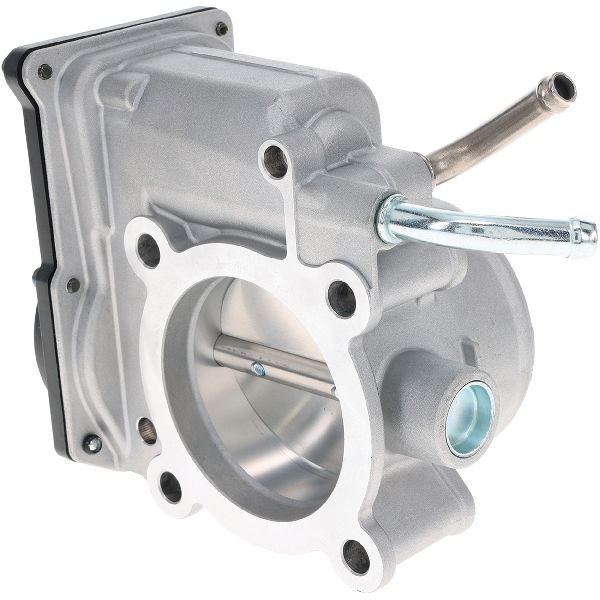
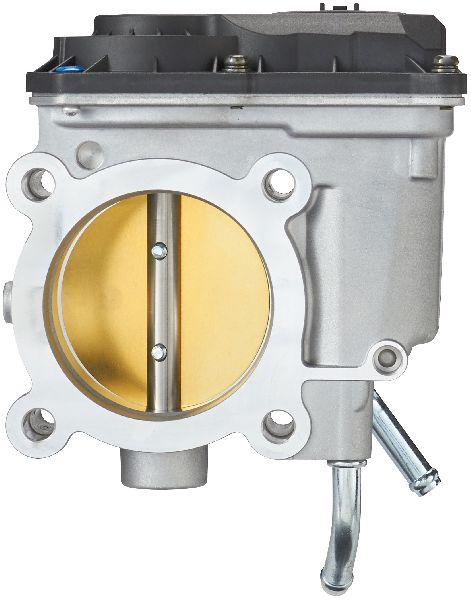
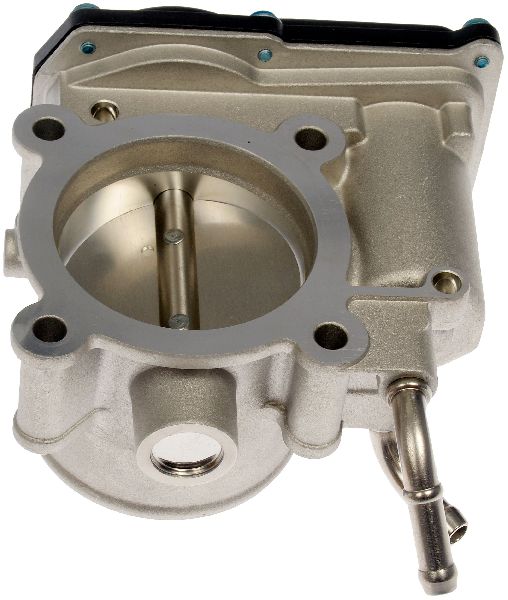
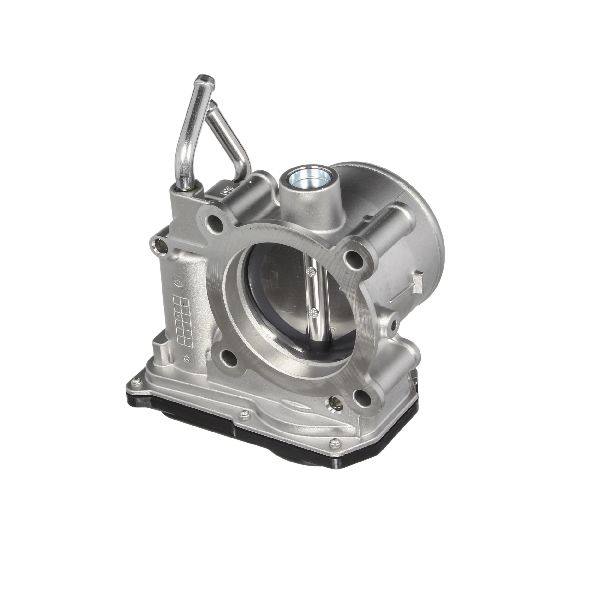
- Electronic Throttle Body Assembly
(OEM #35100-2E000)— This is the required fix if cleaning the original unit does not resolve the code, as the internal motor or sensors have failed. This part is shared with other Hyundai and Kia models.
Trusted brands: Hyundai (Genuine), Mobis, Bosch, Cardone (Remanufactured)
OEM price range: $619-$838
Aftermarket price range: $150-$350 - Throttle Body Cleaner — Required for the first and most common repair step: cleaning carbon buildup from the throttle plate and bore.
Trusted brands: CRC, Berryman, Gumout
Aftermarket price range: $8-$15
Related Codes That Often Appear With This One
- P2111 — This is the opposite code, 'Throttle Actuator Control System - Stuck Open,' indicating a failure of the same component in a different manner.
- P2135 — This code for 'Throttle/Pedal Position Sensor/Switch 'A'/'B' Voltage Correlation' often appears with P2112 and strongly indicates an internal electronic failure of the throttle body assembly, as the two internal sensors are sending conflicting signals.
- P0638 — This code for 'Throttle Actuator Control Range/Performance' points to a general problem with the throttle body's ability to operate correctly.
Technical Service Bulletins (TSBs) & Recalls
- TSB 13-FL-002: Advises cleaning the Electronic Throttle Control (ETC) body due to deposits found at the valve-to-bore interface on 2011-2013 Elantra models, among others, to correct drivability issues.
Platform-Specific Known Issues
- Hyundai issued Technical Service Bulletin 13-FL-002, which specifically advises cleaning the throttle body to resolve rough idle and related performance issues before replacing the component. This confirms that carbon buildup is a recognized problem on this platform.
- Owner forums like Hyundai-Forums.com and Reddit have numerous threads where owners of 2011-2016 Elantras resolved P2112 and associated limp mode by simply cleaning the throttle body, reinforcing it as the primary fix.
Mechanic-Grade Diagnostic Values
- Throttle Position Sensor 1 (TPS1) Signal Voltage — expected: Approx. 0.5V - 0.7V at closed throttle, sweeping smoothly to ~4.5V at wide-open throttle.. Failure: Voltage is erratic, jumps, has flat spots during the sweep, or is stuck low/high.
- Throttle Position Sensor 2 (TPS2) Signal Voltage — expected: Approx. 4.5V at closed throttle, sweeping smoothly down to ~0.5V at wide-open throttle.. Failure: Voltage does not move inversely to TPS1 or has spikes/dropouts.
- 5V Reference Voltage at Throttle Body Connector — expected: A stable 4.8V - 5.2V with the key on, engine off.. Failure: Voltage is significantly lower or higher, indicating a wiring or PCM issue.
Scan Tool Commands That Help
- Professional Bi-Directional Scan Tool (e.g., Hyundai GDS): Throttle Actuator Control Test — Use with key on, engine off to command the throttle plate to open and close. This directly tests the functionality of the internal motor and gears, confirming if it's physically capable of moving, separate from sensor readings.
Wiring & Ground Locations
- Throttle Body Connector (6-pin) — The electrical connector on the electronic throttle body assembly.. This is the primary connection point for all power, ground, and signal wires for the throttle actuator motor and position sensors. Key pins for the 1.8L engine are Pin 5 (TPS1 Signal), Pin 3 (TPS2 Signal), Pin 6 (5V Reference), and Pin 4 (Sensor Ground).
- Gng03 — A primary engine ground point located at the top rear of the engine.. A poor or corroded engine ground can cause erratic behavior from multiple sensors, including the electronic throttle body, leading to incorrect readings and fault codes.
Model Year Variations Within This Range
- 2014-2016: For the 2014 model year facelift, the 1.8L engine's output was slightly reduced to 145 horsepower from 148. Additionally, a 2.0L GDI engine became available in higher trims. While the P2112 code's primary cause (carbon buildup) remains the same, be aware of the different engine options when sourcing parts for later models in this range.
Diagnostic Flowchart
Other Known Issues on This Vehicle
Issues unrelated to this code that are worth knowing about as an owner of this generation:
- Engine Ticking / Piston Slap 🔴 High — Common issue with the 1.8L Nu engine, particularly noticeable on cold starts. Can lead to eventual engine failure. (Ref: Hyundai acknowledged the issue and extended the powertrain warranty for affected vehicles, particularly in cold weather states, following a class-action lawsuit.)
- Steering Coupler Failure 🟠 Medium — Extremely common. The flexible rubber coupler in the electronic power steering motor disintegrates over time, causing a distinct clicking or clunking noise in the steering column when turning.
- Premature Engine Failure 🔴 High — Some 2011-2013 models with the 1.8L engine experienced short block problems leading to engine failure, though it was not as widespread as the Theta II engine issues in other Hyundai models. (Ref: Engines were often replaced under warranty, but no formal recall was issued for the Elantra's Nu engine specifically for this.)
- Timing Chain Guide Wear 🟠 Medium — The plastic timing chain guides can become brittle and crack, leading to chain slap, noise, and potentially the chain skipping a tooth, causing a no-start condition.
Used vs. New Parts: Buying Guide for This Vehicle
When a used part is the smart pick: A used OEM throttle body from a reputable salvage yard is a very smart choice for this repair. The failure is often electronic, not from mechanical wear, so a lower-mileage used part can provide the same lifespan as a new aftermarket part for a fraction of the cost.
Donor-vehicle mileage cap: roughly under 80000 miles for the part to have meaningful remaining life.
What to inspect on the donor part:
- Check for a clean throttle plate and bore; excessive carbon may indicate a high-mileage or poorly maintained donor vehicle.
- Ensure the electrical connector pins are straight and free of corrosion.
- Verify the part number (35100-2E000) matches exactly.
- Ask for a short warranty (30-90 days) to protect against a part that is dead on arrival.
Aftermarket brands forum-validated for this vehicle:
- Bosch
- Hitachi
- Dorman (specifically their OE FIX version with an improved shaft seal)
- Cardone (Remanufactured)
Brands owners have reported issues with on this vehicle:
- Unbranded, no-name parts from online marketplaces should be avoided, as their internal electronics and sensor accuracy can be inconsistent, leading to the code returning.
Real Owner Stories
Aggregated from forums and TSBs cited above. Mileages and costs reflect what owners reported in those sources.
2011-2013 Hyundai Elantra
Symptoms: The owner experienced rough idle and drivability issues related to deposits found at the valve-to-bore interface of the throttle body.
What fixed it: Cleaning the Electronic Throttle Control (ETC) body as advised by the technical service bulletin.
Source hint: TSB 13-FL-002
2011-2016 Hyundai Elantra — 49000 miles
Symptoms: The owner experienced performance issues that required a throttle body cleaning, and later questioned if the issue was recurring as they approached higher mileage.
What fixed it: Throttle body cleaning.
Source hint: Hyundai-Forums.com - Thread titled 'Tsb 13 - fl - 002'
2011-2016 Hyundai Elantra
Symptoms: Vehicle entered 'limp mode' with associated throttle performance codes.
What fixed it: Cleaning the throttle body to remove carbon buildup.
Source hint: Hyundai-Forums.com and Reddit threads cited in vehicle_specific_issues
Related OBD-II Codes
Frequently Asked Questions
Does Hyundai TSB 13-FL-002 apply to my 2011-2016 Elantra regarding code P2112?
Can I just replace the Throttle Position Sensor (TPS) on my Elantra to fix P2112?
Is there a specific throttle relearn procedure for the Elantra after cleaning the throttle body?
What are the most reliable aftermarket brands if I need to replace the throttle body?
Why does my Elantra keep getting carbon buildup in the throttle body?
Should I be worried about engine ticking while diagnosing my throttle issues?
Helpful Videos

Used OEM Parts in Stock
New Aftermarket Parts Available



The information in this article is provided for general reference and educational purposes only. Vehicle specifications, procedures, and part compatibility can vary by production date, trim level, and region. Always consult your vehicle's factory service manual and verify part numbers before purchasing or performing repairs. Safety-critical components such as airbags, seat belts, and braking systems should be installed by a qualified professional.
- Hyundai Elantra:
- 🧭 Diagnostic Flowchart
- 🎬 Helpful Videos
- 🛍️ Shop This Part
- What's Unique About the 2011-2016 Hyundai Elantra
- Symptoms You May Notice
- Most Likely Causes
- Rare But Worth Checking
- Diagnosis Steps
- Parts You'll Likely Need
- Related Codes That Often Appear With This One
- Technical Service Bulletins (TSBs) & Recalls
- Platform-Specific Known Issues
- Mechanic-Grade Diagnostic Values
- Scan Tool Commands That Help
- Wiring & Ground Locations
- Model Year Variations Within This Range
- Other Known Issues on This Vehicle
- Used vs. New Parts: Buying Guide for This Vehicle
- Real Owner Stories
- 2011-2013 Hyundai Elantra
- 2011-2016 Hyundai Elantra — 49000 miles
- 2011-2016 Hyundai Elantra
- Related OBD-II Codes
- Frequently Asked Questions
- 🎟️ Get 5% Off