

P2112 on 2009-2012 Lincoln MKS 3.7L: Throttle Body Stuck Closed Causes and Fixes
On a 2009-2012 Lincoln MKS with the 3.7L engine, code P2112 is almost always caused by a failed electronic throttle body. This common issue triggers a dangerous 'limp mode.' The only reliable fix is to replace the entire throttle body assembly, which costs around $100-$250 for the part and is a straightforward DIY job. Cleaning the unit is ineffective as the failure is internal and electronic.
- P2112 on a 2009-2012 Lincoln MKS 3.7L is a very specific and common problem: the electronic throttle body has failed internally.
- Do not waste time or money cleaning the throttle body; the fault is electronic and requires replacement of the entire assembly.
- This failure will put the car into a dangerous 'limp mode' with no acceleration, requiring immediate repair.
- Ford acknowledged this widespread defect with TSB 10-21-6 and Customer Satisfaction Program 13N03, which have since expired.
- The correct replacement part is OEM # 7T4Z-9E926-FA, and the repair is considered simple for a DIY mechanic.
What's Unique About the 2009-2012 Lincoln MKS
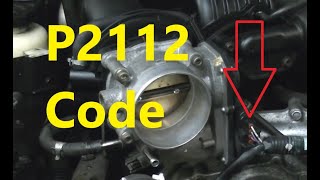
The 3.7L Cyclone V6 in the Lincoln MKS shares a well-documented and widespread issue with its electronic throttle body (ETB). The problem was so prevalent across many Ford and Lincoln models that Ford issued Technical Service Bulletin (TSB) 10-21-6 and a Customer Satisfaction Program (13N03) for this exact issue. The failure is typically not due to simple 🎬 Watch: Understanding the P2112 code causes and fixes carbon buildup, but rather an internal electronic fault caused by contamination on the throttle motor's internal contacts, which results in intermittent electrical connectivity. This makes replacement the only reliable solution.
Symptoms You May Notice
- Sudden and severe loss of engine power (entering 'limp mode').
- Wrench icon or Check Engine Light illuminated on the dashboard.
- Unresponsive or sluggish accelerator pedal.
- Rough, unstable, or surging idle.
- Engine may stall when coming to a stop.
- Inability to accelerate past a low speed, just above idle.
- Attempting to clean the throttle body. The issue is an internal electronic fault due to contaminated contacts, not carbon buildup. Cleaning will not solve the P2112 code on this platform.
- Replacing the Accelerator Pedal Position (APP) Sensor. While the APP sensor is part of the drive-by-wire system, the P2112 code specifically points to a problem at the throttle body actuator, not the pedal.
Most Likely Causes
- Failed Electronic Throttle Body (ETB) Assembly 🔴 High Probability → Shop Fuel Injection Throttle Body The original equipment ETBs on this platform have a known high failure rate due to internal contamination of the electrical contacts, a design flaw acknowledged by Ford through TSBs and customer satisfaction programs. This issue was the subject of multiple class-action lawsuits.
How to confirm: With the P2112 code present (often with P2111) and symptoms of limp mode, the throttle body is the confirmed cause in the vast majority of cases. A 'tap test' on the throttle body motor housing with a screwdriver handle may sometimes cause the engine to stumble or the throttle plate to move erratically, further confirming an internal electronic fault.
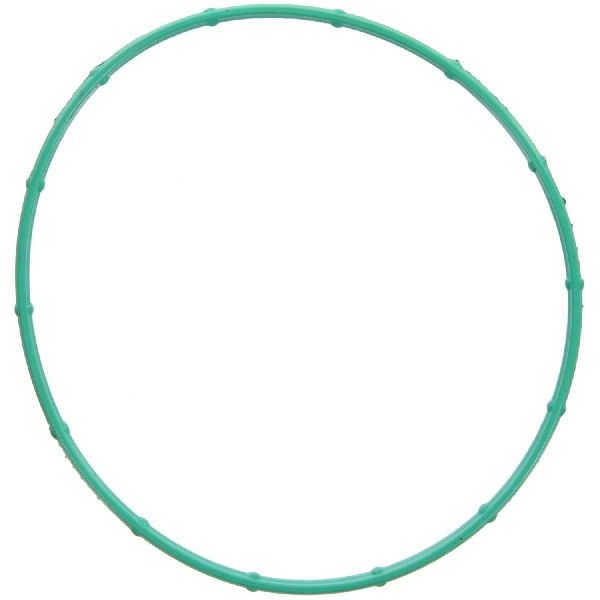
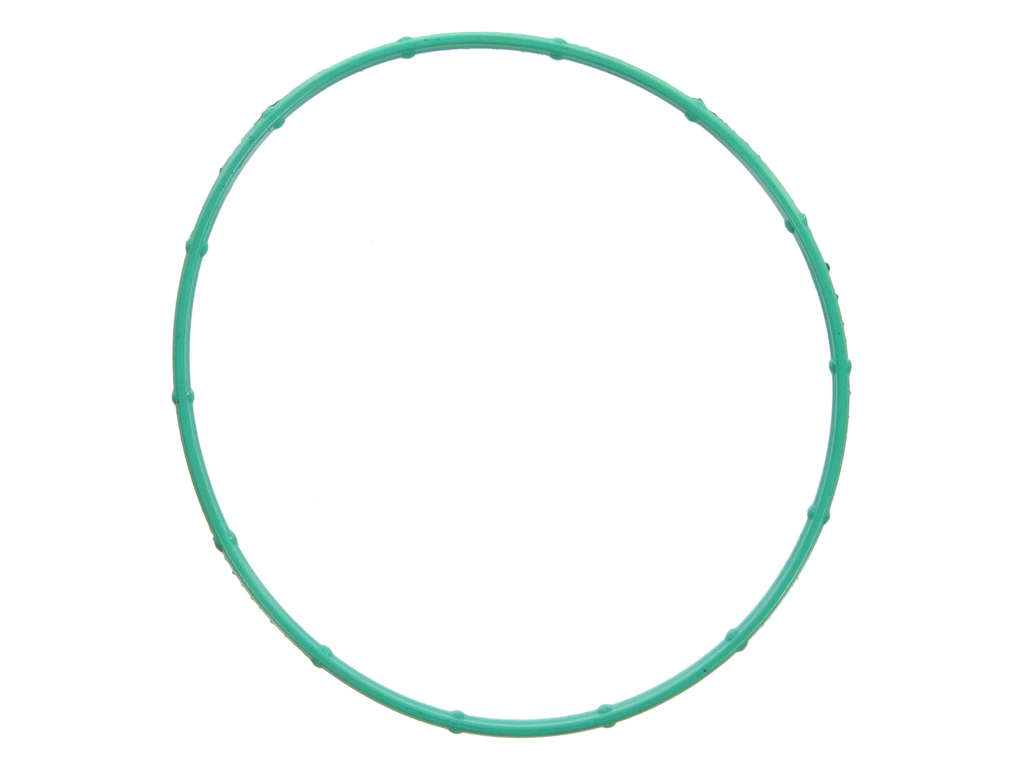
Typical fix: Replace the entire electronic throttle body assembly and gasket. Cleaning the old unit is not an effective or lasting repair for this specific internal electronic failure.
Est. part cost: $80-$250
Rare But Worth Checking
- Wiring or Connector Issues: While less common than outright ETB failure, damage to the wiring harness or a corroded/loose connector at the throttle body can mimic the symptoms. A visual inspection of the harness is a wise first step before ordering parts.
- Powertrain Control Module (PCM) Failure: In very rare instances, the fault may lie with the PCM itself, which controls the throttle body. This should only be considered after a new throttle body and verified wiring fail to fix the problem. This would likely be accompanied by other codes.
Diagnosis Steps
- Confirm the presence of code P2112 (and possibly P2111/P2110) using an OBD-II scanner.
- Verify the primary symptoms, such as the vehicle being in 'limp mode' with a wrench light and no throttle response.
- Perform a thorough visual inspection of the throttle body wiring harness and its connector for any signs of damage, corrosion, or loose connections.
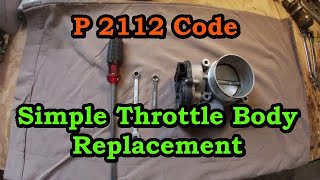
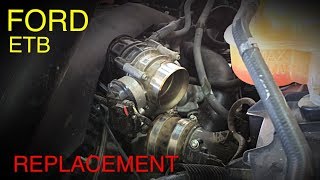
- Given the extremely high probability of a failed throttle body on this specific vehicle, the most practical and common step is to replace the electronic throttle body assembly. 🎬 Watch: Step-by-step electronic throttle body replacement walkthrough
- After replacement, perform a throttle body 'relearn' procedure. This can be done without special tools by disconnecting the negative battery terminal for 15-20 minutes, reconnecting it, starting the engine, and then letting the vehicle idle for several minutes to allow the PCM to calibrate to the new part.
- Clear all DTCs with the scanner and perform a test drive to ensure the issue is resolved and the idle is stable.
Parts You'll Likely Need
- Electronic Throttle Body Assembly
(OEM #7T4Z-9E926-FA)— This is the root cause of code P2112 on the 3.7L Cyclone V6 in almost all cases due to a well-documented internal electronic design flaw. The original part number 7T4Z-9E926-EA was superseded by this part.
Trusted brands: Motorcraft, Bosch, Hitachi, Cardone (A1), Dorman
OEM price range: $150-$265
Aftermarket price range: $80-$160
Related Codes That Often Appear With This One
- P2111 — This code, for 'Throttle Actuator Control System - Stuck Open,' is the sibling to P2112. They are often caused by the same internal electronic failure within the throttle body, indicating erratic behavior and loss of control. It's common to see one or both stored.
- P2110 — This code, 'Throttle Actuator Control System - Forced Limited RPM,' is not a fault code itself but an informational one. It confirms that the PCM has intentionally placed the vehicle in 'limp mode' as a direct result of detecting a critical throttle control fault like P2112.
Technical Service Bulletins (TSBs) & Recalls
- TSB 10-21-6: Addresses DTCs P2111, P2112, or idle speed fluctuations, recommending throttle body replacement for affected vehicles including the 2010-2011 MKS with the 3.7L engine.
- Customer Satisfaction Program 13N03: An extended warranty program (10 years/150,000 miles) to cover the replacement of the faulty electronic throttle body free of charge. It explicitly identifies the failure as internal contact contamination.
Platform-Specific Known Issues
- Ford/Lincoln issued Customer Satisfaction Program 13N03, which extended the warranty on the electronic throttle body to 10 years or 150,000 miles due to the high failure rate. This program has since expired for the 2009-2012 model years but serves as official confirmation of the defect. The program specifically noted the cause as 'contamination on the internal motor contacts of the Throttle Body, resulting in intermittent electrical connectivity'.
- Technical Service Bulletin (TSB) 10-21-6 was also released, instructing technicians to replace the throttle body on vehicles exhibiting DTCs P2111 or P2112. The TSB covered 2010-2011 MKS models with the 3.7L engine.
Mechanic-Grade Diagnostic Values
- Throttle Position Sensor 1 (TP1) and Throttle Position Sensor 2 (TP2) Voltage — expected: The two sensors have opposite-sweeping voltages. TP1 should read ~0.5-1.0V at closed throttle and ~4.5V at wide-open throttle. TP2 should read ~4.5V at closed throttle and ~0.5-1.0V at wide-open throttle.. Failure: Any glitches, spikes, or dropouts in the voltage sweep as the throttle is slowly opened and closed indicates a failing sensor. A voltage reading outside the expected range can also indicate a fault.
- Throttle Actuator Control Motor (TACM) Coil Resistance — expected: Between 1 and 900 ohms when measured across the two motor pins on the throttle body.. Failure: A reading of infinity (Open Loop) or near zero ohms (short circuit) indicates a failed motor within the throttle body assembly, requiring replacement.
- PCM Failure Threshold (Live Data) — expected: The 'Commanded Throttle Angle' PID should closely match the 'Throttle Position' PID.. Failure: P2112 sets when the measured throttle angle is more than 6 degrees lower than the commanded angle. Observing this deviation on a live data graph confirms the fault condition.
- Wiring Harness Resistance — expected: Less than 5 ohms between the throttle body connector pins and the corresponding pins at the PCM connector (C175E).. Failure: Resistance higher than 5 ohms indicates corrosion or a break in the wire, which needs to be repaired.
Scan Tool Commands That Help
- Ford IDS (Integrated Diagnostic System): Datalogger with graphing for PIDs: TP1, TP2, ETC_CMD, ETC_ACT — This is the primary diagnostic method. Graphing the commanded vs. actual throttle position while operating the pedal (KOEO) or during a test drive can visually capture the moment the actual position deviates from the commanded position, confirming the internal fault.
- Ford IDS (Integrated Diagnostic System): Powertrain -> PCM -> Clear All Self-Test DTCs & PCM Reset — After replacing the throttle body, this function should be used to clear not only the fault codes but also the Keep Alive Memory (KAM), which forces the PCM to relearn idle and throttle trim values for the new part.
Wiring & Ground Locations
- Electronic Throttle Control (ETC) Assembly — Located at the top front of the engine, where the air intake duct connects to the intake manifold.. This is the component that contains the actuator motor and position sensors that fail, directly causing code P2112.
- ETC Connector (C134 on some diagrams) — The 6-pin electrical connector plugged directly into the side of the electronic throttle body.. This connector is the single point of failure for wiring issues. Inspecting for corrosion, pushed-out pins, or harness damage here is a critical diagnostic step before replacing the part.
- PCM Connector C175E — This is the main engine connector at the Powertrain Control Module (PCM), which is typically located in the engine bay near the firewall or battery junction box.. Technicians would test for continuity and resistance between this connector and the throttle body connector to rule out a wiring harness fault.
- Ground G102 / G104 — Common engine bay ground points, often located on the firewall or inner fender near the battery junction box.. While a bad ground is a rare cause for this specific code, a poor engine ground can cause a variety of erratic electronic issues. Verifying grounds are clean and tight is good practice if other diagnostics are inconclusive.
Real Owner Repair Stories
- Ford F150 Forum user 'co_heil_F150' (2016 Ford F-150 3.5L EcoBoost (platform mate with similar ETB) at 48,000 miles) — Sudden loss of power while pulling into traffic, vehicle would only idle forward. Check engine light came on.
✅ What actually fixed it Scanned the P2112 code, purchased a new OEM throttle body and gasket from the dealer for $81, and replaced it himself in 15 minutes. This resolved the issue completely.
OEM Part Supersession History
7T4Z-9E926-EA→7T4Z-9E926-FA— The original -EA part is the failure-prone version. The -FA is the updated replacement from Ford/Motorcraft designed to address the internal electronic failure.
Diagnostic Flowchart
Other Known Issues on This Vehicle
Issues unrelated to this code that are worth knowing about as an owner of this generation:
- Internal Water Pump Failure 🔴 High — Common after 80,000 miles. Failure can be sudden and catastrophic, as the timing-chain-driven pump leaks coolant directly into the engine oil.
- Power Transfer Unit (PTU) Failure (AWD Models) 🔴 High — Common on AWD models. The PTU is located near the hot exhaust, causing the 'lifetime' fluid to break down from heat, leading to bearing/gear failure. Symptoms include a burning gear oil smell and whining/grinding noises. (Ref: TSB 19-2017 (for related models))
- Mass Air Flow (MAF) Sensor Failure 🟡 Low — Can occur at various mileages, often due to contamination. Symptoms include rough idle, hesitation, poor fuel economy, and code P0101. Often resolved by cleaning, but may require replacement.
- Variable Cam Timing (VCT) Solenoid Failure 🟠 Medium — Can become clogged with oil sludge, especially with extended oil change intervals, leading to rough idle, poor performance, and timing-related codes (e.g., P0022). (Ref: SSM 47170 / SSM 50067 (for related models))
Used vs. New Parts: Buying Guide for This Vehicle
When a used part is the smart pick: NEVER. A used part for this specific issue is a very poor choice. The failure is a known, widespread design and manufacturing defect, not a simple wear-and-tear issue. A used part from a donor vehicle is highly likely to have the same internal fault or develop it soon after installation.
What to inspect on the donor part:
- Not applicable, as even a low-mileage used part carries the same inherent defect.
OEM-only on this vehicle (don't cheap out):
- While not strictly 'OEM-only', using a new Motorcraft (OEM) or a reputable OEM-supplier like Bosch is highly recommended over remanufactured or unbranded parts. Some remanufactured units have been reported to fail prematurely.
Aftermarket brands forum-validated for this vehicle:
- Motorcraft (OEM)
- Bosch
- Hitachi
Brands owners have reported issues with on this vehicle:
- Unbranded 'white box' parts from online marketplaces.
- Remanufactured units have a mixed reputation and may not be reliable.
Real Owner Stories
Aggregated from forums and TSBs cited above. Mileages and costs reflect what owners reported in those sources.
2010 Lincoln MKS 3.7L V6
Symptoms: The vehicle experienced a sudden and severe loss of engine power, entering 'limp mode' with the wrench icon illuminated on the dashboard.
What fixed it: Replacement of the electronic throttle body assembly as covered under the 13N03 extended warranty program.
Source hint: Reddit r/Ford: A user described the exact symptoms of limp mode and the wrench light, learning from a dealer that their vehicle was covered under the 13N03 extended warranty for the electronic throttle body. URL: https://www.reddit.com/r/Ford/comments/3d702j/does_anyone_here_have_experience_with_consumer/
2011 Ford Edge Sport 3.7L V6
Symptoms: Vehicle entered limp mode with P2112 and P2111 codes present.
What fixed it: Replacement of the electronic throttle body (ETB).
Source hint: Go-Parts.com Repair Database: Multiple articles for platform-mate vehicles like the Ford Edge and F-150 with the same 3.7L engine confirm P2112 is a hallmark of ETB failure.
Related OBD-II Codes
Frequently Asked Questions
Does TSB 10-21-6 apply to my 2010 Lincoln MKS with the 3.7L engine?
Is there an extended warranty for the throttle body on my 2009-2012 Lincoln MKS?
Can I just clean the throttle body on my MKS to fix the P2112 code?
What is the 'tap test' mentioned for diagnosing the MKS throttle body?
Do I need a scan tool to perform the throttle relearn after replacing the part?
Are there other major issues I should watch for on my 3.7L Cyclone V6 besides the throttle body?
Helpful Videos
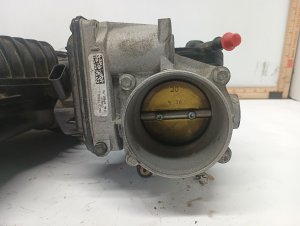
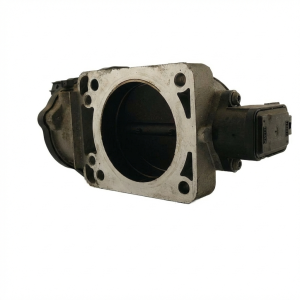
Used OEM Parts in Stock
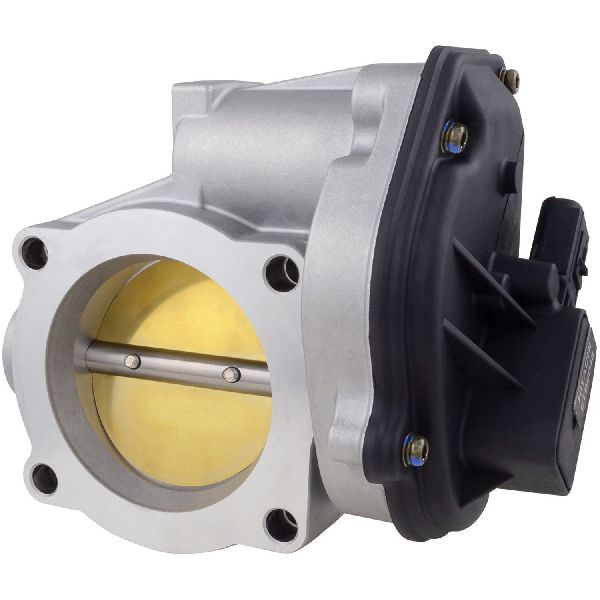
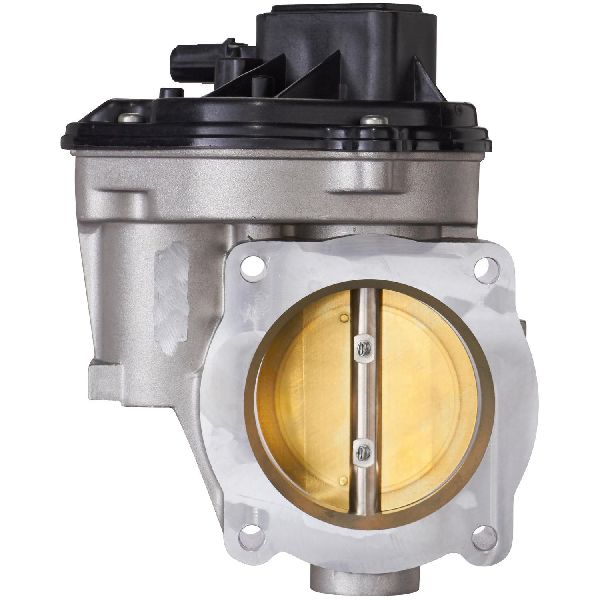
New Aftermarket Parts Available


The information in this article is provided for general reference and educational purposes only. Vehicle specifications, procedures, and part compatibility can vary by production date, trim level, and region. Always consult your vehicle's factory service manual and verify part numbers before purchasing or performing repairs. Safety-critical components such as airbags, seat belts, and braking systems should be installed by a qualified professional.
- Lincoln MKS:
- 🧭 Diagnostic Flowchart
- 🎬 Helpful Videos
- 🛍️ Shop This Part
- What's Unique About the 2009-2012 Lincoln MKS
- Symptoms You May Notice
- Most Likely Causes
- Rare But Worth Checking
- Diagnosis Steps
- Parts You'll Likely Need
- Related Codes That Often Appear With This One
- Technical Service Bulletins (TSBs) & Recalls
- Platform-Specific Known Issues
- Mechanic-Grade Diagnostic Values
- Scan Tool Commands That Help
- Wiring & Ground Locations
- Real Owner Repair Stories
- OEM Part Supersession History
- Other Known Issues on This Vehicle
- Used vs. New Parts: Buying Guide for This Vehicle
- Real Owner Stories
- 2010 Lincoln MKS 3.7L V6
- 2011 Ford Edge Sport 3.7L V6
- Related OBD-II Codes
- Frequently Asked Questions
- 🎟️ Get 5% Off