

P2118 on 2010-2015 Toyota Camry: Throttle Control Motor Fault Causes and Fixes
P2118 on a 2010-2015 Camry indicates a fault in the electronic throttle control system, often causing the car to enter a low-power 'limp mode'. The most common cause is a blown 10-amp ETCS fuse, especially after a jump-start or battery replacement. If the fuse is good, the throttle body assembly may need replacement, but this is a frequent misdiagnosis.
- Before buying any parts, check the 10-amp ETCS fuse in the engine bay fuse box. It is the most likely and cheapest fix.
- P2118 will put your car in a low-power 'limp mode', making it unsafe for normal driving.
- Do not immediately assume you need a new throttle body; this is a common misdiagnosis according to Toyota's own service bulletin.
- If you recently jump-started the car or replaced the battery, a blown ETCS fuse is highly probable.
- Replacing a throttle body is a manageable DIY task, but always check the fuse and battery/alternator voltage first.
What's Unique About the 2010-2015 Toyota CAMRY
For this generation of Toyota Camry, the P2118 code is very specifically defined and is often misdiagnosed. Toyota issued a Technical Service Bulletin (T-TT-0321-15) to clarify that this code points to a problem in the power supply circuit—like the ETCS fuse—rather than a failure of the throttle body itself. The TSB explains that the ECM's diagnostic check for P2118 is performed on the power source circuit *before* the throttle body, making a blown fuse or wiring issue the direct cause, not the throttle motor.
Diagnostic Flowchart
Tap your situation to follow the diagnostic path that matches what you're seeing on this vehicle.
Generation note: This year range covers two Camry generations: the end of the XV40 (2010-2011) and the beginning of the XV50 (2012-2015). The P2118 fault and its primary causes are similar across both, but specific part numbers for the throttle body will differ. Both generations primarily use the 2.5L 2AR-FE I4 and 3.5L 2GR-FE V6 engines, which share this ETCS design.
Symptoms You May Notice
- Check Engine Light is on
- Vehicle enters 'limp mode' with drastically reduced power
- Poor or no throttle response (accelerator pedal does nothing)
- Hesitation or surging during acceleration
- Engine may stall or not start
- Engine turns over but stalls immediately
- Replacing the throttle body assembly without first checking the 10A ETCS fuse. The official Toyota TSB explicitly warns that the root cause is often the fuse, not the throttle body.
- Replacing the Accelerator Pedal Position (APP) sensor. P2118 specifically relates to the motor current at the throttle body, not the driver's pedal input. A faulty APP sensor would generate different codes (like P2138).
Most Likely Causes
- Blown 10A ETCS Fuse 🔴 High Probability This fuse is notoriously sensitive and known to blow after an improper jump-start, battery replacement, or even from voltage spikes, causing a sudden loss of power to the throttle control system.
How to confirm: Locate the main fuse box in the engine bay, typically near the battery. The fuse is labeled 'ETCS' on the fuse box cover diagram. A visual check will show if the metal strip inside the 10-amp (red) fuse is broken. A continuity test with a multimeter should show less than 1 ohm.
Typical fix: Replace the blown 10A fuse. This is a very simple and inexpensive fix that resolves the issue in a majority of cases.
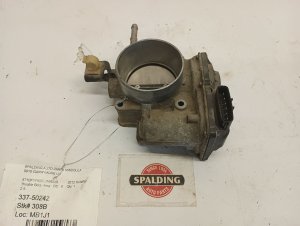
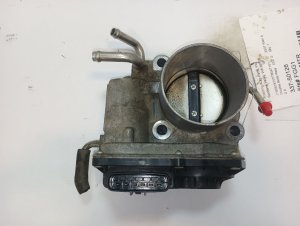
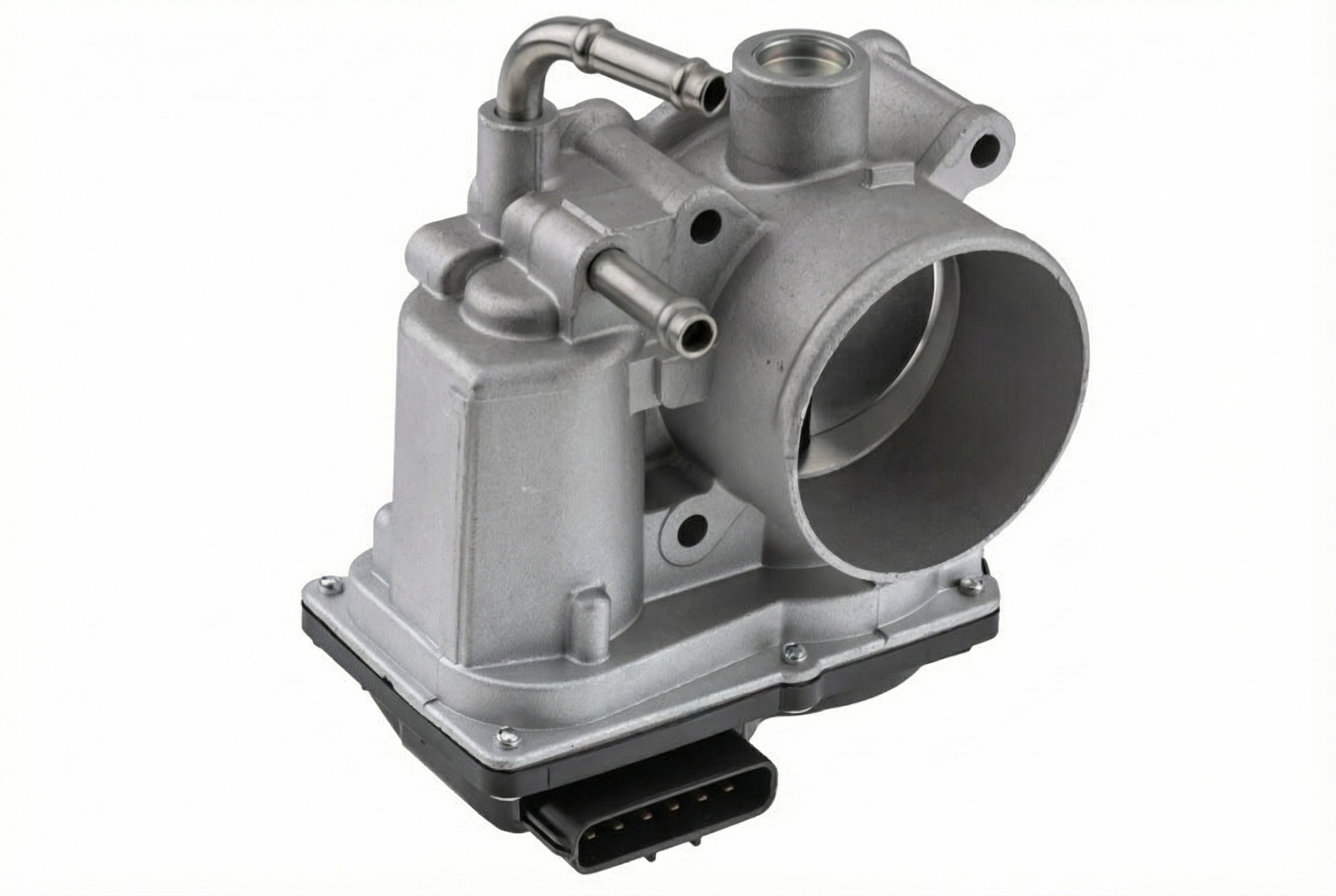
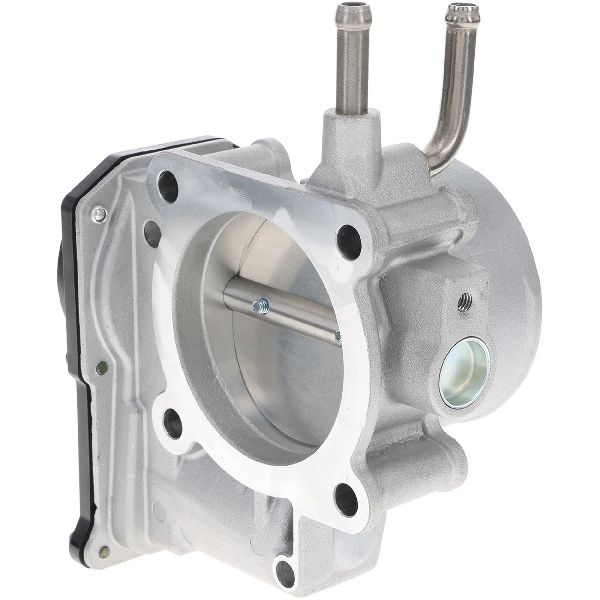
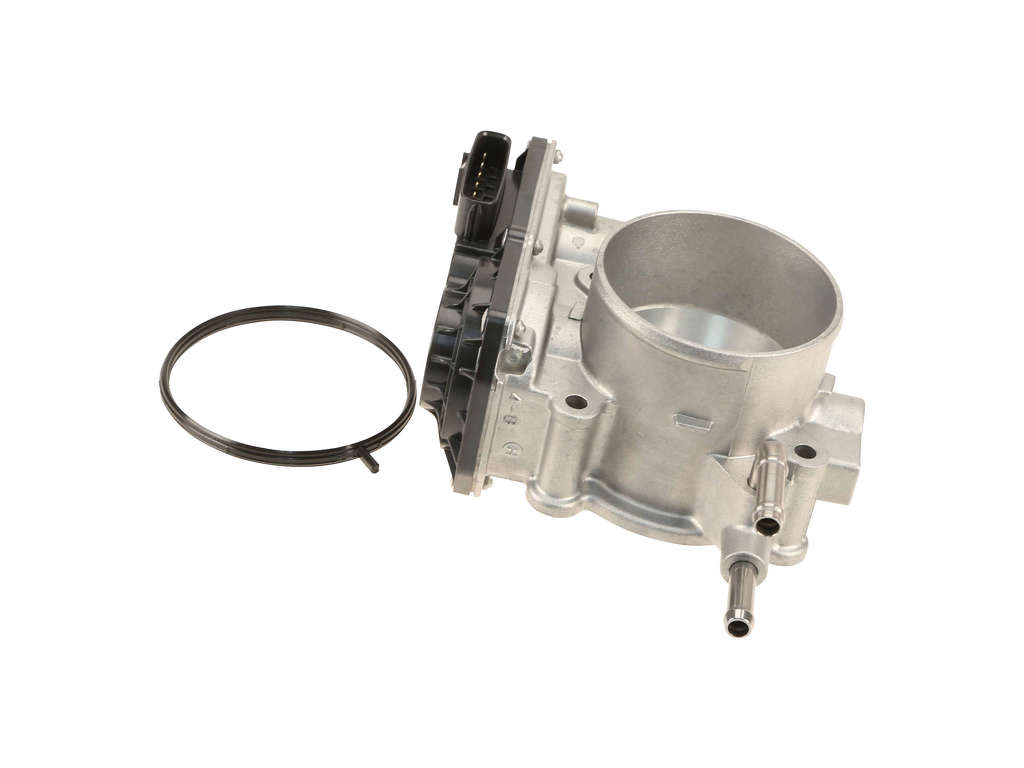
Est. part cost: $1-$5 - Faulty Throttle Body Assembly 🟡 Medium Probability → Shop Fuel Injection Throttle Body If the fuse is intact, the internal motor of the throttle body may have failed or is binding due to carbon buildup, causing it to draw incorrect current. While Toyota's TSB points away from this as the cause for P2118, it remains a possible failure point if other codes are present or the fuse is good.
How to confirm: After confirming the ETCS fuse is good, inspect the throttle body for heavy carbon buildup. If cleaning doesn't resolve the code, and wiring is confirmed good, the assembly is likely faulty. A resistance check across the motor terminals should read between 0.3 and 100 ohms; a reading outside this range indicates a faulty motor.
Typical fix: First, attempt to clean the throttle plate and bore with a dedicated throttle body cleaner. If the code returns, replace the entire throttle body assembly.
Est. part cost: $150-$581 - Wiring or Connector Issue ⚪ Low Probability Vibrations and heat can cause wires to fray or the connector to the throttle body to become loose or corroded over time. The issue could also be in the wiring between the fuse box and the ECM.
How to confirm: Visually inspect the wiring harness and connector leading to the throttle body for any signs of damage, melting, or corrosion. Use a multimeter to check for stable voltage and ground at the connector per the service manual procedure.
Typical fix: Repair the damaged section of wiring or clean/replace the connector.
Est. part cost: $10-$50
Rare But Worth Checking
- Faulty Battery or Alternator: A weak or failing battery can provide unstable or low voltage (below 12V), which can be sufficient to trigger the P2118 code logic in the ECM even if the ETCS fuse is intact. If the alternator is not charging properly, the system voltage can drop during operation and cause the same fault.
- Faulty Engine Control Module (ECM): This is very rare. The ECM is the last component to suspect after all other possibilities, including fuses, wiring, battery/alternator, and the throttle body itself, have been thoroughly checked and ruled out.
Diagnosis Steps
- Read the codes with an OBD-II scanner to confirm P2118 is present.
- CRITICAL FIRST STEP: Inspect the 10A 'ETCS' fuse in the engine bay fuse box. This is the most common cause. The fuse is often red and its location is shown on the underside of the fuse box lid. Replace it if blown.
- If the fuse is good, check the battery voltage. A reading below 12.4V with the engine off indicates a weak battery that could be the cause. Check that the alternator is charging correctly (typically 13.5-14.5V with the engine running).
- If voltage is good, inspect the throttle body electrical connector for damage or corrosion.
- Remove the air intake hose and visually inspect the throttle plate for heavy carbon buildup that could restrict movement.
- If dirty, clean the throttle body using a dedicated cleaner and a soft cloth. Do not force the plate by hand. 🎬 See this DIY guide for safely cleaning your throttle body.
- After any repair, clear the codes with the scanner. Many Toyotas require an idle relearn procedure. A common manual method is to warm the engine, turn it off, turn the ignition ON then OFF twice, then start the engine and let it idle in Drive (with e-brake on) for 5-10 minutes until the idle stabilizes.
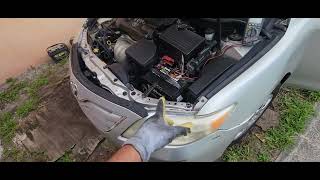
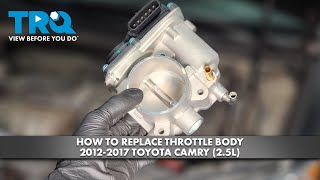
- If the code persists after these steps, perform resistance and voltage checks on the throttle body motor and wiring harness according to the specific diagnostic values. If these tests fail, the throttle body assembly likely requires replacement. 🎬 Watch: Step-by-step walkthrough for replacing the throttle body assembly.
Parts You'll Likely Need
- ETCS Fuse
(OEM #90982-09008)— This 10-amp fuse is the most common point of failure for this specific code, often blowing after a jump-start or battery change.
Trusted brands: Toyota Genuine
OEM price range: $1-$5
Aftermarket price range: $1-$5 - Throttle Body Assembly (2012-2015, XV50, 2AR-FE)
(OEM #22030-0V010 (replaces 22030-36010))— If the fuse and wiring are not the issue, the entire throttle body assembly, which contains the actuator motor, is the next most likely cause for the XV50 generation with the 2.5L engine.
Trusted brands: AISIN, Denso, Hitachi, Dorman
OEM price range: $317-$455
Aftermarket price range: $150-$300 - Throttle Body Assembly (2010-2011, XV40, 2AR-FE)
(OEM #22030-0H031 (replaces 22030-0H030, 22030-28070, 22030-28071))— If the fuse and wiring are not the issue, this is the likely part for the XV40 generation with the 2.5L engine.
Trusted brands: AISIN, Denso, Standard Motor Products
OEM price range: $347-$567
Aftermarket price range: $150-$350
Technical Service Bulletins (TSBs) & Recalls
- T-TT-0321-15: States that P2118 on these vehicles is often caused by the ETCS fuse and that the throttle body is not the indicated point of failure for this specific DTC. The bulletin includes a diagram showing the ECM's judgment area for P2118 is the power source circuit, not the throttle body itself.
Platform-Specific Known Issues
- Toyota Technical Service Bulletin T-TT-0321-15 was issued for the 2010-2015 Camry (and other models) specifically for P2118. It states the issue is commonly misdiagnosed as a throttle body failure when the actual root cause is often the ETCS fuse or another power supply issue.
- The jump-start sensitivity is a widely reported owner experience. Reversing polarity or voltage spikes during a jump-start are common triggers for blowing the 10A ETCS fuse and inducing limp mode.
Mechanic-Grade Diagnostic Values
- Throttle Control Motor Resistance — expected: 0.3 to 100 Ω at 20°C (68°F). Failure: Resistance is outside of this range.
- ETCS Fuse Resistance — expected: Below 1 Ω. Failure: Resistance is higher, indicating a blown or faulty fuse.
- ECM Power Supply Voltage (+BM) — expected: 9 to 14 V. Failure: Voltage is below 9V, especially if it drops below 4V for more than 0.8 seconds, which will trigger the code.
- Continuity Check: ETCS Fuse to ECM — expected: Below 1 Ω between ETCS fuse terminal 2 and ECM connector A9, Pin 3 (+BM).. Failure: Higher resistance indicates an open in the wiring harness.
- Short to Ground Check: ETCS Circuit — expected: 10 kΩ or higher between ETCS fuse terminal 2 (or ECM pin A9-3) and body ground.. Failure: Lower resistance indicates a short to ground in the harness.
Scan Tool Commands That Help
- Toyota Techstream: Data List > +BM VOLTAGE — To monitor the specific power supply voltage that the ECM is seeing for the throttle actuator. This helps confirm if the voltage is dropping below the 9V-14V specification, which is the direct trigger for P2118.
- Toyota Techstream: Utility > Learning Value Reset — After replacing the throttle body or cleaning it, this function forces the ECM to clear its stored idle and fuel trim values, speeding up the relearn process.
Wiring & Ground Locations
- ECM Connector A9, Pin 3 (+BM) — At the Engine Control Module (ECM). For the V6 (2GR-FE), the ECM is often on the firewall behind the engine.. This is the specific pin on the ECM that receives power from the ETCS fuse. Checking for continuity between this pin and the fuse box is a key diagnostic step to rule out a wiring break.
- Engine Ground (2GR-FE) — A primary engine harness ground is located on the side of the cylinder head, underneath the throttle body.. While P2118 is a power supply code, a poor engine ground can cause fluctuating voltages and electrical noise, potentially contributing to the fault. Ensuring this ground is clean and tight is a good practice if the power-side checks are inconclusive.
- Engine Ground (2AR-FE) — A key ground point (often labeled E01, E03) is located on the top rear of the engine.. This is a main grounding point for the engine harness. A loose or corroded connection here can affect multiple sensors and actuators, including the throttle body's reference voltage, leading to various electrical faults.
Real Owner Repair Stories
- YouTube channel 'Zero Kool' (2010 Toyota Camry) — Code P2118, engine was shutting off completely.
❌ Tried (didn't work) Checking the ETCS fuse, which was found to be good., Swapping the ETCS fuse with a known good one just in case.
✅ What actually fixed it The battery was 5 years old and faulty, and the alternator was not charging correctly. Replacing both the battery and the alternator, in addition to cleaning the throttle body, resolved the P2118 code and the stalling issue. - YouTube channel 'MS TECH' (2011 Toyota Camry LE) — Code P2118, car would not accelerate, alternator was also bad.
❌ Tried (didn't work) Replaced the alternator which fixed the charging issue, but the car still would not accelerate.
✅ What actually fixed it Found a blown fuse labeled 'power outlet' (a 20A fuse in this case, differing from the usual 10A ETCS). Replacing this fuse and clearing the codes restored throttle function. This suggests related circuits can sometimes be involved. - YouTube channel 'FixerGood' (2009 Toyota Camry) — Code P2118, car in limp mode, no throttle response after a recent battery change/jump start.
✅ What actually fixed it Found and replaced the blown 10A ETCS fuse in the engine bay fuse box. After replacing the fuse, it was necessary to clear all stored trouble codes before throttle response was fully restored.
OEM Part Supersession History
22030-28070→22030-0H031— Part has been updated by the manufacturer. The original was also superseded by 22030-28071 and 22030-0H030 before the final revision.
Helpful Videos


Used OEM Parts in Stock
New Aftermarket Parts Available


The information in this article is provided for general reference and educational purposes only. Vehicle specifications, procedures, and part compatibility can vary by production date, trim level, and region. Always consult your vehicle's factory service manual and verify part numbers before purchasing or performing repairs. Safety-critical components such as airbags, seat belts, and braking systems should be installed by a qualified professional.
- Toyota CAMRY:
- 🧭 Diagnostic Flowchart
- 🎬 Helpful Videos
- 🛍️ Shop This Part
- What's Unique About the 2010-2015 Toyota CAMRY
- Symptoms You May Notice
- Most Likely Causes
- Rare But Worth Checking
- Diagnosis Steps
- Parts You'll Likely Need
- Technical Service Bulletins (TSBs) & Recalls
- Platform-Specific Known Issues
- Mechanic-Grade Diagnostic Values
- Scan Tool Commands That Help
- Wiring & Ground Locations
- Real Owner Repair Stories
- OEM Part Supersession History
- 🎟️ Get 5% Off