

P2119 on 2004-2007 Buick Rainier: Throttle Body Range/Performance Causes and Fixes
On a 2004-2007 Buick Rainier, code P2119 almost always points to a faulty or dirty electronic throttle body. Cleaning the carbon buildup is a common first step, but replacement of the entire assembly is the most frequent permanent fix. The vehicle will likely enter 'Reduced Engine Power' mode, making it unsafe to drive normally. Expect to pay $150-$300 for a new throttle body assembly.
- P2119 on a Buick Rainier points directly to a problem with the electronic throttle body.
- The most common symptom is the 'Reduced Engine Power' warning, which severely limits vehicle speed and requires immediate attention.
- The first step is to clean the throttle body, but replacement of the entire assembly is often necessary to fix the problem permanently.
- This is a common failure on the GMT360 platform (Rainier, Trailblazer, Envoy, Saab 9-7x, Isuzu Ascender), and OEM TSBs acknowledge the issue in both high-mileage and extreme cold situations.
- After cleaning or replacing the throttle body, a 'relearn' procedure is required. A common method is idling the engine for 3 minutes, shutting it off for 1 minute, and repeating the 3-minute idle.
What's Unique About the 2004-2007 Buick RAINIER
The Buick Rainier shares its GMT360 platform with the Chevy Trailblazer, GMC Envoy, Isuzu Ascender, and Saab 9-7x, all of which are known for throttle body issues. Carbon buildup from the PCV system is a very common problem, especially on high-mileage engines, which can cause the throttle plate to stick and trigger the code. Furthermore, manufacturer bulletins specifically mention that this code, along with others, can appear in extreme cold weather (around -10°F / -23°C) or on high-mileage vehicles, leading to reduced engine power. [Bulletin #PIP4573B, Bulletin #PIP4578B]
Diagnostic Flowchart
Tap your situation to follow the diagnostic path that matches what you're seeing on this vehicle.
Symptoms You May Notice
- "Reduced Engine Power" warning light on the dashboard
- Check Engine Light is on
- Unstable, surging, or rough idle
- Engine stalling, especially when coming to a stop
- Hesitation or poor acceleration
- Delayed throttle response
- Replacing the accelerator pedal position sensor (APPS). While the APPS is part of the electronic throttle system, P2119 and its companion codes on this vehicle almost always point to the throttle body at the engine, not the pedal sensor. A separate code, like P2135, is more likely to be set if the pedal sensor is the root cause.
Most Likely Causes
- Dirty or Carbon-Fouled Throttle Body 🔴 High Probability → Shop Fuel Injection Throttle Body Carbon and oil vapor from the PCV system can build up behind the throttle plate, restricting its movement. This is a very common issue on the GMT360 platform, and TSB PIP4578B directly addresses this for high-mileage vehicles.
How to confirm: Remove the air intake tube and visually inspect the throttle bore and plate for a thick black coating of carbon. The plate may feel sticky or slow to move when pushed by hand (with the engine off).
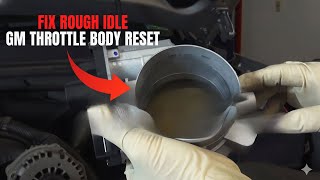
Typical fix: Thoroughly clean the throttle body bore and plate with a dedicated throttle body cleaner and a soft brush or cloth. 🎬 Watch: How to clean the throttle body on your Rainier. A throttle relearn procedure is required afterward. For many owners, cleaning is a temporary fix that may last for a few months before the issue returns.
Est. part cost: $5-$15 - Failed Throttle Body Assembly 🔴 High Probability → Shop Fuel Injection Throttle Body The internal electronic motor or the integrated throttle position sensors (TPS) within the sealed throttle body unit fail over time. On this platform, the sensors cannot be replaced separately, requiring replacement of the entire assembly.
How to confirm: If cleaning the throttle body does not resolve the code and symptoms, and the wiring is intact, the unit itself has likely failed. A diagnostic scanner can monitor the commanded vs. actual throttle position to confirm a discrepancy.
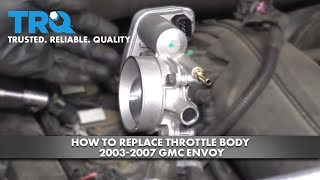
Typical fix: Replace the entire throttle body assembly. 🎬 See this step-by-step guide for replacing the throttle body assembly. A relearn procedure is mandatory after installation for the PCM to learn the new part's idle and off-idle positions.
Est. part cost: $150-$300 - Wiring or Connector Issue ⚪ Low Probability The wiring harness to the throttle body can become brittle or damaged over time due to engine heat and vibration. The connector pins can also corrode or lose tension, causing an intermittent connection.
How to confirm: Inspect the wiring harness and connector at the throttle body for any signs of corrosion, damage, frayed wires, or loose pins. Wiggling the harness with the engine running may cause a change in idle or trigger the 'Reduced Engine Power' light, confirming a connection issue.
Typical fix: Repair the damaged wiring or clean/replace the connector pigtail. Some owners report success by slightly twisting the male pins in the connector to ensure a tighter fit.
Est. part cost: $10-$50
Rare But Worth Checking
- Faulty Powertrain Control Module (PCM): This is extremely rare. The PCM should only be considered after all other possibilities, especially the throttle body and its wiring, have been ruled out. A dealership-level scan tool may be needed to diagnose a faulty PCM driver circuit. One owner on a forum reported a bad PCM was the ultimate cause after replacing other parts.
Diagnosis Steps
- Read the trouble codes with an OBD-II scanner and note all active and pending codes.
- Inspect the wiring harness and electrical connector at the throttle body for any visible damage, corrosion, or looseness. Wiggle the connector to see if it affects engine idle.
- Remove the air intake duct from the throttle body.
- Inspect the throttle body bore and the edges of the throttle plate for heavy carbon buildup. The plate should be clean and move freely without sticking.
- If dirty, clean the throttle body thoroughly using a dedicated throttle body cleaner and a soft cloth. Do not use harsh tools that could scratch the bore. Do not force the plate open manually on an electronic throttle body; have a helper turn the key to 'ON' (engine off) and press the gas pedal to open the plate for cleaning.
- After cleaning, reinstall the intake duct. Perform a throttle relearn procedure. A common method for these GM vehicles is to start the engine and let it idle in Park for 3 minutes, turn the engine off for 60 seconds, then restart and idle for another 3 minutes.
- If the code returns after cleaning and a successful relearn, the throttle body assembly itself is the most likely culprit and should be replaced.
- After replacing the throttle body, a relearn procedure is mandatory for the computer to recognize the new part's parameters. Failure to do so will likely result in a high idle and code P2176.
Parts You'll Likely Need
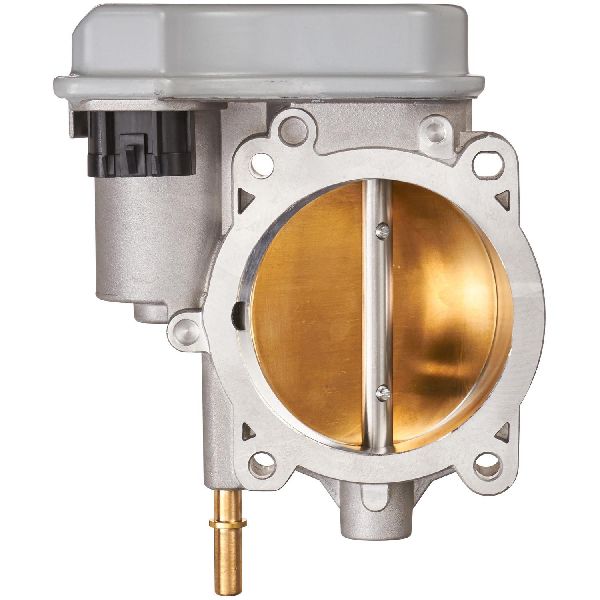
- Fuel Injection Throttle Body Assembly
(OEM #12568580)— This is the primary cause of code P2119. The internal electronics fail, and cleaning carbon buildup is not always a permanent solution. The position sensors are integrated, so the entire unit must be replaced. This part number is widely cross-referenced for the GMT360 platform.
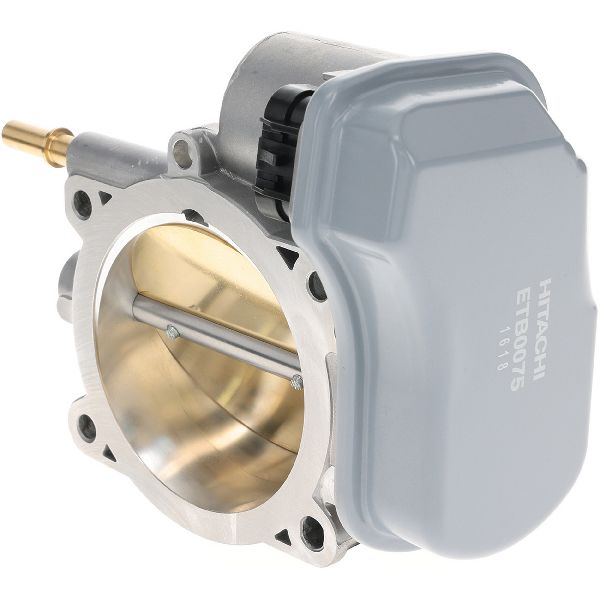
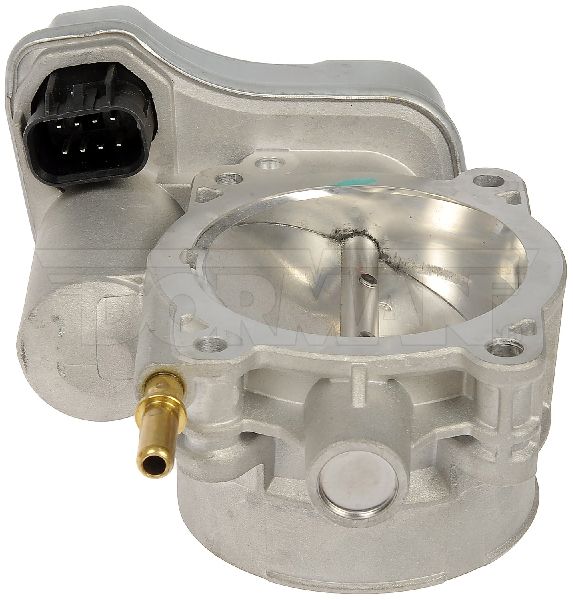
Trusted brands: ACDelco (GM Genuine), Standard Motor Products (S20064), Hitachi (ETB0075), Dorman (977-017)
OEM price range: $250-$400
Aftermarket price range: $150-$250
Related Codes That Often Appear With This One
- P1516 — This code specifically relates to the Throttle Actuator Control (TAC) module performance and is frequently triggered alongside P2119, as noted in TSBs PIP4578B and PIP4573B.
- P2101 — This code, 'Throttle Actuator Control Motor Circuit Range/Performance,' points directly to an issue with the motor inside the throttle body, which is a common cause of P2119. [Bulletin #PIP4578B, 1]
- P2176 — This code, 'Throttle Actuator Control System - Idle Position Not Learned,' often appears with P2119, especially after cleaning or replacement if a relearn procedure isn't performed correctly. [Bulletin #PIP4578B, Bulletin #PIP4573B, 1]
- P2135 — While often pointing to the pedal, this 'Throttle/Pedal Position Sensor/Switch A/B Voltage Correlation' code can sometimes appear if the PCM sees a major disagreement between the sensors in the throttle body itself.
Technical Service Bulletins (TSBs) & Recalls
- PIP4578B: Addresses idle surge, reduced engine power, and multiple throttle-related DTCs on high-mileage vehicles. It explicitly recommends cleaning the throttle body and performing an idle learn reset.
- PIP4573B: Notes that reduced power and several throttle codes can be triggered by very cold ambient temperatures, possibly due to moisture freezing or mechanical sluggishness in the throttle body.
Platform-Specific Known Issues
- A known issue on high-mileage vehicles can cause idle surge, reduced power, and set DTCs P2119, P1516, P2101, and P2176 due to carbon buildup. [Bulletin #PIP4578B, 1]
- In very cold ambient temperatures (approx. -10°F / -23°C), the engine may enter reduced power mode and set codes P1516, P2101, P2119, and/or P2176. [Bulletin #PIP4573B]
- Owner Experience: Many owners on forums like GMTNation and TrailVoy report that cleaning the throttle body provides only a temporary fix. The 'Reduced Engine Power' message often returns within a few weeks or months, with full replacement being the only long-term solution.
- Wiring Connector Fix: Some owners have fixed intermittent issues by carefully twisting the male pins on the throttle body connector to ensure a tighter connection, or by replacing the connector pigtail entirely.
Mechanic-Grade Diagnostic Values
- Throttle Position Sensor (TPS) Voltage — expected: Should rise smoothly from ~0.5V at idle to ~4.5V at wide-open throttle (WOT).. Failure: Voltage spikes, dropouts, or a flatline reading indicates a faulty TPS or wiring issue.
- Throttle Actuator Motor Resistance — expected: Typically between 2 and 12 Ohms.. Failure: A reading in the K-Ohm or M-Ohm range, or an Open Loop (OL) reading, indicates a failed motor.
- Wiring Harness Continuity — expected: Resistance should be less than or equal to 0.5 Ω for the signal wire between the throttle body and PCM.. Failure: Higher resistance or an open circuit (OL) indicates a break or corrosion in the wire.
Scan Tool Commands That Help
- GM Tech2 / Professional Scan Tool: Throttle Actuator Test (TAC Motor Control) — Use this bidirectional command to manually open and close the throttle plate while observing its movement and listening for the motor. This confirms if the PCM can command the motor and if the motor is physically capable of responding, helping to isolate a bad motor from a wiring or PCM driver issue.
- GM Tech2 / Professional Scan Tool: Idle Learn Reset / Throttle Relearn — This function must be used after cleaning or replacing the throttle body to reset the learned idle values in the PCM. Failure to do so often results in a high or unstable idle and may set code P2176. While a manual procedure exists, the scan tool function is the most reliable method.
Wiring & Ground Locations
- G102 — On the left (driver's) side of the underhood compartment, near the rear of the underhood fuse block.. This is a major ground point. While not directly for the PCM on all models, poor grounds in this area can introduce electrical noise and voltage drops that affect various engine sensors and actuators, including the throttle body.
- G107 — On the lower left (driver's) side of the engine block.. This is a primary engine block ground. The Powertrain Control Module (PCM) and its associated sensors rely on a clean ground path to the engine block. A loose or corroded G107 can cause erratic sensor readings and unpredictable behavior from actuators like the throttle body.
- Throttle Body Connector — The electrical connector on the throttle body assembly itself, located at the front of the intake manifold.. This is the single point of connection for all power, ground, and signal wires to the throttle body's motor and sensors. Corrosion, spread terminals, or wire damage at this connector is a common cause of intermittent throttle-related codes like P2119.
Real Owner Repair Stories
- Chevy HHR Network Forum User (Chevy HHR (Uses a similar GM electronic throttle control system)) — Sudden "Engine Power Reduced" message and Check Engine Light with codes P2135 and P2119.
❌ Tried (didn't work) Initial stop and restart cleared the limp mode temporarily.
✅ What actually fixed it The issue returned when driving over bumps. The owner messed with the connectors under the hood and had to apply "percussive maintenance" to get the underhood fuse box to close properly. After this, the car ran normally, suggesting the root cause was a loose connection either at a sensor, the fuse box, or within the associated wiring harness.
OEM Part Supersession History
12568580→ACDelco 217-2296— This is a standard part number update where the GM part number is superseded by an ACDelco service part number. They are the same component.
Model Year Variations Within This Range
- 2004-2007: The throttle body for the Buick Rainier in this year range can have either a 6-pin or an 8-pin electrical connector. It is critical to visually inspect the connector on the vehicle's original part before ordering a replacement to ensure compatibility.
Helpful Videos
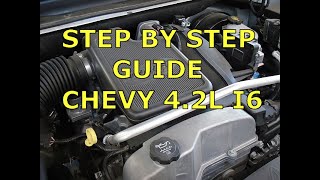
Used OEM Parts in Stock
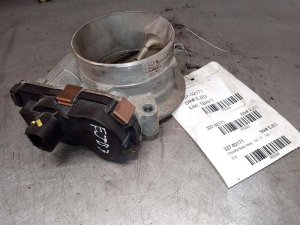
New Aftermarket Parts Available



The information in this article is provided for general reference and educational purposes only. Vehicle specifications, procedures, and part compatibility can vary by production date, trim level, and region. Always consult your vehicle's factory service manual and verify part numbers before purchasing or performing repairs. Safety-critical components such as airbags, seat belts, and braking systems should be installed by a qualified professional.
- Buick RAINIER:
- 🧭 Diagnostic Flowchart
- 🎬 Helpful Videos
- 🛍️ Shop This Part
- What's Unique About the 2004-2007 Buick RAINIER
- Symptoms You May Notice
- Most Likely Causes
- Rare But Worth Checking
- Diagnosis Steps
- Parts You'll Likely Need
- Related Codes That Often Appear With This One
- Technical Service Bulletins (TSBs) & Recalls
- Platform-Specific Known Issues
- Mechanic-Grade Diagnostic Values
- Scan Tool Commands That Help
- Wiring & Ground Locations
- Real Owner Repair Stories
- OEM Part Supersession History
- Model Year Variations Within This Range
- 🎟️ Get 5% Off