

P2119 on 2015-2018 Cadillac CTS: Throttle Body Performance, Causes, and Fixes
On a 2015-2018 Cadillac CTS, code P2119 is most often caused by an incorrect/deformed air filter or a damaged air intake duct, leading to a 'Reduced Engine Power' warning. Before suspecting the throttle body, inspect the air filter and intake tube, as this is a known issue cited in manufacturer bulletins GCUS-3-885 and PIP5424A.
- For P2119 on a 2015-2018 CTS, always inspect the air filter and air intake duct first. This is the most likely cause and the cheapest fix.
- The vehicle will enter a 'Reduced Engine Power' mode for safety, so while it is drivable for short distances, it should be repaired promptly.
- Do not immediately replace the throttle body. The problem is often upstream in the intake system.
- If you clean or replace the throttle body, an 'idle relearn' procedure is necessary for the computer to adapt to the new/clean part.
What's Unique About the 2015-2018 Cadillac CTS
Unlike many vehicles where P2119 immediately points to a faulty throttle body, the 2015-2018 Cadillac CTS and its platform mates (like the Cadillac ATS and Chevrolet Camaro) have a well-documented sensitivity to the air intake system. Multiple Technical Service Bulletins (TSBs) from GM, including GCUS-3-885 and PIP5424A, specify that an incorrect, collapsed, or improperly installed air filter, or a cracked air intake duct, can trigger this code. The altered or unmetered airflow is enough to cause a discrepancy between the expected and actual throttle position, leading to a misdiagnosis if the intake system isn't checked first.
Diagnostic Flowchart
Tap your situation to follow the diagnostic path that matches what you're seeing on this vehicle.
Symptoms You May Notice
- Reduced Engine Power warning message on the driver information center
- Check Engine Light (Malfunction Indicator Lamp) is on
- Sluggish, delayed, or non-responsive acceleration
- Unstable, surging, or rough idle
- Vehicle may stall, especially when coming to a stop
- Vehicle may not accelerate past a certain speed
- Replacing the throttle body before inspecting the air filter and intake duct. This is the most common and costly mistake on this specific platform due to the TSBs pointing to the intake system as the primary cause.
- Replacing the accelerator pedal position (APP) sensor. P2119 specifically points to a problem at the throttle body, whereas other codes (like P2138 or P2120) typically indicate a faulty pedal sensor.
Most Likely Causes
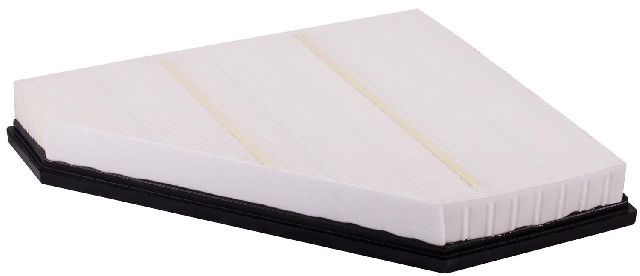
- Incorrect or Deformed Air Filter 🔴 High Probability → Shop Air Cleaner Assembly As per GM Technical Service Bulletins GCUS-3-885 and PIP5424A, this platform is highly sensitive to airflow changes. An aftermarket or incorrect filter (e.g., a round filter forced into a flat housing) can deform or collapse, restricting air and causing the throttle control system to fault when it can't achieve the expected airflow for a given throttle angle.
How to confirm: Open the air filter housing. Visually inspect the air filter to see if it is crushed, deformed, or does not fit snugly. Compare the part number to the OEM specification; the correct ACDelco part is often A3221C (GM #84373974).
Typical fix: Replace the air filter with a high-quality OEM part. Ensure it is seated correctly in the housing before closing.
Est. part cost: $25-$60 - Cracked or Disconnected Air Intake Duct 🔴 High Probability → Shop Engine Air Intake Resonator Cited in TSB GCUS-3-885, the plastic and rubber air duct between the air filter box and the throttle body can become brittle and crack, allowing unmetered air to enter the system. This disrupts the air/fuel mixture and causes a mismatch between MAF sensor readings and the throttle's actual position, triggering the code.
How to confirm: With the engine off, carefully inspect the entire length of the air intake duct for cracks, splits, or loose connections. Pay close attention to the flexible, ribbed sections and the connection points.
Typical fix: Replace the damaged air intake duct. OEM part numbers vary by engine, for example, GM #22964585 for the 3.6L V6 and #22865760 for the 2.0L Turbo.
Est. part cost: $80-$200 - Dirty Throttle Body 🟡 Medium Probability → Shop Fuel Injection Throttle Body Direct injection engines, like the 2.0T (LTG) and 3.6L (LFX/LGX), are prone to carbon buildup from the PCV system routing oil vapors into the intake. This buildup can restrict the movement of the throttle plate, causing it to stick or not return to its rest position correctly. TSB PIP4578B notes this code can occur on high-mileage vehicles, where buildup is more likely.
How to confirm: Remove the air intake duct from the throttle body and visually inspect the throttle plate and bore for a black, sticky layer of carbon, especially on the backside of the plate.
Typical fix: Clean the throttle body with a dedicated throttle body cleaner and a soft cloth. Do not spray directly on electrical connections. An idle relearn procedure is often required after cleaning. 🎬 Watch: Step-by-step guide to cleaning your Cadillac throttle body
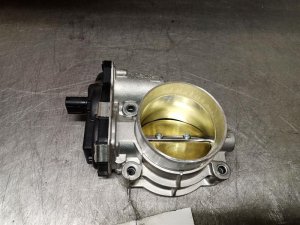
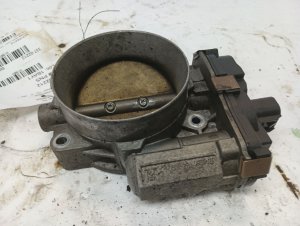
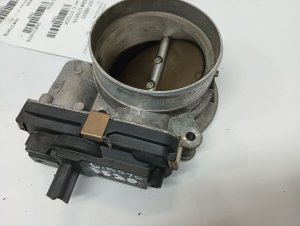
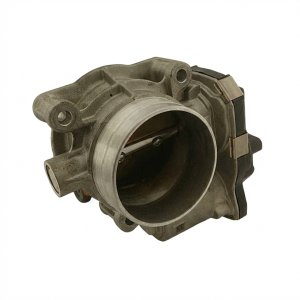
Est. part cost: $10-$20 (for cleaner) - Failing Throttle Body Assembly ⚪ Low Probability → Shop Fuel Injection Throttle Body If the intake system is perfect and cleaning the throttle body doesn't resolve the issue, the internal motor, position sensor, or plastic gears within the throttle body assembly may have failed. This is a process of elimination after the more common, simpler causes are ruled out.
How to confirm: This is typically a process of elimination. If all other causes are ruled out, the throttle body is the likely culprit. A scan tool can monitor commanded vs. actual throttle position to confirm erratic behavior or a lack of response.
Typical fix: Replace the entire throttle body assembly. A throttle relearn procedure is mandatory after replacement. Common part numbers include ACDelco 12670839 for the 2.0T and ACDelco 12670981 for the 3.6L.
Est. part cost: $150-$400
Rare But Worth Checking
- Wiring or Connector Issue: The wiring harness or connector at the throttle body can become damaged, corroded, or have loose pins, causing an intermittent signal. This should be checked before replacing the throttle body itself, especially if the issue is more frequent in wet weather.
- Debris in Throttle Body: → Shop Fuel Injection Throttle Body If the air filter housing is not secured properly, larger debris like leaves or even nesting material can be ingested and physically jam the throttle plate, causing this code.
- Low System Voltage: A failing battery or alternator can cause low voltage to the throttle actuator module, leading to performance errors. If other electrical issues are present, check the battery and charging system health.
Diagnosis Steps
- Read all fault codes stored in the ECM. Note any other codes that appear with P2119.
- Crucial First Step: Open the air filter housing. Inspect the air filter for being the correct part number (e.g., ACDelco A3221C), and check for any signs of collapse, deformation, or improper installation.
- Inspect the entire air intake duct from the airbox to the throttle body. Look for any cracks, tears, or loose clamps. Ensure it is securely fastened at both ends. A common failure point is the flexible ribbed section.
- If the intake system is confirmed to be in perfect condition, remove the duct from the throttle body. Inspect the throttle bore and plate for heavy carbon buildup or foreign debris.
- If dirty, clean the throttle body thoroughly using a dedicated throttle body cleaner and a soft rag. Move the plate by hand to clean behind it. Do not spray cleaner directly into electrical components.
- Inspect the electrical connector and wiring at the throttle body for any signs of damage, corrosion, or loose pins. Wiggle the harness while the engine is running to see if it affects idle.
- After any cleaning or part replacement, perform a throttle idle learn procedure. This can sometimes be done by idling the engine for several minutes, but using a capable OBD-II scan tool is the most reliable method.
- If the code returns after these steps, the throttle body assembly itself is likely faulty and requires replacement.
Parts You'll Likely Need
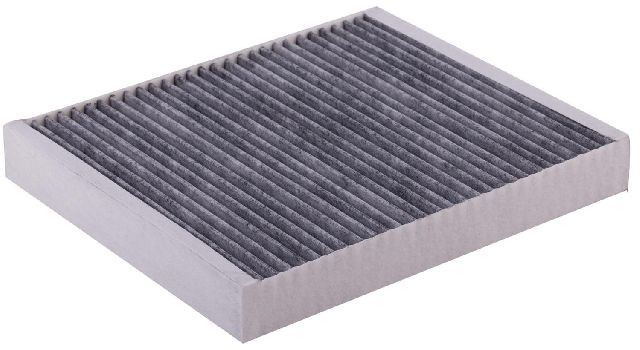
- Engine Air Filter
(OEM #ACDelco A3221C / GM 84373974)— Per manufacturer TSBs, an incorrect or deformed air filter is a primary cause of this code on the CTS.
Trusted brands: ACDelco, WIX, Fram
OEM price range: $40-$60
Aftermarket price range: $25-$45 - Air Intake Duct/Hose
(OEM #22964585 (3.6L), 22865760 (2.0L))— Cracks in this hose are another primary cause cited in TSBs, allowing unmetered air to disrupt throttle calculations.
Trusted brands: ACDelco / GM Genuine
OEM price range: $120-$170
Aftermarket price range: $80-$130 - Throttle Body Assembly
(OEM #12670839 (2.0T), 12670981 (3.6L))— If cleaning fails and the intake system is intact, the internal electronics or motor of the throttle body have likely failed.
Trusted brands: ACDelco / GM Genuine, Standard Motor Products, Hitachi
OEM price range: $180-$400
Aftermarket price range: $150-$250
Related Codes That Often Appear With This One
- P2101 — This code, 'Throttle Actuator Control Motor Circuit Range/Performance', is frequently set with P2119 as they both relate to the throttle body's electronic control and performance. It is explicitly mentioned in TSBs GCUS-3-885 and PIP5424A as a companion code.
- P0121 — This code, 'Throttle/Pedal Position Sensor 'A' Circuit Range/Performance', often accompanies P2119 because a physical restriction (like a bad air filter or carbon) can cause the sensor's output to be out of its expected range. It is also cited in the same TSBs.
- P0068 — This code indicates a conflict between the MAP sensor, MAF sensor, and throttle position. A problem causing P2119, such as a large vacuum leak from a cracked intake duct, can easily lead to this correlation code. It is mentioned alongside P2119 in TSB PIP4578B.
- P2176 — This code, 'Throttle Actuator Control System - Idle Position Not Learned', can be set with P2119, especially on high-mileage vehicles as noted in TSB PIP4578B, indicating the system can no longer adapt to a worn or dirty throttle body.
Technical Service Bulletins (TSBs) & Recalls
- GCUS-3-885: Notes that a cut air duct or incorrect air filter can cause DTCs P0121, P2101, and P2119. Recommends replacing the air filter and/or duct.
- PIP5424A: Cites incorrect air filters causing P0121, P2101, and P2119, especially during wide-open throttle. Recommends inspection and replacement of the air filter.
- PIP4578B: Mentions P2119 as one of several codes (P0068, P0121, P1516, P2101, P2176) that can appear on high-mileage vehicles experiencing idle surge or reduced power.
Platform-Specific Known Issues
- Air Filter Sensitivity: As documented in TSBs GCUS-3-885 and PIP5424A, these vehicles can set throttle performance codes simply from using a low-quality or incorrect air filter that deforms under vacuum.
- Air Duct Failure: TSB GCUS-3-885 also highlights that the air duct can be cut or cracked, which is a common point of failure leading to P2119.
- High-Mileage Throttle Issues: TSB PIP4578B acknowledges that on high-mileage vehicles, this code can be part of a group of DTCs related to idle surges and reduced power, often pointing to a worn or dirty throttle body.
Mechanic-Grade Diagnostic Values
- Throttle Position Sensor (TPS) Voltage — expected: ~0.5V at closed throttle to ~4.5V at wide-open throttle. Failure: A reading that is high when the throttle is closed (e.g., >1.0V) or a signal that does not move smoothly from 0% to 100% on a scan tool.
- Throttle Actuator Power Supply Voltage — expected: 11.5V – 13.5V with the engine running. Failure: Persistent low voltage suggests a problem with the battery, alternator, or wiring harness providing power to the throttle body.
- Ground Circuit Resistance (at sensor connector) — expected: Less than 5 Ohms between the ground pin and a known good chassis ground. Failure: Resistance higher than 5 Ohms indicates a poor ground connection, which can cause erratic sensor behavior.
Scan Tool Commands That Help
- GM GDS2 / Tech2: Throttle Actuator Test — This bidirectional control allows a technician to command the throttle plate to open and close without the engine running. It's used to verify the actuator motor's function, listen for binding or grinding noises, and confirm the range of motion.
- GM GDS2 / Tech2: Idle Learn / Throttle Body Relearn — This function must be used after cleaning or replacing the throttle body to reset the learned idle airflow values in the ECM. Failure to perform this step is a common reason for a persistent high idle or the code returning.
- Any Professional Scan Tool: Monitor Desired vs. Actual Throttle Position — While driving or operating the pedal, these two data PIDs should track each other closely. A significant deviation between the commanded (Desired) and reported (Actual) position indicates a performance problem and is the direct trigger for code P2119.
Wiring & Ground Locations
- G103 — Located at the left rear of the engine compartment on the cowl, often above the brake booster.. This is a major ground point for the Engine Control Module (ECM) and Body Control Module (BCM). A poor connection here can cause a wide range of sensor and communication issues, including problems with the throttle control system.
- G105 — Located at the left front of the engine compartment, sometimes behind cooling fan relays.. This is another primary engine compartment ground. While it primarily serves lighting and cooling fans, ensuring all major grounds are clean and tight is a critical step in diagnosing electronic faults.
- Throttle Body Connector — The 6-pin electrical connector directly on the throttle body assembly.. This is the direct interface for the throttle motor and position sensors. The two thicker wires are for the motor, while the other pins are for the 5V reference, ground, and dual sensor signals. Checking for 5V reference and good ground at this connector is a key diagnostic step.
OEM Part Supersession History
12627217, 12669073→12670839— Standard part evolution, likely for improved reliability or manufacturing efficiency.
Heads up: Part 12670839 is listed for the 2.5L and some 2.0L applications. While it may physically fit other engines, using the correct part number for the specific engine (2.0T vs 3.6L) is critical as the internal calibration may differ.
Model Year Variations Within This Range
- 2015: The 2015 model year primarily used the 3.6L LFX V6 engine, a carryover from the previous generation known for its reliability.
- 2016-2018: Starting in 2016, the CTS received the updated 3.6L LGX V6 engine. This engine featured a redesigned block, improved cooling, larger valves, and was engineered to address some of the long-term wear issues (like timing chains) seen in the LFX. While the P2119 diagnosis is similar, part numbers for components like the intake duct may differ between LFX and LGX engines.
Helpful Videos

![Cadillac ATS CTS 2.0 [Mishimoto Intake Tube Install]](https://img.youtube.com/vi/ZtUbtZo_UCs/mqdefault.jpg)
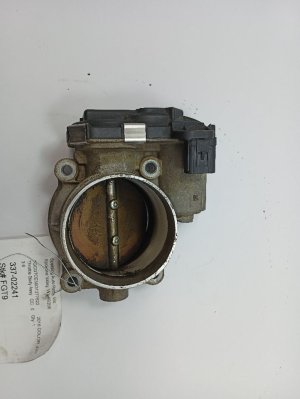
Used OEM Parts in Stock
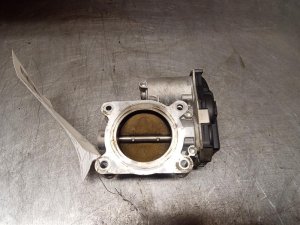
New Aftermarket Parts Available


The information in this article is provided for general reference and educational purposes only. Vehicle specifications, procedures, and part compatibility can vary by production date, trim level, and region. Always consult your vehicle's factory service manual and verify part numbers before purchasing or performing repairs. Safety-critical components such as airbags, seat belts, and braking systems should be installed by a qualified professional.
- Cadillac CTS:
- 🧭 Diagnostic Flowchart
- 🎬 Helpful Videos
- 🛍️ Shop This Part
- What's Unique About the 2015-2018 Cadillac CTS
- Symptoms You May Notice
- Most Likely Causes
- Rare But Worth Checking
- Diagnosis Steps
- Parts You'll Likely Need
- Related Codes That Often Appear With This One
- Technical Service Bulletins (TSBs) & Recalls
- Platform-Specific Known Issues
- Mechanic-Grade Diagnostic Values
- Scan Tool Commands That Help
- Wiring & Ground Locations
- OEM Part Supersession History
- Model Year Variations Within This Range
- 🎟️ Get 5% Off