

P2119 on 2007-2014 Cadillac Escalade: Throttle Body Performance Fault Causes and Fixes
On a 2007-2014 Escalade, P2119 almost always indicates a problem with the electronic throttle body, often due to carbon buildup or internal failure. This triggers 'Reduced Engine Power' mode. Cleaning the throttle body is the first step; if that fails, replacement is the most common fix, costing between $150 and $400 for the part.
- P2119 on a 2007-2014 Escalade will trigger the 'Reduced Engine Power' safety mode, making the vehicle unsafe for highway driving.
- The first step should always be to thoroughly clean the throttle body and perform an idle relearn procedure.
- If cleaning does not fix the problem, the entire throttle body assembly needs to be replaced; this is a very common repair for this vehicle.
- Always perform the idle relearn procedure after cleaning or replacing the throttle body to avoid idle issues and code P2176.
- Do not replace the gas pedal sensor for this code; the fault lies at the throttle body.
What's Unique About the 2007-2014 Cadillac ESCALADE
The 2007-2014 Cadillac Escalade, part of the GMT900 platform, is well-known for throttle body issues, particularly on high-mileage vehicles. A General Motors Technical Service Bulletin (TSB #PIP4578B) specifically acknowledges that codes like P2119 can occur due to issues that develop over time. The primary cause is often heavy carbon buildup inside the throttle body, which physically restricts the throttle plate's movement, causing it to stick or respond slowly. As carbon accumulates, the ECM learns to open the throttle plate more to maintain idle, but if the buildup becomes excessive or is cleaned without a reset, it can cause this fault.
Diagnostic Flowchart
Tap your situation to follow the diagnostic path that matches what you're seeing on this vehicle.
Symptoms You May Notice
- "Reduced Engine Power" message on the dashboard
- "Service Stabilitrak" message may also appear
- Check Engine Light is on
- Severely limited acceleration and power (Limp Mode)
- Unstable or surging idle speed
- Hesitation when pressing the accelerator
- Engine may stall or have difficulty starting
- Replacing the Accelerator Pedal Position (APP) Sensor. While part of the drive-by-wire system, P2119 specifically points to a performance issue at the throttle body itself. A failing pedal sensor will typically set other codes, such as P2135 or P2138.
Most Likely Causes
- Dirty/Clogged Throttle Body 🔴 High Probability → Shop Fuel Injection Throttle Body The PCV (Positive Crankcase Ventilation) system on these V8 engines can route oil vapors and combustion byproducts back into the intake, which bake onto the throttle plate and bore over time, restricting movement. This is a very common issue on high-mileage GMT900 vehicles.
How to confirm: Remove the air intake tube from the throttle body and visually inspect the throttle plate and bore for a thick, black layer of carbon. Manually push the plate (with ignition off) to feel for any sticking, binding, or a gritty feeling.
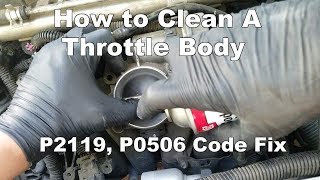
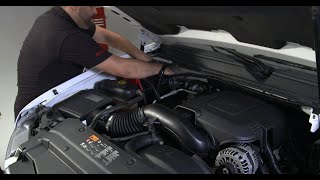
Typical fix: Thoroughly clean the throttle body bore and plate with a dedicated throttle body cleaner and a soft cloth. 🎬 Watch: How to properly clean your throttle body and clear codes. An idle relearn procedure is required after cleaning.
Est. part cost: $10-$20 - Failing Throttle Body Assembly 🔴 High Probability → Shop Fuel Injection Throttle Body Beyond just carbon, the internal electronic components of the throttle body—the actuator motor and the integrated Throttle Position Sensor (TPS)—are known failure points on this platform. This is often an age and mileage-related failure. Some model years were subject to a special coverage adjustment (11273) extending the warranty due to these failures.
How to confirm: If cleaning the throttle body and performing a relearn does not resolve the code, the issue is almost certainly internal to the assembly. A scan tool can monitor commanded vs. actual throttle position; a discrepancy or erratic signal points to a faulty unit.
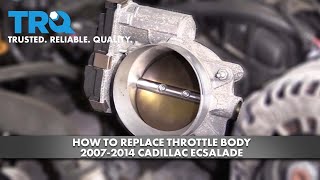
Typical fix: Replace the entire throttle body assembly. 🎬 See this step-by-step walkthrough for replacing the throttle body assembly. This is the most reliable long-term solution. An idle relearn procedure must be performed after installation.
Est. part cost: $150-$400 - Damaged Wiring or Connector ⚪ Low Probability The wiring harness leading to the throttle body is subject to engine heat and vibration, which can cause wires to become brittle and break internally over time, often right near the connector where the harness flexes. Forum users report finding broken wires inside the insulation with no visible external damage.
How to confirm: Visually inspect the wiring harness for any signs of chafing, melting, or corrosion at the connector. With the engine running, carefully wiggle the harness near the throttle body to see if it causes the idle to stumble or the code to appear. A continuity test from the ECM connector to the throttle body connector may be needed to find an internal break.
Typical fix: Repair the damaged section of wire or replace the connector pigtail. Splicing in a new pigtail is a common repair discussed in owner forums.
Est. part cost: $15-$50
Rare But Worth Checking
- Poor Engine/Chassis Grounds: Multiple owners on forums for GMT900 platform vehicles have traced persistent 'Reduced Engine Power' issues, including P2119, to corroded or loose ground wires. Key locations to check are the main ground straps on the frame under the driver's side door and the ground wire on the firewall behind the engine.
- Low Battery Voltage: The electronic throttle control system is sensitive to voltage. A weak or failing battery/alternator can sometimes cause this code to set without there being a fault in the throttle body itself. Always ensure the battery and charging system are healthy before replacing expensive parts.
- Faulty Powertrain Control Module (PCM): This is extremely rare. Before condemning the PCM, all other possibilities, especially the throttle body, its wiring, and ground connections, must be exhaustively ruled out. This is typically a last resort diagnosis.
Diagnosis Steps
- Check for other stored DTCs. Codes like P2101, P1516, or P2176 provide strong confirmation of a throttle body issue.
- Inspect the air intake tube for any cracks or loose connections between the MAF sensor and the throttle body.
- Remove the air intake tube and visually inspect the throttle body bore and plate for heavy carbon buildup.
- If carbon is present, clean the throttle body thoroughly with a dedicated cleaner and a soft rag. Do not spray excessive fluid into the intake.
- Inspect the throttle body electrical connector and nearby wiring for any signs of damage, corrosion, or loose pins. Wiggle the harness to check for intermittent connections.
- Check major ground connections on the firewall and frame for corrosion or looseness, as this is a known cause of similar issues.
- After cleaning or replacement, perform the throttle body relearn procedure. A common manual method is: Start the engine and let it idle in Park for 3 minutes. The idle may be high but should start to decrease. Turn the engine off for 60 seconds. Restart the engine and let it idle in Park for another 3 minutes. The idle should now be normal. 🎬 Watch: A professional guide to performing the GM idle relearn procedure.
- If the code returns after cleaning, a relearn, and verifying wiring/grounds, the throttle body assembly is faulty and needs to be replaced.
Parts You'll Likely Need
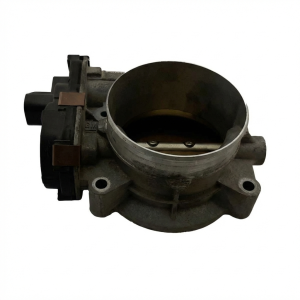
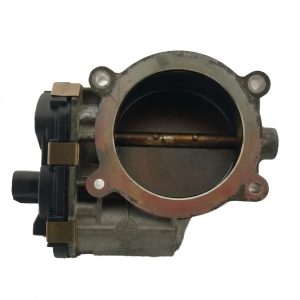
- Throttle Body Assembly
(OEM #12678223 (superseded by 12740727))— This is the most common fix. The internal electronics fail over time, and cleaning only resolves issues related to carbon buildup. Replacement of the complete assembly is the definitive repair.
Trusted brands: ACDelco (OEM), Bosch, Hitachi, Standard Motor Products, Dorman
OEM price range: $250-$400
Aftermarket price range: $150-$250 - Throttle Body Cleaner — Required for the first and most common diagnostic step: cleaning a dirty throttle body to see if it resolves the sticking issue.
Trusted brands: CRC, Berryman, Gumout
Aftermarket price range: $10-$20
Related Codes That Often Appear With This One
- P1516 — This GM-specific code indicates 'Throttle Actuator Control (TAC) Module Throttle Actuator Position Performance,' directly related to P2119 and often set concurrently.
- P2101 — Defined as 'Throttle Actuator Control Motor Circuit Range/Performance,' this code points to an electrical issue within the throttle body's motor, often setting alongside P2119.
- P2176 — This code, 'Throttle Actuator Control System - Idle Position Not Learned,' frequently appears after cleaning or replacing the throttle body if the mandatory idle relearn procedure is not performed correctly.
- P0068 — This code indicates a conflict between the MAP sensor, MAF sensor, and throttle position. A stuck throttle plate can cause this correlation fault.
Technical Service Bulletins (TSBs) & Recalls
- PIP4578B: Mentions idle surge, reduced engine power mode, and DTCs including P2119 on high-mileage vehicles.
- Special Coverage 11273: Extends warranty on throttle body for certain model years due to failures causing reduced power mode.
Platform-Specific Known Issues
- TSB PIP4578B: A Technical Service Bulletin from GM (PIP4578B) directly addresses DTCs P2119, P2101, and others on high-mileage vehicles, noting symptoms like idle surge and reduced engine power, corroborating that this is a known issue caused by carbon buildup.
- Special Coverage 11273: For some 2008-2011 V8 models, GM issued a special coverage adjustment (#11273A) extending the warranty on the throttle body assembly to 10 years or 120,000 miles due to conditions causing the 'Reduced Engine Power' message. Owners should check with a dealer to see if their VIN is covered.
Mechanic-Grade Diagnostic Values
- Throttle Actuator Control (TAC) Motor Resistance — expected: 2 to 15 Ohms between Pins A and C.. Failure: A reading of less than 1 Ohm indicates a short; a reading over the limit (OL) indicates an open circuit.
- Throttle Position Sensor (TPS) 1 Resistance Sweep — expected: Connect multimeter between Pins G (Signal) and D (Low Reference). Resistance should change smoothly with no gaps or spikes as the throttle plate is manually moved.. Failure: Jerky readings, dropouts, or a value that stays stuck indicates a faulty sensor.
- Throttle Position Sensor (TPS) 2 Resistance Sweep — expected: Connect multimeter between Pins F (Signal) and B (Low Reference). Resistance should change smoothly with no gaps or spikes as the throttle plate is manually moved.. Failure: Jerky readings, dropouts, or a value that stays stuck indicates a faulty sensor.
- Live Data - TPS Voltage (Scan Tool) — expected: Approximately 0.5V at idle/closed throttle, sweeping smoothly up to ~4.5V at wide-open throttle.. Failure: Voltage that is stuck, jumps erratically, or doesn't match the other TPS sensor's mirrored movement indicates a fault.
- Live Data - 5V Reference (Scan Tool or Multimeter) — expected: A steady 5.0V at Pins E and H on the throttle body connector with key on, engine off.. Failure: Voltage below 4.8V or above 5.2V indicates a problem with the ECM or wiring, not necessarily the throttle body.
Scan Tool Commands That Help
- GDS2 / Tech2 / Professional Scan Tool: Idle Learn Reset / Throttle/Idle Learn — This function, often found under 'Module Setup' or 'Special Functions', must be used after cleaning or replacing the throttle body to reset the learned idle airflow values in the ECM. Failing to do so often results in a high idle and code P2176.
- GDS2 / Tech2 / Professional Scan Tool: Throttle Sweep Test / Actuator Test — This bidirectional control commands the throttle motor to open and close, allowing a technician to observe the throttle plate's physical movement and monitor the corresponding TPS sensor data on the scan tool to confirm if the motor is responding and sensors are reading correctly.
Wiring & Ground Locations
- Throttle Body Connector (8-Pin) — Directly on the electronic throttle body assembly.. This is the primary connection point for all power, ground, and signal wires for the throttle assembly. Pin functions are: A (Yellow): TAC Motor (-), B (Black/White): Low Ref, C (Brown): TAC Motor (+), D (Black): Low Ref, E (Lt Blue/Black): 5V Ref, F (Purple): TP Sensor 2 Signal, G (Dk Green): TP Sensor 1 Signal, H (Grey): 5V Ref.
- G103 / G104 — G103 is on the cowl, above the brake booster. G104 is often cited as being on the rear of the left cylinder head.. These are critical ground points for the ECM and various engine sensors. High resistance or corrosion at these grounds can cause erratic behavior in the throttle control system, leading to codes like P2119 and P1516 even with a good throttle body.
- Engine Block to Firewall Ground Strap — A braided strap typically running from the rear of the passenger side cylinder head to a stud on the firewall.. This strap provides the main ground path between the engine and the chassis/body. If it becomes corroded or broken, modules on the engine (like the ECM) can lose a stable ground reference, causing numerous electrical issues including reduced power mode.
Real Owner Repair Stories
- Tahoe Yukon Forum - Thread: 'Solution to Reduced Engine Power Message and p1516' (2003-2007 GM Truck/SUV (GMT800/900 platform)) — Recurring 'Reduced Engine Power' message, especially after hitting bumps, with code P1516.
❌ Tried (didn't work) Replacing the throttle body, Replacing the Throttle Position Sensor (TPS), Replacing the pigtail connector for the throttle body
✅ What actually fixed it Adding new, redundant ground wires. The owner added a 10-gauge wire from the firewall to an unused threaded hole on the engine's valve cover, and a second ground wire from the TAC module mounting bolt to the firewall. This provided a stable ground path and permanently resolved the issue.
OEM Part Supersession History
12678223→12740727— GM frequently updates parts to improve reliability or consolidate inventory. This supersession chain includes multiple previous numbers like 12620263 and 12678312.
Heads up: While the parts are physically interchangeable, some aftermarket parts catalogs distinguish between 2007-2008 and 2009-2014 models, suggesting potential minor internal differences. Always verify fitment with the vehicle's VIN.
Model Year Variations Within This Range
- 2007-2008 vs 2009-2014: Some parts suppliers list different throttle body part numbers for the early vs. later years of this generation. For example, one AC Delco part number may be specified for 2007-2008, and another for 2009-2014. While the core issue is the same, it is critical to use a part specified for the exact model year and VIN to ensure correct calibration and function.
Helpful Videos
Used OEM Parts in Stock
New Aftermarket Parts Available


The information in this article is provided for general reference and educational purposes only. Vehicle specifications, procedures, and part compatibility can vary by production date, trim level, and region. Always consult your vehicle's factory service manual and verify part numbers before purchasing or performing repairs. Safety-critical components such as airbags, seat belts, and braking systems should be installed by a qualified professional.
- Cadillac ESCALADE:
- 🧭 Diagnostic Flowchart
- 🎬 Helpful Videos
- 🛍️ Shop This Part
- What's Unique About the 2007-2014 Cadillac ESCALADE
- Symptoms You May Notice
- Most Likely Causes
- Rare But Worth Checking
- Diagnosis Steps
- Parts You'll Likely Need
- Related Codes That Often Appear With This One
- Technical Service Bulletins (TSBs) & Recalls
- Platform-Specific Known Issues
- Mechanic-Grade Diagnostic Values
- Scan Tool Commands That Help
- Wiring & Ground Locations
- Real Owner Repair Stories
- OEM Part Supersession History
- Model Year Variations Within This Range
- 🎟️ Get 5% Off