

P2119 on 2006-2010 Chevrolet Express: Throttle Body Range/Performance Fixes
This code means the throttle body is not responding correctly, often triggering 'Reduced Engine Power' mode. The most common fix is cleaning the throttle body of carbon buildup or, if that fails, replacing the entire throttle body assembly. A throttle relearn procedure is often required after cleaning or replacement.
- P2119 on a Chevy Express almost always points to an issue with the throttle body.
- The first step should always be to inspect for and clean carbon buildup, which is a known issue on these vans.
- An 'Idle Learn Reset' procedure is critical after cleaning or replacing the throttle body to prevent further issues.
- If cleaning doesn't work, the entire throttle body assembly usually needs to be replaced, as the sensors are internal.
- Before replacing parts, always check the wiring and connector at the throttle body for damage or corrosion.
What's Unique About the 2006-2010 Chevrolet EXPRESS
On these high-mileage work vans, the P2119 code is frequently linked to a known issue acknowledged by GM. Over time, carbon builds up inside the throttle body, physically restricting the movement of the throttle plate. The engine's computer tries to compensate for this buildup by learning new idle positions, but eventually, the restriction becomes too great, triggering the code and the dreaded 'Reduced Engine Power' mode. A specific Technical Service Bulletin (TSB PIP4578B) addresses this exact scenario for high-mileage GM vehicles, including the Express van.
🎬 Watch: Troubleshooting reduced power mode and common GM throttle codes.Diagnostic Flowchart
Tap your situation to follow the diagnostic path that matches what you're seeing on this vehicle.
Symptoms You May Notice
- "Reduced Engine Power" message on the dashboard.
- Check Engine Light is on.
- Vehicle has very limited acceleration and power (limp mode).
- Unstable, rough, or surging idle.
- Engine may stall at low speeds or when coming to a stop.
- Hesitation or delayed response when pressing the gas pedal.
- Difficulty starting the engine.
- Replacing the Accelerator Pedal Position Sensor (APPS). While the APPS is part of the overall throttle control system, P2119 specifically points to a performance issue at the throttle body itself, not the pedal. Other codes, like P2135, more directly implicate the pedal or correlation issues.
Most Likely Causes
- Dirty/Sticking Throttle Body 🔴 High Probability → Shop Fuel Injection Throttle Body As noted in TSB PIP4578B, high-mileage GM V8 vehicles are prone to significant carbon buildup in the throttle body, which restricts the plate's movement and causes a 'carbon fest'.
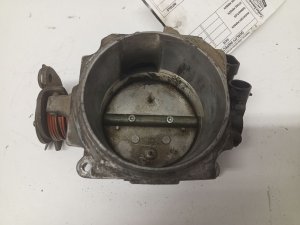
How to confirm: Visually inspect the throttle body bore and plate for a thick, black layer of carbon. You can also manually (with the engine off) push the throttle plate to feel for any binding or stickiness. The back side of the throttle plate is often the dirtiest.
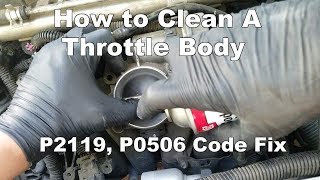
Typical fix: Thoroughly clean the throttle body plate and bore with a dedicated throttle body cleaner and a soft cloth or brush. It is best to remove the throttle body from the vehicle for a complete cleaning to prevent debris from entering the intake manifold. 🎬 See how to properly clean your throttle body to fix P2119. An idle relearn procedure is mandatory after cleaning to prevent new codes like P0506 or P0507 from appearing.
Est. part cost: $10-$20 for cleaner - Failed Throttle Body Assembly 🟡 Medium Probability → Shop Fuel Injection Throttle Body The internal electronic components, including the integrated throttle position sensor (TPS) and the actuator motor, can fail over time due to wear, heat, and vibration. On these models, the sensors are typically integrated and not sold separately, requiring replacement of the entire assembly.
How to confirm: If cleaning the throttle body does not resolve the code and symptoms, and the wiring is confirmed to be good, the internal electronics have likely failed. A scan tool can monitor commanded vs. actual throttle position to confirm a discrepancy.
Typical fix: Replace the entire throttle body assembly. A throttle relearn procedure is mandatory after replacement.
Est. part cost: $150-$350 - Wiring or Connector Issues ⚪ Low Probability The wiring harness connector at the throttle body is exposed to engine heat and vibration, which can lead to corrosion, loose pins, or damaged wires over time. Bad ground wires to the ECM have also been reported as a cause for intermittent issues.
How to confirm: Visually inspect the connector and wiring harness for any signs of damage, corrosion, or loose connections. Wiggle the connector with the engine running to see if it affects the idle.
Typical fix: Clean the connector pins with electrical contact cleaner or repair/replace the damaged section of the wiring harness or pigtail connector.
Est. part cost: $5-$50
Rare But Worth Checking
- Low Battery Voltage: The electronic throttle control system requires a stable voltage to operate correctly. A weak or failing battery can sometimes cause this code to set.
- Powertrain Control Module (PCM) Fault: This is very rare. Before suspecting the PCM, all other possibilities (throttle body, wiring) must be exhaustively ruled out. Sometimes, a PCM software update (reflash) is needed to correct logic errors, especially if other codes are present. Usually, a PCM hardware failure will be accompanied by multiple other unrelated codes.
Diagnosis Steps
- Check for other stored trouble codes that could provide more context, such as P1516, P2101, or P2135.
- Visually inspect the throttle body for heavy carbon buildup, especially around the throttle plate and bore.
- Inspect the wiring harness and connector at the throttle body for damage, corrosion, or loose pins.
- If carbon is present, remove the throttle body and clean it thoroughly with a dedicated cleaner and a soft brush/rag.
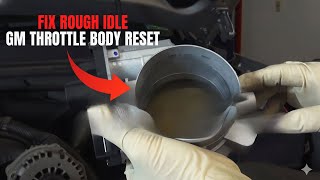
- After cleaning or replacement, perform an Idle Relearn procedure. A common method without a scan tool is to start the engine and let it idle in Park for 3 minutes, turn it off for 60 seconds, then restart and idle for another 3 minutes. Other variations exist, so following a specific guide is recommended. 🎬 Watch: How to manually reset and relearn your GM throttle body.
- If the code returns after cleaning, use a scan tool to monitor the commanded vs. actual throttle position in real-time. A lag or incorrect reading points to a failing throttle body.
- If the throttle body is determined to be faulty, replace the entire assembly.
- After replacement, perform the mandatory Idle Learn Reset procedure to calibrate the new part. A scan tool is the most reliable method, but manual procedures can also work.
Parts You'll Likely Need
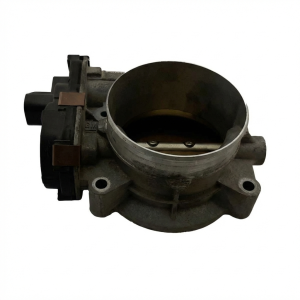
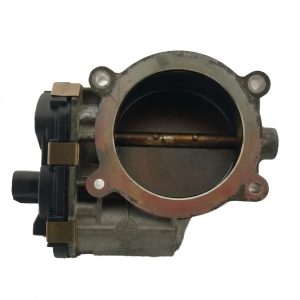
- Throttle Body Assembly
(OEM #ACDelco 217-3151 (for 6.0L V8), ACDelco 217-3150 (for 4.8L/5.3L V8). Note: Always verify with VIN.)— This is the most common repair if cleaning fails. The internal sensors and motor are integrated into the assembly and typically cannot be replaced separately on this vehicle.
Trusted brands: ACDelco (GM Genuine), Bosch, Hitachi, Dorman
OEM price range: $250-$400
Aftermarket price range: $150-$250 - Throttle Body Cleaner — This is the first and least expensive step. Heavy carbon buildup is a very common cause of this code on high-mileage Express vans.
Trusted brands: CRC, Permatex, Berryman
OEM price range: $10-$20
Aftermarket price range: $10-$20
Related Codes That Often Appear With This One
- P1516 — This GM-specific code often appears with P2119, indicating a mismatch between the throttle actuator command and the actual position, often called 'Throttle Actuator Control (TAC) Module Performance'.
- P2101 — Similar to P1516, this code points to a range/performance issue with the throttle actuator control motor circuit.
- P0121 — This code indicates a performance problem with the Throttle Position Sensor 'A' circuit, which can be triggered by the same carbon buildup or electronic failure that causes P2119.
- P2176 — This code means the PCM has not learned the throttle body's minimum idle position. It often appears after a throttle body has been cleaned or replaced without performing the idle relearn procedure.
- P2135 — Indicates a correlation error between the two throttle position sensors (TPS 1 and TPS 2). This can be caused by a failing sensor within the throttle body assembly.
Technical Service Bulletins (TSBs) & Recalls
- PIP4578B: Mentions idle surge, reduced engine power, and DTCs including P2119 on high mileage vehicles due to carbon buildup in the throttle body. It explicitly lists the Chevrolet Express and GMC Savana from 2006-2017.
Platform-Specific Known Issues
- GM issued Technical Service Bulletin (TSB) #PIP4578B, which directly addresses P2119 along with other codes on high-mileage vehicles with V8 engines. It states that as carbon builds up, the PCM learns to open the throttle plate more at idle to compensate. If the throttle body is then cleaned or replaced without performing an 'idle learn reset' with a scan tool or manual procedure, the PCM will continue to use the old learned values, causing an incorrect throttle angle, high idle, and new codes like P0506 or P0507.
- A YouTube video by 'The Car Doctor' shows a mechanic diagnosing a 2014 GMC Savana with P1516 and other related codes, confirming the cause was a 'carbon fest' in the throttle body, which was resolved by cleaning and performing an idle learn reset with a scan tool.
- For some other GM models, a special coverage adjustment (14582) was issued extending the throttle body warranty, but this may not apply to the Express van and was for different codes like P2135.
Mechanic-Grade Diagnostic Values
- Throttle Position Sensor (TPS) Live Data — expected: A smooth sweep from ~0% to 100% as the accelerator is pressed, with commanded and actual positions matching closely.. Failure: Gaps, jumps, or a significant mismatch between commanded and actual throttle position indicates a fault. One documented failure showed a 23% indicated angle vs. a 13% desired angle at idle.
- 5V Reference Voltage at Throttle Body Connector — expected: Approximately 5.0 volts.. Failure: Significantly lower or no voltage points to an issue with the ECM or the wiring between the ECM and the throttle body.
- Voltage Supply to Actuator — expected: Stable voltage between 11.5V and 13.5V with the engine running.. Failure: Persistent low voltage (<11.5V) suggests a problem with the battery, alternator, or the power supply circuit, which can cause false codes.
- Throttle Body Connector Ground Voltage Drop — expected: Less than 100mV (0.1V).. Failure: A reading higher than 100mV indicates a poor or corroded ground connection, which can cause erratic sensor readings and codes.
- Throttle Body Harness Wire Continuity — expected: Less than or equal to 0.5 Ω.. Failure: Higher resistance indicates a damaged wire or corrosion in the circuit, disrupting signals between the ECM and throttle body.
Scan Tool Commands That Help
- GM Tech2 / GDS2 or equivalent professional scanner: TAC System Test (Throttle Actuator Control) — Use this bidirectional control to command the throttle plate to open and close while observing its movement. This helps determine if the failure is mechanical (sticking plate) or electrical (bad motor/sensor) without disassembly.
- GM Tech2 / GDS2 or equivalent professional scanner: Idle Learn Reset / Throttle/Idle Learn — This function is mandatory after cleaning or replacing the throttle body. It erases the old learned idle airflow values from the ECM's memory. Failing to perform this reset is a common cause for a high idle or code P2176 to appear after the repair.
Wiring & Ground Locations
- Throttle Body Connector (C1) — The 6-pin electrical connector on the throttle body assembly.. This is the single point of failure for all signals and power to the throttle body. Key pins for testing are Pin E (Gray, 5V Reference), Pin D (Dark Green, TP1 Signal), and Pin F (Purple, TP2 Signal). Corrosion or loose pins here are a direct cause of failure.
- G102 / G103 — On V8 models (except 6.6L), G102 is on the left rear of the engine and G103 is on the right rear of the engine. These are primary engine-to-chassis grounds.. The ECM and its sensors rely on a clean ground path. High resistance at these main ground points due to corrosion can cause erratic voltage, leading the ECM to misinterpret sensor data and set false throttle body codes.
- G104 — Located on the lower right front of the engine.. Another critical engine ground point. Verifying all major engine grounds are clean and tight is a key diagnostic step before replacing expensive electronic parts.
Real Owner Repair Stories
- YouTube user in video '2008 Chevy Express Van - EP7: Throttle Body & Electrical Failures' (2008 Chevrolet Express Van) — Van was dying, running in 'Reduced Engine Power' mode, and throwing throttle body codes.
❌ Tried (didn't work) Initial diagnosis pointed to a failed throttle body.
✅ What actually fixed it The actual cause was extensive corrosion on various electrical grounds and connectors. Cleaning the grounds and connectors resolved all symptoms and codes without replacing the throttle body.
When the Usual Fixes Don't Work
- While replacing the throttle body assembly is the most common fix when cleaning fails, there are documented cases where the root cause was not the part itself but rather the electrical foundation it relies on. In one instance involving a 2008 Express, extensive corrosion on main engine grounds caused intermittent throttle body codes and 'Reduced Engine Power' mode. A thorough cleaning of the ground connections resolved the problem completely, avoiding the cost of a new throttle body. This highlights the importance of testing the ground circuit via a voltage drop test before condemning the component.
OEM Part Supersession History
GM 12601387→GM 12629992 (ACDelco 217-3151)— Standard part revision and improvement by the manufacturer.
Heads up: This part is for the 6.0L V8. Always verify fitment with the vehicle's VIN.Unknown→GM 12615503 (ACDelco 217-3150)— Standard part for this application.
Heads up: This part is for the 4.8L and 5.3L V8 engines. Always verify fitment with the vehicle's VIN.
Model Year Variations Within This Range
- 2006-2010: Different throttle body part numbers are used for the 4.8L/5.3L V8 engines (ACDelco 217-3150) versus the 6.0L V8 engine (ACDelco 217-3151).
- 2006: The 2006 Express is based on the older GMT800 platform architecture. While the generation didn't officially change until later, some electronic components and designs may differ from the 2007-2010 models, which align more closely with the newer GMT900 truck platform electronics. Extra care should be taken to verify part numbers for 2006 models.
Helpful Videos


Used OEM Parts in Stock
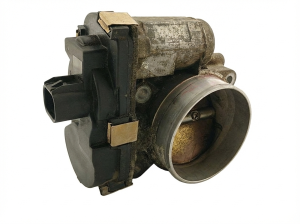
New Aftermarket Parts Available


The information in this article is provided for general reference and educational purposes only. Vehicle specifications, procedures, and part compatibility can vary by production date, trim level, and region. Always consult your vehicle's factory service manual and verify part numbers before purchasing or performing repairs. Safety-critical components such as airbags, seat belts, and braking systems should be installed by a qualified professional.
- Chevrolet EXPRESS:
- 🧭 Diagnostic Flowchart
- 🎬 Helpful Videos
- 🛍️ Shop This Part
- What's Unique About the 2006-2010 Chevrolet EXPRESS
- Symptoms You May Notice
- Most Likely Causes
- Rare But Worth Checking
- Diagnosis Steps
- Parts You'll Likely Need
- Related Codes That Often Appear With This One
- Technical Service Bulletins (TSBs) & Recalls
- Platform-Specific Known Issues
- Mechanic-Grade Diagnostic Values
- Scan Tool Commands That Help
- Wiring & Ground Locations
- Real Owner Repair Stories
- When the Usual Fixes Don't Work
- OEM Part Supersession History
- Model Year Variations Within This Range
- 🎟️ Get 5% Off