

P2119 on 2011-2015 Chevrolet Express: Throttle Body Performance Causes and Fixes
On a 2011-2015 Chevrolet Express, code P2119 almost always points to a dirty or failing electronic throttle body. Cleaning the throttle body bore and plate is the first step; if that fails, replacement is the likely fix. A throttle relearn procedure is required after cleaning or replacement.
- P2119 on a Chevy Express almost always relates to the electronic throttle body.
- The first and most cost-effective step is to thoroughly clean the throttle body and perform an idle relearn procedure.
- If cleaning doesn't work, the entire throttle body assembly needs to be replaced.
- A throttle relearn procedure is NOT optional; it must be done after cleaning or replacing the part to ensure proper idle and performance.
- The vehicle will enter a 'Reduced Engine Power' mode, making it unsafe for normal driving until repaired.
What's Unique About the 2011-2015 Chevrolet EXPRESS
On high-mileage GM trucks and vans like the Chevrolet Express and its platform mates (Silverado, Savana, Tahoe), this issue is extremely common and is specifically addressed in Technical Service Bulletin (TSB) #PIP4578B. The problem often stems from carbon and grime buildup from the PCV system, which physically restricts the throttle plate's movement. As carbon builds, the PCM learns to open the throttle slightly more to maintain idle speed; after cleaning, this learned compensation is too aggressive, making a throttle relearn procedure mandatory to avoid new idle-related codes.
Diagnostic Flowchart
Tap your situation to follow the diagnostic path that matches what you're seeing on this vehicle.
Symptoms You May Notice
- "Reduced Engine Power" message on the dashboard
- Vehicle enters "limp mode" with very limited power
- "Engine Disabled" message may appear
- Sluggish or delayed acceleration
- Rough, surging, or unstable idle
- Engine may stall, especially at idle
- Check Engine Light is on
- Symptoms may appear or worsen after hitting bumps, indicating a loose connection
- Replacing the Accelerator Pedal Position (APP) sensor. While the APP sensor is part of the electronic throttle system, it will typically set its own specific codes (like P1121 or P2138) if it fails. P2119 points specifically to a performance issue at the throttle body itself.
Most Likely Causes
- Dirty Throttle Body 🔴 High Probability → Shop Fuel Injection Throttle Body As noted in TSB #PIP4578B, high-mileage GM vehicles are susceptible to carbon and oil vapor buildup from the PCV system, which coats the throttle bore and plate, causing the plate to stick.
How to confirm: Remove the air intake hose from the throttle body and visually inspect the throttle plate and bore for a thick, black layer of carbon. The plate may feel sticky when moved by hand.
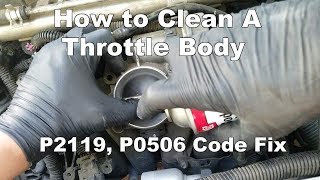
Typical fix: Thoroughly clean the throttle body bore and both sides of the throttle plate 🎬 Watch: How to clean your throttle body to fix P2119. with a dedicated throttle body cleaner and a soft cloth. Do not use aggressive carburetor cleaner. A throttle relearn procedure must be performed afterward.
Est. part cost: $5-$15 for cleaner - Failing Throttle Body Assembly or Sensor 🟡 Medium Probability → Shop Fuel Injection Throttle Body The internal components fail with time and heat cycles. This can be the electric motor, the internal plastic gears (often due to hardened grease), or the integrated Throttle Position Sensor (TPS).
How to confirm: If the code returns immediately after a thorough cleaning and relearn, the assembly is the likely culprit. A scan tool can monitor commanded vs. actual throttle position to confirm erratic behavior. In some cases, only the TPS fails, which can be diagnosed with a multimeter.
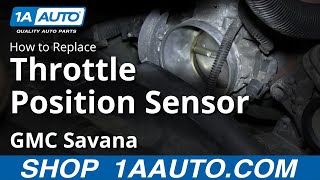
Typical fix: Replace the entire throttle body assembly. In some instances, the TPS can be purchased and replaced separately, which is a less expensive repair. A relearn 🎬 See this walkthrough on replacing the throttle position sensor. procedure is mandatory after replacement.
Est. part cost: $50-$120 for TPS sensor only; $150-$590 for full assembly - Wiring or Connector Issues ⚪ Low Probability Engine vibrations and heat can cause wires to fray or connectors to become loose. A specific, known failure point on some GM trucks is a broken ground wire located on the passenger side of the intake manifold, which can cause these exact symptoms.
How to confirm: Visually inspect the wiring harness leading to the throttle body for any signs of damage. Wiggle the harness while the engine is running to see if it triggers the fault. Specifically check the small black ground wire on the passenger side of the engine. Also check for loose or corroded pins in the connector.
Typical fix: Repair the damaged section of wiring or clean/replace the connector pigtail. If the ground wire is broken, secure it to a clean chassis or engine ground point.
Est. part cost: $10-$50
Rare But Worth Checking
- Powertrain Control Module (PCM) Fault: This is extremely rare. Before condemning the PCM, all other possibilities, especially the throttle body itself and its wiring/grounds, must be exhaustively ruled out. A faulty PCM will usually set other, unrelated codes as well.
Diagnosis Steps
- Scan for any and all stored trouble codes. Note any other codes that appear with P2119, especially P2135, as they can help pinpoint the issue.
- Visually inspect the wiring harness and electrical connector at the throttle body for damage, corrosion, or loose connections. Pay special attention to the ground wire on the passenger side of the intake manifold.
- Remove the air intake duct from the throttle body.
- Inspect the throttle bore and plate for heavy carbon buildup. If dirty, proceed with cleaning.
- Using a dedicated throttle body cleaner and a soft cloth (do not use harsh tools or carb cleaner), clean the plate and bore thoroughly. Manually open the plate to clean the edges.
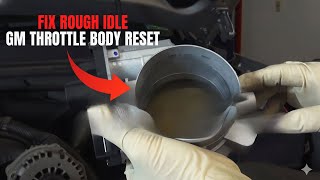
- Once clean and reassembled, perform a GM throttle body relearn procedure. This is critical. 🎬 Watch: How to manually relearn your GM electronic throttle body.
- Relearn Procedure (No Scan Tool): 1. Start and idle the engine in PARK for 3 minutes. The idle may be high or rough. 2. Turn the ignition OFF for 60 seconds. 3. Start and idle the engine in PARK again for 3 minutes. The idle should now be stable. 4. If idle is still not correct, a drive cycle (driving over 40 mph with decelerations and stops) may be needed.
- Relearn Procedure (With Scan Tool): Use the 'Idle Learn Reset' or 'TAC System' function in the 'Special Functions' or 'Module Set Up' menu of a compatible scan tool like a Tech 2.
- Clear the codes and test drive the vehicle. If the code and symptoms return, the throttle body assembly or its position sensor is likely faulty and requires replacement.
Parts You'll Likely Need
- Electronic Throttle Body Assembly
(OEM #12689826 (supersedes 12601387) - MUST verify by VIN and engine size)— This is the most common fix when cleaning does not resolve the code. The internal motor or sensor fails, and the entire unit must be replaced. The original part number may have been superseded.
Trusted brands: ACDelco, GM Genuine Parts, Bosch, Dorman
OEM price range: $250-$450
Aftermarket price range: $150-$300 - Throttle Position Sensor (TPS)
(OEM #Varies - MUST verify by VIN)— In some cases, only the sensor on the side of the throttle body fails. Replacing just the sensor is a more affordable repair if available for your specific throttle body. Often triggers code P2135 alongside P2119.
Trusted brands: ACDelco, Dorman
OEM price range: $70-$120
Aftermarket price range: $40-$80
Related Codes That Often Appear With This One
- P0068 — MAP/MAF - Throttle Position Correlation. The PCM sees a conflict between airflow sensor data and what the throttle position is reporting. This is listed in TSB #PIP4578B.
- P0121 — Throttle/Pedal Position Sensor 'A' Circuit Range/Performance. This code is closely related and points to an issue with the throttle position sensor's reported values. Also listed in TSB #PIP4578B.
- P1516 — Throttle Actuator Control (TAC) Module Throttle Actuator Position Performance. A GM-specific code indicating the PCM's command doesn't match the throttle's actual movement. Also listed in TSB #PIP4578B.
- P2101 — Control Module Throttle Actuator Control Motor Circuit Range/Performance. This points more specifically to the electric motor within the throttle body. Also listed in TSB #PIP4578B.
- P2135 — Throttle/Pedal Position Sensor/Switch 'A'/'B' Voltage Correlation. This code often appears with P2119 and points to a disagreement between the two internal TPS sensors, a very common failure.
- P2176 — Throttle Actuator Control System - Idle Position Not Learned. This code often appears after a battery disconnect or throttle body cleaning/replacement if a relearn procedure was not performed. Also listed in TSB #PIP4578B.
Technical Service Bulletins (TSBs) & Recalls
- PIP4578B: Mentions idle surge, reduced engine power mode, and DTCs P0068, P0121, P1516, P2101, P2119, and/or P2176 on high mileage vehicles. Stresses the importance of performing an 'idle learn reset' after cleaning the throttle body.
Platform-Specific Known Issues
- As documented in TSB #PIP4578B, this code is often triggered on high-mileage vehicles due to carbon buildup, leading to an idle surge or reduced power mode.
- This is a well-known issue across the entire GM truck and SUV lineup of this era (Silverado, Sierra, Tahoe, Yukon) that use the same V8 engines and electronic throttle control system.
Mechanic-Grade Diagnostic Values
- Throttle Actuator Control (TAC) Motor Resistance — expected: ~4.4 Ω. Failure: A significantly higher or lower reading, or an open circuit (infinite resistance).
- Throttle Position Sensor (TPS) Voltage — expected: Smoothly sweeps from ~0.5V (or as low as 0.35V) at closed throttle to ~4.5V at wide-open throttle.. Failure: Voltage that jumps, drops out, or has dead spots as the throttle plate is moved manually.
- Throttle Body Wiring Harness Continuity — expected: ≤ 0.5 Ω. Failure: Higher resistance indicates corrosion or a partially broken wire, which can cause intermittent faults.
Scan Tool Commands That Help
- GM GDS2 / Tech 2 / Professional Snap-on, Autel, etc.: Idle Learn Reset — This function, often found under 'Module Setup' or 'Special Functions', must be used after cleaning or replacing the throttle body to reset the learned idle airflow values in the PCM. Failure to do so can cause idle issues and set new codes like P2176 or P0507.
- GM GDS2 / Professional Scan Tool: Throttle Actuator Control (TAC) Test — This bidirectional test allows the technician to command the throttle plate to specific angles (e.g., 10%, 25%, 50%). It is used to verify if the throttle motor is responding correctly and if the TPS sensors are reporting the position accurately without glitches.
Wiring & Ground Locations
- G103 — At the rear of the left-hand (driver's side) engine cylinder head. Other similar GM trucks may have it on the front of the passenger-side cylinder head, so location may vary slightly by year and engine.. A poor connection at this critical engine ground can cause a host of electrical issues, including erratic sensor readings for the throttle control system, leading to P2119 and other related codes. This is mentioned as a key checkpoint in a GM service bulletin for other electrical faults.
- Throttle Body Connector Pigtail — The 8-pin electrical connector at the electronic throttle body.. Breaks in the wires often occur within 1 to 4 inches of the connector due to engine vibration and heat. These breaks can be internal to the insulation and not visually apparent, requiring a 'wiggle test' of each wire while monitoring scan tool data to identify.
Real Owner Repair Stories
- YouTube channel 'ScannerDanner' (2011 GMC Savana with 5.3L V8) — Check Engine Light on with 'Reduced Power' message. Codes P2119 and P2135 stored.
❌ Tried (didn't work) The video focuses on diagnosis rather than failed parts replacement.
✅ What actually fixed it Diagnosis with a scan tool showed TPS1 and TPS2 voltages did not agree. The fix was to replace only the throttle position sensor (TPS) located on the side of the throttle body, not the entire assembly. This resolved the codes.
OEM Part Supersession History
12601387→12689826— Standard part revision for improved reliability or material changes.
Heads up: Part number 12670839 is often incorrectly listed for this vehicle online but is for 2.5L 4-cylinder engines. Using the wrong throttle body can cause compatibility issues. Always verify the correct part number for the V8 engine using the vehicle's VIN.
Model Year Variations Within This Range
- 2011-2015: Unlike some earlier GM models which used a separate Throttle Actuator Control (TAC) module, the 2011-2015 Express integrates TAC functions directly into the main Engine Control Module (ECM). This means there is no separate TAC module to diagnose or replace, simplifying the circuit.
Helpful Videos
Used OEM Parts in Stock
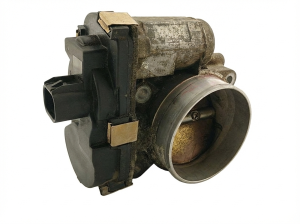
New Aftermarket Parts Available

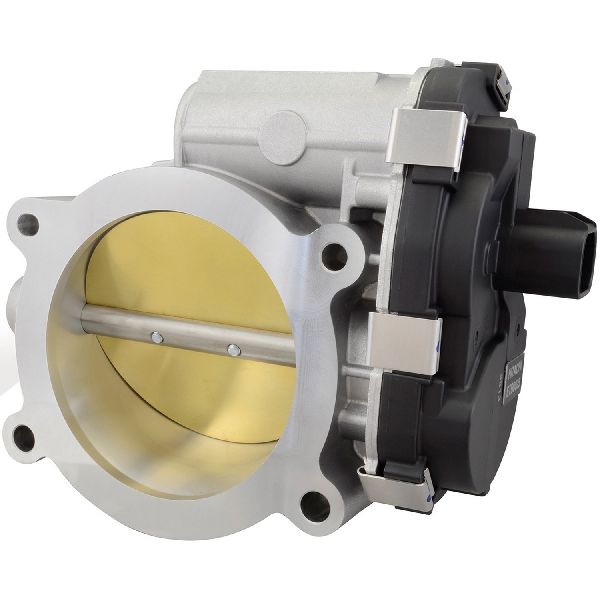
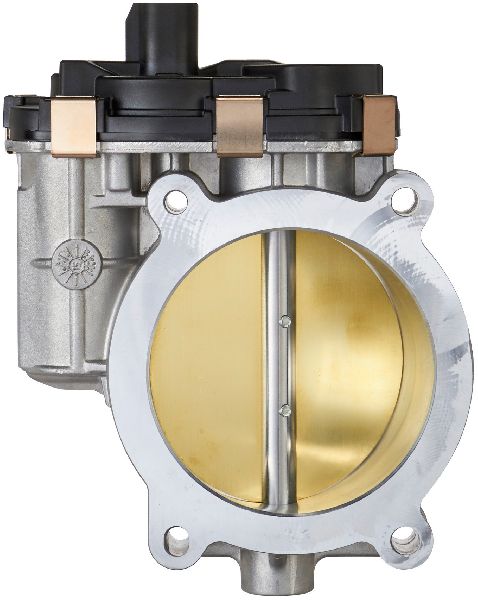

The information in this article is provided for general reference and educational purposes only. Vehicle specifications, procedures, and part compatibility can vary by production date, trim level, and region. Always consult your vehicle's factory service manual and verify part numbers before purchasing or performing repairs. Safety-critical components such as airbags, seat belts, and braking systems should be installed by a qualified professional.
- Chevrolet EXPRESS:
- 🧭 Diagnostic Flowchart
- 🎬 Helpful Videos
- 🛍️ Shop This Part
- What's Unique About the 2011-2015 Chevrolet EXPRESS
- Symptoms You May Notice
- Most Likely Causes
- Rare But Worth Checking
- Diagnosis Steps
- Parts You'll Likely Need
- Related Codes That Often Appear With This One
- Technical Service Bulletins (TSBs) & Recalls
- Platform-Specific Known Issues
- Mechanic-Grade Diagnostic Values
- Scan Tool Commands That Help
- Wiring & Ground Locations
- Real Owner Repair Stories
- OEM Part Supersession History
- Model Year Variations Within This Range
- 🎟️ Get 5% Off