

P2119 on 2004-2011 GMC Canyon: Throttle Body Causes and Fixes
P2119 on a GMC Canyon almost always points to a dirty or failing throttle body. Cleaning the throttle body is a common, low-cost first step that often resolves the issue. If that fails, a replacement throttle body assembly is the next likely solution. This is a very common issue for this platform and its relatives, the Chevrolet Colorado and Hummer H3.
- P2119 on a 2004-2011 GMC Canyon is a serious code that will trigger 'Reduced Engine Power' mode.
- The most common and cheapest first step is to thoroughly clean the throttle body.
- After cleaning or replacing the throttle body, a 'throttle relearn' procedure may be necessary.
- These trucks are known to have this issue, especially with high mileage or in very cold weather, as documented by GM TSBs.
- If cleaning doesn't work, replacing the entire throttle body assembly is the next logical step.
What's Unique About the 2004-2011 Gmc CANYON
The first-generation GMC Canyon and its platform mates (Chevrolet Colorado, Hummer H3) are known for throttle body issues, particularly on high-mileage vehicles. As confirmed by GM Technical Service Bulletins, carbon buildup from the PCV system can cause the throttle plate to stick, leading to a cluster of throttle-related codes including P2119. This is especially prevalent in very cold weather, where moisture and oil blow-by can freeze or thicken, further impeding throttle movement. The issue was common enough that GM issued several TSBs addressing these symptoms and even extended warranty coverage on some V8 models.
Diagnostic Flowchart
Tap your situation to follow the diagnostic path that matches what you're seeing on this vehicle.
Symptoms You May Notice
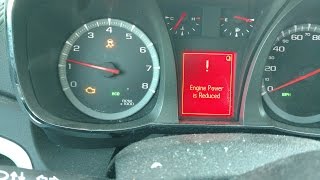
- "Reduced Engine Power" me 🎬 Watch: How cleaning the throttle body fixes reduced engine power mode.ssage on the dashboard
- Check Engine Light is on
- Unstable, rough, or surging idle
- Vehicle stalling, especially at idle
- Poor or delayed throttle response
- Sluggish acceleration
- Inability to restart the engine after stalling
- Replacing the accelerator pedal position sensor (APPS). While the APPS is part of the electronic throttle system, it will typically set its own specific codes (like P1121). P2119 is more directly related to the throttle body itself.
Most Likely Causes
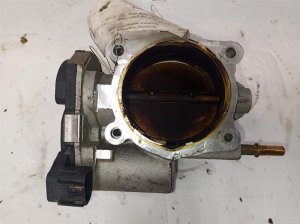
- Dirty Throttle Body 🔴 High Probability → Shop Fuel Injection Throttle Body As vehicles accumulate miles, carbon and oil deposits from the PCV (Positive Crankcase Ventilation) system build up inside the throttle body. This gunk can cause the throttle plate to stick, preventing it from opening and closing smoothly. TSB PIP4578B specifically mentions this issue on high-mileage vehicles, noting that the computer learns to compensate for the buildup, and cleaning it without a relearn can cause new issues.
How to confirm: Remove the air intake tube from the throttle body and visually inspect the throttle plate and bore for a thick, black layer of carbon buildup. The plate may feel sticky or slow to move when pushed by hand (with the engine off). This is a very common first check shown in many DIY videos.
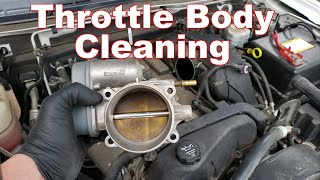
Typical fix: Remove the throttle body from the intake manifold (typically four 10mm bolts) and clean it thoroughly 🎬 Watch: A step-by-step guide to cleaning your Canyon's throttle body. with a dedicated throttle body cleaner and a soft brush or rag. Pay special attention to the area where the throttle plate seats. After cleaning, a throttle relearn procedure may be necessary.
Est. part cost: $5-$15 for cleaner - Failing Throttle Body Assembly 🟡 Medium Probability → Shop Fuel Injection Throttle Body The electronic throttle body is a complex component containing a motor and position sensors. Over time, the internal electronics or motor can fail, especially after many cycles of heat and vibration. Aftermarket manufacturers like Dorman have even designed upgraded units with better seals to prevent the common failure from moisture and oil intrusion.
How to confirm: If a thorough cleaning does not resolve the code, and the wiring is confirmed to be good, the throttle body assembly itself is the likely culprit. A scan tool can monitor commanded vs. actual throttle position; a discrepancy points to a faulty unit.
Typical fix: Replace the entire throttle body assembly. It is typically sold as a single unit including the actuator motor and position sensors. After replacement, a throttle relearn procedure is required.
Est. part cost: $150-$350 - Wiring or Connector Issue ⚪ Low Probability Engine vibration and exposure to the elements can cause wiring to fray or the connector at the throttle body to become loose or corroded. The main harness connector is a frequent point of inspection.
How to confirm: Visually inspect the wiring harness leading to the throttle body for any signs of damage, chafing, or melting. Unplug the connector and check for corrosion, moisture, or bent pins. A multimeter can be used to check for proper voltage, ground, and signal continuity at the connector.
Typical fix: Repair the damaged section of the harness or clean/replace the connector pigtail. The cost is typically for the pigtail part and a small amount of labor.
Est. part cost: $10-$50
Rare But Worth Checking
- Extreme Cold Weather Operation: TSB PIP4573B notes that at temperatures around -10°F (-23°C), these trucks can set P2119 and other throttle codes. This may be due to moisture freezing within the PCV system, causing excessive crankcase pressure and/or the throttle plate to stick. The TSB recommends inspecting the PCV vacuum pipe for ice, changing the oil to remove moisture, and even testing the battery as a weak battery can affect cold throttle operation.
- Weak Battery: As mentioned in TSB PIP4573B, a weak or marginal battery may not provide sufficient power for proper throttle plate operation in very cold conditions, contributing to this code.
Diagnosis Steps
- Read the code(s) with an OBD-II scanner. Note any other codes present, especially P1516, P2101, or P2176.
- Inspect the air intake hose between the air filter box and the throttle body for cracks or loose connections.
- Disconnect the intake hose from the throttle body. Visually inspect the throttle bore and plate for heavy carbon buildup.
- With the ignition off, carefully open and close the throttle plate by hand to feel for any sticking or binding.
- If dirty, remove the throttle body (typically four 10mm bolts) and clean it thoroughly using throttle body cleaner and a soft cloth/brush. Do not spray cleaner directly on the electronic components.
- Reinstall the throttle body and clear the codes. Perform a throttle relearn procedure. For many GM vehicles, this can be done without a scan tool by idling the engine for 3 minutes, turning it off for 60 seconds, and then idling again for 3 minutes. Other methods involve specific pedal presses or simply driving the vehicle. A scan tool offers the most reliable method.
- If the code returns after cleaning, inspect the wiring and connector at the throttle body for damage, corrosion, or loose pins.
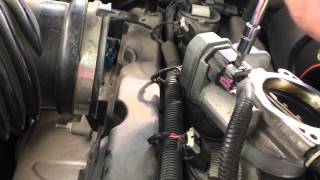
- If the wiring is good and cleaning did not fix the issue, the throttle body assembly likely needs to be replaced. 🎬 See this walkthrough on how to replace the throttle body assembly. Ensure you purchase the correct part number for your engine.
- In extreme cold, follow TSB PIP4573B to check for a frozen PCV system by inspecting the PCV pipe for ice or sludge.
Parts You'll Likely Need
- Throttle Body Assembly
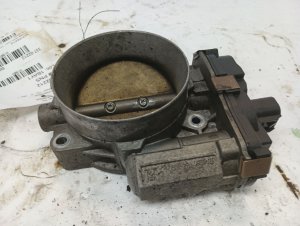
(OEM #12568580, 12670981, 217-3108 (ACDelco))— If cleaning the original unit doesn't solve the problem, the internal motor or sensors have likely failed, requiring a full replacement. The original part number 12568580 has been superseded by newer versions.
Trusted brands: ACDelco (GM OE), Bosch, Dorman, Standard Motor Products
OEM price range: $250-$350
Aftermarket price range: $150-$250 - Throttle Body Cleaner — This is the essential item for the most common and inexpensive first step in fixing a P2119 code caused by carbon buildup.
Trusted brands: CRC, Gumout, Permatex
Aftermarket price range: $5-$15
Related Codes That Often Appear With This One
- P0068 — MAP/MAF - Throttle Position Correlation. This code appears when the airflow sensor readings don't match what's expected for the given throttle angle, often due to a sticking throttle plate. It is listed alongside P2119 in TSB PIP4578B.
- P1516, P2101 — These are manufacturer-specific and SAE codes for Throttle Actuator Control (TAC) Performance. They are frequently seen with P2119 as they all point to a malfunction within the electronic throttle control system, as noted in TSBs PIP4578B and PIP4573B.
- P2176 — Throttle Actuator Control System - Idle Position Not Learned. This often appears after a battery disconnect or after cleaning/replacing the throttle body before the computer has had a chance to relearn the new idle position. It is also cited in TSBs PIP4578B and PIP4573B.
Technical Service Bulletins (TSBs) & Recalls
- PIP4578B: Mentions P2119 in a group of codes related to idle surge and reduced power on high-mileage vehicles due to carbon buildup.
- PIP4573B: Links P2119 to extreme cold weather operation, potential PCV system freezing, and engine stalling.
Platform-Specific Known Issues
- High Mileage Performance: TSB PIP4578B addresses an idle surge, reduced engine power, and DTCs including P2119 that may be experienced on high mileage vehicles due to throttle body carbon buildup. It emphasizes the need for an idle learn reset with a scan tool after cleaning.
- Extreme Cold Weather: TSB PIP4573B links DTC P2119 with ambient temperatures around -10°F (-23°C), where the engine may stall. This is often caused by a frozen PCV system leading to excessive crankcase pressure. The fix involves thawing and cleaning the PCV components and changing the oil.
- V8 Engine Special Coverage: While most Canyons have I4 or I5 engines, models equipped with the V8 engine were part of Special Coverage Adjustment 11273. This program extended the warranty for a faulty throttle position sensor to 10 years/120,000 miles, addressing rough running and reduced power messages. This same issue is noted on the V8-equipped Hummer H3.
Mechanic-Grade Diagnostic Values
- Throttle Position Sensor 1 (TPS1) Resistance (2004-2006 2.8L) — expected: 2K - 4K Ohms. Failure: 0 Ohms (short circuit) or OL/infinity (open circuit).
- Throttle Actuator Control (TAC) Motor Voltage Supply — expected: 11.5V - 13.5V with engine running. Failure: Persistent low voltage suggests a power supply issue to the throttle body.
- Sensor 5V Reference Wire (Shared) — expected: Approx. 5.0 Volts. Failure: Voltage significantly below 4.8V or above 5.2V points to a PCM or wiring issue affecting the sensor's power supply.
- Wiring Harness Continuity Check — expected: ≤ 0.5 Ω. Failure: Higher resistance indicates corrosion or a damaged wire in the circuit between the PCM and the throttle body.
Scan Tool Commands That Help
- Tech2 / GDS2 / Professional Scan Tool: Throttle Actuator Test (or 'Throttle Sweep') — To command the throttle plate to open and close while observing its movement and comparing 'Commanded Position' vs. 'Actual Position' data PIDs. A failure to move, or a lag between commanded and actual values, confirms a fault in the throttle body.
- Tech2 / GDS2 / Professional Scan Tool: Idle Relearn / Throttle Body Adaptation — This is a mandatory step after cleaning or replacing the throttle body. The PCM has learned to compensate for carbon buildup, and without a relearn, it will command an incorrect throttle angle, leading to a very high or unstable idle. This function is typically found under 'Service Functions' or 'ETC'.
Wiring & Ground Locations
- G102 / G103 — On the lower left side of the engine. A Reddit user also specified G103 is on the cowl, above the brake booster.. The PCM (engine computer) grounds through these points. A poor connection at G102 or G103 can cause erratic behavior and incorrect voltage readings for the entire engine management system, including the throttle control circuits.
- Throttle Body Connector — The 8-pin electrical connector on the throttle body assembly.. This is the single point of connection for the two throttle position sensors and the actuator motor. A diagnostic tutorial for the 2.8L engine identifies specific terminals for testing: TPS 1 uses terminals C and G, while the TAC motor uses terminals A and B. Corrosion or loose pins here will directly cause throttle-related codes.
- Underhood Fuse Block — On the left front side of the engine compartment.. The fuse for the ETC (Electronic Throttle Control) system, typically 15A, is located here. A blown fuse will result in a complete loss of throttle control. The PCM also receives ground through connections in this fuse block.
Real Owner Repair Stories
- Pine Hollow Auto Diagnostics (YouTube) (2008 GMC Canyon) — Vehicle went into limp mode with a check engine light. Codes P2101 (Throttle Actuator Position Performance) and P2135 (Throttle Position Sensor Correlation) were present.
❌ Tried (didn't work) A previous shop misdiagnosed the issue as a faulty ECM.
✅ What actually fixed it The mechanic used a scan tool to graph the two internal throttle position sensors and found one was dropping out. He also commanded a throttle sweep and could hear the actuator motor making noise but not moving correctly. The final fix was replacing the entire throttle body assembly.
When the Usual Fixes Don't Work
- A very common scenario reported by owners is that the P2119 code returns shortly after a thorough throttle body cleaning. While cleaning is the correct first step, its failure to resolve the issue does not mean the diagnosis was wrong. Instead, it often indicates the problem has progressed beyond simple carbon buildup. The failure is frequently within the sealed electronic portion of the throttle body—either the internal position sensors have failed or the actuator motor is weak. In these cases, no amount of cleaning will fix the electronic fault, and a complete replacement of the throttle body assembly is the correct and final repair.
OEM Part Supersession History
12568580→217-3108 (ACDelco), S20064— Standard part evolution and consolidation.
Heads up: This is the correct family of parts for the 2004-2012 I4 and I5 engines.N/A→12670981— This is a different part for newer or different GM engines (e.g., 2015+ Colorado, V6 models).
Heads up: INCOMPATIBILITY TRAP: While it may look similar, part number 12670981 is for different applications and explicitly requires programming and/or special setup procedures to work. The correct throttle body for the 2004-2011 Canyon generally does not require programming. Installing this part will not work without dealer-level tools.
Model Year Variations Within This Range
- 2004-2006: These years used the 2.8L I4 and 3.5L I5 engines. Specific diagnostic procedures, like resistance tests, have been documented for these early models.
- 2007-2012: In 2007, the engines were updated to the 2.9L I4 and 3.7L I5. While the throttle body is functionally identical, part numbers may differ slightly. Wiring diagrams from 2007 are specific to this updated engine family.
- 2009-2012: Models with the optional 5.3L V8 engine use a different, larger throttle body. These were subject to a specific Special Coverage Adjustment (11273) for the throttle position sensor, a separate issue from the more common carbon buildup on the I4/I5 engines.
Helpful Videos
Used OEM Parts in Stock
New Aftermarket Parts Available





The information in this article is provided for general reference and educational purposes only. Vehicle specifications, procedures, and part compatibility can vary by production date, trim level, and region. Always consult your vehicle's factory service manual and verify part numbers before purchasing or performing repairs. Safety-critical components such as airbags, seat belts, and braking systems should be installed by a qualified professional.
- Gmc CANYON:
- 🧭 Diagnostic Flowchart
- 🎬 Helpful Videos
- 🛍️ Shop This Part
- What's Unique About the 2004-2011 Gmc CANYON
- Symptoms You May Notice
- Most Likely Causes
- Rare But Worth Checking
- Diagnosis Steps
- Parts You'll Likely Need
- Related Codes That Often Appear With This One
- Technical Service Bulletins (TSBs) & Recalls
- Platform-Specific Known Issues
- Mechanic-Grade Diagnostic Values
- Scan Tool Commands That Help
- Wiring & Ground Locations
- Real Owner Repair Stories
- When the Usual Fixes Don't Work
- OEM Part Supersession History
- Model Year Variations Within This Range
- 🎟️ Get 5% Off