

P2119 on 2005-2009 GMC Envoy: Throttle Body Performance Causes and Fixes
On a 2005-2009 GMC Envoy, code P2119 is almost always caused by a dirty or failing electronic throttle body. Carbon and oil buildup physically restricts the throttle plate's movement. Cleaning the throttle body often resolves the issue. If cleaning doesn't work, or if the internal electronics have failed, replacement is the next step, costing between $150 and $300 for a quality part.
- P2119 on a GMC Envoy indicates a problem with the electronic throttle body's performance.
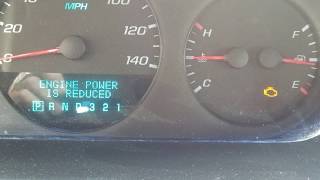
- The most common symptom is the vehicle entering 'Reduced Engine Power' mode.
- Start your diagnosis by thoroughly cleaning the throttle body, as carbon buildup is a very frequent cause.
- If cleaning doesn't fix the problem, the entire throttle body assembly likely needs to be replaced.
- This issue can be worse in very high-mileage vehicles or in extremely cold weather, as noted in official GM service bulletins.
What's Unique About the 2005-2009 Gmc ENVOY
The GMC Envoy, along with its GMT360 platform mates like the Chevrolet Trailblazer, is known for issues related to the electronic throttle body on its Atlas series inline engines. Carbon buildup from the PCV system is a very common problem that can cause the throttle plate to stick, a condition exacerbated in high-mileage vehicles. Furthermore, GM has issued Technical Service Bulletins (TSBs) that link this code to specific conditions like extremely cold weather, where ice can form in the throttle bore from a frozen PCV system, preventing the throttle plate from closing properly. These factors make the Envoy particularly susceptible to P2119 and related throttle performance codes.
Diagnostic Flowchart
Tap your situation to follow the diagnostic path that matches what you're seeing on this vehicle.
Symptoms You May Notice
- "Reduced Engine Power" message on the dashboard
- Check Engine Light is on
- Poor or delayed acceleration
- Unstable or rough idle, sometimes surging
- Engine stalling, especially at idle
- Vehicle will not accelerate past a certain speed (Limp Mode)
- In some cases, a no-start or no-crank condition can occur if the PCM cannot verify a safe throttle position.
- Unexpected automatic transmission shift points.
- Replacing the accelerator pedal position sensor (APPS). While the APPS is part of the throttle control system, it typically sets its own specific codes when it fails. P2119 points more directly to a range/performance issue at the throttle body itself.
Most Likely Causes
- Dirty Throttle Body 🔴 High Probability → Shop Fuel Injection Throttle Body Carbon and oil vapor from the PCV system can accumulate in the throttle body over time, causing the throttle plate to stick. This is a well-documented issue on these GM engines, especially at high mileage, as noted in TSB PIP4578B.
How to confirm: Remove the air intake hose from the throttle body and visually inspect the throttle plate and bore for a thick, black, tar-like carbon buildup. The plate may feel sticky or sluggish if you try to move it manually (with the engine off).
Typical fix: Thoroughly clean the throttle body bore and plate with a dedicated throttle body cleaner (not carburetor cleaner) and a soft cloth or brush. 🎬 Watch this step-by-step guide on cleaning your Envoy's throttle body. A throttle relearn procedure is highly recommended after cleaning to reset the ECM's learned values.
Est. part cost: $5-$15 - Failing Throttle Body Assembly 🟡 Medium Probability → Shop Fuel Injection Throttle Body The internal electronic components, including the integrated throttle position sensor (TPS) and the actuator motor, can wear out. The plastic gears inside the actuator can also strip or fail, causing excessive play or a completely stuck throttle plate.
How to confirm: If cleaning the throttle body does not resolve the code, the assembly itself is likely faulty. A scan tool can monitor the commanded vs. actual throttle position PIDs to confirm erratic behavior. A complete failure may result in a no-crank condition, as the PCM prevents startup for safety. 🎬 Watch how to diagnose a no-crank condition caused by these codes.
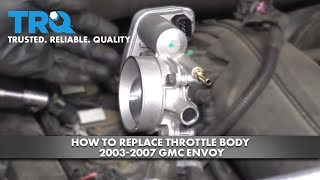
Typical fix: Replace the entire throttle body assembly. 🎬 See how to replace the throttle body assembly yourself. It's recommended to use a quality OEM part from ACDelco. A throttle relearn procedure is required after replacement.
Est. part cost: $150-$300 - Wiring or Connector Issues ⚪ Low Probability While less common, the wiring harness to the throttle body can become damaged from engine heat and vibration, or the connector pins can corrode, leading to a poor connection. Owners on forums sometimes find issues with the connector itself.
How to confirm: Visually inspect the wiring harness for any signs of fraying, melting, or damage. Unplug the connector and check for corrosion, moisture, or bent pins. A multimeter can be used to check for continuity and proper voltage at the connector based on the service manual.
Typical fix: Repair the damaged section of the wiring harness or clean/replace the electrical connector.
Est. part cost: $10-$50
Rare But Worth Checking
- Powertrain Control Module (PCM) Failure: This is very rare. Before suspecting the PCM, all other possibilities, especially the throttle body and wiring, should be thoroughly ruled out. A faulty PCM will usually present with multiple, unrelated error codes.
- Frozen PCV System / Icing: As detailed in TSB PIP4573B, in extremely cold temperatures (below -10°F / -23°C), moisture in the crankcase can freeze within the PCV system. This can lead to excessive crankcase pressure and also cause ice to form in the throttle body, physically preventing the plate from moving and triggering P2119.
Diagnosis Steps
- Check for other stored diagnostic trouble codes that could provide more context.
- Visually inspect the wiring harness and connector at the throttle body for damage, corrosion, or loose connections. Ensure the connector is fully seated.
- Remove the air intake duct and inspect the throttle body for heavy carbon buildup around the throttle plate and bore.
- If significant carbon is present, clean the throttle body thoroughly using a dedicated electronic throttle body cleaner and a soft rag. Do not use aggressive solvents like brake cleaner. Manually move the plate gently to clean the edges.
- After cleaning, reinstall the intake duct. Perform a throttle relearn procedure. A manual procedure exists for many GM vehicles, but a scan tool is the most reliable method.
- Manual Relearn Procedure: Turn ignition ON for 3 mins, OFF for 60 secs, then ON for another 3 mins. Clear any resulting codes. A drive cycle may be needed to finalize the learn.
- Clear the codes and test drive the vehicle to see if the code returns.
- If the code comes back, use a scan tool to monitor live data for Commanded Throttle Position vs. Actual Throttle Position. If they do not track together or the actual position is erratic, the throttle body assembly is the most likely culprit and should be replaced.
Parts You'll Likely Need
- Electronic Throttle Body Assembly
(OEM #ACDelco 217-2422 (for 4.2L I6); ACDelco 12572658 / 12679524 (for 5.3L V8))— This is the most common failure point for code P2119 after cleaning proves ineffective. The internal sensors or motor fail, requiring replacement of the whole unit.
Trusted brands: ACDelco, Bosch, Hitachi
OEM price range: $200-$300
Aftermarket price range: $150-$250 - Throttle Body Gasket
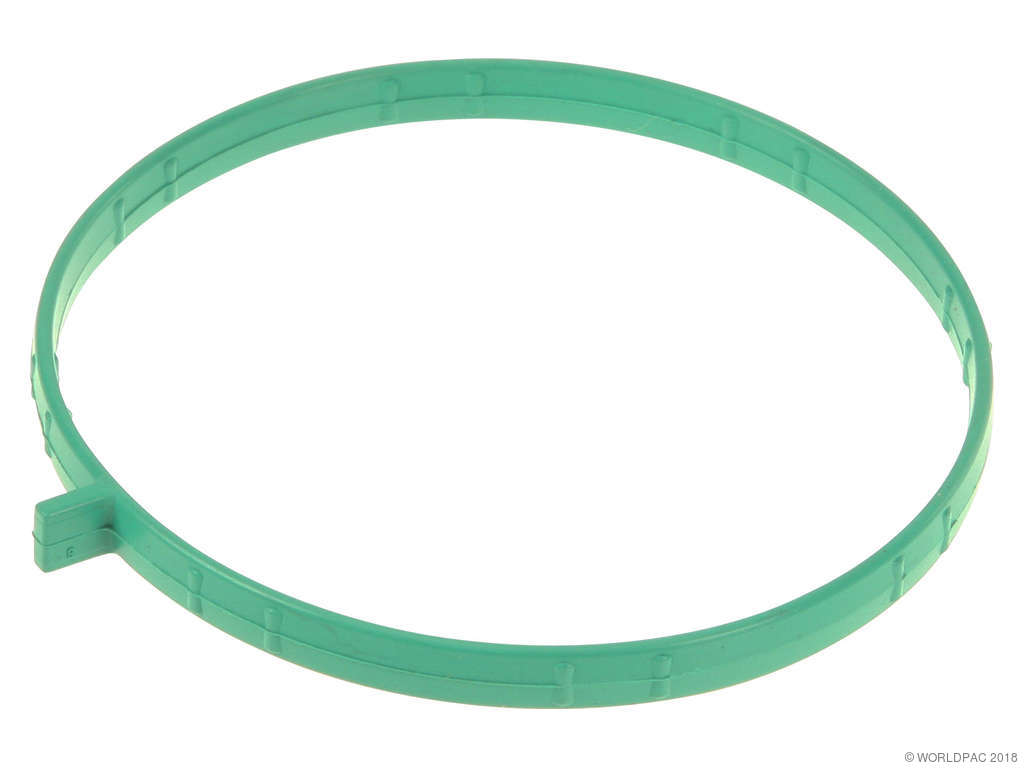
(OEM #ACDelco 217-1592 (for 4.2L I6); Fel-Pro 61469 (for 5.3L V8))— It is best practice to replace the gasket whenever the throttle body is removed for cleaning or replacement to prevent vacuum leaks.
Trusted brands: ACDelco, Fel-Pro, Mahle
OEM price range: $10-$20
Aftermarket price range: $5-$15
Related Codes That Often Appear With This One
- P1516 — This code relates to Throttle Actuator Control (TAC) Module Performance and is frequently seen with P2119, as noted in GM TSBs PIP4578B and PIP4573B.
- P2101 — This code means 'Throttle Actuator Position Performance' and indicates a discrepancy between the commanded and actual throttle position, directly related to P2119. It is often seen in combination when the throttle plate is physically stuck.
- P2176 — This code, 'Minimum Throttle Position Not Learned', often appears after a throttle body has been cleaned or replaced without performing the proper idle relearn procedure. It's also cited alongside P2119 in GM TSBs.
- P0068 — This code indicates a mismatch between the Mass Airflow (MAF) sensor, Manifold Absolute Pressure (MAP) sensor, and throttle position. A malfunctioning throttle body can cause this correlation error. TSB PIP4578B lists it as a related code.
- P0121 — This code for 'Throttle/Pedal Position Sensor 'A' Circuit Range/Performance' can be triggered by the same throttle body faults that cause P2119. TSB PIP4578B also mentions this code.
- P0506 — This code for 'Idle Air Control System RPM Lower Than Expected' can be caused by a carbon-caked throttle body that isn't allowing enough air to pass at idle, a common precursor or companion to P2119.
Technical Service Bulletins (TSBs) & Recalls
- PIP4578B: Mentions P2119 in relation to idle surge and reduced power on high-mileage vehicles. Recommends cleaning the throttle body and performing an idle learn reset.
- PIP4573B: Links P2119 to issues occurring in extremely cold temperatures due to a frozen PCV system causing ice in the throttle bore.
Platform-Specific Known Issues
- TSB #PIP4578B notes that P2119 can occur on high-mileage vehicles, leading to an idle surge or the vehicle entering reduced engine power mode due to carbon buildup. It explicitly states to clean the throttle body and perform an idle learn reset.
- TSB #PIP4573B highlights that this code can be set in extremely cold ambient temperatures (around -10°F / -23°C). The root cause is often a frozen PCV system causing moisture and ice to form in the throttle bore, preventing the plate from closing. The fix involves inspecting the PCV system for ice/sludge.
- Owner Experience: A user on GMTNation.com described a scenario where after cleaning the throttle body, the truck would not run correctly. The advice from other members was to check
Mechanic-Grade Diagnostic Values
- Throttle Position Sensor (TPS) Signal Voltage — expected: Should sweep smoothly from ~0.5V (idle/closed) to ~4.5V (wide-open throttle) as the plate is moved.. Failure: Voltage that is jumpy, flat, or has dead spots indicates a failing sensor.
- Throttle Actuator Control (TAC) Motor Resistance (4.2L I6) — expected: Between 2 and 13 Ohms when measured across terminals E and F on the throttle body.. Failure: A reading below 1 Ohm suggests an internal short circuit, requiring throttle body replacement.
- Throttle Body 5V Reference Voltage — expected: Approximately 5 volts should be present at the reference wire pin on the connector with the key on, engine off.. Failure: Significantly lower or no voltage indicates a wiring or PCM issue upstream of the throttle body.
- Voltage Supply to Actuator — expected: Should remain stable between 11.5V and 13.5V with the engine running.. Failure: Persistent low voltage (<11.5V) points to a problem with the battery, alternator, or power supply circuit, which can cause false P2119 codes.
Scan Tool Commands That Help
- GM Tech2 / GDS2: TAC System Test (Throttle Actuator Control) — This is a bidirectional control that allows a technician to command the throttle plate to open and close. It's used to verify if the motor is responding and to check for any physical binding or sticking of the throttle plate, separating a mechanical from an electrical failure.
- GM Tech2 / GDS2 or high-end aftermarket scanner: Throttle/Idle Learn — This function is mandatory after cleaning or replacing the throttle body. It resets the learned idle position in the ECM. Skipping this step will often result in a high idle, unstable idle, or the P2176 code appearing alongside P2119.
Wiring & Ground Locations
- G103 — Located at the left rear of the engine compartment on the cowl, above the brake booster.. This is a major ground point for the Body Control Module (BCM), Instrument Panel Cluster (IPC), and the Data Link Connector (DLC). A poor connection here can cause a wide range of communication and sensor issues, potentially leading to false codes.
- Throttle Body Connector (4.2L I6) — The 8-pin connector on the electronic throttle body assembly.. Knowing the pinout is critical for testing. For the TAC motor, test across pins E (Yellow) and F (Brown). For the two TPS sensors, power and ground are supplied via pins B, C, G, and H, with signals on A and D.
Real Owner Repair Stories
- ClubLexus Forum (Lexus RCF (different vehicle, but illustrates a common wiring failure mode)) — Sudden loss of throttle while merging into traffic, P2119 code set.
❌ Tried (didn't work) Initial diagnosis pointed towards throttle body failure.
✅ What actually fixed it The throttle body wiring harness connector was pulled too tight from the factory. This stress, combined with heat, caused two wires to back out of the connector pins internally, creating an intermittent open circuit. Reseating the pins and ensuring slack in the harness resolved the issue. - YouTube user Diablo Moreno (2004 GMC Envoy 4.2L) — Overheating in traffic, oil pressure gauge jumping up and down, 'Check Gages' light.
❌ Tried (didn't work) Replacing the fan clutch previously did not provide a permanent fix.
✅ What actually fixed it The problem was traced to a bad ground for the electronic fan clutch circuit. By providing a solid, direct ground to the fan clutch connector, the clutch began engaging correctly, and the associated electrical issues (like the fluctuating oil gauge) were resolved. This shows how a bad ground on a related component can affect vehicle electronics.
"I Checked Everything" — The Actual Cause
- A common scenario for P2119 is that cleaning the throttle body provides no fix or only a temporary one. In these cases, the root cause is often not the carbon buildup itself but a failure of the electronics integrated into the throttle body assembly. A real-world example involved a wiring harness connector that was under tension from the factory; the pins eventually worked loose, causing an intermittent connection that mimicked a faulty throttle body. The throttle body itself was mechanically and electrically sound, but the connection to it was not.
Model Year Variations Within This Range
- 2005-2009: The service procedure for the Throttle Position Sensor (TPS) depends entirely on the engine. On the common 4.2L I6 engine, the TPS is integrated into the electronic throttle body and is not sold or serviced separately; the entire assembly must be replaced. On the 5.3L V8 engine (found in Envoy Denali), the TPS is a separate, bolt-on sensor that can be replaced independently of the throttle body.
Helpful Videos
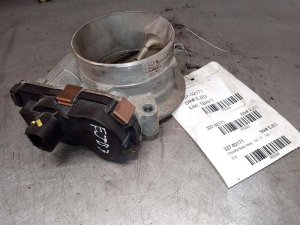
Used OEM Parts in Stock
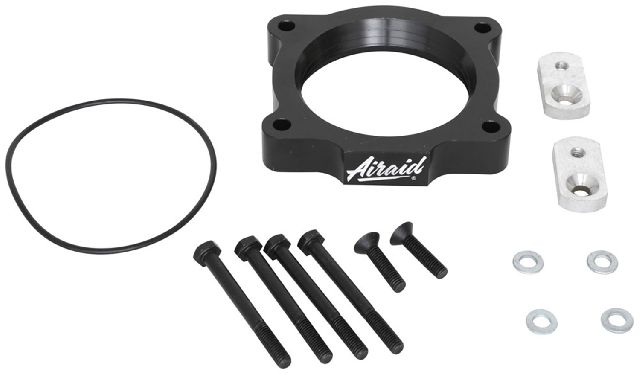
New Aftermarket Parts Available




The information in this article is provided for general reference and educational purposes only. Vehicle specifications, procedures, and part compatibility can vary by production date, trim level, and region. Always consult your vehicle's factory service manual and verify part numbers before purchasing or performing repairs. Safety-critical components such as airbags, seat belts, and braking systems should be installed by a qualified professional.
- Gmc ENVOY:
- 🧭 Diagnostic Flowchart
- 🎬 Helpful Videos
- 🛍️ Shop This Part
- What's Unique About the 2005-2009 Gmc ENVOY
- Symptoms You May Notice
- Most Likely Causes
- Rare But Worth Checking
- Diagnosis Steps
- Parts You'll Likely Need
- Related Codes That Often Appear With This One
- Technical Service Bulletins (TSBs) & Recalls
- Platform-Specific Known Issues
- Mechanic-Grade Diagnostic Values
- Scan Tool Commands That Help
- Wiring & Ground Locations
- Real Owner Repair Stories
- "I Checked Everything" — The Actual Cause
- Model Year Variations Within This Range
- 🎟️ Get 5% Off