

P2119 on 2007-2014 GMC Sierra 1500: Throttle Body Performance Fixes
Code P2119 on a 2007-2014 GMC Sierra 1500 almost always points to a dirty or failing electronic throttle body. The most common fix is to thoroughly clean the throttle body of carbon buildup; if that fails, replacement is necessary. This is a very common issue on high-mileage GM trucks of this era.
- P2119 on your Sierra almost always means there's an issue with the electronic throttle body.
- Before buying any parts, your first step should be to thoroughly clean the throttle body of carbon buildup.
- Driving with this code is risky as the truck can enter 'Reduced Engine Power' mode at any time, creating a safety hazard.
- If cleaning doesn't work, replacing the entire throttle body assembly is the most likely and reliable fix.
- After cleaning or replacing the throttle body, a 'throttle relearn' procedure is often necessary to restore proper idle and performance.
What's Unique About the 2007-2014 Gmc SIERRA 1500
On this generation of GMC trucks (GMT900 platform), the throttle body is highly susceptible to carbon buildup, a fact acknowledged by GM's own service bulletins. This is largely due to the Positive Crankcase Ventilation (PCV) system, which routes oil vapors and combustion byproducts back into the intake manifold. These vapors bake onto the hot surface of the throttle body and plate, creating a sticky layer of carbon that physically restricts movement. This restriction causes the throttle plate to stick or respond slowly, which directly leads to the P2119 code and a "Reduced Engine Power" message.
Diagnostic Flowchart
Tap your situation to follow the diagnostic path that matches what you're seeing on this vehicle.
Generation note: The 2007-2014 range covers two generations: the 3rd Gen (GMT900 platform, 2007-2013) and the first year of the 4th Gen (K2XX platform, 2014). While both use electronic throttle control, the specific part numbers for the throttle body may differ. However, the cause of the P2119 code—carbon buildup or electronic failure—is common to both generations, with the GMT900 platform being particularly well-documented for this issue.
Symptoms You May Notice
- "Reduced Engine Power" message on the dashboard
- Check Engine Light is on
- Vehicle will not accelerate properly or has severe hesitation
- Unstable, rough, or high idle
- Engine may stall at stops
- Delayed throttle response
- Hard shifting from the transmission as it struggles with incorrect engine load information
- Replacing the Accelerator Pedal Position (APP) sensor. While the APP sensor is part of the overall system, P2119 specifically points to a performance issue at the throttle body itself, not the pedal. An APP sensor fault will typically set its own specific codes.
Most Likely Causes
- Dirty Throttle Body 🔴 High Probability → Shop Fuel Injection Throttle Body As mentioned in TSB #PIP4578B, these trucks, especially at high mileage, are known for carbon accumulation in the throttle body from the PCV system, which restricts the throttle plate's movement. This is the most common cause by a wide margin.
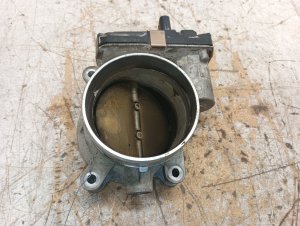
How to confirm: Remove the air intake hose connected to the throttle body and visually inspect the throttle plate and bore for a thick, black, sticky layer of carbon. The buildup is often heaviest on the back side of the plate and around the edges where it seats at idle.
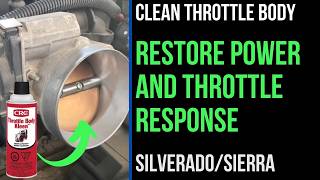
Typical fix: Thoroughly clean the throttle body with a dedicated throttle body cleaner and a soft brush or rag. It is critical to clean both sides of the throttle plate and the entire bore. A throttle relearn 🎬 Watch: A simple guide to cleaning your throttle body. procedure is highly recommended afterward.
Est. part cost: $5-$15 for cleaner and a gasket - Failing Throttle Body Assembly 🟡 Medium Probability → Shop Fuel Injection Throttle Body The internal electronic components, including the integrated throttle position sensor (TPS) and the actuator motor, can wear out over time, causing erratic signals or failure to move the throttle plate correctly. Sometimes cleaning provides only a temporary fix before the electronics fail completely.
How to confirm: If a thorough cleaning does not resolve the code, and wiring is confirmed to be good, the throttle body assembly itself is the likely culprit. A scan tool can monitor the commanded vs. actual throttle position to see discrepancies that point to a failing sensor or motor.
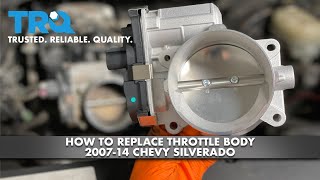
Typical fix: Replace the entire throttle body assembly. 🎬 See this walkthrough on how to replace the assembly. This is sold as a complete unit with the motor and sensor integrated. An idle relearn procedure is required after replacement.
Est. part cost: $150-$400 - Wiring or Connector Issue ⚪ Low Probability Vibrations and heat in the engine bay can cause wires to fray or the connector at the throttle body to become loose or corroded. There are owner reports of a small black ground wire in the main harness near the passenger side of the intake manifold breaking internally, causing intermittent loss of communication and throttle control. A TSB also notes that the Yellow TAC Motor Control Circuit (581) can break internally within 4 inches of the connector.
How to confirm: Visually inspect the wiring harness leading to the throttle body for any signs of damage. Unplug the connector and check for corrosion or bent pins. Wiggle the harness with the key on (engine off) and listen for the throttle body clicking or relays cycling, which can indicate a broken wire. Firmly pull on each wire at the back of the connector to check for internal breaks.
Typical fix: Repair the damaged section of wire or clean/replace the electrical connector. If the specific ground wire is broken, it can be cut and re-grounded to a solid chassis point.
Est. part cost: $5-$50
Rare But Worth Checking
- Powertrain Control Module (PCM) Fault: This is very rare. Before suspecting the PCM, all other possibilities (throttle body, wiring) must be exhaustively ruled out. This is often accompanied by other, unrelated error codes and communication faults.
Diagnosis Steps
- Check for other stored trouble codes that could provide more context, especially P1516, P2101, or P2135.
- Visually inspect the wiring harness and electrical connector at the throttle body for damage, looseness, or corrosion. Pay attention to the harness routing near the back of the intake manifold.
- Remove the air intake duct and inspect the throttle body bore and plate for heavy carbon buildup.
- If dirty, clean the throttle body thoroughly. Use only dedicated throttle body cleaner; do not use brake cleaner or harsh solvents which can damage the electronic components. Do not force the throttle plate open by hand. Have a helper turn the key to 'ON' (engine off) and press the gas pedal to open it.
- After cleaning or replacement, perform a throttle relearn procedure. A common manual method for these trucks is: Start the engine and let it idle in Park for 3 minutes. Turn the engine off for 60 seconds. Restart the engine and let it idle for another 3 minutes. The idle should stabilize. If not, a drive cycle or a scan tool reset may be required. 🎬 Watch: Professional tips for the electronic throttle relearn procedure.
- If the code returns after cleaning, use a scan tool to monitor the live data for the commanded and actual throttle position sensors to check for discrepancies while an assistant operates the pedal.
- If the sensor data is erratic or does not match, and the wiring has been verified as good, replace the throttle body assembly.
Parts You'll Likely Need
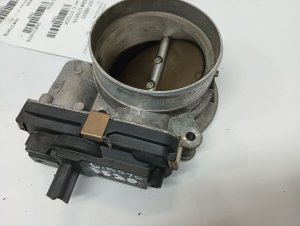
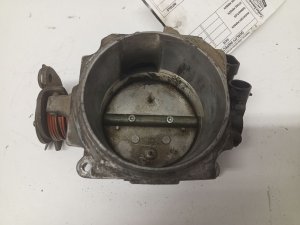
- Throttle Body Assembly
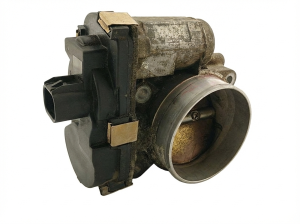
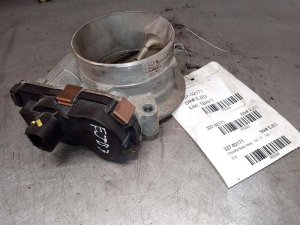
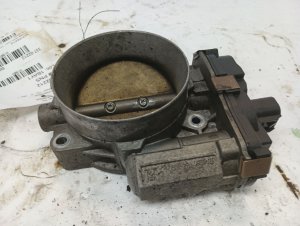
(OEM #12679524)— This is the most common fix if cleaning fails. The internal sensors and motor are integrated and fail as a unit. This part number is a common replacement for the 4.8L, 5.3L, 6.0L, and 6.2L V8 engines in this platform.
Trusted brands: ACDelco, Bosch, Hitachi
OEM price range: $250-$400
Aftermarket price range: $120-$250 - Throttle Body Cleaner — Required for the first and most common diagnostic and repair step: cleaning the carbon buildup.
Trusted brands: CRC, Gumout
Aftermarket price range: $5-$10 - Throttle Body Gasket
(OEM #12629992 (example for 5.3L))— It is best practice to replace the gasket anytime the throttle body is removed to prevent vacuum leaks. The original is often a reusable silicone O-ring style, but can become flattened or damaged.
Trusted brands: Fel-Pro, ACDelco
OEM price range: $10-$20
Aftermarket price range: $5-$15
Related Codes That Often Appear With This One
- P1516 — This code (Throttle Actuator Control (TAC) Module Throttle Actuator Position Performance) is very similar and often appears with P2119, pointing directly to a throttle body issue. It's explicitly mentioned in TSB PIP4578B.
- P2101 — This code (Throttle Actuator Control Motor Circuit Range/Performance) indicates a problem with the motor that moves the throttle plate, which is part of the throttle body assembly. Also mentioned in TSB PIP4578B.
- P0068 — Indicates a conflict between the Mass Airflow (MAF) sensor, Manifold Absolute Pressure (MAP) sensor, and the throttle position. A sticking throttle can cause this correlation fault. Also mentioned in TSB PIP4578B.
- P2176 — This code (Throttle Actuator Control System - Idle Position Not Learned) often appears after a throttle body has been cleaned or replaced but a relearn procedure has not been performed correctly. Also mentioned in TSB PIP4578B.
- P2135 — This code indicates a correlation error between the two internal throttle position sensors (TPS). It is a very common companion code and often leads to throttle body replacement.
Technical Service Bulletins (TSBs) & Recalls
- PIP4578B: Mentions idle surge, reduced engine power mode, and DTCs including P2119, P1516, P2101, P0068, and P2176 on high mileage vehicles.
Platform-Specific Known Issues
- A GM Technical Service Bulletin (PIP4578B) directly addresses P2119 on high-mileage vehicles, linking it to idle surge and reduced engine power, confirming that carbon buildup is a known factory issue across a wide range of V8-equipped GM trucks and SUVs.
- Owner forums are filled with accounts of cleaning the throttle body resolving the issue. A common story involves the truck running fine, then suddenly going into limp mode, and a 30-minute cleaning job completely fixing the problem.
Mechanic-Grade Diagnostic Values
- Throttle Position Sensor (TPS) Voltage at Idle — expected: Approx. 0.5V. Failure: Spikes, flatlines, or voltage significantly different from the expected value when the pedal is not pressed.
- Throttle Position Sensor (TPS) Voltage at Wide Open Throttle (WOT) — expected: Approx. 4.5V. Failure: Voltage does not reach the expected level at WOT, or the signal is erratic as the pedal is pressed.
- Throttle Actuator Control (TAC) Motor Resistance — expected: 2 to 12 Ohms. Failure: A reading in the K-Ohm or M-Ohm range, or an Open Loop (OL) reading, indicates an internal open circuit in the motor. A reading below 1 Ohm indicates an internal short.
- Voltage at Throttle Actuator Power Feed (Engine Running) — expected: 11.5V - 13.5V. Failure: Persistent low voltage suggests a power supply issue from the PCM or a wiring problem.
Scan Tool Commands That Help
- GM GDS2 / Tech2: Throttle Actuator Test — This bidirectional control allows a technician to command the throttle plate to open and close, verifying the actuator motor's function and listening for any unusual noises without needing to press the accelerator pedal.
- GM GDS2 / Tech2: Idle Learn / Throttle Body Relearn — This function should be used after cleaning or replacing the throttle body to reset the learned idle values in the ECM. Skipping this step is a common reason for the code to return or for a high/unstable idle to persist.
- GM GDS2 / Tech2: Live Data Monitoring (Desired vs. Indicated Angle) — Monitor the 'Desired Throttle Position Angle' and 'Indicated Throttle Position Angle' PIDs. If the indicated angle does not closely follow the desired angle as the pedal is pressed, it confirms a performance issue with the throttle body.
Wiring & Ground Locations
- Throttle Body Connector (8-pin) — Directly on the electronic throttle body assembly.. This is the single connection point for the dual throttle position sensors and the actuator motor. Corrosion or loose pins here are a primary cause of failure. Pinout: A: (Yellow) TAC Motor Control -1, B: (Black/White) Low Reference, C: (Brown) TAC Motor Control -2, D: (Black) Low Reference, E: (Light Blue/Black) 5V Reference, F: (Purple) TP Sensor 2 Signal, G: (Dark Green) TP Sensor 1 Signal, H: (Gray) 5V Reference.
- G103 — On the front of the passenger side (right) cylinder head.. This is a primary engine ground. A loose or corroded G103 can cause a variety of sensor and module communication issues, including erratic behavior from the throttle control system.
- G104 — On the rear of the driver side (left) cylinder head, often connected via a ground strap to the firewall.. This ground is critical for the engine control module and various sensors. An issue here can lead to incorrect sensor readings and intermittent throttle-related codes.
Real Owner Repair Stories
- gm-trucks.com forum user (2008 Silverado 5.3L) — Truck went into Reduced Engine Power mode, throwing codes P2119 and P1516.
❌ Tried (didn't work) Thoroughly cleaning the throttle body. The issue returned shortly after.
✅ What actually fixed it Replacing the entire throttle body assembly with a new unit and performing the idle relearn procedure resolved the codes and the limp mode issue permanently.
OEM Part Supersession History
12572658, 12580760→12679524— Part has been updated by GM over the years to improve reliability or address known failure points.
Heads up: While physically similar, using a throttle body from a different engine family or year range (e.g., an LS3 car throttle body on a truck engine) without proper tuning and potentially an adapter harness (like an X-Link) will cause compatibility codes.
Model Year Variations Within This Range
- 2014: The 2014 model year marked the transition to the K2XX platform. While the 5.3L engine is similar, owners of 2014+ trucks often report more noticeable throttle delay or 'lag' programmed into the ECU for fuel economy, which can sometimes be misdiagnosed as a fault when it is intended behavior.
Helpful Videos
We Have This Part in Stock

The information in this article is provided for general reference and educational purposes only. Vehicle specifications, procedures, and part compatibility can vary by production date, trim level, and region. Always consult your vehicle's factory service manual and verify part numbers before purchasing or performing repairs. Safety-critical components such as airbags, seat belts, and braking systems should be installed by a qualified professional.
- Gmc SIERRA 1500:
- 🧭 Diagnostic Flowchart
- 🎬 Helpful Videos
- 🛍️ Shop This Part
- What's Unique About the 2007-2014 Gmc SIERRA 1500
- Symptoms You May Notice
- Most Likely Causes
- Rare But Worth Checking
- Diagnosis Steps
- Parts You'll Likely Need
- Related Codes That Often Appear With This One
- Technical Service Bulletins (TSBs) & Recalls
- Platform-Specific Known Issues
- Mechanic-Grade Diagnostic Values
- Scan Tool Commands That Help
- Wiring & Ground Locations
- Real Owner Repair Stories
- OEM Part Supersession History
- Model Year Variations Within This Range
- 🎟️ Get 5% Off