

P2119 on 2013-2014 Lexus LS460: Throttle Body Range/Performance Issues
On a 2013-2014 Lexus LS460, code P2119 is most often caused by an outdated Engine Control Module (ECM) software, leading to hesitation. The primary fix is a software update from a Lexus dealer, as specified in TSB L-SB-0037-16. If that doesn't resolve it, cleaning the electronic throttle body for carbon buildup or, as a last resort, replacing the throttle body assembly are the next steps.
- For a 2013-2014 LS460 (especially 2WD) with code P2119, the first step should always be to check if TSB L-SB-0037-16 has been performed.
- The most probable fix is an ECM software update from a Lexus dealer, not a hardware replacement, and it may be covered by the emissions warranty.
- If an update doesn't work or isn't applicable, cleaning the throttle body for carbon buildup is a low-cost and effective next step.
- Do not replace the throttle body assembly unless both the software update and cleaning have failed to solve the issue.
- The vehicle may enter a reduced-power 'limp mode', so address this issue promptly for safety and reliability.
What's Unique About the 2013-2014 Lexus LS460
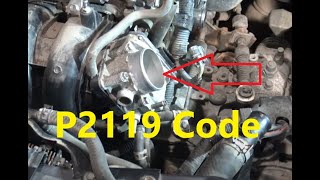
What's unique to the 2013-2014 LS460 (2WD models specifically) regarding P2119 is a known software issue. [⭐] Lexus issued TSB L-SB-0037-16, indicating the ECM's logic for detecting detonation (spark knock) was overly sensitive. [⭐] This could cause a non-linear or hesitant acceleration and set the P2119 code 🎬 Watch: Understanding how P2119 affects your throttle actuator control, even if the throttle body itself was mechanically sound. [⭐] The fix is a specific ECM software update to improve acceleration smoothness and correct the faulty detection logic. The TSB explicitly states the ECM should not be replaced for this issue. This repair is covered under the Lexus Federal Emission Warranty, which is in effect for 96 months or 80,000 miles from the vehicle's in-service date.
Diagnostic Flowchart
Tap your situation to follow the diagnostic path that matches what you're seeing on this vehicle.
Symptoms You May Notice
- Hesitation or a non-linear feeling during acceleration. [⭐]
- Reduced engine power or 'limp mode'.
- Check Engine Light and/or VSC light illuminated.
- Rough or unstable idle.
- Poor or delayed throttle response.
- Sluggishness, where RPMs increase with little corresponding increase in vehicle speed.
- Replacing the throttle body when only an ECM software update was needed. [⭐]
- Replacing the accelerator pedal position sensor, which typically sets its own specific codes (e.g., P1121) and is a separate component from the throttle body.
Most Likely Causes
- Outdated Engine Control Module (ECM) Software 🔴 High Probability A specific TSB (L-SB-0037-16) was issued for 2013-2014 LS460 2WD models for this exact problem, where the ECM logic incorrectly detects spark knock, causing hesitation and this DTC. [⭐]
How to confirm: A Lexus dealer or a qualified independent shop with access to Toyota/Lexus technical information can check the current software calibration ID against the latest version specified in the TSB. An 'Authorized Modifications Label' may be affixed under the hood if the update has been performed.
Typical fix: Flash reprogramming the ECM with the updated software calibration using a Toyota Techstream tool. The GR8 Battery Diagnostic Station must be used in Power Supply Mode to maintain 13.5 volts during the flash.
Est. part cost: $0 (if covered under emissions warranty) - Dirty Throttle Body 🟡 Medium Probability → Shop Fuel Injection Throttle Body Carbon and oil vapor from the PCV system can build up around the throttle plate over time, restricting its movement and causing it to deviate from the ECM's commanded position, triggering the code.
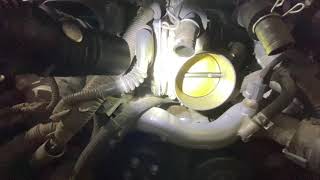
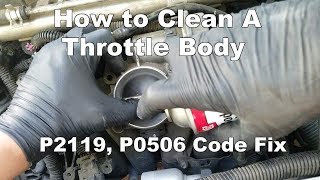
How to confirm: Visually inspect the throttle bore and plate for black carbon deposits after removing the air intake tube. 🎬 See this walkthrough on cleaning a dirty throttle body
Typical fix: Clean the throttle body bore and plate with a dedicated throttle body cleaner and a soft, lint-free cloth or soft brush. Do not force the plate open aggressively. An idle relearn procedure may be necessary afterward, which often involves letting the car idle until warm and then driving for a few cycles.
Est. part cost: $10-$20 - Failing Electronic Throttle Body Assembly ⚪ Low Probability → Shop Fuel Injection Throttle Body While generally reliable, the internal electric motor, clutch mechanism, or the integrated throttle position sensor can fail with age and mileage, leading to range/performance errors.
How to confirm: After ruling out software and a dirty throttle body, a technician can use a scan tool to monitor throttle position sensor voltage for erratic readings or command the throttle plate open and closed to check for sticking or failure to respond. A user on ClubLexus noted their scanner showed a 14.9% throttle position at idle, indicating a faulty sensor.
Typical fix: Replace the entire throttle body assembly. This is typically the last resort after other causes are eliminated.
Est. part cost: $712 - $1000 (OEM)
Rare But Worth Checking
- Wiring or Connector Issue: A damaged wire or corroded connector pin between the ECM and the throttle body can cause intermittent signal loss, triggering the code. This should be checked before replacing expensive components. One owner reported having to repin the throttle body connector due to damage during other repairs. 🎬 Watch: A mechanic's guide to troubleshooting complex LS460 issues
- Excessive Valve Guide Clearance: On some older LS460 models (primarily 2007-2008), excessive valve guide wear could create noise that the knock sensors would misinterpret as engine knock, leading to hesitation and sometimes P2119. This is a major engine repair involving cylinder head replacement and is less common on 2013-2014 models, but the underlying engine architecture is similar.
Diagnosis Steps
- Check for any Technical Service Bulletins (TSBs) related to P2119 for your vehicle's VIN. Specifically, check if TSB L-SB-0037-16 has been performed, which is the most likely fix for 2WD models. [⭐]
- Scan the ECM for any other stored trouble codes. Troubleshoot other codes first if present, as they may be the root cause.
- If the TSB has not been performed, have a Lexus dealer update the ECM software. This is the most probable solution. [⭐, 2]
- If the code returns, disconnect the battery, remove the air intake hose, and inspect the throttle body for carbon buildup.
- Clean the throttle body thoroughly using a dedicated throttle body cleaner and a soft cloth or brush. Gently push the plate open with a finger to clean the edges; do not snap it open and closed, as this can damage the internal gears.
- Reconnect the battery and perform a throttle body relearn procedure. This can often be done by letting the engine warm up fully at idle with no accessories on, then driving for a few miles with smooth acceleration and deceleration.
- If the problem persists, use a scan tool to monitor the live data from the throttle position sensors while operating the pedal. Look for smooth, linear response without dropouts or spikes.
- Inspect the wiring harness and connector at the throttle body for any signs of damage, corrosion, or loose pins.
- If all other steps fail, the throttle body assembly itself is likely faulty and requires replacement.
Parts You'll Likely Need
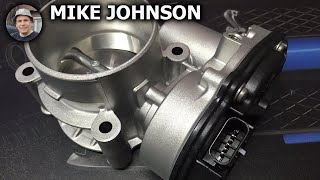
- Electronic Throttle Body Assembly
(OEM #22030-38010)— If cleaning the throttle body and updating the ECM software does not resolve the code, the internal motor or sensor has likely failed, requiring a full replacement.
Trusted brands: Lexus (OEM), Aisin, Denso
OEM price range: $712-$979
Aftermarket price range: $250-$500
Technical Service Bulletins (TSBs) & Recalls
- L-SB-0037-16: Addresses non-linear acceleration or hesitation and DTC P2119 on 2013-2014 LS460 (2WD) by updating the ECM software. [⭐]
- L-SB-0033-08 Rev2: An earlier TSB for 2007-2008 models that addresses similar hesitation symptoms, sometimes requiring cylinder head replacement due to valve guide issues, which is a more severe and less likely cause on 2013-14 models.
Platform-Specific Known Issues
- A known ECM software issue can cause hesitation and trigger P2119 on 2WD models, which is addressed by TSB L-SB-0037-16. [⭐]
- The repair for the TSB is covered under the Lexus Federal Emission Warranty for 96 months or 80,000 miles.
Mechanic-Grade Diagnostic Values
- Knock Correct Learn Value vs. Ignition Advance (Live Data) — expected: Knock Correct Learn Value should remain stable, around 17.0 CA (Crankshaft Angle).. Failure: If the Knock Correct Learn Value drops from 17.0 CA to below 12.0 CA and the Ignition Advance goes negative during hesitation, it points to a false knock condition, potentially from valve guides.
- Throttle Control Motor Resistance — expected: 0.3 – 100 Ω at 20°C (68°F) between terminals M+ and M–.. Failure: Resistance outside this range indicates a faulty motor.
- Throttle Control Motor Clutch Resistance — expected: 4.2 – 5.2 Ω at 20°C (68°F) between terminals CL+ and CL–.. Failure: Resistance outside this range indicates a faulty clutch.
- Throttle Position Sensor Voltage (Live Data) — expected: A smooth, linear increase from under 1.0V at idle (closed throttle) to over 4.5V at wide-open throttle (WOT).. Failure: Voltage that is erratic, jumps, or has dead spots as the throttle is slowly opened indicates a failing sensor.
- Fail-Safe Throttle Position — expected: When a fault is detected and limp mode is active, the throttle plate returns to a fixed 6-degree angle.. Failure: This is not a failure indicator, but a specific parameter of the fail-safe mode.
Scan Tool Commands That Help
- Techstream: Health Check — To begin any diagnosis. It scans all ECUs and checks for available software calibration updates by providing a 'Yes' link next to the ECU if an update is available, which is the primary fix for this code.
- Techstream: Live Data (Data List): 'THROTTLE POS #1' — To monitor the real-time voltage or percentage of the throttle position sensor while operating the accelerator pedal. This is used to check for smooth, linear response. The path is typically DIAGNOSIS / ENHANCED OBD II / DATA LIST / ETCS / THROTTLE POS #1.
- Techstream: Live Data (Data List): 'Knock Correct Learn Value' & 'Ignition Advance' — To diagnose a more complex hesitation issue where false knock is suspected. Monitoring these values during a test drive can confirm if the ECM is incorrectly pulling timing.
- Techstream: Active Test — To command the throttle motor to open and close without using the accelerator pedal. This directly tests the functionality of the throttle actuator motor and can help identify sticking or binding in the throttle plate.
- Techstream: CUW (Calibration Update Wizard) — This is the specific application within Techstream used to perform the ECU flash reprogramming with the updated calibration file as per TSB L-SB-0037-16.
Wiring & Ground Locations
- Engine Control Module (ECM) — Located on the left side of the engine compartment.. This is the computer that controls the throttle body and logs code P2119. All wiring for the throttle control system originates or terminates here, making its connectors (A11, A13, A40, etc.) key test points.
- ETCS Fuse (10A) — Located in the engine room junction block (fuse box).. This fuse supplies power to the Electronic Throttle Control System. A blown fuse will cause a complete loss of throttle control and set this code. It should be one of the first things checked.
- DLC3 Connector — Lower left end of the dash, under the steering wheel.. This is the data link connector where a scan tool like Techstream is connected to communicate with the ECM for diagnosis and reprogramming.
Real Owner Repair Stories
- Lexus Owners Club of North America (2007 Lexus LS460L with 110,000 miles) — Significant acceleration and hesitation problems.
❌ Tried (didn't work) ECU update flash (provided some improvement but did not solve the problem)., Using premium gas (Shell V-Power) and Techron additive.
✅ What actually fixed it Using a can of BG 44K fuel system cleaner in the gas tank completely resolved the hesitation issues. The owner suspected gummed-up fuel injectors were the underlying cause. - ClubLexus Forum (Lexus LS 4th Gen (2007-2017)) — Hesitation when accelerating hard (WOT) from a cruising speed.
❌ Tried (didn't work) Driving with the issue, assuming it was normal.
✅ What actually fixed it Switching from mid-grade or regular fuel back to premium fuel. The owner concluded the engine's knock sensors were retarding timing due to the lower octane fuel, causing the hesitation, which directly relates to the TSB's theme of knock detection.
OEM Part Supersession History
22030-38010→22030-38010— No supersession found.
Heads up: This part number appears to be consistent for all Lexus LS460 models from 2007 through 2017, indicating no design changes or revisions that would cause incompatibility within the 2013-2014 model years.
Model Year Variations Within This Range
- 2013-2014 (2WD): These specific model years are subject to TSB L-SB-0037-16, which points to an overly sensitive knock detection logic in the ECM software as the primary cause for P2119 and hesitation. [⭐]
- 2007-2008: Earlier models with similar hesitation symptoms were addressed by TSB L-SB-0033-08 Rev2, which had a higher probability of requiring major engine work (cylinder head replacement) due to valve guide wear causing false knock signals. This is a less likely, but still possible, cause on 2013-2014 models.
Helpful Videos

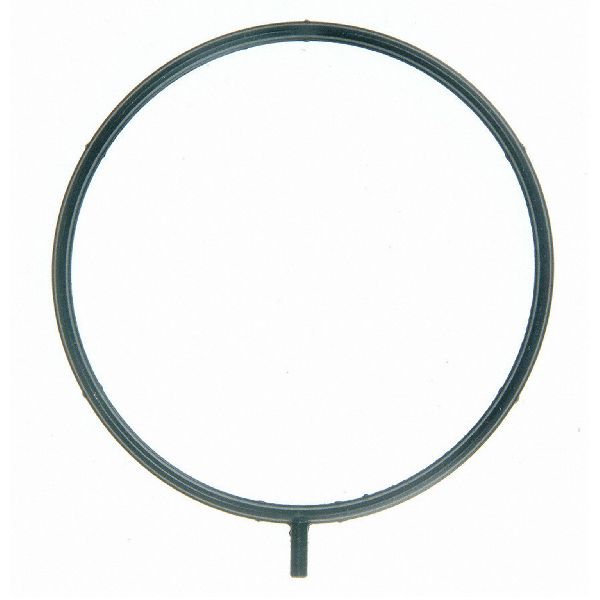
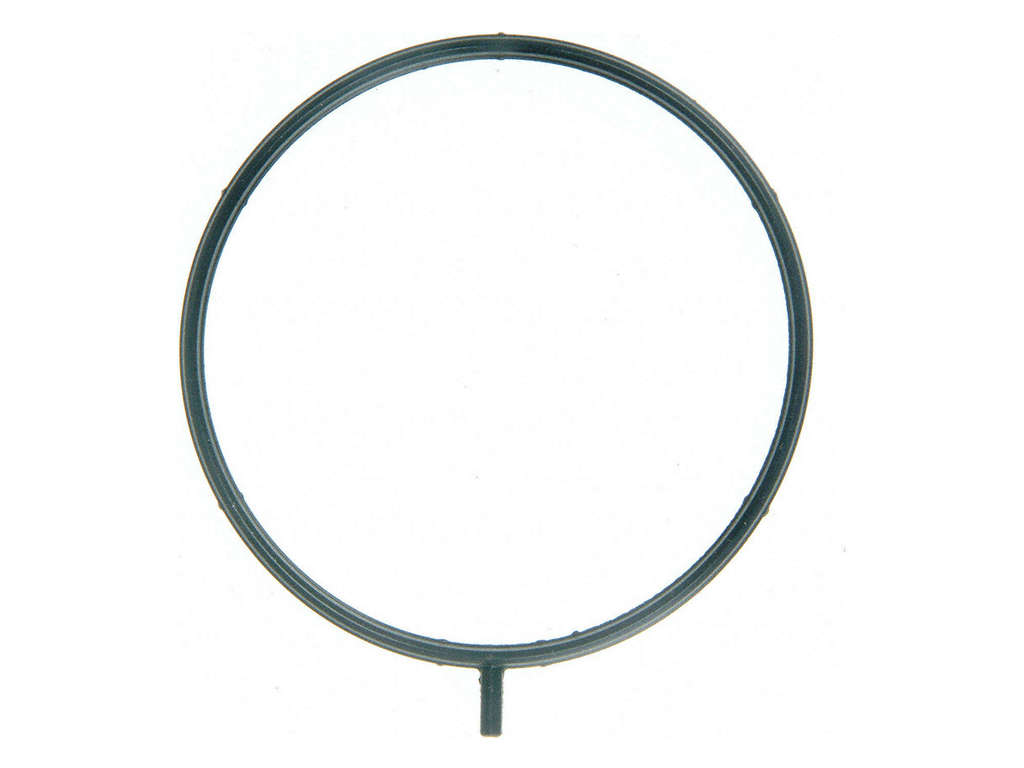
We Have This Part in Stock

The information in this article is provided for general reference and educational purposes only. Vehicle specifications, procedures, and part compatibility can vary by production date, trim level, and region. Always consult your vehicle's factory service manual and verify part numbers before purchasing or performing repairs. Safety-critical components such as airbags, seat belts, and braking systems should be installed by a qualified professional.
- Lexus LS460:
- 🧭 Diagnostic Flowchart
- 🎬 Helpful Videos
- 🛍️ Shop This Part
- What's Unique About the 2013-2014 Lexus LS460
- Symptoms You May Notice
- Most Likely Causes
- Rare But Worth Checking
- Diagnosis Steps
- Parts You'll Likely Need
- Technical Service Bulletins (TSBs) & Recalls
- Platform-Specific Known Issues
- Mechanic-Grade Diagnostic Values
- Scan Tool Commands That Help
- Wiring & Ground Locations
- Real Owner Repair Stories
- OEM Part Supersession History
- Model Year Variations Within This Range
- 🎟️ Get 5% Off