

P2122 on 2007-2014 Cadillac Escalade: Reduced Power, Causes, and Fixes
This code usually means a problem with the accelerator pedal's position sensor or its wiring. The most common fix is replacing the entire accelerator pedal assembly. Expect to pay $80-$150 for an aftermarket part or more for OEM. A frequent underlying cause is poor electrical contact at the connector, as noted in a GM Technical Service Bulletin.
- P2122 on your Escalade will cause a 'Reduced Engine Power' message and limit your speed, but it's often a fixable wiring or connector issue rather than a major component failure.
- Before replacing the expensive accelerator pedal assembly, always follow GM's TSB (PIP3783D) and inspect the wiring connectors at the pedal, the ECM, and especially the intermediate connectors C109/X109 and C205/X205.
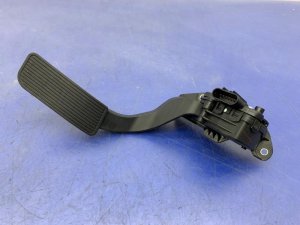
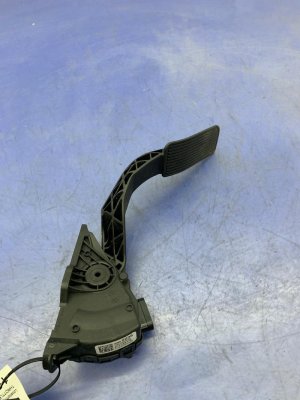
- The most common fix is replacing the accelerator pedal assembly (OEM Part #25832864), which is a straightforward DIY job for many owners.
- This issue is extremely common across the entire 2007-2014 GM truck and SUV lineup (Tahoe, Yukon, Silverado, etc.), so a wealth of information is available in owner forums.
What's Unique About the 2007-2014 Cadillac ESCALADE
For this generation of Escalade and other GM trucks (GMT900 platform), the issue is so common that General Motors issued a Technical Service Bulletin (TSB #PIP3783D). This bulletin specifically points technicians toward checking for poor terminal tension and corrosion not just at the pedal connector, but also at the ECM and two key intermediate harness connectors: C109/X109 (under the hood fuse block) and C205/X205 (under the dashboard trim panel). This suggests that the problem is often not the pedal sensor itself but the electrical connection to it, which can save a significant amount of money if diagnosed correctly.
Diagnostic Flowchart
Tap your situation to follow the diagnostic path that matches what you're seeing on this vehicle.
Symptoms You May Notice
- "Reduced Engine Power" message on the dashboard.
- Check Engine Light (Service Engine Soon) is on.
- Poor or no throttle response; the vehicle may not accelerate or may feel 'dead'.
- Vehicle may stall, especially when braking or at idle.
- "Service StabiliTrak" and "Traction Control Off" messages may also appear.
- Replacing the throttle body. The throttle body is at the engine, while this code points specifically to the pedal sensor circuit inside the cabin. While throttle body issues can cause similar symptoms (like code P2135), P2122 is specific to the pedal sensor circuit. Many owners replace the throttle body only to have the problem persist.
Most Likely Causes
- Poor terminal tension or connection at the Accelerator Pedal Position (APP) sensor and related harness connectors 🔴 High Probability → Shop Accelerator Pedal Assembly This is a known issue documented by GM in TSB #PIP3783D. The connector terminals can loosen, corrode, or get dirty over time, causing intermittent low voltage signals. The TSB specifically calls out connectors C109/X109 and C205/X205 as potential trouble spots.
How to confirm: Visually inspect the APP sensor connector and the specified harness connectors for corrosion or damage. With the ignition off, disconnect and reconnect them to ensure they're seated. Use a terminal test probe to check the pin tension. A user on tahoeyukonforum.com fixed the issue by cleaning corroded contacts within and under the under-hood fuse box. 🎬 Watch: This video shows how to fix the P2122 wiring issue.
Typical fix: Clean the connector terminals with electrical contact cleaner. If tension is poor, the terminals may need to be carefully re-tensioned or the connector pigtail replaced. In some cases, recrimping the terminals at the APP and ECM connectors is required.
Est. part cost: $0-$40 - Faulty Accelerator Pedal Position (APP) Sensor 🔴 High Probability → Shop Accelerator Pedal Assembly The sensor is integrated into the accelerator pedal assembly, which is a common failure point on these vehicles after 100,000 miles due to electronic wear. Updated replacement parts often feature a more robust sensor design.
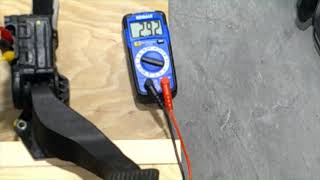
How to confirm: Use a scan tool to monitor the APP sensor 1 voltage in live data. The voltage should increase smoothly as the pedal is pressed, with no dropouts. Alternatively, test with a multimeter: a good sensor will show a smooth voltage increase (e.g., ~0.9V at idle to ~2.4V at full press for one potentiometer) without any sudden spikes or glitches. 🎬 See how to test your pedal for these specific voltage glitches.
Typical fix: Replace the entire accelerator pedal assembly. It is typically not sold as a separate sensor. One owner noted they had to remove some insulation behind the new pedal for it to sit flush during installation.
Est. part cost: $80-$200 - Damaged wiring harness 🟡 Medium Probability Wires can chafe, corrode, or break between the pedal assembly and the ECM, causing a short to ground or an open circuit. This is especially common near connectors or where the harness may rub against other components.
How to confirm: Perform a continuity and voltage drop test on the wires for the APP sensor circuit 'D' between the sensor connector and the ECM connector. Wiggle the harness while testing to expose intermittent breaks.
Typical fix: Repair or replace the damaged section of the wiring harness.
Est. part cost: $10-$100
Rare But Worth Checking
- Faulty Engine Control Module (ECM): → Shop Engine Control Module (ECM) This is a last resort. The ECM's internal circuits that read the sensor voltage can fail, but this is much less common than sensor or wiring issues. All other possibilities, especially those outlined in TSB PIP3783D, should be exhausted before condemning the ECM.
Diagnosis Steps
- Read all fault codes with an OBD-II scanner. Note any other codes like P2127 or P2138.
- Inspect the accelerator pedal assembly and its electrical connector for any obvious damage, looseness, or corrosion.
- Follow TSB PIP3783D: Disconnect the APP connector and inspect the terminals for dirt, moisture, or poor pin tension.
- Expand the TSB check: Inspect intermediate harness connectors. C109/X109 is located under the underhood fuse block, and C205/X205 is under the upper instrument panel trim near the windshield. Check for corrosion or unseated terminals. One owner found the fix by cleaning contacts in this area.
- Use a scan tool to view live data for APP Sensor 1 and APP Sensor 2 voltages. Press the pedal slowly and watch for smooth, linear changes. P2122 corresponds to APP Sensor 1. Look for any voltage drops or glitches.
- If the live data seems okay, wiggle the wiring harness between the pedal and the firewall, and around the under-hood fuse block, while watching the live data to check for intermittent shorts or opens.
- If a new pedal is installed and the code returns, the problem is almost certainly in the wiring or connectors. A user on tahoeyukonforum.com reported this exact scenario.
- If wiring and the sensor appear good, the final step would be to test the circuits at the ECM connector to rule out a wiring break before considering a faulty ECM.
Parts You'll Likely Need
- Accelerator Pedal Assembly
(OEM #25832864 (replaces 15101848, 15847349))— This is the most common part replaced for this fault, though it may not always be the root cause. The sensor is integrated into the pedal assembly and cannot be replaced separately. 🎬 Watch this walkthrough on replacing the accelerator pedal assembly.
Trusted brands: ACDelco (GM Genuine), Standard Motor Products, Dorman
OEM price range: $120-$200
Aftermarket price range: $70-$150 - Accelerator Pedal Position Sensor Connector
(OEM #13584094 (Mating connector w/ leads))— If the connector housing is damaged or the terminals have lost tension (a known issue per TSB PIP3783D), replacing the connector pigtail is the correct repair.
Trusted brands: ACDelco, Dorman
OEM price range: $25-$40
Aftermarket price range: $15-$30
Related Codes That Often Appear With This One
- P2127 — P2127 is 'APP Sensor Circuit 'E' Low Voltage'. The pedal has two sensors for redundancy. It's common for both to be affected by the same connector or wiring issue, causing multiple codes to appear together.
- P2138 — P2138 indicates a correlation fault between the two pedal sensors. This can be triggered if one sensor's voltage is low (P2122) while the other's is normal, causing a mismatch that the ECM flags.
Technical Service Bulletins (TSBs) & Recalls
- PIP3783D: Addresses a Service Engine Soon light and Reduced Engine Power message with APP sensor DTCs, advising inspection of circuits for poor terminal tension and checking specific intermediate connectors (C109/X109, C205/X205) for faults.
Platform-Specific Known Issues
- GM Technical Service Bulletin PIP3783D is the key document for this issue. It explicitly addresses intermittent P2122 codes (and others) on this vehicle, directing technicians to check for poor terminal tension at the APP sensor and ECM connectors. Crucially, it also instructs to inspect harness connectors C109/X109 (left side of engine bay, below fuse block) and C205/X205 (under the upper instrument trim panel) for corrosion, water intrusion, or poorly seated terminals.
Mechanic-Grade Diagnostic Values
- APP Sensor 1 Voltage (Scan Tool) — expected: 0.80V - 4.75V (Smoothly increases from idle to full press). Failure: Voltage below 0.8V for more than 0.2 seconds, or any spikes/dropouts during a pedal sweep.
- APP Sensor 2 Voltage (Scan Tool) — expected: 0.30V - 2.50V (Smoothly changes with pedal press). Failure: Voltage below 0.3V for more than 0.2 seconds, or not correlating with Sensor 1.
- 5-Volt Reference Circuit at APP Connector — expected: 4.8V - 5.2V. Failure: Voltage below 4.8V (indicates short to ground or open/high resistance) or above 5.2V (indicates short to voltage).
- Accelerator Pedal Bolt Torque — expected: 9 Nm (80 lb in). Failure: N/A
Scan Tool Commands That Help
- GDS2 / Tech2 or equivalent professional scan tool: Idle/Throttle Relearn Procedure — After replacing the accelerator pedal assembly or throttle body, a relearn procedure may be needed if the idle is unstable or throttle response is incorrect. While some sources suggest a manual procedure, using a scan tool is the most reliable method to reset adaptations.
Wiring & Ground Locations
- G201 — Behind the upper left end of the dash, near the A-pillar.. This is a primary instrument panel ground. A poor connection here can cause intermittent voltage drops and erratic behavior for multiple dash components, including the circuits for the APP sensor.
- G303 — On the left side B-pillar, behind the trim panel.. This ground is part of the body harness grounding scheme. While less direct than G201, TSBs for similar issues often point to checking all relevant body grounds, and corrosion or looseness here can introduce electrical noise.
- APP Sensor Connector Pins — At the top of the accelerator pedal assembly.. The six pins in this connector are for the two separate sensor circuits. P2122 relates to APP Sensor 1. The specific pins are for 5V reference, low reference (ground), and signal for each of the two sensors. A fault on any of these can cause the code.
Real Owner Repair Stories
- YouTube video comment section (paraphrased for clarity) (2007-2014 GM Truck (GMT900 Platform)) — Reduced Engine Power message, codes P2122 and P2138.
❌ Tried (didn't work) Replaced the accelerator pedal assembly with a new part.
✅ What actually fixed it The problem persisted after replacing the pedal. The final fix was tracing the wiring harness from the pedal and discovering a poor ground connection. Cleaning the ground point and ensuring a tight connection resolved the codes and symptoms permanently. - YouTube video by 'Reduced Engine Power FIX' (Chevrolet (GMT900 platform)) — Check Engine Light, Traction Control light, codes P2122, P2138, and P2135.
❌ Tried (didn't work) Initially considered replacing the throttle body due to code P2135.
✅ What actually fixed it Replaced the accelerator pedal assembly with an updated Standard Motor Products part. The video notes that P2122 and P2138 are pedal-related and should be addressed first. After replacement, the codes were cleared and did not return. The mechanic also noted he had to rip out some insulation behind the pedal for the new part to sit flush.
OEM Part Supersession History
15101848, 15847349→25832864— Standard part evolution, design improvement.
Heads up: Part 25832864 is specified for vehicles with adjustable pedals. Ensure the correct part is ordered for the vehicle's options.
Helpful Videos
We Have This Part in Stock

The information in this article is provided for general reference and educational purposes only. Vehicle specifications, procedures, and part compatibility can vary by production date, trim level, and region. Always consult your vehicle's factory service manual and verify part numbers before purchasing or performing repairs. Safety-critical components such as airbags, seat belts, and braking systems should be installed by a qualified professional.
- Cadillac ESCALADE:
- 🧭 Diagnostic Flowchart
- 🎬 Helpful Videos
- 🛍️ Shop This Part
- What's Unique About the 2007-2014 Cadillac ESCALADE
- Symptoms You May Notice
- Most Likely Causes
- Rare But Worth Checking
- Diagnosis Steps
- Parts You'll Likely Need
- Related Codes That Often Appear With This One
- Technical Service Bulletins (TSBs) & Recalls
- Platform-Specific Known Issues
- Mechanic-Grade Diagnostic Values
- Scan Tool Commands That Help
- Wiring & Ground Locations
- Real Owner Repair Stories
- OEM Part Supersession History
- 🎟️ Get 5% Off