

P2122 on 2007-2014 Chevrolet Tahoe: Accelerator Pedal Sensor Circuit Low Causes and Fixes
On a 2007-2014 Tahoe, code P2122 almost always points to a failing accelerator pedal position (APP) sensor or a wiring issue near the pedal. The vehicle may enter 'Reduced Engine Power' mode, often accompanied by 'Service Stabilitrak' warnings. A new pedal assembly is the most common fix, costing around $60-$150 for the part.
- P2122 on a Tahoe means the accelerator pedal sensor circuit has low voltage, which is a serious issue that will likely put the truck in 'Reduced Engine Power' mode.
- The most common fix is to replace the entire accelerator pedal assembly, which is a relatively simple DIY job.
- Before replacing parts, always inspect the electrical connector at the pedal for loose pins or corrosion, as a GM service bulletin identifies this as a known problem.
- Do not confuse this with a throttle body problem; this code points specifically to the driver's accelerator pedal.
- This issue is often accompanied by code P2138, confirming a disagreement between the pedal's internal sensors.
What's Unique About the 2007-2014 Chevrolet TAHOE
The GMT900 platform, which includes the 2007-2014 Tahoe, Silverado, Suburban, and Yukon, is known for issues with the accelerator pedal position sensor and its related wiring. General Motors issued a Technical Service Bulletin (TSB #PIP3783D) specifically for these vehicles that points technicians toward checking for poor electrical terminal tension at the APP sensor connector and other harness connectors as a primary diagnostic step, indicating a known weakness in the system's wiring. This intermittent connection issue can frustrate owners and even dealerships, sometimes leading to multiple part replacements before the true wiring fault is found.
Diagnostic Flowchart
Tap your situation to follow the diagnostic path that matches what you're seeing on this vehicle.
Symptoms You May Notice
- "Reduced Engine Power" message on the dashboard
- Check Engine Light (Service Engine Soon lamp) is on
- "Service Stabilitrak" and "Service Traction Control" messages appearing simultaneously.
- Poor or no throttle response; the engine won't rev up when pressing the gas pedal
- Vehicle may be stuck in a low gear or have limited speed
- Rough or unstable idle
- Replacing the throttle body. This code specifically relates to the sensor at the driver's foot pedal, not the throttle body on the engine. While throttle body issues can also cause reduced power, P2122 points directly to the pedal circuit. Owners have replaced the throttle body only to have the P2122-related problem persist. 🎬 Watch: How to fix the P2122 code and reduced engine power.
Most Likely Causes
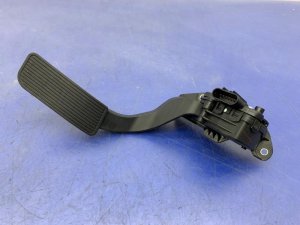
- Faulty Accelerator Pedal Position (APP) Sensor Assembly 🔴 High Probability → Shop Accelerator Pedal Assembly The sensor is a high-use electronic component that wears out over time. It is the most frequently replaced part for this code, and some aftermarket replacements feature an updated, more robust design.
How to confirm: Use a scan tool to monitor the live voltage data for APP Sensor 1 (D circuit). The voltage should be around 0.9V with the pedal released and sweep smoothly to ~2.4V when fully depressed. If it's stuck low (typically below 0.2V), has dead spots, or doesn't sweep smoothly, the sensor is bad.
Typical fix: Replace the entire accelerator pedal assembly. The sensor is integrated into the pedal unit and held on by two 10mm bolts.
Est. part cost: $60-$150 - Wiring or Connector Issue 🔴 High Probability A GM Technical Service Bulletin (#PIP3783D) specifically highlights poor terminal tension, corrosion, or damage in the wiring harness between the pedal and the PCM as a common cause. The harness can also be damaged by moisture or rodents.
How to confirm: Visually inspect the connector and wiring at the accelerator pedal. Unplug it and check for corrosion or bent/loose pins. Wiggle the harness while watching live data to see if the voltage fluctuates. Check the 5V reference wire for a steady 5 volts and check the ground wire for good continuity.
Typical fix: Repair the damaged section of the wire harness, clean the connector terminals, or replace the connector pigtail. Ensuring good pin tension is critical.
Est. part cost: $10-$50 - Faulty Powertrain Control Module (PCM) ⚪ Low Probability → Shop Engine Control Module (ECM)
How to confirm: This is diagnosed by exclusion. If the APP sensor and all related wiring (including 5V reference and ground circuits) have been tested and are confirmed to be good, the PCM itself may be the issue. This requires professional-level diagnostics.
Typical fix: The PCM would need to be repaired or replaced and programmed to the vehicle.
Est. part cost: $300-$800
Rare But Worth Checking
- Low System Voltage: A weak or failing battery can sometimes cause low voltage readings across various vehicle sensors, including the APP sensor. Before diving into complex diagnostics, ensure the battery and charging system are healthy.
Diagnosis Steps
- Read all stored fault codes with an OBD-II scanner. Note all codes present, especially P2138 or P2127.
- Using the scanner's live data function, monitor the voltage readings for both APP Sensor 1 and APP Sensor 2.
- With the key on and engine off, slowly press and release the accelerator pedal. Watch the voltage readings. For a 2007-2014 Tahoe, APP Sensor 1 (D-circuit) should sweep smoothly from ~0.9V to ~2.4V. P2122 is triggered by a reading stuck below ~0.2V.
- Check the 5V reference circuit at the APP sensor connector using a multimeter. You should have a steady 4.8V-5.2V. If not, there is a wiring or PCM issue.
- Perform a visual inspection of the accelerator pedal's electrical connector and wiring harness. Look for any signs of damage, chafing, corrosion, or rodent damage.
- Disconnect the pedal connector and inspect the pins for tightness and cleanliness. A loose pin is a known issue per TSB PIP3783D.
- If the sensor voltage is stuck low and the 5V reference and ground circuits are good, the accelerator pedal assembly is the most likely culprit.
- If wiring is suspected, perform a continuity and resistance test on the signal, power, and ground wires between the pedal connector and the PCM connector.
- If both the sensor and wiring test good, the final step is to consider a fault with the PCM, which typically requires a professional diagnosis.
Parts You'll Likely Need
- Accelerator Pedal Position (APP) Sensor Assembly
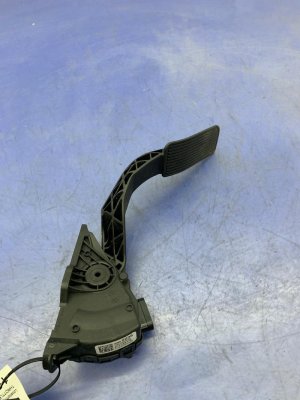
(OEM #25832864 (replaces 15101848, 15847349))— This is the most common failure point for code P2122. The sensor is integrated into the pedal assembly and is not sold separately. Replacing the entire unit is the standard repair.
Trusted brands: ACDelco (GM Genuine), Delphi, Standard Motor Products (e.g., APS265), Dorman (e.g., 699-105)
OEM price range: $100-$150
Aftermarket price range: $60-$100
Related Codes That Often Appear With This One
- P2138 — This code indicates a correlation error between the two accelerator pedal sensors (APP1 and APP2). It's very common to see P2122 (low voltage on one sensor) alongside P2138, as the mismatch between the faulty sensor and the good one triggers the correlation code. 🎬 Watch this diagnostic walkthrough for P2138 and P2122 on GMT900 trucks.
- P2127 — This is the equivalent 'Circuit Low' code for the second pedal sensor (APP2). Seeing both P2122 and P2127 together could point to a shared power or ground circuit issue affecting both sensors, or a completely failed pedal assembly.
- P2120, P2123, P2125, P2128 — These are all related APP sensor circuit codes (for high voltage, circuit range, etc.). A group of these codes often points to a problem with the harness connector or the sensor assembly itself.
Technical Service Bulletins (TSBs) & Recalls
- PIP3783D: Addresses intermittent SES light, Reduced Engine Power messages, and multiple APP sensor DTCs (P2120, P2122, P2123, P2125, P2127, P2128, and/or P2138). It specifically points to checking for poor terminal tension at the APP sensor and other harness connectors as a potential cause.
Platform-Specific Known Issues
- A GM Technical Service Bulletin (PIP3783D) exists for the 2007-2014 Tahoe and related trucks regarding a group of APP sensor codes, including P2122. The bulletin advises technicians that if standard diagnostics don't find the fault, they should inspect the wiring harness and connectors for poor terminal tension, as this is a known intermittent cause of the issue.
- The location of the APP sensor connector in the driver's footwell can make it susceptible to being kicked, stressed, or exposed to moisture from wet shoes, potentially causing intermittent connection problems over time.
Helpful Videos
We Have This Part in Stock

The information in this article is provided for general reference and educational purposes only. Vehicle specifications, procedures, and part compatibility can vary by production date, trim level, and region. Always consult your vehicle's factory service manual and verify part numbers before purchasing or performing repairs. Safety-critical components such as airbags, seat belts, and braking systems should be installed by a qualified professional.
- Chevrolet TAHOE:
- 🧭 Diagnostic Flowchart
- 🎬 Helpful Videos
- 🛍️ Shop This Part
- What's Unique About the 2007-2014 Chevrolet TAHOE
- Symptoms You May Notice
- Most Likely Causes
- Rare But Worth Checking
- Diagnosis Steps
- Parts You'll Likely Need
- Related Codes That Often Appear With This One
- Technical Service Bulletins (TSBs) & Recalls
- Platform-Specific Known Issues
- 🎟️ Get 5% Off