

P2122 on 2020-2021 Ford Escape: Causes, Symptoms, and Fixes for Low Pedal Sensor Voltage
On a 2020-2021 Ford Escape, code P2122 is most often caused by a damaged wiring harness above the steering column, a known issue cited in Ford TSBs. This can cause a rough idle, limp mode, and a blown fuse. The fix is to inspect and repair the harness, which is more likely than a failed accelerator pedal sensor.
- For a 2020-2021 Ford Escape, P2122 is very likely caused by a damaged wiring harness above the steering column, as documented in Ford TSBs.
- Before buying any parts, thoroughly inspect the 14290 harness for chafing and check if Fuse 44 is blown.
- Do not drive the vehicle with this code, as it can cause a sudden loss of power, which is a serious safety hazard.
- If the wiring is not the issue, the fix is to replace the entire accelerator pedal assembly, not just a sensor.
- This code is often accompanied by a large number of other codes due to a shared voltage reference circuit being shorted.
What's Unique About the 2020-2021 Ford ESCAPE
For the 2020-2021 Ford Escape and its platform mates (Bronco Sport, Lincoln Corsair), this code is frequently not a sensor failure. Ford has issued Technical Service Bulletins (TSBs 50116, 50245) indicating that a specific engine wiring harness (the 14290 harness) is prone to chafing and shorting out. The specific failure point is directly above the steering shaft u-joint near the upper brake pedal mount. Rotation of the steering wheel can cause the harness to rub against the shaft, triggering a short circuit. This wiring issue can cause a loss of the 5-volt reference (VREF) to multiple sensors, triggering P2122 along with a host of other seemingly unrelated codes.
Diagnostic Flowchart
Tap your situation to follow the diagnostic path that matches what you're seeing on this vehicle.
Symptoms You May Notice
- Check Engine Light is on
- Engine runs rough or has an erratic idle. [TSB 50245, TSB 50116]
- Vehicle enters "limp mode," with severely reduced engine power and acceleration.
- Poor or no throttle response.
- Intermittent stalling
- Electronic Throttle Control (ETC) or "wrench" light may be illuminated
- A multitude of other, seemingly unrelated trouble codes appearing at the same time.
- Replacing the accelerator pedal assembly without first inspecting the 14290 wiring harness. On this specific vehicle and its platform mates, the harness is a more likely culprit due to the known TSBs.
Most Likely Causes
- Damaged 14290 Wiring Harness 🔴 High Probability → Shop Engine Wiring Harness Ford TSBs #SSM 50245 and #SSM 50116 specifically identify the 14290 harness chafing as a known issue. The harness is routed too close to the steering shaft u-joint.
How to confirm: Visually inspect the wiring harness located directly above the steering shaft u-joint, near the upper brake pedal mount. Look for signs of rubbing, chafing, or exposed copper wires. The damage occurs as the steering wheel is turned. Check for a blown Fuse 44 in the fuse box, as this is a direct consequence mentioned in the TSBs.
Typical fix: Repair the damaged section of the wiring harness. This involves cutting out the damaged wires, splicing in new wire, and protecting the harness with anti-abrasion tape or loom. Crucially, the TSB instructs to then secure the harness away from the steering shaft, using a provided harness locator and stud if available, to prevent recurrence.
Est. part cost: $10-$50 for wiring repair materials - Failed Accelerator Pedal Position (APP) Sensor 🟡 Medium Probability → Shop Accelerator Pedal Assembly
How to confirm: If the wiring harness is intact, use a scan tool to monitor the APP sensor voltage in live data. The voltage for sensor 'D' should be between 0.5-0.8V at idle and rise smoothly to 4.0-4.5V at full pedal. If it's stuck low (below 0.5V) or has dropouts, the sensor has failed.
Typical fix: Replace the entire accelerator pedal assembly, as the sensor is integrated into it. The OEM part number is LX6Z-9F836-E, which supersedes LX6Z-9F836-A.
Est. part cost: $70-$220 - Blown Fuse ⚪ Low Probability The TSBs mention that Fuse 44 may blow as a result of the wiring harness shorting to ground. [TSB 50116]. The blown fuse is a symptom of the harness issue, not the root cause.
How to confirm: Check Fuse 44 in the vehicle's fuse panel. If it is blown, it is a strong indicator of a short circuit in the 14290 harness.
Typical fix: Replace the fuse AFTER repairing the underlying short circuit. Replacing the fuse without fixing the short will result in the new fuse blowing immediately.
Est. part cost: $1-$5
Rare But Worth Checking
- Powertrain Control Module (PCM) Failure: → Shop Engine Control Module (ECM) This is very uncommon. All other possibilities, especially the wiring harness and APP sensor, should be exhaustively ruled out before considering the PCM as the cause.
Diagnosis Steps
- Connect an OBD-II scanner and confirm P2122 is present. 🎬 Watch: Understanding fault code P2122 and throttle sensor inputs. Note all other codes, as a long list of codes points towards the TSB-documented wiring issue.
- Check Fuse 44 in the fuse box. If it is blown, this strongly suggests a short circuit in the 14290 wiring harness.
- Gain access to the area above the driver's side footwell and steering column. Carefully inspect the '14290' wiring harness for any signs of chafing, rubbing against metal brackets, or visible copper wire. The specific point of contact is directly above the steering shaft u-joint.
- If damage is found, disconnect the battery, repair the wiring by splicing and insulating, and then secure the harness away from the steering shaft to prevent future contact.
- If no damage is visible, proceed to test the sensor. Using a multimeter, check for 5-volt reference and good ground at the accelerator pedal connector.
- Use a scan tool to view live data for the Accelerator Pedal Position sensors (there will be multiple). Press the pedal slowly and watch for a smooth, linear voltage increase from all sensors. If one (specifically 'D') is stuck low or erratic, the pedal assembly is faulty.
- If the wiring and sensor test good, the final, least likely possibility is a fault within the Powertrain Control Module (PCM).
Parts You'll Likely Need
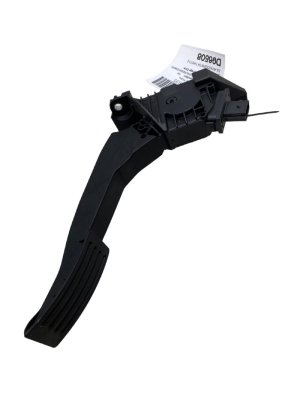
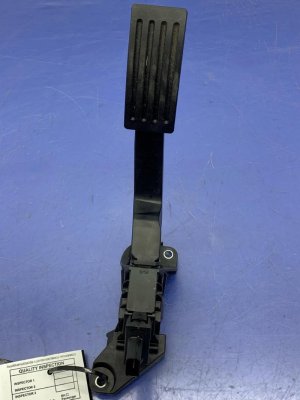
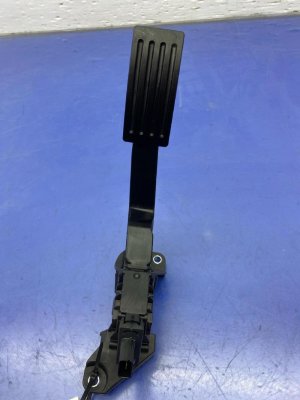
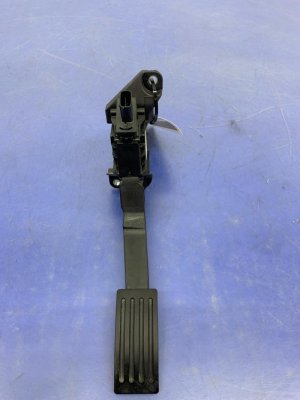
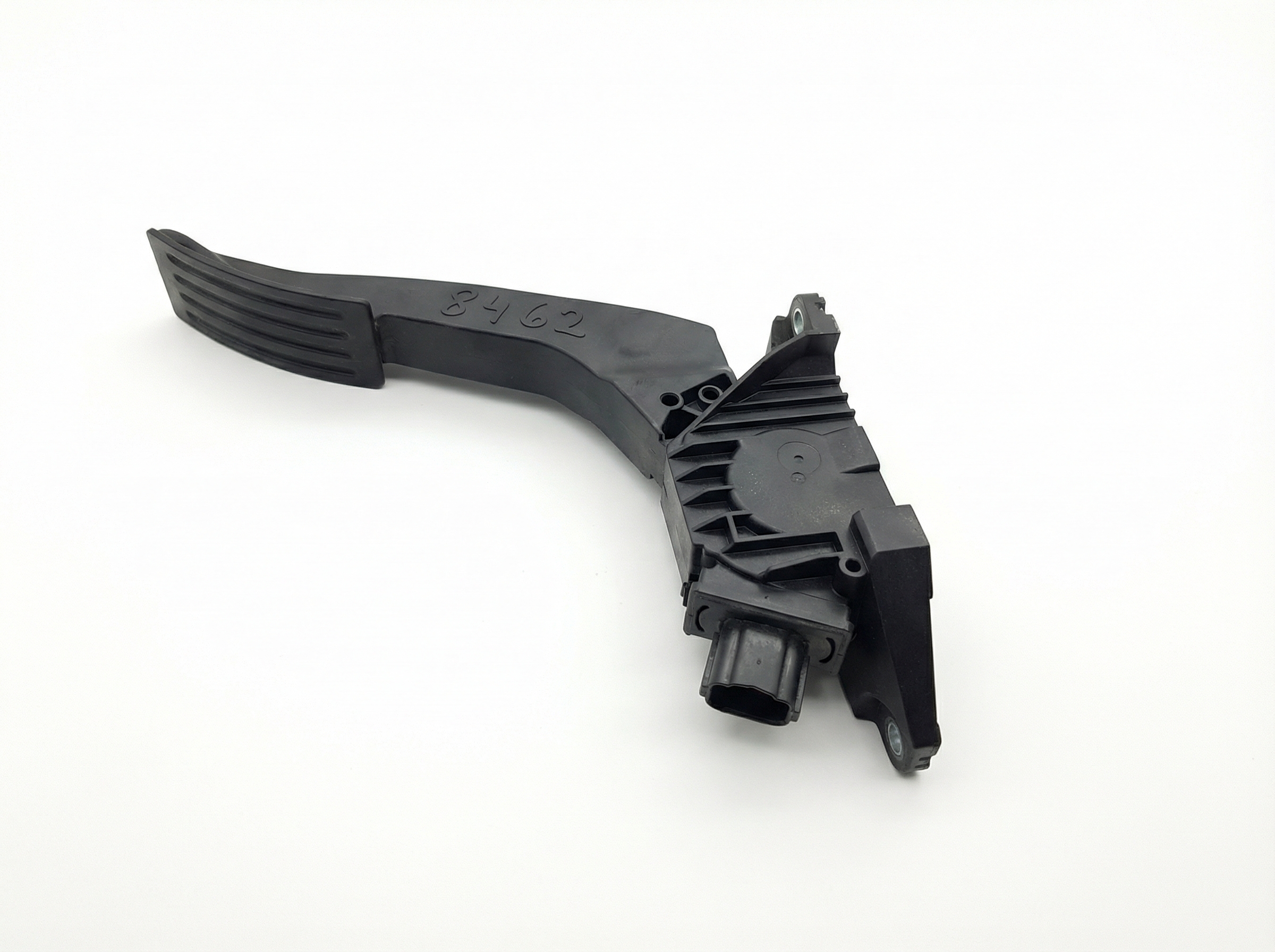
- Accelerator Pedal Assembly
(OEM #LX6Z-9F836-E (supersedes LX6Z-9F836-A))— This is the required part if the integrated Accelerator Pedal Position Sensor has failed. The sensor is not sold separately. This part is shared with the Bronco Sport, Corsair, and Maverick.
Trusted brands: Motorcraft
OEM price range: $100-$180
Aftermarket price range: $70-$150 - Wiring Repair Supplies — Needed to fix the common chafing issue on the 14290 harness. Includes automotive-grade wire, butt connectors or solder, and anti-abrasion tape.
OEM price range: $10-$50
Aftermarket price range: $10-$30 - 14290 Wiring Harness
(OEM #LX6Z-14290-PB (example for 1.5L AWD))— In cases of severe damage, the entire harness section may need replacement. The exact part number is specific to the vehicle's engine and drivetrain (e.g., 1.5L FWD vs 2.0L AWD).
Trusted brands: Ford
OEM price range: $250-$500
Related Codes That Often Appear With This One
- P2127 — This code is for the 'E' circuit of the same pedal position sensor. A wiring issue affecting the sensor's shared voltage or ground will often trigger codes for multiple circuits simultaneously.
- P06A7, P0840, P0842, P0522, and others — According to TSBs 50245 and 50116, a short in the 14290 harness can cause a loss of the 5-volt reference (VREF) circuit, which is shared by numerous sensors. This will cause many different codes to appear at once.
Technical Service Bulletins (TSBs) & Recalls
- SSM 50245: Notes that a rough run condition and an illuminated MIL can be caused by a wiring issue on the 14290 harness, listing P2122 as a possible resulting DTC.
- SSM 50116: Specifically calls out the 14290 harness above the steering column as the location of a potential short that causes a loss of VREF, blows fuse 44, and sets P2122 and other codes. It notes that turning the steering wheel can trigger the short.
Platform-Specific Known Issues
- Ford Technical Service Bulletins SSM 50245 and SSM 50116 describe a known issue where the 14290 wiring harness can rub and short out 'directly above the steering shaft u-joint near the upper brake pedal mount'. This causes a loss of voltage reference (VREF), blowing fuse 44, and setting P2122 along with numerous other DTCs. The repair involves not just fixing the wires but also re-securing the harness to prevent it from happening again.
Mechanic-Grade Diagnostic Values
- APP Sensor 'D' Circuit Voltage (Live Data) — expected: 0.5V - 0.8V at idle (pedal released). Smoothly rises to 4.0V - 4.5V at wide-open throttle.. Failure: Voltage is stuck below 0.5V, does not change with pedal movement, or has erratic jumps/drops.
- PCM Reference Voltage to APP Sensor — expected: 5.0 Volts (or >4.8V) at the sensor connector with key on, engine off.. Failure: Voltage significantly below 4.8V indicates a problem with the PCM or the VREF circuit, potentially related to the TSB wiring issue.
- P2122 Fault Trigger Threshold — expected: Signal voltage must remain above the PCM's calibrated minimum.. Failure: Code sets when voltage from the 'D' circuit drops below the minimum threshold, which is often around 0.17V - 0.2V.
Scan Tool Commands That Help
- Ford IDS (Integrated Diagnostic System): TPS Calibration Module — After replacing the accelerator pedal assembly or if you suspect a software/calibration issue. The function guides the technician through a process to relearn the sensor's idle and wide-open throttle positions.
Wiring & Ground Locations
- Accelerator Pedal Assembly Connector — At the top of the accelerator pedal assembly in the driver's side footwell.. This is the 6-pin connector where voltage and ground tests for the APP sensor are performed. Verifying 5V reference, ground, and signal wire integrity at these pins is a primary diagnostic step.
OEM Part Supersession History
LX6Z-9F836-A→LX6Z-9F836-E— Standard part revision for improvement or manufacturing change. No specific reason publicly documented.
Heads up: Critical: The accelerator pedal assembly part number MUST be matched exactly. Pedals for gasoline, hybrid (HEV), and plug-in hybrid (PHEV) models are not interchangeable, even if they physically fit.
Helpful Videos
We Have This Part in Stock

The information in this article is provided for general reference and educational purposes only. Vehicle specifications, procedures, and part compatibility can vary by production date, trim level, and region. Always consult your vehicle's factory service manual and verify part numbers before purchasing or performing repairs. Safety-critical components such as airbags, seat belts, and braking systems should be installed by a qualified professional.
- Ford ESCAPE:
- 🧭 Diagnostic Flowchart
- 🎬 Helpful Videos
- 🛍️ Shop This Part
- What's Unique About the 2020-2021 Ford ESCAPE
- Symptoms You May Notice
- Most Likely Causes
- Rare But Worth Checking
- Diagnosis Steps
- Parts You'll Likely Need
- Related Codes That Often Appear With This One
- Technical Service Bulletins (TSBs) & Recalls
- Platform-Specific Known Issues
- Mechanic-Grade Diagnostic Values
- Scan Tool Commands That Help
- Wiring & Ground Locations
- OEM Part Supersession History
- 🎟️ Get 5% Off