

P2123 on 2007-2011 Chevrolet Silverado: Reduced Power Causes and Fixes
On a 2007-2011 Silverado, code P2123 almost always points to a faulty Accelerator Pedal Position (APP) sensor or a wiring issue at its connector. This triggers the 'Reduced Engine Power' message. The most common fix is replacing the entire accelerator pedal assembly (OEM Part #25832864), which costs about $60-$150 for the part and is a simple DIY job. However, before replacing parts, inspect the connector for loose pins (per TSB PIP3783D) and check for bad ground wires, as these are also common
- P2123 on a 2007-2011 Silverado will almost certainly trigger the 'Reduced Engine Power' warning, making the truck very slow to accelerate.
- The most likely cause is a failed Accelerator Pedal Position (APP) sensor, which is part of the gas pedal assembly (GM Part #25832864).
- Before replacing the pedal, ALWAYS inspect the wiring. Check the 6-pin connector at the pedal for loose pins (TSB PIP3783D) and check main chassis/engine grounds for corrosion or looseness.
- Do not replace the throttle body; this code points specifically to the accelerator pedal circuit.
- Replacing the accelerator pedal assembly is a simple DIY job that usually takes less than an hour.
What's Unique About the 2007-2011 Chevrolet SILVERADO
For this generation of Silverado (GMT900 platform), the accelerator pedal circuit is a known weak point. General Motors issued a specific Technical Service Bulletin (TSB #PIP3783D) highlighting that 'poor terminal tension' in the APP sensor's electrical connector is a frequent cause of codes like P2123. This means that before you rush to replace the pedal assembly, you should carefully inspect the wiring and connector. Furthermore, another TSB (#07-06-04-019D) identifies water intrusion into the main IP-to-body harness connector in the driver's kick panel as another potential cause for these exact symptoms, leading to corrosion and voltage issues. These known issues are common across similar GM trucks and SUVs from this era.
Diagnostic Flowchart
Tap your situation to follow the diagnostic path that matches what you're seeing on this vehicle.
Symptoms You May Notice
- "Reduced Engine Power" message on the dashboard.
- Check Engine Light is on.
- Severely limited acceleration or poor throttle response.
- Vehicle may not accelerate at all or may stall.
- Cruise control will be disabled.
- Stabilitrak/Traction Control light may also illuminate.
- Replacing the Throttle Body. P2123 specifically points to a fault in the accelerator pedal circuit, not the throttle body at the engine. While throttle body issues can cause similar symptoms like reduced power, they will set different codes (e.g., P1516, P2135).
Most Likely Causes
- Faulty Accelerator Pedal Position (APP) Sensor Assembly 🔴 High Probability → Shop Accelerator Pedal Assembly The sensor is a high-use electronic component that can wear out over time, leading to incorrect voltage signals. It is the most cited fix for this code.
How to confirm: Use a scan tool to monitor live data for APP Sensor 1 and APP Sensor 2. The voltage for Sensor 1 will likely be stuck high (above 4.75V) or won't change smoothly as the pedal is pressed.
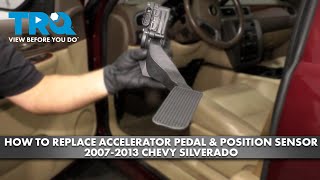
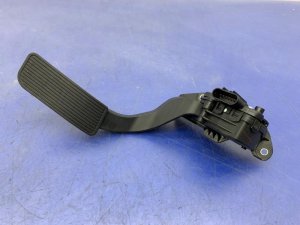
Typical fix: Replace the entire accelerator pedal assembly. 🎬 See this step-by-step walkthrough for replacing the pedal assembly. The sensors are integrated into the pedal and are not sold separately. The GM OEM part is #25832864.
Est. part cost: $60-$150 - Poor Wiring Connection or Damaged Harness 🟡 Medium Probability As identified in TSB #PIP3783D, the terminals in the 6-pin connector at the accelerator pedal can lose tension, causing an intermittent or high-resistance connection. Wires can also break or chafe near the connector or where they pass through the firewall. In one documented case, the brown ground wire was found broken just inside the firewall, causing a P2123 code.
How to confirm: Visually inspect the APP sensor connector for loose, spread, or corroded pins. Wiggle the harness while monitoring the APP sensor voltage on a scan tool to see if the reading fluctuates.
Typical fix: Clean and tighten the connector terminals using a terminal pick tool. If a pin is too loose, the connector pigtail may need to be replaced. Repair any broken or chafed wires.
Est. part cost: $0-$40
Rare But Worth Checking
- Corroded Main Body Harness Connector (Water Intrusion): Per TSB 07-06-04-019D, water leaking from the A-pillar, sunroof drains, or windshield cowl can seep into the main Instrument Panel (IP)-to-body harness connector, often located in the driver's side kick panel. This corrosion can cause P2138 and related APP codes. Before extensive wiring repairs, check this connector for any signs of moisture or green/white corrosion.
- Bad or Loose Ground Connection: Multiple owner experiences point to faulty grounds as a hidden cause. A loose or corroded main ground wire on the frame under the driver's side door has been found to resolve these codes after a pedal replacement failed. Similarly, a broken ground wire on the engine itself 🎬 Watch how to fix reduced engine power and related codes. can cause intermittent power loss and APP codes.
- Faulty Powertrain Control Module (PCM/ECM): This is very rare. Before condemning the ECM, you must exhaustively rule out all wiring, connector, and sensor issues. An ECM failure can sometimes cause this code, but it should be the last item you diagnose.
Diagnosis Steps
- Read all Diagnostic Trouble Codes (DTCs) with an OBD-II scanner. Note any other codes present, especially P2138 or other APP sensor codes.
- Using the scanner's live data function, observe the voltage readings for APP Sensor 1 and APP Sensor 2. With the key on and engine off, the readings should be steady and change smoothly as you press and release 🎬 Watch: How to test the sensor using a scan tool. the accelerator pedal.
- For P2123, you will likely see the voltage for APP Sensor 1 stuck high (e.g., >4.75V) or not responding.
- Turn the ignition off. Locate the accelerator pedal assembly and inspect the 6-pin electrical connector for any signs of damage, corrosion, or backed-out pins.
- As per TSB PIP3783D, carefully check for poor terminal tension. The female pins in the connector should grip the male pins on the sensor tightly. A wiggle test on the harness here while watching live data can confirm a bad connection.
- Inspect key ground locations. Check the main ground wire from the battery to the frame and engine block. A known trouble spot is the frame ground located under the driver's side door area; ensure it is clean and tight. Also check engine grounds G103 and G104.
- If pedal connector and grounds appear fine, inspect the IP-to-body harness connector in the driver's kick panel for signs of water intrusion or corrosion, as noted in TSB 07-06-04-019D.
- If all wiring and connectors are confirmed to be good, the most likely cause is a failed APP sensor. Replace the entire accelerator pedal assembly.
- After replacement, clear the codes and perform a test drive to ensure the issue is resolved.
Parts You'll Likely Need
- Accelerator Pedal Assembly with Sensor
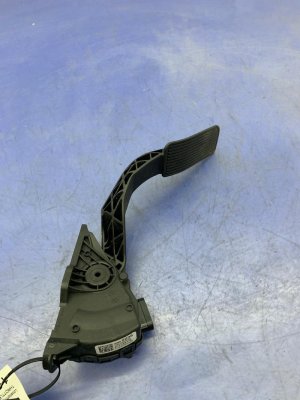
(OEM #25832864 (replaces 15101848, 15847349))— This is the most common failure point for code P2123. The sensors are integrated into the pedal assembly and cannot be replaced individually.
Trusted brands: ACDelco, GM Genuine Parts, Dorman, Standard Motor Products
OEM price range: $95-$150
Aftermarket price range: $60-$100 - APP Sensor Connector Pigtail — If the connector itself is damaged or the terminals have lost tension and cannot be re-pinned, replacing the pigtail is necessary.
Trusted brands: ACDelco, Dorman
OEM price range: $25-$40
Aftermarket price range: $15-$30
Related Codes That Often Appear With This One
- P2122 — This code indicates 'APP Sensor 'D' Circuit Low Input'. Seeing both P2122 and P2123 can point to an erratic sensor or a wiring connection that is intermittently shorting to ground and voltage.
- P2138 — This code means 'Throttle/Pedal Position Sensor/Switch 'D'/'E' Voltage Correlation'. The ECM compares the readings from the two APP sensors; if they don't agree, it sets this code. It's very common to see this with any single APP sensor fault code, as the faulty high signal from Sensor 1 will not correlate with the normal signal from Sensor 2.
- P2120, P2125, P2127, P2128 — These are all related to the accelerator pedal position sensor circuits (both Sensor 1 and Sensor 2). The presence of these codes alongside P2123 reinforces that the problem lies within the APP sensor assembly or its related wiring, as noted in TSB PIP3783D.
Technical Service Bulletins (TSBs) & Recalls
- PIP3783D: Addresses Service Engine Soon lamp, reduced engine power, and multiple APP sensor codes (including P2123) due to poor terminal tension in the APP sensor circuits.
- 07-06-04-019D: Addresses intermittent P2138 and Reduced Engine Power caused by water intrusion into the Instrument Panel (IP) to body harness connector, leading to corrosion.
Platform-Specific Known Issues
- GM Technical Service Bulletin #PIP3783D specifically calls out 'poor terminal tension' in the accelerator pedal position sensor connector as a common cause for P2123 and related codes on this platform.
- GM Technical Service Bulletin #07-06-04-019D warns of water intrusion into the IP-to-body harness connector (driver's kick panel) causing corrosion and leading to identical symptoms and codes, particularly P2138.
Mechanic-Grade Diagnostic Values
- APP Sensor 1 ('D' Circuit) Voltage — expected: Approx. 0.46V at rest to 4.75V at full pedal depression.. Failure: Voltage is stuck above 4.87V for more than 0.4 seconds.
- APP Sensor 5-Volt Reference Circuit — expected: Between 4.5V and 5.2V with key on, engine off.. Failure: Voltage outside of this range indicates a wiring or PCM issue.
- APP Sensor Connector Pinout (at pedal) — expected: Pin E (Dark Blue wire) is APP Sensor 1 Signal. Pin D (Brown wire) is the Low Reference for Sensor 1. Pin F (White/Black wire) is the 5V Reference for Sensor 1.. Failure: Testing the wrong pin will lead to misdiagnosis. A high voltage on Pin E or an open circuit on Pin D can cause P2123.
Scan Tool Commands That Help
- GDS2 / Tech2: Live Data - APP Sensor 1 & 2 Voltage/Percentage — This is the primary diagnostic step to confirm the fault. The scan tool will display the erratic or stuck high voltage reading from APP Sensor 1 in real-time as the pedal is pressed, confirming the ECM is seeing the fault.
- GDS2 / Tech2 or equivalent professional scan tool: ETC RELEARN (Electronic Throttle Control Relearn) — This function should be performed after replacing the accelerator pedal assembly to ensure the PCM properly calibrates the new sensor's idle and wide-open throttle positions.
Wiring & Ground Locations
- APP Connector — 6-pin connector directly attached to the top of the accelerator pedal assembly.. This is the location of the TSB-identified 'poor terminal tension' issue. The signal wire (Pin E, Dark Blue) and low reference wire (Pin D, Brown) are critical for this code.
- G103 — On the front of the passenger side cylinder head.. This is a primary engine wiring harness and PCM ground. A poor connection here can cause erratic sensor readings and multiple DTCs.
- G104 — On the rear of the driver's side cylinder head.. This is another critical engine ground. A loose or corroded G104 can cause intermittent electrical issues, including APP sensor faults.
- G108 — On the driver's side of the firewall.. This ground's location near the firewall makes it a potential culprit if wiring work has been done inside the cabin or in the engine bay near the brake booster.
Real Owner Repair Stories
- ChevroletForum.com user 'Jon Miller' (2006 Trailblazer (similar GMT platform wiring)) — Reduced Engine Power, Check Engine Light, Stabilitrak light, code P2123 after installing an aftermarket radio.
❌ Tried (didn't work) Disconnecting the battery for 30 minutes.
✅ What actually fixed it Found and repaired a broken brown wire (the low reference circuit for APP Sensor 1) just inside the firewall, which was likely disturbed during the radio installation.
When the Usual Fixes Don't Work
- While replacing the accelerator pedal assembly is the most common fix, it is not always successful. Multiple owner-documented repairs show that the P2123 code persisted after pedal replacement. The final solution in these cases was often found to be a wiring issue, such as cleaning a corroded frame ground under the driver's door or repairing a broken wire near the firewall. This strongly supports the advice in TSB PIP3783D to thoroughly inspect all related circuits before replacing parts.
OEM Part Supersession History
15101848, 15847349→25832864— Standard part revision and consolidation by the manufacturer.
Heads up: The replacement part 25832864 is the correct service part for the entire generation.
Model Year Variations Within This Range
- 2011: Some aftermarket part listings for the 2011 model year specifically mention the need for a pedal assembly 'w/Tin Connector', suggesting a possible change in connector material or design late in the generation. While the OEM part number appears consistent, this could affect compatibility with certain aftermarket pigtails or sensors.
- 2007-2009 vs 2010-2013: The factory diagnostic software shifts during this period. Earlier models are typically diagnosed with the Tech2win software, while 2010 and newer models use the GDS2 (Global Diagnostic System 2) platform.
Helpful Videos
We Have This Part in Stock

The information in this article is provided for general reference and educational purposes only. Vehicle specifications, procedures, and part compatibility can vary by production date, trim level, and region. Always consult your vehicle's factory service manual and verify part numbers before purchasing or performing repairs. Safety-critical components such as airbags, seat belts, and braking systems should be installed by a qualified professional.
- Chevrolet SILVERADO:
- 🧭 Diagnostic Flowchart
- 🎬 Helpful Videos
- 🛍️ Shop This Part
- What's Unique About the 2007-2011 Chevrolet SILVERADO
- Symptoms You May Notice
- Most Likely Causes
- Rare But Worth Checking
- Diagnosis Steps
- Parts You'll Likely Need
- Related Codes That Often Appear With This One
- Technical Service Bulletins (TSBs) & Recalls
- Platform-Specific Known Issues
- Mechanic-Grade Diagnostic Values
- Scan Tool Commands That Help
- Wiring & Ground Locations
- Real Owner Repair Stories
- When the Usual Fixes Don't Work
- OEM Part Supersession History
- Model Year Variations Within This Range
- 🎟️ Get 5% Off