

P2123 on 2007-2014 Chevrolet Suburban: Causes and Fixes for Reduced Engine Power
P2123 on a 2007-2014 Suburban indicates a high voltage fault in the accelerator pedal's position sensor circuit, almost always triggering 'Reduced Engine Power' mode. The most common fix is replacing the entire accelerator pedal assembly, a simple DIY job with a part cost of $60-$120. Before replacement, a critical first step is inspecting the pedal's electrical connector for poor pin tension, a known issue cited in a GM Technical Service Bulletin. A less common but critical check is for water i
- P2123 means the accelerator pedal sensor circuit has a high voltage fault, triggering 'Reduced Engine Power' mode.
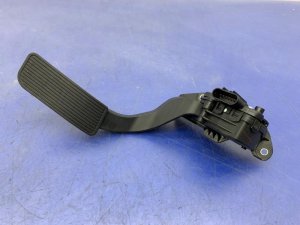
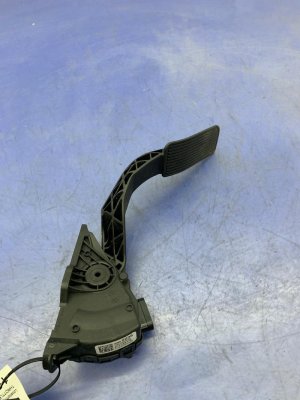
- The most common fix is replacing the accelerator pedal assembly (Part #25832864).
- Before replacing parts, always inspect the pedal's 6-pin connector for loose terminals, as noted in GM TSB #PIP3783D.
- Also inspect and clean major ground wire connections on the frame and engine block, as this is a known platform weakness.
- Do not misdiagnose this as a throttle body issue; P2123 points specifically to the pedal circuit.
What's Unique About the 2007-2014 Chevrolet SUBURBAN
On this generation of GM trucks (GMT900 platform), a common cause for P2123 and related codes is not necessarily a failed sensor, but poor electrical contact at the pedal's connector. GM issued Technical Service Bulletin #PIP3783D specifically mentioning 'poor terminal tension' as a frequent culprit for a range of APP sensor codes. This means a simple connector inspection is a critical first step before replacing parts. This issue is common across all GMT900 platform mates, including the Chevrolet Tahoe, GMC Yukon, and Cadillac Escalade. Furthermore, water intrusion into the IP-to-body harness connector in the driver's kick panel is another known issue on this platform that can cause this code, as detailed in TSB 07-06-04-019E.
Diagnostic Flowchart
Tap your situation to follow the diagnostic path that matches what you're seeing on this vehicle.
Symptoms You May Notice
- "Reduced Engine Power" message on the dashboard.
- Check Engine Light is on.
- Severely limited acceleration and sluggish performance (limp mode).
- Poor or no response from the accelerator pedal.
- "Service StabiliTrak" or "StabiliTrak Disabled" message may appear.
- Unstable or high engine idle.
- Replacing the Throttle Body. The trouble code P2123 specifically points to a fault in the accelerator *pedal* circuit, not the throttle body on the engine. While throttle body issues can cause a 'Reduced Engine Power' message, they are associated with different codes (like P1516). Owners often mistakenly replace the throttle body when the issue is the pedal assembly or its wiring.
Most Likely Causes
- Faulty Accelerator Pedal Position (APP) Sensor Assembly 🔴 High Probability → Shop Accelerator Pedal Assembly The electronic sensors integrated into the pedal assembly are a known high-failure part on this platform due to wear over time, leading to incorrect voltage signals. It is a widely reported issue on owner forums for GMT900 trucks.
How to confirm: Using a scan tool with live data, monitor the voltage for 'APP Sensor 1' and 'APP Sensor 2'. As you press the pedal, both voltages should change smoothly. For P2123, you will likely see APP Sensor 1 showing a fixed high voltage (typically over 4.75V) regardless of pedal position. A normal reading should sweep smoothly from about 0.46V to 4.75V.
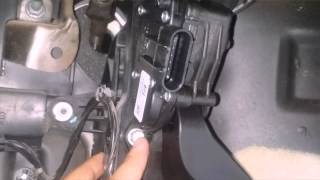
Typical fix: Replace the entire accelerator pedal assembly. The sensor is not sold separately from the pedal. This is a simple DIY job held in by two bolts (often 10mm or T30 Torx) and can be done in under 30 minutes. 🎬 Watch this walkthrough on how to replace the pedal assembly.
Est. part cost: $60-$120 - Poor Connection or Damaged Wiring at the APP Sensor 🟡 Medium Probability As cited in TSB #PIP3783D, the female terminals in the 6-pin connector at the pedal can lose tension, causing intermittent or poor connections that result in a high-resistance fault. Additionally, ground wires on these trucks are a known weak point. A broken ground wire (often a brown wire) in the harness near the firewall or at a chassis ground point can also cause this code.
How to confirm: Visually inspect the electrical connector at the accelerator pedal. Check for backed-out pins, corrosion, or loose-fitting terminals. Wiggle the connector while monitoring live data on a scan tool to see if the voltage reading for APP Sensor 1 changes erratically. Inspect known ground locations under the driver's side door and on the engine block for corrosion or breaks.
Typical fix: Clean the connector terminals and apply dielectric grease. 🎬 Watch how to clean and grease connectors for a free fix. If terminal tension is poor, the terminals may need to be carefully re-tensioned or the connector pigtail replaced. Repair any broken ground wires found in the harness.
Est. part cost: $0-$30
Rare But Worth Checking
- Faulty Powertrain Control Module (PCM): This is very rare. Before condemning the PCM, all other possibilities, especially the pedal assembly and its wiring/grounds, must be exhaustively ruled out. A PCM failure might also be accompanied by other unrelated trouble codes. A service manual provides steps for testing the PCM circuits to confirm failure.
- Water Intrusion in IP-to-Body Harness Connector: Water leaking from a clogged sunroof drain, windshield seal, or A-pillar can drip onto the main instrument panel-to-body harness connector, located in the driver's side kick panel. This causes corrosion and can short the APP sensor circuits, triggering P2123. This is documented in TSB 07-06-04-019E.
Diagnosis Steps
- Read all diagnostic trouble codes with an OBD-II scanner. Note any other codes that are present, especially P2138.
- Using the scanner's live data function, monitor the voltage readings for 'APP Sensor 1' and 'APP Sensor 2'.
- Slowly press and release the accelerator pedal. Observe the voltage readings. APP Sensor 1 voltage should sweep smoothly from ~0.5V to ~4.7V. For P2123, it will likely be stuck at a high voltage (e.g., >4.75V).
- Turn off the vehicle and disconnect the 6-pin electrical connector at the accelerator pedal assembly.
- Inspect the connector and the pins on the pedal assembly for any signs of corrosion, moisture, or damage. Ensure all pins are straight and fully seated.
- Per TSB #PIP3783D, check for poor terminal tension. The female terminals in the connector should grip the male pins on the sensor tightly. Wiggle the harness while observing live data to check for intermittent connections.
- If the connector looks good, inspect key ground wire locations. Check the ground points under the driver's side door attached to the frame and the main engine block grounds for tightness and corrosion.
- If the connector and wiring appear fine and the voltage reading was stuck high, the accelerator pedal assembly is faulty and should be replaced.
- If the problem persists after replacement, a more advanced diagnosis of the wiring harness for a short-to-voltage between the pedal and the ECM is required, as outlined in vehicle service manuals.
Parts You'll Likely Need
- Accelerator Pedal Assembly with Sensor
(OEM #25832864)— This is the most common cause of P2123. The sensor is integrated into the pedal assembly and is not sold separately by the OEM. This part number also replaces older numbers 15847349 and 15101848.
Trusted brands: ACDelco (GM Genuine), Dorman (e.g., 699-207), Standard Motor Products (e.g., APS265), NTK
OEM price range: $90-$140
Aftermarket price range: $60-$100 - APP Sensor Connector Pigtail — Needed only if the original connector is damaged, corroded, or the terminals have lost tension and cannot be repaired.
Trusted brands: ACDelco, Dorman
OEM price range: $25-$40
Aftermarket price range: $15-$30
Related Codes That Often Appear With This One
- P2122 — This code is for 'APP Sensor 1 Circuit Low Voltage', the opposite of P2123. Seeing them together can indicate an intermittent wiring problem or a failing sensor.
- P2127 — This code is for 'APP Sensor 2 Circuit Low Voltage'. Since both sensors are in the same assembly, a failure can sometimes affect both circuits.
- P2128 — This code is for 'APP Sensor 2 Circuit High Voltage'. Seeing P2123 and P2128 together strongly points to a problem with the pedal assembly or its connector.
- P2138 — This code indicates a correlation problem between APP Sensor 1 and APP Sensor 2. It is often set alongside P2123 when the computer sees one sensor signal is stuck high while the other is responding normally, a condition explicitly mentioned in TSB #PIP3783D.
Technical Service Bulletins (TSBs) & Recalls
- PIP3783D: Addresses Service Engine Soon light, reduced engine power, and DTCs P2120, P2122, P2123, P2125, P2127, P2128, and/or P2138, recommending inspection of the APP circuits for poor terminal tension.
- 07-06-04-019E: Addresses intermittent DTC P2138 (and by extension, related APP codes like P2123) caused by water intrusion into the instrument panel (IP) to body harness connector.
Platform-Specific Known Issues
- A GM Technical Service Bulletin (TSB #PIP3783D) was issued for multiple APP sensor codes, including P2123, on these vehicles. It specifically identifies 'poor terminal tension' in the APP sensor connector as a likely cause, advising technicians to inspect it before replacing parts.
- Grounding issues are prevalent on the GMT900 platform. A corroded or broken ground connection, particularly the main grounds under the driver-side door to the frame, can cause fluctuating voltages and trigger codes like P2123, even if the pedal and connector are good.
- Water intrusion into the main IP-to-body harness connector, located in the driver's kick panel, is a known issue covered by TSB 07-06-04-019E. Corrosion in this connector can cause identical symptoms to a failed pedal sensor.
Mechanic-Grade Diagnostic Values
- APP Sensor 1 Voltage (Scan Tool) — expected: Approx. 0.46V (released) to 4.75V (fully depressed), sweeping smoothly.. Failure: Voltage is stuck high, typically > 4.75V, and does not change with pedal movement.
- APP Sensor 2 Voltage (Scan Tool) — expected: Approx. 0.3V - 0.6V (released) to 1.95V - 2.4V (fully depressed), sweeping smoothly.. Failure: Voltage does not correlate with Sensor 1, shows jumps, or is flat.
- 5-Volt Reference at APP Connector — expected: 4.8V - 5.2V with Key On, Engine Off.. Failure: Voltage is significantly outside the 4.8V-5.2V range, indicating a circuit or PCM issue.
- APP Sensor 1 Signal Circuit Resistance (harness side, disconnected from PCM) — expected: Infinite resistance (OL) to ground.. Failure: Less than infinite resistance indicates a short to ground in the harness.
- Low Reference Circuit Resistance (at APP connector) — expected: Less than 5 ohms to a known good ground.. Failure: Higher than 5 ohms indicates a poor ground connection for the sensor.
Scan Tool Commands That Help
- Manual Procedure: Accelerator Pedal Released Position Learning — Must be performed after the APP sensor or ECM harness connector is disconnected. Turn ignition ON for at least 2 seconds, then OFF for at least 10 seconds; repeat this cycle to allow the ECM to learn the pedal's new released position.
- Tech2 / GDS2: Idle Learn Reset — This is not for the P2123 code directly, but should be used if the throttle body was cleaned or replaced as part of a misdiagnosis, as its idle position must be relearned.
Wiring & Ground Locations
- APP Connector (X209) — At the top of the accelerator pedal assembly under the driver's side dashboard.. This 6-pin connector is the primary interface for the pedal sensor. TSB #PIP3783D cites poor terminal tension here as a primary cause of APP codes. Pin E (Dark Blue wire) is the APP Sensor 1 signal that triggers P2123.
- IP-to-Body Harness Connector — In the driver's side kick panel area, near the floor.. This is a notorious failure point documented in TSB 07-06-04-019E. Water leaks can corrode the APP sensor circuit pins passing through this connector, directly causing P2123.
- G103 — On the front of the passenger side (right) cylinder head.. A major engine and ECM ground point. While not the direct ground for the APP sensor, a poor connection here can introduce electrical noise and voltage offsets affecting multiple sensors.
- G104 — On the left rear corner of the engine, mounted to the left cylinder head.. Another critical engine ground strap location. Verifying its integrity is a key step when diagnosing persistent, hard-to-trace electrical faults on the GMT900 platform.
- G300 / G305 — Under the vehicle on a body mount/frame rail, near the driver's side door area.. This is the specific frame ground that owners frequently report cleaning to resolve recurring APP sensor codes after pedal replacement failed to fix the issue.
Real Owner Repair Stories
- TahoeYukonForum.com user report (2007-2014 GM SUV (GMT900 Platform)) — Recurring 'Reduced Engine Power' message, StabiliTrak light, and APP sensor codes (including P2123).
❌ Tried (didn't work) Replacing the accelerator pedal assembly.
✅ What actually fixed it Cleaning the main ground wires attached to the frame under the driver's side door (likely G300 or G305), which were corroded. - ChevroletForum.com user report (GM SUV (Trailblazer, similar wiring)) — P2123 code, 'Reduced Engine Power' message.
❌ Tried (didn't work) Initial diagnosis pointed towards the pedal assembly.
✅ What actually fixed it Found and repaired a broken brown ground wire in the main wiring harness near the firewall.
"I Checked Everything" — The Actual Cause
- A common scenario for P2123 is when standard diagnostic tests on the pedal and its immediate wiring check out fine. The actual root cause is often found to be either a corroded frame ground under the driver's side of the vehicle (G300/G305) or, more subtly, water intrusion causing corrosion deep inside the IP-to-Body harness connector located in the driver's kick panel, an issue documented in TSB 07-06-04-019E. These issues create intermittent high resistance or voltage fluctuations that standard tests might miss.
When the Usual Fixes Don't Work
- While replacing the accelerator pedal assembly is the most common fix, numerous owner reports confirm that this does not always resolve the issue. In these cases, the problem was ultimately traced back to poor ground connections on the frame under the driver's door or corrosion in a harness connector within the driver's kick panel due to water leaks. This highlights the necessity of checking grounds and secondary connectors before assuming a new pedal will fix the problem.
OEM Part Supersession History
15101848, 15847349→25832864— Part revision and consolidation by GM.
Model Year Variations Within This Range
- 2007-2014: The accelerator pedal assembly, its wiring, and related ground locations are consistent across the entire GMT900 generation for the Suburban. The diagnostic procedures and common failures apply equally to all years in this range.
Helpful Videos
We Have This Part in Stock

The information in this article is provided for general reference and educational purposes only. Vehicle specifications, procedures, and part compatibility can vary by production date, trim level, and region. Always consult your vehicle's factory service manual and verify part numbers before purchasing or performing repairs. Safety-critical components such as airbags, seat belts, and braking systems should be installed by a qualified professional.
- Chevrolet SUBURBAN:
- 🧭 Diagnostic Flowchart
- 🎬 Helpful Videos
- 🛍️ Shop This Part
- What's Unique About the 2007-2014 Chevrolet SUBURBAN
- Symptoms You May Notice
- Most Likely Causes
- Rare But Worth Checking
- Diagnosis Steps
- Parts You'll Likely Need
- Related Codes That Often Appear With This One
- Technical Service Bulletins (TSBs) & Recalls
- Platform-Specific Known Issues
- Mechanic-Grade Diagnostic Values
- Scan Tool Commands That Help
- Wiring & Ground Locations
- Real Owner Repair Stories
- "I Checked Everything" — The Actual Cause
- When the Usual Fixes Don't Work
- OEM Part Supersession History
- Model Year Variations Within This Range
- 🎟️ Get 5% Off