

P2125 on 2007-2014 Cadillac Escalade: Causes, Fixes, and Reduced Power
Code P2125 on a 2007-2014 Escalade almost always indicates a problem with the accelerator pedal's position sensor or its wiring, triggering the 'Reduced Engine Power' message. The most common fix is replacing the entire accelerator pedal assembly, which costs around $70-$150 for the part. However, a known wiring connector issue is often the true cause and should be investigated first.
- P2125 on your Escalade will cause a 'Reduced Engine Power' warning, making the vehicle unsafe to drive normally.
- Before buying a new accelerator pedal, ALWAYS inspect the wiring connector at the pedal for loose pins, as this is a very common problem documented by GM.
- The two most likely fixes are replacing the accelerator pedal assembly (around $150 for an OEM part) or splicing in a new wiring connector pigtail (around $40).
- Do not confuse this with a throttle body problem; P2125 is related to the pedal assembly.
- An experienced DIYer can perform this repair in 1-2 hours with basic tools and a scan tool for diagnosis.
What's Unique About the 2007-2014 Cadillac ESCALADE
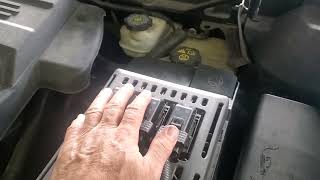
On this generation of Cadillac Escalade and its GMT900 platform mates (like the Chevrolet Tahoe, Suburban, Silverado and GMC Yukon/Sierra), the P2125 code is very frequently caused by a known wiring issue, not a failed sensor. General Motors issued a specific Technical Service Bulletin (TSB #PIP3783D) highlighting that 🎬 Watch: A deep dive into diagnosing the TSB wiring issues. poor electrical contact in the accelerator pedal's wiring connector, and also in two major inline body connectors (X109 and X205), is a primary cause. This means that before you rush to buy a new pedal, a thorough inspection of the full circuit is critical.
Diagnostic Flowchart
Tap your situation to follow the diagnostic path that matches what you're seeing on this vehicle.
Symptoms You May Notice
- "Reduced Engine Power" message displayed on the instrument cluster
- Check Engine Light (Service Engine Soon light) is on
- Poor or no throttle response
- Vehicle will not accelerate past a low speed
- Hesitation or stalling when pressing the accelerator
- Engine may misfire or run poorly
- Replacing the Throttle Body. The throttle body has its own set of diagnostic codes (like P1516 or P2135). P2125 specifically points to the driver's input at the pedal ('E' circuit), not the throttle's action at the engine.
Most Likely Causes
- Poor Terminal Tension at APP Sensor Connector or Inline Connectors 🔴 High Probability As documented in GM TSB #PIP3783D, the female terminals in the wiring harness connector at the pedal can loosen over time, causing intermittent signal loss. The TSB also identifies inline body connectors C109/X109 (under the underhood fuse block) and C205/X205 (under the instrument panel) as potential locations for corrosion or poor connection.
How to confirm: With the key on and engine off, use a scan tool to monitor APP sensor 2 voltage while gently wiggling the connector at the pedal and the related harnesses. If the voltage reading drops out or becomes erratic (jumping outside the 0.24V-4.49V range), the connection is the likely fault.
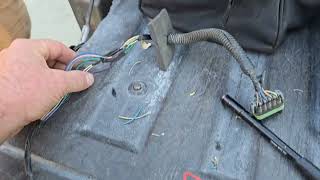
Typical fix: Replace the connector pigtail by splicing in a new one (e.g., ACDelco PT2628). Alternatively, carefully re-tension the existing female terminals with a small pick tool. Applying dielectric grease can help prevent future corrosion. Inspect and clean inline connectors X109 and X205 if necessary.
Est. part cost: $30-$80 - Faulty Accelerator Pedal Position (APP) Sensor 🔴 High Probability → Shop Accelerator Pedal Assembly The sensor is a high-use electronic component that wears out over time. It is integrated directly into the accelerator pedal assembly and is not serviceable.
How to confirm: If the connector and wiring are confirmed to be good, but a scan tool shows erratic or no voltage from one of the APP sensors as the pedal is pressed, the sensor itself has failed. The reading should be smooth from idle to full press. On many GM vehicles, a healthy APP Sensor 2 should read approximately 50% of the voltage of APP Sensor 1 throughout the pedal's travel.
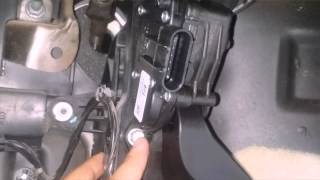
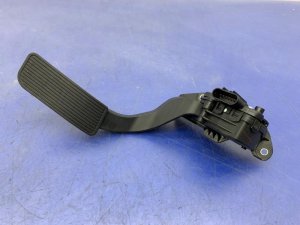
Typical fix: Replace the entire accelerator pedal assembly. It is a non-serviceable unit. The most 🎬 See this walkthrough on how to replace the pedal assembly. common OEM part is GM #25832864.
Est. part cost: $60-$150 - Damaged Wiring Harness 🟡 Medium Probability The harness can be damaged by abrasion, corrosion from wet floor mats, or improper installation of aftermarket accessories. Breaks in the wires often occur within 1 to 4 inches of the APP sensor connector.
How to confirm: Visually inspect the wiring harness between the pedal and the firewall. Look for chafing, melting, or green corrosion. Perform a continuity test on the relevant wires between the APP sensor connector and the PCM if a break is suspected.
Typical fix: Repair the specific broken or shorted wire using solder and heat shrink for a durable, weather-proof fix.
Est. part cost: $5-$20
Rare But Worth Checking
- Faulty Powertrain Control Module (PCM): → Shop Engine Control Module (ECM) This is extremely rare. The PCM should only be considered after all wiring, connector, and sensor issues have been definitively ruled out by a professional. One owner on a forum went through every other component before concluding the PCM was the issue.
Diagnosis Steps
- Read all stored DTCs with an OBD-II scanner. Note all codes present, especially P2120, P2138, or others in the P212x family.
- Use the scanner's live data function to monitor the voltage of APP Sensor 1 and APP Sensor 2. At idle, they should show steady, different voltages. Per TSB PIP3783D, the expected range for APP2 (Circuit 'E') is between 0.24V and 4.49V. 🎬 Watch: How to perform a professional APP sensor voltage diagnosis.
- With the key on (engine off), slowly press and release the accelerator pedal. Both sensor readings should change smoothly and track with each other without any dropouts or spikes. For many GM vehicles, APP2 voltage should remain close to 50% of APP1 voltage.
- Gently wiggle the wiring connector at the accelerator pedal while watching the live data. Any sudden drops or spikes in the readings indicate a bad connection.
- If wiggling the pedal connector has no effect, manipulate the main engine harness, specifically near the underhood fuse block (location of connector X109) and under the dash (location of X205), to see if the voltage readings are affected.
- Disconnect the pedal and visually inspect the connector terminals (both on the pedal and in the harness) for corrosion, damage, or being spread too far apart (poor tension).
- If a bad connection is confirmed, either replace the connector pigtail (recommended) or carefully re-tension the terminals.
- If the connection is solid but the sensor readings are still faulty, replace the accelerator pedal assembly.
- If the problem persists after replacing the pedal and verifying the connector, perform a continuity check on the signal, reference, and ground wires between the pedal connector and the PCM to rule out a harness break.
Parts You'll Likely Need
- Accelerator Pedal Assembly
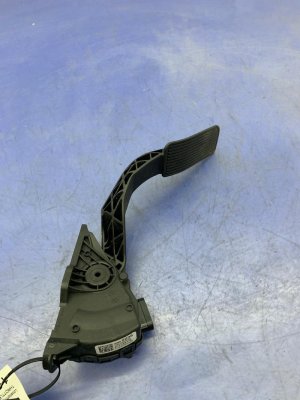
(OEM #25832864)— This is the most common fix when the sensor itself has failed. The sensor is integrated into the pedal assembly and is not sold separately. This part number replaces older versions 15101848 and 15847349.
Trusted brands: ACDelco, Standard Motor Products, NTK
OEM price range: $120-$150
Aftermarket price range: $60-$100 - Accelerator Pedal Position Sensor Connector
(OEM #ACDelco PT2628 / GM 88986222)— This 8-pin pigtail is required to fix the common issue of poor terminal tension, as identified in TSB PIP3783D. Splicing in a new connector is often more reliable than re-tensioning old, fatigued pins.
Trusted brands: ACDelco, Dorman
OEM price range: $60-$80
Aftermarket price range: $30-$45
Related Codes That Often Appear With This One
- P2120 — Both codes relate to the APP sensor circuits. P2120 points to Sensor/Switch 'D' circuit, while P2125 points to 'E' circuit. A wiring or connector issue often affects both.
- P2138 — This code indicates a Voltage Correlation error between APP Sensor 1 and Sensor 2. It is often set alongside P2125 when the PCM sees a signal from one sensor that doesn't plausibly match the other.
- P2122, P2123, P2127, P2128 — These codes are all specific to high or low voltage faults in the different APP sensor circuits. They are all mentioned in TSB #PIP3783D and point to the same potential causes of a faulty pedal, connector, or wiring.
Technical Service Bulletins (TSBs) & Recalls
- PIP3783D: Addresses SES light and Reduced Engine Power with DTCs P2120, P2122, P2123, P2125, P2127, P2128, and/or P2138, pointing to poor terminal tension in APP sensor circuits at the pedal and in major inline body connectors.
Platform-Specific Known Issues
- A GM Technical Service Bulletin (PIP3783D) exists specifically for this issue on 2007-2014 Escalades and their platform mates. It explicitly directs technicians to inspect for poor terminal tension at the APP sensor connector and also at inline connectors C109/X109 and C205/X205 as a primary diagnostic step before replacing parts.
Mechanic-Grade Diagnostic Values
- APP Sensor 2 (Circuit 'E') Voltage — expected: Between 0.24V and 4.49V. Should be approximately 50% of APP Sensor 1's voltage.. Failure: Voltage is less than 0.235V or more than 4.487V for more than 0.5 seconds.
- APP Sensor 1 (Circuit 'D') Voltage — expected: Between 0.24V and 4.49V. At rest, voltage is low (e.g., ~0.88V) and increases smoothly to ~4.5V at full pedal press.. Failure: Voltage is outside the specified range, does not change smoothly, or does not correlate with APP Sensor 2.
- APP Sensor Low Reference (Ground) Circuit — expected: Less than 100mV (0.1V) when back-probing the ground wires at the APP connector with the sensor plugged in and key on.. Failure: Voltage significantly higher than 0.1V indicates a poor ground connection, which is a common cause of sensor codes.
Scan Tool Commands That Help
- N/A: No specific relearn procedure required. — Unlike a throttle body replacement, replacing the Accelerator Pedal Position (APP) sensor on this platform does not typically require a specific scan tool relearn or manual reset procedure. The PCM adapts to the new sensor's values automatically after installation and a few key cycles.
Wiring & Ground Locations
- X205 — Under the upper instrument panel (dashboard), requiring removal of the dash trim panel with the defroster grille to access.. This is a major inline body connector identified in TSB PIP3783D as a potential site for corrosion, water intrusion, or poor pin tension affecting the APP sensor circuits.
- X109 — In the engine compartment, located below the underhood fuse block on the driver's side.. This is the second major inline connector mentioned in TSB PIP3783D. It's a common point for harness issues due to its location in the engine bay.
- G201 — Behind the upper left (driver's side) end of the dashboard.. This is a primary instrument panel ground point. A loose or corroded G201 can cause a floating ground for various interior electronics, including the APP sensor's low reference circuit, leading to erratic voltage readings.
Real Owner Repair Stories
- TahoeYukonForum.com user (2007 Chevy Tahoe (GMT900 platform-mate)) — Reduced Engine Power message, codes P2125 and P2138.
❌ Tried (didn't work) Replacing the accelerator pedal assembly (twice), Replacing the throttle body, Cleaning the throttle body
✅ What actually fixed it The problem was finally resolved by cutting off the original APP sensor connector and splicing in a new pigtail connector. The terminals in the original connector had lost tension, causing an intermittent connection that wasn't obvious on visual inspection.
Helpful Videos
We Have This Part in Stock

The information in this article is provided for general reference and educational purposes only. Vehicle specifications, procedures, and part compatibility can vary by production date, trim level, and region. Always consult your vehicle's factory service manual and verify part numbers before purchasing or performing repairs. Safety-critical components such as airbags, seat belts, and braking systems should be installed by a qualified professional.
- Cadillac ESCALADE:
- 🧭 Diagnostic Flowchart
- 🎬 Helpful Videos
- 🛍️ Shop This Part
- What's Unique About the 2007-2014 Cadillac ESCALADE
- Symptoms You May Notice
- Most Likely Causes
- Rare But Worth Checking
- Diagnosis Steps
- Parts You'll Likely Need
- Related Codes That Often Appear With This One
- Technical Service Bulletins (TSBs) & Recalls
- Platform-Specific Known Issues
- Mechanic-Grade Diagnostic Values
- Scan Tool Commands That Help
- Wiring & Ground Locations
- Real Owner Repair Stories
- 🎟️ Get 5% Off