

P2125 on 2007-2014 GMC Yukon: Accelerator Pedal Sensor 'E' Circuit Causes and Fixes
On a 2007-2014 GMC Yukon, code P2125 almost always points to a faulty accelerator pedal position (APP) sensor or a bad connection at the sensor. The vehicle will enter 'Reduced Engine Power' mode. The most common fix is replacing the entire accelerator pedal assembly, which is a simple DIY job costing between $60 and $190 for the part. Checking the connector terminals for looseness, as noted in a GM TSB, is a critical first step.
- P2125 on a 2007-2014 Yukon points directly to a fault in the accelerator pedal's sensor circuit.
- The vehicle will go into 'Reduced Engine Power' mode, making it unsafe for normal driving.
- Before replacing any parts, inspect the electrical connector at the pedal for loose or corroded terminals, as this is a known issue cited in a GM TSB.
- The most common fix is replacing the entire accelerator pedal assembly, which is a beginner-friendly DIY repair that takes less than 30 minutes.
What's Unique About the 2007-2014 Gmc YUKON
The GMT900 platform, which includes the 2007-2014 Yukon, is known for issues with the electrical connector for the accelerator pedal sensor. General Motors issued a Technical Service Bulletin (TSB #PIP3783D) specifically advising technicians to inspect the APP sensor circuits for poor terminal tension. This means that before you replace the pedal assembly, it's critical to check if the problem is simply a loose or corroded connection, which is a common point of failure on these trucks. Water intrusion into the IP-to-body harness connector in the driver's side kick panel area has also been noted as a cause for related APP sensor codes on these vehicles.
Diagnostic Flowchart
Tap your situation to follow the diagnostic path that matches what you're seeing on this vehicle.
Symptoms You May Notice
- "Reduced Engine Power" message on the dashboard.
- Check Engine Light (Malfunction Indicator Lamp) is on.
- Very limited or no throttle response (vehicle may not exceed 1500 RPM).
- Vehicle hesitates or stalls when accelerating.
- Erratic or delayed acceleration.
- Gauges and lights on the dashboard may act erratically if the cause is a bad ground wire.
- Replacing the throttle body. The throttle body has its own throttle position sensor (TPS), but P2125 specifically refers to the accelerator pedal sensor inside the cabin. While throttle body issues can also cause 'Reduced Engine Power', they typically set different codes (like P2135 or P1516).
Most Likely Causes
- Poor terminal tension at the APP sensor connector 🔴 High Probability This is a known issue documented by GM in TSB #PIP3783D. The connector pins can loosen over time due to vibration and heat cycles, causing an intermittent and faulty signal.
How to confirm: Disconnect the electrical connector from the accelerator pedal assembly. Visually inspect the pins and sockets for corrosion or damage. Use a proper terminal test probe to check for a snug fit. Wiggling the harness while monitoring live data on a scan tool may also show the voltage drop out. A user on a forum might notice the issue is triggered by hitting bumps in the road.
Typical fix: Clean the connector terminals with contact cleaner. If terminal tension is poor, the TSB recommends re-crimping the terminals or replacing the connector pigtail. Pigtail part numbers like PT2712 or 13584094 are common replacements.
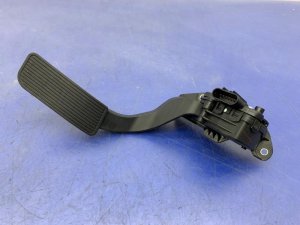
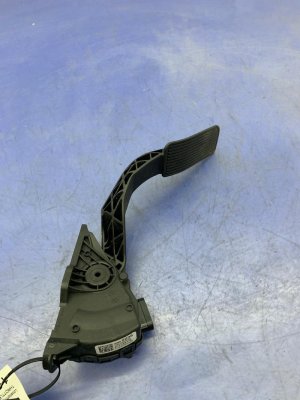
Est. part cost: $15-$40 for a new pigtail connector. - Failed Accelerator Pedal Position (APP) Sensor 🔴 High Probability → Shop Accelerator Pedal Assembly The sensor is an electronic component that wears out over time. It is integrated into the accelerator pedal assembly and is the most commonly replaced part for this code.
How to confirm: After confirming the connector and wiring are good, use a scan tool to monitor the APP sensor voltage readings (APP1 and APP2). If one of the readings is erratic, stuck at a certain voltage, or doesn't change smoothly as you press the pedal, the sensor has failed. The two sensors should show a correlating change in voltage; if they disagree, a code will be set.
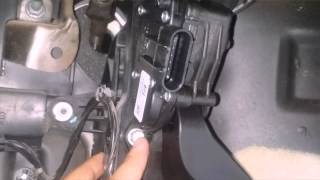
Typical fix: Replace the entire accelerator pedal assembly. The sensor is not sold separately for this vehicle. This is often a simple DIY repair involving a few 10mm bolts. 🎬 Watch: Step-by-step guide to replacing the accelerator pedal assembly.
Est. part cost: $90-$190 - Damaged Wiring Harness 🟡 Medium Probability Wiring can become chafed or damaged where it passes through the firewall or rubs against other components, leading to a short or open circuit. In some cases, mice have been known to chew through the harness near the firewall grommet after it was dislodged for other wiring installations.
How to confirm: Visually inspect the wiring harness running from the APP sensor to the PCM for any signs of damage, melting, or chafing. A common chafing point on GM vehicles is where the harness may rub on a valve cover. Perform a continuity test on each wire with a multimeter.
Typical fix: Repair the damaged section of wire using solder and heat shrink tubing. Protect the harness from future damage with loom or by re-routing it.
Est. part cost: $5-$20 for wiring repair supplies
Rare But Worth Checking
- Faulty Powertrain Control Module (PCM): → Shop Engine Control Module (ECM) This is rare and should only be considered after all other possibilities (sensor, connector, wiring) have been exhaustively ruled out. A failed PCM can sometimes mimic sensor circuit faults.
- Poor Ground Connection: A loose or corroded ground wire, particularly the main engine or body grounds, can cause a host of electrical issues, including the Reduced Engine Power message. One video documented a broken ground wire on the passenger side of the intake manifold causing intermittent power loss and relay clicking when wiggled. 🎬 Watch: How to find and inspect critical engine ground wires.
Diagnosis Steps
- Read all stored fault codes with an OBD-II scanner. Note any other codes that are present, especially P2138.
- Check for Technical Service Bulletins (TSBs) related to P2125 for your vehicle. TSB #PIP3783D is highly relevant.
- Visually inspect the accelerator pedal assembly, its electrical connector, and the wiring harness for any obvious damage, moisture, or signs of rodent activity.
- Disconnect the APP sensor connector. Inspect the terminals for corrosion, moisture, or damage. Check for proper terminal tension as recommended by the TSB.
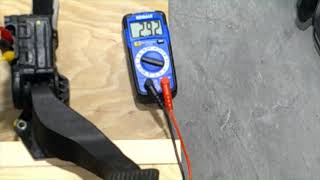
- Using a scan tool with live data capability, monitor the voltage readings for both APP Sensor 1 and APP Sensor 2. The readings should be smooth and correspond to pedal movement. One sensor's voltage typically sweeps up while the other sweeps down. A jumpy or frozen reading indicates a problem. 🎬 See how to test the pedal and identify glitchy readings.
- While watching live data, wiggle the wiring harness at the pedal connector, along the firewall, and near the PCM to see if the voltage readings fluctuate, which would indicate a wiring issue.
- If the connector and wiring appear fine but the sensor data is erratic or incorrect, the accelerator pedal assembly is the likely culprit and should be replaced.
- If the sensor and connector are confirmed to be good, perform a continuity and resistance check on the wiring harness between the APP sensor and the PCM to rule out an open or shorted wire.
Parts You'll Likely Need
- Accelerator Pedal Assembly
(OEM #25832864)— This is the most common failure point for code P2125. The sensor is integrated into the pedal assembly and is not sold separately.
Trusted brands: ACDelco (GM Genuine Parts), Standard Motor Products, Dorman
OEM price range: $140-$190
Aftermarket price range: $60-$120 - Accelerator Pedal Sensor Connector (Pigtail)
(OEM #PT2712 (ACDelco), 13584094 (GM))— If the cause is poor terminal tension or a damaged connector, replacing the pigtail is the correct repair, as outlined in TSB PIP3783D.
Trusted brands: ACDelco, Dorman, Standard Motor Products (S-1197)
OEM price range: $25-$50
Aftermarket price range: $15-$30
Related Codes That Often Appear With This One
- P2120 — Relates to the APP Sensor 'D' circuit, the other primary sensor in the pedal assembly. Often appears with P2125 when there is a general pedal or connector issue.
- P2122 — Indicates low voltage on the APP Sensor 'D' circuit.
- P2123 — Indicates high voltage on the APP Sensor 'D' circuit.
- P2127 — Indicates low voltage on the APP Sensor 'E' circuit, directly related to P2125.
- P2128 — Indicates high voltage on the APP Sensor 'E' circuit, directly related to P2125.
- P2138 — Indicates a voltage correlation problem between the two APP sensors ('D' and 'E'). This is very common to see alongside P2125, as it means the PCM is receiving conflicting signals from the two sensors.
Technical Service Bulletins (TSBs) & Recalls
- PIP3783D: Addresses SES light and reduced engine power with codes including P2125. Recommends inspecting Accelerator Pedal Position (APP) circuits for poor terminal tension.
- 11273A: A special coverage adjustment for throttle body position sensor issues, which can be confused with P2125 but typically sets code P2135.
Platform-Specific Known Issues
- A Special Coverage Adjustment (#11273A) was issued for some 2008-2011 GM trucks, including the Yukon, for issues with the *throttle position sensor* on the throttle body, which can cause similar symptoms but usually sets code P2135. It's important to distinguish this from the P2125 code, which points to the pedal sensor inside the cab.
- TSB #PIP3783D specifically calls out poor terminal tension in the APP sensor circuits as a cause for P2125 and related codes.
- Water intrusion in the driver's side footwell or kick panel area can corrode harness connectors, leading to APP sensor circuit faults.
Mechanic-Grade Diagnostic Values
- APP Sensor 2 ('E' Circuit) Voltage — expected: 0.24V to 4.49V, changing smoothly with pedal input.. Failure: Voltage is less than 0.24V or more than 4.49V for more than 0.5 seconds.
- APP Sensor 2 5-Volt Reference Circuit — expected: 4.8V to 5.2V.. Failure: Voltage is less than 4.49V or more than 5.21V.
Scan Tool Commands That Help
- Manual Procedure (No Scan Tool): Idle / Throttle Relearn Procedure — After replacing the accelerator pedal assembly or throttle body, or after disconnecting the battery, to allow the ECM to learn the new sensor's idle and full-range positions. An incomplete relearn can cause erratic idle or persistent codes. A common procedure is: 1. Start the engine and let it idle in Park for 3 minutes. 2. Turn the engine off for 1 minute. 3. Restart the engine and let it idle for another 3 minutes. The idle should stabilize. If not, a drive cycle above 45 MPH with several decelerations may be required.
Wiring & Ground Locations
- G103 — On the front of the passenger side (right) cylinder head. Some earlier diagrams may show it on the right rear of the engine block.. A poor ground connection at this point can cause a variety of electrical issues and sensor faults. The ECM and other critical modules rely on clean grounds for accurate sensor readings.
- G104 — On the rear of the driver side (left) cylinder head.. This is a primary engine ground. A loose or corroded connection here can cause intermittent power loss and unpredictable behavior from engine sensors, mimicking a component failure.
- IP-to-Body Harness Connector — Large connector located in the driver's side kick panel area, often above or near the parking brake pedal assembly.. This connector carries the APP sensor signals to the ECM. It is a notorious spot for water intrusion from windshield or cowl leaks, leading to corrosion and setting P2125/P2138. This is a well-documented issue in GM TSBs.
- APP Sensor Connector — 6-pin connector directly attached to the accelerator pedal assembly.. This is the primary connection point for the sensor. TSB #PIP3783D specifically calls out checking for poor terminal tension in this connector as a first step.
Real Owner Repair Stories
- Edmunds Forums user (GMC Yukon XL) — Intermittent 'Reduced Engine Power' mode, stalling.
❌ Tried (didn't work) Multiple diagnostic sessions at a dealership that cost nearly $2,000.
✅ What actually fixed it The final fix was a loose ground wire. The mechanic found one loose ground and another where the clamp was damaged, causing the wire to flop around. When the wire was wiggled, the fuel pump and other relays could be heard clicking on and off. The repair cost was for a $3 clamp. - YouTube channel 'Just Rolled In' (GM vehicle with 3.8L V6 (similar drive-by-wire system)) — Reduced Engine Power message, multiple codes including P1125, P2125, P2138.
❌ Tried (didn't work) Initial thought was to replace the pedal assembly or throttle body.
✅ What actually fixed it After finding no continuity on several wires between the pedal and throttle body, the technician discovered the wiring harness had been rubbing on the valve cover. This chafing completely severed five wires. Repairing the wires and protecting the harness from future rubbing resolved all fault codes.
OEM Part Supersession History
15101848, 15847349→25832864— Standard part revision and consolidation by the manufacturer.
Heads up: Part 25832864 is the correct replacement for the earlier numbers on vehicles with adjustable pedals.
Model Year Variations Within This Range
- 2007-2014: The exact physical location of some ground points may vary slightly. For example, some diagrams for 2007 models show ground G103 on the front of the right cylinder head, while others for 2009 show it in the same place, but a 2006 diagram shows it on the right rear of the engine block. Always verify the location for your specific model year, but the key grounds will be on the cylinder heads and engine block.
Helpful Videos
We Have This Part in Stock

The information in this article is provided for general reference and educational purposes only. Vehicle specifications, procedures, and part compatibility can vary by production date, trim level, and region. Always consult your vehicle's factory service manual and verify part numbers before purchasing or performing repairs. Safety-critical components such as airbags, seat belts, and braking systems should be installed by a qualified professional.
- Gmc YUKON:
- 🧭 Diagnostic Flowchart
- 🎬 Helpful Videos
- 🛍️ Shop This Part
- What's Unique About the 2007-2014 Gmc YUKON
- Symptoms You May Notice
- Most Likely Causes
- Rare But Worth Checking
- Diagnosis Steps
- Parts You'll Likely Need
- Related Codes That Often Appear With This One
- Technical Service Bulletins (TSBs) & Recalls
- Platform-Specific Known Issues
- Mechanic-Grade Diagnostic Values
- Scan Tool Commands That Help
- Wiring & Ground Locations
- Real Owner Repair Stories
- OEM Part Supersession History
- Model Year Variations Within This Range
- 🎟️ Get 5% Off