

P2125 on 2007-2011 GMC Yukon Denali: Accelerator Pedal Sensor Circuit Causes and Fixes
On a 2007-2011 GMC Yukon Denali, code P2125 almost always indicates a problem with the accelerator pedal assembly or its wiring, triggering 'Reduced Engine Power' mode. The most likely cause is a poor electrical connection at the pedal, as noted in GM TSB #PIP3783D. If the connector is secure, replacing the pedal assembly (OEM Part #25832864) is the common fix, costing $80-$190 for the part and requires no reprogramming.
- P2125 on a 2007-2011 Yukon Denali will cause the vehicle to enter 'Reduced Engine Power' mode.
- Before buying any parts, inspect the electrical connector at the accelerator pedal for loose or corroded terminals, as this is a known GM issue (TSB #PIP3783D).
- If the connector is good, the most likely fix is replacing the entire accelerator pedal assembly, which is a simple DIY job.
- Do not confuse this with a throttle body issue; P2125 points specifically to the accelerator pedal sensor circuit.
What's Unique About the 2007-2011 Gmc YUKON DENALI
The GMT900 platform, which includes the 2007-2011 Yukon Denali, is known for electrical issues related to the accelerator pedal. General Motors issued Technical Service Bulletin #PIP3783D specifically advising technicians to check the Accelerator Pedal Position (APP) sensor's electrical connector for poor terminal tension. This means a simple connector or wiring issue is a very common cause for this code, which can often be misdiagnosed as a failed pedal sensor itself. The connector is a 6-pin connector located in the driver's footwell and can be disturbed by feet or floor mats.
🎬 Watch this first to understand these common GM pedal codes.Diagnostic Flowchart
Tap your situation to follow the diagnostic path that matches what you're seeing on this vehicle.
Symptoms You May Notice
- "Reduced Engine Power" message on the instrument cluster.
- "Service Stabilitrak" message may also appear.
- Check Engine Light (Malfunction Indicator Lamp) is on.
- Poor or no throttle response; pedal feels dead.
- Vehicle will not accelerate properly or has very limited speed.
- Hesitation or surging while driving at a steady speed.
- Vehicle may stall intermittently.
- Replacing the throttle body. The throttle body has its own position sensors, but P2125 specifically points to the accelerator pedal inside the cabin. Throttle body issues typically set different codes, such as P1516 or P2135.
Most Likely Causes
- Poor Terminal Tension or Corrosion at APP Sensor Connector 🔴 High Probability GM issued TSB #PIP3783D specifically for this issue on this platform, indicating that the female terminals in the 6-pin connector can spread, causing a loose connection and intermittent signal loss.
How to confirm: Visually inspect the electrical connector at the accelerator pedal. Disconnect it and check for any spread, loose, or corroded pins. With the engine running and a scan tool connected, perform a 'wiggle test' by gently moving the connector and harness to see if it triggers the fault or causes voltage readings to jump. 🎬 See how to diagnose and fix these specific voltage issues.
Typical fix: If terminals are loose, they may need to be carefully re-tensioned with a terminal pick tool. If the connector is damaged or terminals are spread beyond repair, replace the connector pigtail. Clean any corrosion with an electrical contact cleaner.
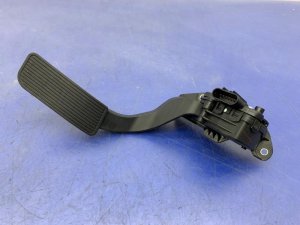
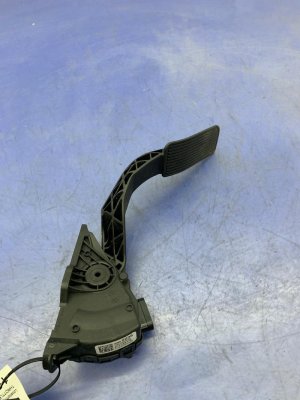
Est. part cost: $25-$50 for a new pigtail connector (e.g., ACDelco PT2712 / GM 13584094). - Failed Accelerator Pedal Position (APP) Sensor Assembly 🟡 Medium Probability → Shop Accelerator Pedal Assembly The internal electronic components (potentiometers) of the sensor wear out over time from use, causing erratic or incorrect voltage signals. It is a common failure point on many modern vehicles and is sold as a complete pedal assembly.
How to confirm: Using a scan tool, monitor the live data for APP Sensor 1 and APP Sensor 2. As you press the pedal, both voltage readings should increase smoothly and correlate with each other (one is typically half the other). If the APP Sensor 2 signal is erratic, flat, or outside the 0.24V-4.49V range, the sensor is bad.
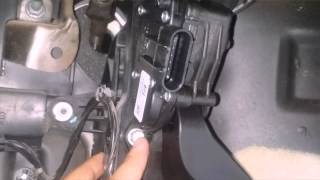
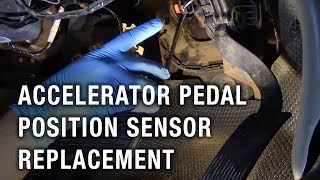
Typical fix: Replace the entire accelerator pedal assembly. It is typically held on by two or three 10mm nuts and is a plug-and-play part with no programming required. 🎬 Follow this walkthrough to replace your accelerator pedal assembly.
Est. part cost: $80-$190 - Damaged Wiring Harness ⚪ Low Probability The wiring harness can be damaged by abrasion against sharp edges under the dash, from aftermarket accessory installation, or from floor mats interfering with it.
How to confirm: Perform a continuity and resistance check on the wires between the APP sensor connector and the PCM. Check for any shorts to ground or power. A user on Cadillac Forums traced a similar issue to a pin that had backed out of the main ECM connector, which is a more advanced check.
Typical fix: Repair the specific damaged section of wire. This may involve soldering and heat-shrinking the affected wire or repinning a connector.
Est. part cost: $5-$25 for wiring repair supplies
Rare But Worth Checking
- Failed Powertrain Control Module (PCM): → Shop Engine Control Module (ECM) This is very rare. The PCM should only be considered after all other possibilities, including the sensor, connector, and all related wiring, have been thoroughly tested and ruled out.
Diagnosis Steps
- Scan the PCM for all stored trouble codes. Note any other codes that accompany P2125, especially P2138.
- Visually inspect the wiring harness leading to the accelerator pedal assembly. Look for any signs of chafing, pinching, or damage from floor mats or feet.
- Disconnect the 6-pin electrical connector at the accelerator pedal. Carefully inspect the terminals on both the harness side and the pedal side for corrosion, moisture, or signs of being loose or spread apart. This is the issue highlighted in TSB #PIP3783D.
- With the key on and engine off, use a multimeter to verify that you have a stable 5-volt reference and a good ground at the connector.
- If available, use a scan tool to observe the live data from both 'APP Sensor 1' and 'APP Sensor 2'. Press the pedal slowly from fully released to fully depressed. The voltage for APP Sensor 2 should sweep smoothly and stay within the range of approximately 0.24V to 4.49V.
- Perform a 'wiggle test': While watching the live data, gently wiggle the connector and harness at the pedal. If the voltage readings spike, drop out, or become erratic, the fault is in the wiring or connector.
- If the wiring and connector are confirmed to be good but the sensor data is erratic, the accelerator pedal assembly is faulty and should be replaced.
- After replacement, clear the codes and perform a test drive. No special relearn procedure or programming is required for this part.
Parts You'll Likely Need
- Accelerator Pedal Position (APP) Sensor Assembly
(OEM #25832864)— This assembly contains the sensors that fail or wear out, causing code P2125. It is the most common part replaced to fix this issue after wiring problems are ruled out. This part number supersedes older numbers like 15847349 and 15101848.
Trusted brands: ACDelco (GM Genuine), Dorman (699-105 or 699-199), Standard Motor Products
OEM price range: $100-$190
Aftermarket price range: $60-$120 - Accelerator Pedal Sensor Connector Pigtail
(OEM #ACDelco PT2712 / GM 13584094)— If the connector terminals have lost tension or the housing is damaged, as described in TSB #PIP3783D, replacing the pigtail is the correct repair.
Trusted brands: ACDelco, Dorman (645-595), Standard Motor Products (S-1197)
OEM price range: $25-$50
Aftermarket price range: $15-$30
Related Codes That Often Appear With This One
- P2138 — Indicates a voltage correlation problem between the two APP sensors ('D' and 'E'). It is very common to see with P2125 as it means the two sensors are sending conflicting signals, which is a direct result of one sensor circuit failing.
- P2120 — Indicates a fault in the APP Sensor 1 ('D') circuit. Often appears with P2125 when there is a general pedal, connector, or power supply issue affecting the entire assembly.
- P2122 — Indicates low voltage on the APP Sensor 1 ('D') circuit.
- P2127 — Indicates low voltage on the APP Sensor 2 ('E') circuit, directly related to P2125.
- P2123 — Indicates high voltage on the APP Sensor 1 ('D') circuit.
- P2128 — Indicates high voltage on the APP Sensor 2 ('E') circuit, directly related to P2125.
Technical Service Bulletins (TSBs) & Recalls
- PIP3783D: Addresses a Service Engine Soon lamp, reduced engine power, and DTCs like P2125, P2120, P2122, P2123, P2127, P2128, and/or P2138. The bulletin specifically instructs technicians to inspect the Accelerator Pedal Position circuits for poor terminal tension before replacing any parts.
Platform-Specific Known Issues
- A known issue documented in GM Technical Service Bulletin #PIP3783D points to 'poor terminal tension' in the accelerator pedal position sensor's electrical connector, which can cause intermittent signal loss and trigger codes P2125, P2138, and others.
- Owners on the Tahoe Yukon Forum frequently report that the 'Reduced Engine Power' message appears intermittently, sometimes triggered by cold weather or hitting a bump, further pointing to a connection issue.
Mechanic-Grade Diagnostic Values
- APP Sensor 2 Signal Voltage (at pedal connector Pin A, Dark Blue wire) — expected: A smooth voltage increase as the pedal is depressed, staying within 0.24V to 4.49V.. Failure: Voltage is less than 0.24V or more than 4.49V for over 0.5 seconds, or the signal is erratic, has spikes, or dropouts.
- APP Sensor 5-Volt Reference (at pedal connector Pin B/Gray wire for Sensor 2, Pin F for Sensor 1) — expected: 4.8V to 5.2V with Key On, Engine Off.. Failure: Voltage is outside the expected range, indicating a problem with the ECM or the wiring.
- APP Sensor Low Reference (Ground) Resistance (at pedal connector Pin C/Black wire for Sensor 2, Pin D for Sensor 1) — expected: Less than 3.0 ohms of resistance between the pin and a known good chassis ground.. Failure: Resistance is greater than 3.0 ohms, indicating an open or high resistance in the ground circuit.
- APP Sensor 1 Signal Voltage (at pedal connector Pin F/Light Blue wire) — expected: Voltage is high at rest and decreases smoothly as the pedal is depressed (operates opposite of Sensor 2).. Failure: Voltage does not sweep smoothly or fails to correlate with the APP Sensor 2 signal, often setting P2138.
Scan Tool Commands That Help
- GDS2 / Tech2 or equivalent professional scanner: Module Communication Test / PCM Self-Test — After confirming wiring and sensor checks are clean, a technician can request a PCM self-test of the throttle-position inputs. A failed self-test can point toward an internal PCM circuitry fault, though this is rare.
Wiring & Ground Locations
- APP Sensor Connector (X115) — At the top of the accelerator pedal assembly in the driver's side footwell.. This 6-pin connector is the most common point of failure due to poor terminal tension (per TSB PIP3783D), corrosion, or damage. Pin A (Dark Blue) is the APP Sensor 2 signal wire directly related to P2125.
- ECM Connector C1 (J1) - Pin 49 — At the Engine Control Module (ECM), typically located in the engine bay.. Pin 49 (Light Blue wire) on the C1 connector is the input for the APP Sensor 2 Signal on some 2008 and similar models. Testing for continuity and shorts on this wire between the pedal and the ECM is a definitive way to rule out wiring harness issues.
- G103 — On the front of the right (passenger side) cylinder head.. This is a primary engine and module ground point. A poor connection here can cause a host of intermittent and difficult-to-diagnose electrical issues, including erratic sensor readings for the APP circuit.
- G102 — On the lower left (driver's side) front of the engine block.. This is another critical engine ground. A loose or corroded connection here can affect sensor reference voltages and grounds, potentially leading to false codes like P2125.
- IP-to-Body Harness Connector — In the driver's side kick panel area.. TSB #07-06-04-019F notes that water intrusion can corrode this major harness connector, leading to various electrical faults, including those for the APP sensor circuits.
Real Owner Repair Stories
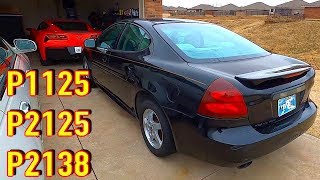
- YouTube channel 'MrSubaru1387' (GM vehicle with 3.8L V6 (similar drive-by-wire system)) — Reduced Engine Power message, codes P1125, P2125, P2138.
❌ Tried (didn't work) The video advises against immediately replacing the pedal assembly or throttle body.
✅ What actually fixed it The root cause was a section of the wiring harness rubbing against the valve cover, which had severed five wires completely. The fix involved repairing the individual wires with solder and heat shrink, then protecting the harness with a heat-resistant insulator to prevent it from happening again. After the repair, all fault codes were cleared.
"I Checked Everything" — The Actual Cause
- In cases of intermittent P2125 where the pedal has been replaced and the connector 'wiggle test' shows no faults, the underlying cause can be a hidden wiring issue far from the pedal itself. One documented case found five completely severed wires inside a loom where the harness was rubbing against the engine's valve cover. This type of fault would not be found by replacing common parts and requires a thorough inspection of the entire harness route for chafing or damage.
OEM Part Supersession History
15101848, 15847349→25832864— Part has been updated by the manufacturer over time.N/A→ACDelco PT2712 / GM 13584094— This is the recommended service pigtail connector for repairing a damaged harness-side connector for the APP sensor.
Helpful Videos
We Have This Part in Stock

The information in this article is provided for general reference and educational purposes only. Vehicle specifications, procedures, and part compatibility can vary by production date, trim level, and region. Always consult your vehicle's factory service manual and verify part numbers before purchasing or performing repairs. Safety-critical components such as airbags, seat belts, and braking systems should be installed by a qualified professional.
- Gmc YUKON DENALI:
- 🧭 Diagnostic Flowchart
- 🎬 Helpful Videos
- 🛍️ Shop This Part
- What's Unique About the 2007-2011 Gmc YUKON DENALI
- Symptoms You May Notice
- Most Likely Causes
- Rare But Worth Checking
- Diagnosis Steps
- Parts You'll Likely Need
- Related Codes That Often Appear With This One
- Technical Service Bulletins (TSBs) & Recalls
- Platform-Specific Known Issues
- Mechanic-Grade Diagnostic Values
- Scan Tool Commands That Help
- Wiring & Ground Locations
- Real Owner Repair Stories
- "I Checked Everything" — The Actual Cause
- OEM Part Supersession History
- 🎟️ Get 5% Off