

P2127 on 2007-2014 Cadillac Escalade: APP Sensor Circuit Low Causes and Fixes
This code indicates a low voltage problem in the accelerator pedal position (APP) sensor circuit. On this Escalade, the most likely cause is a poor electrical connection at the pedal itself, as noted in a GM Technical Service Bulletin. Before replacing the pedal, inspect the connector terminals for a loose fit. Other common causes are a failed pedal assembly or damaged wiring.
- P2127 on a 2007-2014 Escalade points to a low voltage issue with the accelerator pedal sensor.
- Before buying any parts, inspect the electrical connector at the gas pedal for loose-fitting terminals, as this is a known issue documented by GM in TSB #PIP3783D.
- Driving is possible but not recommended, as the vehicle will be in a 'Reduced Engine Power' mode with very poor acceleration.
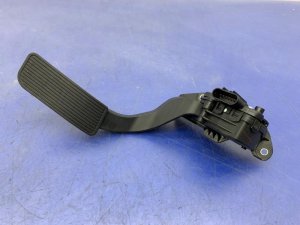
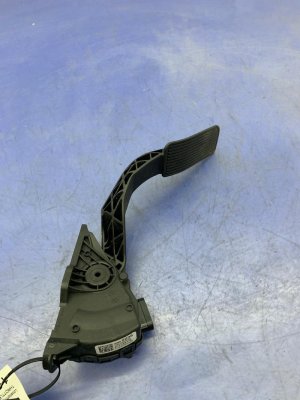
- If the connector is secure, the next most likely fix is replacing the entire accelerator pedal assembly (Part No. 25832864), which contains the faulty sensor.
- This is a DIY-friendly repair for those comfortable working in the driver's footwell, typically requiring only a 10mm socket.
What's Unique About the 2007-2014 Cadillac ESCALADE
The 2007-2014 Cadillac Escalade (GMT900 platform) is specifically called out in a General Motors Technical Service Bulletin (TSB) for this family of codes. The TSB highlights that poor terminal tension in the accelerator pedal's electrical connector is a common culprit. This means the problem is often the connection itself, not a failure of the entire pedal assembly, presenting a unique and cost-effective first diagnostic step for owners. This issue is common across the entire GMT900 platform, including its Chevrolet and GMC siblings.
Diagnostic Flowchart
Tap your situation to follow the diagnostic path that matches what you're seeing on this vehicle.
Symptoms You May Notice
- Reduced Engine Power message on the dashboard
- Check Engine Light is on
- Sluggish or no acceleration
- Vehicle will not accelerate past a very low speed
- Lagging or intermittent throttle response
- "Service StabiliTrak" or Traction Control lights may also illuminate
- Replacing the throttle body assembly. The code P2127 specifically relates to the accelerator pedal circuit, not the throttle body itself.
- Immediately replacing the accelerator pedal assembly without first checking the connector and wiring for issues, which is the most common problem on this vehicle according to TSB #PIP3783D.
Most Likely Causes
- Poor Terminal Tension at APP Sensor Connector 🔴 High Probability This specific issue is documented in GM Technical Service Bulletin #PIP3783D 🎬 Watch: Diagnosing P2127 and P2138 codes on a GM truck for this vehicle platform. Over time, the female terminals in the connector can loosen, causing an intermittent or poor connection.
How to confirm: Visually inspect the electrical connector at the accelerator pedal. Disconnect it and check for any signs of corrosion, moisture, or backed-out pins. Gently tug on each wire to ensure it is secure in the connector. A technician would use a special tool to check the tension of the female terminals, but a loose fit may be visually apparent.
Typical fix: Repairing the terminal connection. This can sometimes be done by carefully tightening the female terminals with a pick tool. Applying dielectric grease before reconnecting can help ensure a good connection and prevent future corrosion. If terminals are damaged, the connector pigtail must be replaced.
Est. part cost: $0-$40 - Failed Accelerator Pedal Position (APP) Sensor Assembly 🟡 Medium Probability → Shop Accelerator Pedal Assembly The sensor is an electronic component that can wear out over time. It is often replaced when the actual fault is the connector, so it's crucial to check the connector first.
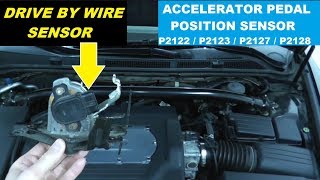
How to confirm: After confirming the wiring and connector are good, use a scan tool to monitor the APP sensor 2 voltage. 🎬 See how to test and replace a drive-by-wire sensor If the voltage is stuck low, does not change smoothly as the pedal is pressed, or shows sudden spikes or glitches, the sensor is faulty.
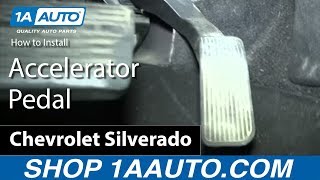
Typical fix: Replace the entire accelerator pedal assembly, as the sensor is integrated into it. This is typically a simple DIY job involving two bolts and one electrical connector. 🎬 Watch: Step-by-step guide to replacing the accelerator pedal assembly
Est. part cost: $70-$130 - Damaged Wiring Harness ⚪ Low Probability Wiring can be damaged by abrasion from floor mats, corrosion from water intrusion (especially in snowy regions), or chafing against chassis components.
How to confirm: Perform a continuity and resistance test on the wires between the APP sensor connector and the Powertrain Control Module (PCM). Check for shorts to ground or open circuits. Visually inspect the harness for any signs of physical damage.
Typical fix: Repair or replace the damaged section of the wiring harness.
Est. part cost: $10-$50
Rare But Worth Checking
- Powertrain Control Module (PCM) Failure: → Shop Engine Control Module (ECM) This is very rare. All other possibilities, especially wiring and connections, should be exhaustively ruled out before considering PCM replacement.
Diagnosis Steps
- Read the fault codes with an OBD-II scanner and note all present codes, paying close attention to any other APP sensor codes like P2122 or P2138.
- Visually inspect the accelerator pedal assembly, its connector, and the nearby wiring for any obvious damage, such as from floor mats.
- Disconnect the APP sensor connector. Check for corrosion, moisture, or damaged pins. A history of water intrusion in the driver's footwell is a red flag.
- Carefully check the terminal tension on the female side of the connector. A loose connection is a primary suspect per TSB #PIP3783D.
- If the connection seems good, use a multimeter to check for the correct 5-volt reference and a good ground at the connector with the key on, engine off.
- If power and ground are correct, reconnect the sensor and use a scan tool with live data graphing capabilities to monitor the voltage for APP Sensor 2. The voltage should be low with the pedal at rest and increase smoothly as you press it.
- Watch for any voltage drops, spikes, or glitches during the pedal sweep. If the signal is stuck low or erratic, and the connector is confirmed to be good, the accelerator pedal assembly needs to be replaced.
- After replacement of the pedal or connector, some sources suggest a 'relearn' procedure may be necessary, which involves idling the engine for a few minutes, shutting it off, and repeating.
Parts You'll Likely Need
- Accelerator Pedal Assembly
(OEM #25832864)— This is the most common part to be replaced if the sensor itself has failed. The sensor is integrated into the pedal assembly and is not sold separately. Part number 25832864 supersedes previous numbers 15847349 and 15101848.
Trusted brands: ACDelco, GM Genuine Parts, Dorman
OEM price range: $95-$136
Aftermarket price range: $60-$90 - APP Sensor Connector Pigtail
(OEM #PT2712)— If the connector itself is damaged or the terminals have lost tension and cannot be repaired, replacing the connector pigtail is the correct fix. This is a 6-wire connector.
Trusted brands: ACDelco, Dorman, Standard Motor Products (S-1479)
OEM price range: $20-$40
Aftermarket price range: $10-$25
Related Codes That Often Appear With This One
- P2122 — This code is for the 'D' circuit low, which is the other sensor (APP Sensor 1) in the pedal assembly. They often appear together, pointing to a common issue like a connector problem or pedal failure.
- P2138 — This code indicates a correlation issue between the two pedal sensors (APP Sensor 1 and 2). It is also mentioned in the same TSB and points to the same potential causes, often appearing alongside P2127.
- P2120, P2123, P2125, P2128 — These are all related to the accelerator pedal position sensor circuits. The presence of any of these codes alongside P2127 reinforces the diagnosis of a fault in the pedal assembly or its wiring, as noted in TSB #PIP3783D.
Technical Service Bulletins (TSBs) & Recalls
- PIP3783D: Mentions that codes P2120, P2122, P2123, P2125, P2127, P2128, and/or P2138 can be caused by poor terminal tension in the Accelerator Pedal Position circuits. It advises technicians to inspect the connector terminals as a primary diagnostic step.
Platform-Specific Known Issues
- As per GM Technical Service Bulletin #PIP3783D, these vehicles are prone to poor terminal tension in the Accelerator Pedal Position (APP) sensor connector, which can trigger code P2127 and other related codes.
- Owners on forums frequently report replacing the pedal assembly, only for the code to return, indicating the root cause was often the connector or wiring, not the pedal itself.
Mechanic-Grade Diagnostic Values
- APP Sensor 2 Voltage (Scan Tool) — expected: Between 0.32V and 4.75V, changing smoothly with pedal input.. Failure: Voltage is less than 0.325V for more than 0.4 seconds.
- APP Sensor 1 Voltage (Scan Tool) — expected: Between 0.35V and 4.75V, changing smoothly with pedal input.. Failure: Used for correlation with Sensor 2. If P2138 is present, the two sensor values do not agree.
- 5-Volt Reference at APP Connector — expected: Approximately 5.0 V (typically between 4.5V and 5.5V).. Failure: Voltage below 4.5V indicates a problem with the PCM or wiring.
- Wiring Harness Continuity — expected: Less than 1Ω of resistance between the sensor connector and the PCM connector pins.. Failure: Higher resistance indicates a break or corrosion in the wire.
Scan Tool Commands That Help
- GDS2 / Tech2 or equivalent professional scanner: Idle Learn Reset / Throttle Relearn — After replacing the accelerator pedal assembly or throttle body, or after disconnecting the battery. This function forces the ECM to relearn the closed throttle position and idle airflow values.
- Manual Procedure (No Scan Tool): Accelerator Pedal Released Position Learning — A manual relearn can sometimes be performed without a scan tool. One method involves turning the key ON for 2 seconds, OFF for 10 seconds, and repeating. This helps the ECM learn the pedal's rest position.
- Manual Procedure (No Scan Tool): Idle Relearn by Idling — After a part replacement or battery disconnect, let the engine idle in Park for 3 minutes, turn the engine off for 1 minute, then restart and idle for another 3 minutes. This allows the ECM to learn new idle values.
Wiring & Ground Locations
- APP Sensor Connector — At the top of the accelerator pedal assembly in the driver's footwell.. This is the primary connection point for the sensor. TSB #PIP3783D specifically calls out poor terminal tension in this 6-pin connector as a main cause for P2127.
- APP Sensor Connector Pinout — On the 6-pin connector at the pedal assembly.. Pin B (Light Blue wire) is the APP Sensor 2 Signal. Pin A (Purple wire) is the Low Reference for Sensor 2. Pin C (Tan wire) is the 5-Volt Reference. Testing voltage and continuity at these specific pins is essential for diagnosis.
- Frame Ground Points — Under the driver's side door on the frame.. A forum member reported that cleaning a corroded ground on the driver's side frame resolved numerous strange electrical issues, including dash messages. A poor ground can introduce low voltage conditions in various circuits, including the APP sensor's reference circuits.
- IP-to-Body Harness Connector (TSB 07-06-04-019F) — A large electrical junction, likely in the driver's side kick panel area, connecting the instrument panel harness to the main body harness.. While this TSB is for the related code P2138, it notes that water intrusion at this connector causes corrosion on the APP sensor circuit pins. This is a highly relevant, hard-to-find potential cause if the pedal and its direct connector check out.
Real Owner Repair Stories
- RamForum.com user (Dodge Ram (similar drive-by-wire system)) — Check Engine Light and Electronic Throttle Control (red lightning bolt) light, codes P2127 and P2138, particularly when making left turns.
❌ Tried (didn't work) Replacing the accelerator pedal assembly with a new part.
✅ What actually fixed it The owner reinstalled the original accelerator pedal and performed a recalibration procedure. This resolved the codes, suggesting the new part was faulty or incompatible, or that the calibration was the true issue all along. - tahoeyukonforum.com user (GMT800 (Previous Generation) Tahoe) — Possessed rear wiper, flickering dash lights, bad fuel mileage, and various warning messages.
❌ Tried (didn't work) Initial diagnostics pointed to multiple unrelated systems.
✅ What actually fixed it The owner found a ground wire that had fallen off its connection point on the driver's side frame. After cleaning the rust from the frame and re-securing the ground with a new bolt, all the strange electrical problems were solved.
When the Usual Fixes Don't Work
- While the most common fixes are checking the connector tension (per TSB PIP3783D) or replacing the pedal assembly, some owners have found that these steps do not resolve the issue. In one documented case, replacing the pedal with a new part did not work; the fix was to reinstall the original pedal and perform a throttle relearn/calibration procedure, which cleared the codes. This highlights that a software or calibration issue can mimic a hardware failure, and a relearn procedure should be considered a critical step after any part replacement in this system.
OEM Part Supersession History
15101848, 15847349→25832864— Part revision and consolidation by the manufacturer.
Heads up: While all are listed for the 2007-2014 range, it is always best to use the latest part number (25832864) to ensure you have the most updated component.
Helpful Videos
We Have This Part in Stock

The information in this article is provided for general reference and educational purposes only. Vehicle specifications, procedures, and part compatibility can vary by production date, trim level, and region. Always consult your vehicle's factory service manual and verify part numbers before purchasing or performing repairs. Safety-critical components such as airbags, seat belts, and braking systems should be installed by a qualified professional.
- Cadillac ESCALADE:
- 🧭 Diagnostic Flowchart
- 🎬 Helpful Videos
- 🛍️ Shop This Part
- What's Unique About the 2007-2014 Cadillac ESCALADE
- Symptoms You May Notice
- Most Likely Causes
- Rare But Worth Checking
- Diagnosis Steps
- Parts You'll Likely Need
- Related Codes That Often Appear With This One
- Technical Service Bulletins (TSBs) & Recalls
- Platform-Specific Known Issues
- Mechanic-Grade Diagnostic Values
- Scan Tool Commands That Help
- Wiring & Ground Locations
- Real Owner Repair Stories
- When the Usual Fixes Don't Work
- OEM Part Supersession History
- 🎟️ Get 5% Off