

P2127 on 2020-2021 Ford Escape: Throttle Position Sensor 'E' Circuit Low Causes and Fixes
On a 2020-2021 Ford Escape, code P2127 is most often caused by a damaged wiring harness chafing against the steering shaft, not a faulty gas pedal. This is a known issue covered by Ford's Technical Service Bulletin (TSB) SSM 50245. The fix involves inspecting, repairing, and rerouting the 14290 harness to prevent future contact.
- For a 2020-2021 Ford Escape, P2127 is very likely caused by a specific wiring harness (the 14290 harness) rubbing against the steering shaft.
- Before buying any parts, your first step should be to inspect this harness, as detailed in Ford TSB SSM 50245.
- Check for a blown fuse 44 in the engine bay fuse box, which is a strong sign of the harness shorting out.
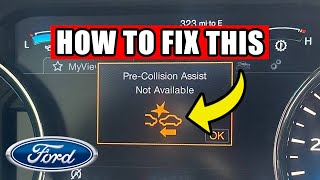
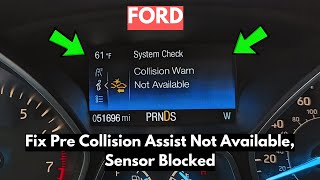
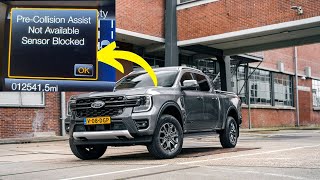
- Other symptoms include the engine running rough, a 'Pre-Collision Assist Not Available' warning, and the vehicle entering a low-power limp mode.
- Simply replacing the accelerator pedal will not fix the problem if the wiring is the cause.
- The issue also affects platform mates like the Lincoln Corsair and Ford Bronco Sport.
- This issue can be a safety concern as it affects throttle control, so it should be addressed promptly.
What's Unique About the 2020-2021 Ford ESCAPE
For the 2020-2021 Ford Escape and its C2 platform mates like the Lincoln Corsair and Bronco Sport, this code is strongly linked to a specific manufacturing and assembly issue. Ford has issued technical service bulletins (TSBs) pointing to the 14290 wiring harness located above the steering shaft that is prone to chafing. This damage can cause a short circuit, leading to a loss of the 5-volt reference (VREF) signal that serves numerous sensors, including the one that triggers P2127. This makes a wiring inspection the top priority over simply replacing the pedal sensor.
Diagnostic Flowchart
Tap your situation to follow the diagnostic path that matches what you're seeing on this vehicle.
Symptoms You May Notice
- Check Engine Light illuminated
- Vehicle enters 'limp mode' with reduced power
- Engine runs rough
- Unresponsive or delayed accelerator pedal
- Vehicle may stall or have trouble starting
- 'Pre-Collision Assist Not Available' warning on the dashboard. 🎬 Watch: How to fix the Pre-Collision Assist warning message.
- Replacing the accelerator pedal assembly without first inspecting the 14290 wiring harness. On these specific Escape models and their platform mates, the TSBs point to the harness as the primary suspect, and replacing the pedal will not fix a wiring short.
Most Likely Causes
- Damaged 14290 Wiring Harness 🔴 High Probability As documented in Ford TSBs SSM 50245 and SSM 50116, the harness above the steering shaft U-joint can rub against the shaft, causing wires to chafe and short out. This interrupts the 5-volt reference (VREF) circuit that powers multiple sensors.
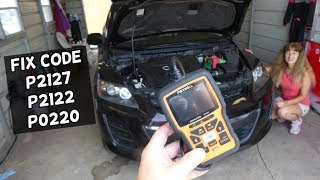
How to confirm: Visually inspect the wiring harness (part family 14290) directly above the steering shaft 🎬 See how to diagnose and fix these specific pedal codes. U-joint, near the upper brake pedal mount. This is in a tight space under the driver's side dashboard. Look for signs of rubbing, exposed copper wires, or damage to the loom. Turning the steering wheel back and forth may help reveal the point of contact.
Typical fix: Disconnect the battery. Carefully cut away the damaged loom to access the affected wires. Repair the individual wires using solder and heat shrink tubing or quality butt connectors. Wrap the repaired section and surrounding area with high-quality anti-abrasion tape (such as Tesa cloth tape). Secure the harness away from the steering shaft using the provided harness locator stud or zip ties to prevent recurrence.
Est. part cost: $10-$30 for wiring repair supplies. - Blown Fuse 🟡 Medium Probability The wiring harness short described in TSB SSM 50245 specifically notes that it can cause fuse 44 in the engine compartment fuse box to blow.
How to confirm: Check fuse F44 in the engine compartment fuse box (located next to the battery). If it is blown, it strongly indicates a short circuit in the related harness. The passenger compartment fuse box is under the glove box.
Typical fix: Replace the fuse *after* the underlying short circuit has been repaired. Do not replace the fuse without fixing the short, as it will simply blow again and could cause further damage.
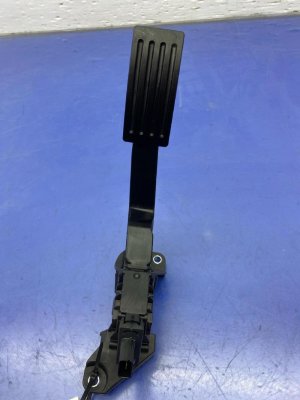
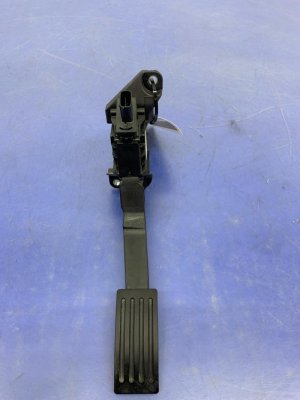
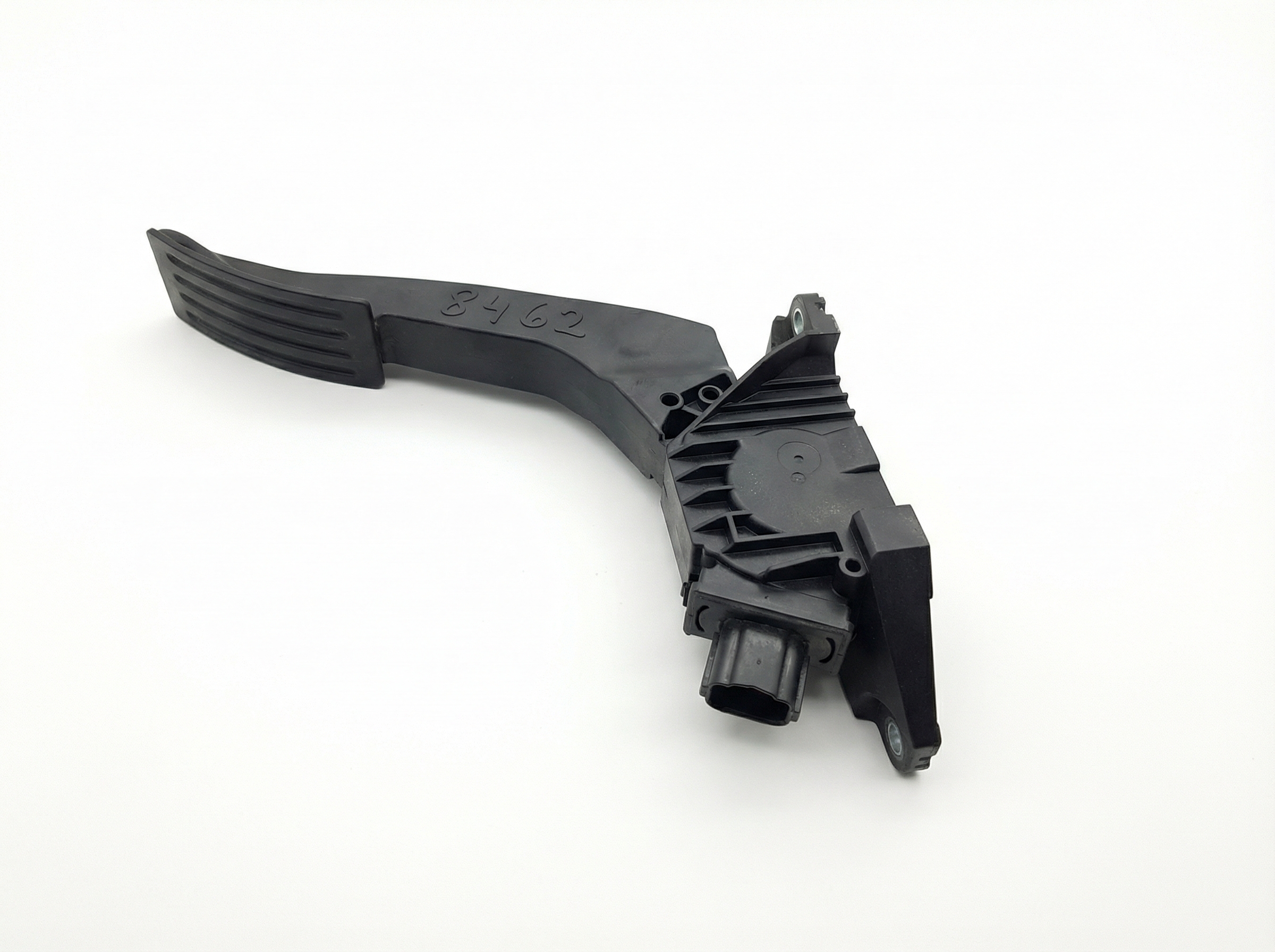
Est. part cost: $1-$5 - Failed Accelerator Pedal Position (APP) Sensor ⚪ Low Probability → Shop Accelerator Pedal Assembly While the sensor itself can fail from internal wear or defects, it is far less common than the wiring issue on this specific vehicle. The sensor is integrated into the accelerator pedal assembly and is not sold separately.
How to confirm: After confirming the wiring harness and fuse are intact, use a diagnostic scan tool to monitor the APP sensor voltage (APP1/APP2). If the voltage is erratic, stuck at 0V, or doesn't change smoothly as the pedal is pressed, the sensor is likely faulty. A good sensor should show a smooth sweep from idle voltage to full-throttle voltage.
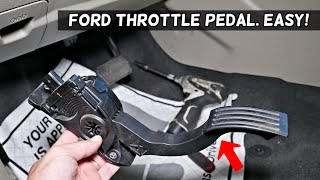
Typical fix: Replace the entire accelerator pedal assembly. 🎬 Watch this walkthrough on how to replace the gas pedal.
Est. part cost: $70-$160
Rare But Worth Checking
- Powertrain Control Module (PCM) Issue: → Shop Engine Control Module (ECM) A PCM failure is extremely rare but possible. This should only be considered after all other possibilities, especially the TSB-related wiring issue, have been thoroughly ruled out by a professional using advanced diagnostic tools.
Diagnosis Steps
- Scan the PCM for all stored trouble codes. Note any other codes that appear alongside P2127, especially those listed in TSB SSM 50245 (like P2122, P06A7, etc.).
- Check fuse 44 in the engine compartment fuse box. If it is blown, this is a strong indicator of a short circuit and you should proceed directly to the harness inspection.
- Perform a detailed visual inspection of the 14290 wiring harness located above the steering shaft, near the brake pedal mount. Use a good light source. Turn the steering wheel to check for any contact between the shaft and the harness.
- If damage is found, repair the wiring. Use a multimeter to confirm continuity and check for shorts to ground after the repair. Ensure no other wires in the bundle are compromised.
- Secure the repaired harness away from the steering shaft using zip ties or by affixing it to a factory mounting point to prevent future damage.
- If the harness is in perfect condition, use a scan tool to observe the live data from the APP sensor circuits (APP1, APP2). Check for a smooth, linear voltage change as you press and release the accelerator pedal.
- If one of the sensor signals is missing or erratic while the wiring is confirmed good, the accelerator pedal assembly is likely faulty and should be replaced.
- After any repair, clear the DTCs and perform a test drive to ensure the issue is resolved.
Parts You'll Likely Need
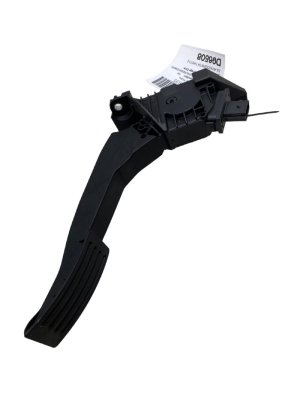
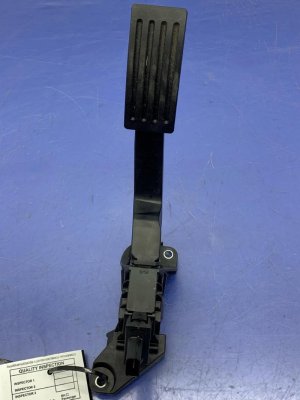
- Accelerator Pedal Assembly
(OEM #LX6Z-9F836-A (supersedes LX61-9F836-AB))— This is the component that is replaced if the sensor itself fails. However, on this vehicle, it is less likely to be the cause than the wiring harness.
Trusted brands: Motorcraft
OEM price range: $100-$180
Aftermarket price range: $70-$120 - Wiring Repair Supplies — Needed to fix the common chafing issue described in Ford's TSBs. Includes wire, solder, heat shrink tubing, and protective loom/tape (Tesa tape recommended).
Trusted brands: 3M, Tesa
OEM price range: $15-$40
Aftermarket price range: $10-$25
Related Codes That Often Appear With This One
- P2122 — This code ('Throttle/Pedal Position Sensor/Switch 'D' Circuit Low') relates to another circuit in the same APP sensor. A shared wiring problem or VREF loss often triggers multiple pedal sensor codes simultaneously.
- P06A7 — This code ('Sensor Reference Voltage 'B' Circuit Range/Performance') and many others listed in TSB SSM 50245 can appear with P2127 because the chafed harness shorts the main 5-volt reference (VREF) circuit that supplies power to numerous engine sensors, including the APP, pre-collision radar, and others.
- P2138 — This code ('Throttle/Pedal Position Sensor/Switch 'D'/'E' Voltage Correlation') is often set alongside P2122 and P2127 because the PCM detects a mismatch between the two main APP sensor signals, which is a direct result of the wiring short or sensor failure.
Technical Service Bulletins (TSBs) & Recalls
- SSM 50245: Details various symptoms, including DTC P2127, caused by a loss of VREF from the 14290 harness chafing on the steering shaft. This is the most relevant TSB.
- SSM 50116: An earlier bulletin also describing the loss of of VREF and DTCs due to the 14290 harness issue, superseded by SSM 50245 but confirms the history of the problem.
Platform-Specific Known Issues
- A known issue documented in Ford Technical Service Bulletins SSM 50245 and SSM 50116 describes the 14290 wiring harness chafing against the steering shaft. This can cause a short circuit, loss of voltage reference (VREF), a blown fuse 44, and trigger code P2127 along with a host of other DTCs.
- Owner experiences confirm that this wiring issue is the first place to look. Ignoring the TSB and replacing the pedal first often leads to wasted time and money, as the problem returns quickly.
Mechanic-Grade Diagnostic Values
- 5-Volt Reference (VREF) at APP sensor connector — expected: Approximately 5.0 Volts (± 0.5V) with key on, engine off (KOEO).. Failure: A reading below 4.5V, close to 0V, or an abnormally high voltage (e.g., 11-12V) indicates a circuit problem (short to ground, open, or short to power).
- APP Sensor Signal Voltage (for circuit 'E') — expected: A smooth voltage sweep from approximately 0.7-0.8V at pedal rest to around 4.0V at full press.. Failure: Voltage is stuck at 0V, does not change with pedal movement, or has dropouts/spikes. A reading below ~0.2-0.3V will trigger the 'Circuit Low' fault.
- Continuity of APP Sensor Signal Wire — expected: Near 0 ohms of resistance between the signal pin at the APP connector and the corresponding pin at the PCM connector.. Failure: High resistance or an 'OL' (Over Limit) reading indicates an open or broken wire.
- Continuity of APP Sensor Ground Wire — expected: Near 0 ohms of resistance between the ground pin at the APP connector and a known good chassis ground.. Failure: High resistance or 'OL' reading indicates a bad ground connection for the sensor.
Scan Tool Commands That Help
- Ford IDS / High-End Scan Tool: Throttle Body Relearn / Reset Adaptive Tables — After replacing the accelerator pedal assembly or repairing wiring, a relearn procedure may be required for the PCM to recognize the new sensor's idle and wide-open throttle positions. While many modern Fords will self-learn, initiating this function can resolve erratic idle or throttle response post-repair.
Wiring & Ground Locations
- APP Sensor Connector — At the top of the accelerator pedal assembly in the driver's side footwell.. This is the primary location for testing voltage and signal integrity of the APP sensor circuits. It is a 6-pin connector.
- 14290 Harness — The specific section of concern is routed above the steering shaft U-joint, under the driver's side dashboard. [TSB SSM 50245]. This is the known chafe point described in Ford TSBs SSM 50245 and 50116, which causes a short that triggers P2127 and other VREF-related codes.
- Fuse F44 — In the engine compartment fuse box, also known as the Battery Junction Box (BJB), located near the 12V battery.. TSB SSM 50245 explicitly states that the wiring harness short can cause this fuse to blow, cutting power to critical components.
- Chassis Ground — A common and reliable chassis ground point for testing is an unpainted metal part of the engine block or chassis frame.. When testing the APP sensor connector, using a known good ground is essential to get accurate voltage readings and confirm the integrity of the sensor's own ground circuit.
Real Owner Repair Stories
- Ford Bronco Sport Forum (platform mate) (2021 Ford Bronco Sport) — Vehicle went into limp mode with multiple warning lights, including 'Pre-Collision Assist Not Available'. Codes P2127, P2122, and others were stored.
❌ Tried (didn't work) Initial dealer diagnosis was inconclusive.
✅ What actually fixed it The owner found TSB SSM 50245 and inspected the wiring harness above the steering shaft. They discovered two wires that had chafed through their insulation. The final fix was repairing the two damaged wires and wrapping the harness in protective tape, which resolved all codes and symptoms.
OEM Part Supersession History
LX6Z-9F836-A→LX6Z-9F836-E— Part number has been updated by the manufacturer. Reasons for supersession are often to improve durability, change suppliers, or make minor design revisions.
Heads up: While the parts may be physically interchangeable, it is critical to match the part number to the vehicle's specific build (Gas, Hybrid, PHEV) as they may have different calibrations.
Helpful Videos
We Have This Part in Stock

The information in this article is provided for general reference and educational purposes only. Vehicle specifications, procedures, and part compatibility can vary by production date, trim level, and region. Always consult your vehicle's factory service manual and verify part numbers before purchasing or performing repairs. Safety-critical components such as airbags, seat belts, and braking systems should be installed by a qualified professional.
- Ford ESCAPE:
- 🧭 Diagnostic Flowchart
- 🎬 Helpful Videos
- 🛍️ Shop This Part
- What's Unique About the 2020-2021 Ford ESCAPE
- Symptoms You May Notice
- Most Likely Causes
- Rare But Worth Checking
- Diagnosis Steps
- Parts You'll Likely Need
- Related Codes That Often Appear With This One
- Technical Service Bulletins (TSBs) & Recalls
- Platform-Specific Known Issues
- Mechanic-Grade Diagnostic Values
- Scan Tool Commands That Help
- Wiring & Ground Locations
- Real Owner Repair Stories
- OEM Part Supersession History
- 🎟️ Get 5% Off