

P2127 on 2007-2014 GMC Yukon: Accelerator Pedal Sensor 'E' Circuit Low Fixes
On a 2007-2014 GMC Yukon, code P2127 is most often caused by a faulty accelerator pedal position (APP) sensor assembly or a bad electrical connection at the pedal. This triggers a 'Reduced Engine Power' warning. Replacing the pedal assembly is the most common fix, but inspecting the wiring connector first is critical.
- P2127 on a 2007-2014 Yukon almost always points to a problem with the gas pedal assembly or its electrical circuit.
- The most common symptom is the 'Reduced Engine Power' message, which severely limits your ability to accelerate.
- Before replacing the pedal, always inspect the wiring and connector for damage or looseness, as this is a known issue on these trucks per TSB #PIP3783D.
- Do not confuse this with a throttle body problem; the code specifically relates to the driver's input at the pedal.
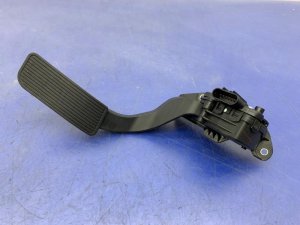
- The correct OEM replacement pedal is typically GM Part #25832864.
- If wiring is the issue, check the main pedal connector, but also be aware of intermediate connectors under the dash (X205) and in the engine bay (X109) as potential failure points.
What's Unique About the 2007-2014 Gmc YUKON
For this generation of GMC Yukon and its GMT900 platform mates (like the Tahoe, Suburban, and Silverado), a common point of failure is not just the pedal sensor itself, but the electrical connector attached to it. A manufacturer Technical Service Bulletin (TSB #PIP3783D) specifically points to poor terminal tension in the APP sensor's wiring harness, which can cause intermittent low voltage signals and trigger this code. The bulletin also advises checking other connectors like C109/X109 (below the underhood fuse block) and C205/X205 (under the instrument panel trim) for corrosion or poor seating, which can also cause this issue.
Diagnostic Flowchart
Tap your situation to follow the diagnostic path that matches what you're seeing on this vehicle.
Symptoms You May Notice
- "Reduced Engine Power" message on the dashboard.
- Check Engine Light is on.
- Little to no throttle response when pressing the gas pedal.
- "Service Stabilitrak" or "Service Traction Control" messages may also appear.
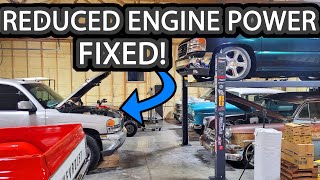
- Engine may stall when coming to a stop or idle erratically. 🎬 Watch: How to fix the Reduced Engine Power message
- Replacing the Throttle Body. While throttle body issues can also cause 'Reduced Engine Power' mode, codes P2122, P2127, and P2138 specifically point to the accelerator pedal assembly or its circuits. Many owners replace the throttle body only to have the P2127 code return, indicating the original problem was at the pedal.
Most Likely Causes
- Failed Accelerator Pedal Position (APP) Sensor Assembly 🔴 High Probability → Shop Accelerator Pedal Assembly The internal electronic components and resistive strips of the sensors wear out over time, leading to incorrect voltage readings. This is a very common failure item on these high-use drive-by-wire vehicles.
How to confirm: Use a scan tool to monitor the live data for APP Sensor 1 and APP Sensor 2 voltages. As you press the pedal, both should show a smooth, corresponding change. For P2127, you will likely see the Sensor 2 voltage stuck low (near 0V) or responding erratically, while Sensor 1 may appear normal.
Typical fix: Replace the entire accelerator pedal assembly. It is a single unit that includes both sensors. The most common OEM part number is GM 25832864.
Est. part cost: $70-$160 - Poor Connection or Damaged Wiring at the APP Sensor 🟡 Medium Probability As noted in TSB #PIP3783D, these vehicles can suffer from poor terminal tension in the connector, leading to intermittent signals. Wires can also get damaged or frayed from foot movement, floor mats interfering with the harness, or corrosion from moisture in the footwell.
How to confirm: Visually inspect the wiring harness and connector at the accelerator pedal. With the key on, gently wiggle the connector and wires while watching the live APP sensor data on a scan tool. If the voltage for Sensor 2 jumps around or returns to normal, it indicates a bad connection or wiring issue.
Typical fix: Repairing the damaged wire, cleaning the connector pins, or replacing the connector pigtail (e.g., ACDelco PT2712). In some cases, simply ensuring the connector is fully seated can resolve the issue.
Est. part cost: $15-$40
Rare But Worth Checking
- Faulty Powertrain Control Module (PCM): → Shop Engine Control Module (ECM) This is very rare. Before suspecting the PCM, all other possibilities, especially the APP sensor, its wiring, and all related connectors (including C109/X109 and C205/X205) must be exhaustively ruled out. A PCM failure usually causes multiple other codes and more widespread issues.
- Loose or Corroded Intermediate Connectors (X205/C205): TSB #PIP3783D points out that connectors between the pedal and the PCM can be a source of the problem. One owner on a forum found their P2127 issue was caused by connector X205, located under the upper instrument panel trim, not being fully seated.
Diagnosis Steps
- Read the codes with an OBD-II scanner. Confirm P2127 is present and note any other codes like P2138 or P2122. 🎬 See this detailed diagnostic walkthrough for P2138 and P2127 codes
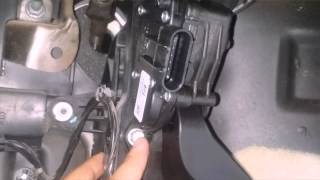
- Visually inspect the accelerator pedal's wiring harness and connector for any obvious damage, corrosion, or loose connections. Ensure no floor mats are interfering with the wiring.
- With the ignition on (engine off), use a scan tool to view live data for 'APP Sensor 1' and 'APP Sensor 2' voltages or percentages.
- At rest, APP Sensor 1 should be around 0.35-4.75V and APP Sensor 2 should be around 0.275-4.75V. For P2127, you will likely see the Sensor 2 value stuck at or near zero volts, or a value below 0.2V.
- Slowly press and release the gas pedal. Both sensor readings should change smoothly. Sensor 1 typically sweeps up in voltage while Sensor 2 sweeps down, or vice-versa, but both should be smooth.
- Gently wiggle the connector and wiring at the pedal while watching the live data. If the reading for Sensor 2 jumps, flickers, or returns to normal, it confirms a bad connection or wiring issue.
- If the pedal connector seems fine, consult TSB #PIP3783D and locate intermediate connectors C109/X109 (underhood fuse block) and C205/X205 (under dash trim) to check for corrosion or looseness.
- If all wiring and connections are confirmed good but the sensor data is still bad, the accelerator pedal assembly is the most likely culprit and should be replaced.
- After replacement, clear the codes. A 'relearn' procedure may be necessary. One commonly cited method is to idle the engine for 3 minutes, shut it off for 1-3 minutes, and repeat the cycle.
Parts You'll Likely Need
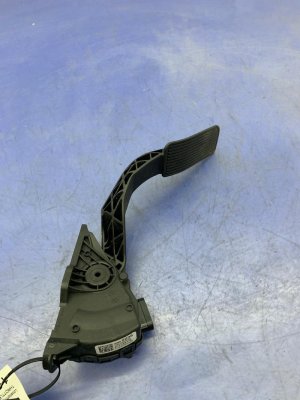
- Accelerator Pedal Position (APP) Sensor Assembly
(OEM #25832864)— This is the most common failure point for code P2127. The sensor is integrated into the pedal assembly and is not sold separately.
Trusted brands: ACDelco, GM Genuine, Dorman
OEM price range: $90-$160
Aftermarket price range: $50-$100 - APP Sensor Connector Pigtail
(OEM #ACDelco PT2712)— If the diagnostic steps point to a bad connection, replacing the connector is the most reliable repair, especially given the TSB regarding poor terminal tension.
Trusted brands: ACDelco, Dorman, Standard Motor Products (S-1479)
OEM price range: $25-$40
Aftermarket price range: $15-$30
Related Codes That Often Appear With This One
- P2138 — This code indicates a 'Sensor 1-2 Correlation' problem. It's often set alongside P2127 because if Sensor 2's voltage is stuck low, its reading will not logically match the reading from Sensor 1 as the pedal is pressed, triggering the correlation fault.
- P2122 — This is the equivalent 'Circuit Low' code for the other APP sensor ('D' or '1' circuit). Seeing both P2122 and P2127 simultaneously strongly points to an issue common to both sensors, such as a problem with the connector, a ground wire, or the 5-volt reference circuit.
Technical Service Bulletins (TSBs) & Recalls
- PIP3783D: Mentions that codes including P2127 can be caused by poor terminal tension in the Accelerator Pedal Position circuits, leading to a Check Engine Light or Reduced Engine Power message. It advises inspecting the APP connector, ECM connector, and intermediate connectors C109/X109 and C205/X205.
Platform-Specific Known Issues
- A known issue, documented in GM Technical Service Bulletin #PIP3783D, involves poor terminal tension in the electrical connector for the Accelerator Pedal Position (APP) sensor. This can cause intermittent low voltage signals and trigger codes P2127 and P2138, leading to a 'Reduced Engine Power' message.
- The same TSB also recommends inspecting intermediate harness connectors C109/X109 (located below the underhood fuse block) and C205/X205 (located under the upper instrument panel trim) for corrosion, water intrusion, or being improperly seated, as these can also cause the fault.
Mechanic-Grade Diagnostic Values
- APP Sensor 5V Reference Voltage — expected: 4.5V - 5.2V. Failure: Voltage below 4.5V indicates a problem with the supply circuit from the PCM or a short.
- APP Sensor 2 Signal Voltage (DTC P2127 Trigger) — expected: Above 0.2V - 0.25V at rest.. Failure: Voltage is consistently below 0.2V for 200 milliseconds or more.
- APP Sensor Low Reference Circuit to Ground Resistance — expected: Less than 5 ohms.. Failure: Resistance greater than 5 ohms indicates a poor ground connection, which can cause floating voltage readings.
- APP Sensor 2 Signal Circuit Resistance to Ground — expected: Infinite resistance (open circuit).. Failure: Resistance below 100 ohms indicates a short to ground in the signal wire.
Scan Tool Commands That Help
- GDS2 / Tech2: Idle Learn Reset / Throttle Position Sensor Learn — After replacing the accelerator pedal assembly or throttle body, this function in the GM diagnostic software forces the PCM to relearn the sensor's home and range-of-motion values. Failure to perform this can cause the code to persist even with new parts.
- Professional Scan Tool (e.g., Snap-on, Autel): Graphing APP Sensor 1 vs. APP Sensor 2 — This is a primary diagnostic step. By graphing both sensor voltages simultaneously while pressing the pedal, a technician can visually identify dropouts, glitches, or a sensor that is stuck low (P2127), which confirms a sensor or wiring fault.
Wiring & Ground Locations
- APP Sensor Connector (X115) — At the top of the accelerator pedal assembly, under the driver's side dashboard.. This is the primary connection point. TSB #PIP3783D specifically calls out poor terminal tension here. The pins for APP Sensor 2 are Pin A (Low Reference) and Pin D (Signal).
- APP Sensor 2 Pinout — On the 6-pin connector at the pedal.. Pin A: Low Reference (Ground from PCM), Pin B: 5V Reference (for Sensor 1), Pin C: APP Sensor 1 Signal, Pin D: APP Sensor 2 Signal (This is the 'E' circuit for P2127), Pin E: 5V Reference (for Sensor 2), Pin F: Low Reference (for Sensor 1). Testing voltage at Pin D is critical for diagnosing P2127.
- G103 Ground — On the cowl in the left rear of the engine compartment, often near the brake booster.. This ground serves multiple modules, including the Body Control Module (BCM) and the Data Link Connector (DLC). While not a direct ground for the APP sensor (which is grounded through the PCM), a poor G103 can cause bizarre communication issues that may mimic sensor problems.
- X205 Connector — Under the upper instrument panel trim, on the driver's side.. This is an intermediate connector between the pedal and the PCM. TSB #PIP3783D and owner reports confirm that a loose or corroded X205 can cause an open or high resistance on the APP sensor circuits, directly causing P2127.
Real Owner Repair Stories
- Tahoe Yukon Forum user 'acfondaw' (2014 GMC Yukon) — Sporadic P2127 code and reduced engine power.
❌ Tried (didn't work) Replaced the accelerator pedal/sensor assembly., Replaced the throttle position sensor (on the throttle body).
✅ What actually fixed it Performing a specific 'relearn' procedure after parts replacement. The procedure was: idle for 3 minutes, shut off for 3 minutes, repeat the cycle, then accelerate while in Park. This allowed the computer to relearn the new sensor positions and resolved the code. - Tahoe Yukon Forum user 'Neuner' (2014 Suburban LT (GMT900 platform mate)) — Recurring P2127 code, happening daily, sometimes multiple times a day.
❌ Tried (didn't work) Replaced the pedal assembly with an OEM GM part.
✅ What actually fixed it The user was advised that a relearn procedure using a Tech2 or high-end Snap-on scanner might be required because a simple battery disconnect doesn't always force the ECM to relearn. The thread suggests this as the next logical step when new parts don't fix the issue, highlighting the importance of software resets.
OEM Part Supersession History
15847349, 15101848→25832864— Part consolidation and potential design updates by GM over the vehicle's lifecycle.
Heads up: Part 25832864 is the current correct replacement for most 2007-2011 models with adjustable pedals. Always verify fitment with the vehicle's VIN before purchasing.
Model Year Variations Within This Range
- 2007-2011 vs 2012-2014: While the fundamental cause is the same, part numbers for the accelerator pedal assembly may differ for later models in the generation (2012-2014), especially depending on options like adjustable pedals. The primary replacement part 25832864 is most commonly associated with 2007-2011 models. Verifying the part number by VIN is crucial for 2012+ vehicles.
Helpful Videos
We Have This Part in Stock

The information in this article is provided for general reference and educational purposes only. Vehicle specifications, procedures, and part compatibility can vary by production date, trim level, and region. Always consult your vehicle's factory service manual and verify part numbers before purchasing or performing repairs. Safety-critical components such as airbags, seat belts, and braking systems should be installed by a qualified professional.
- Gmc YUKON:
- 🧭 Diagnostic Flowchart
- 🎬 Helpful Videos
- 🛍️ Shop This Part
- What's Unique About the 2007-2014 Gmc YUKON
- Symptoms You May Notice
- Most Likely Causes
- Rare But Worth Checking
- Diagnosis Steps
- Parts You'll Likely Need
- Related Codes That Often Appear With This One
- Technical Service Bulletins (TSBs) & Recalls
- Platform-Specific Known Issues
- Mechanic-Grade Diagnostic Values
- Scan Tool Commands That Help
- Wiring & Ground Locations
- Real Owner Repair Stories
- OEM Part Supersession History
- Model Year Variations Within This Range
- 🎟️ Get 5% Off