

P2127 on 2007-2011 GMC Yukon Denali: Causes and Fixes for Reduced Engine Power
On a 2007-2011 GMC Yukon Denali, code P2127 almost always points to a faulty accelerator pedal assembly or a bad electrical connection to it. This triggers the 'Reduced Engine Power' message. Replacing the pedal assembly is the most common fix, costing around $90-$160 for an OEM part. However, a known issue with the connector wiring means it should be inspected thoroughly before replacing any parts.
- P2127 on a Yukon Denali almost always means a problem with the gas pedal assembly or its connector.
- The most common symptom is the 'Reduced Engine Power' message, which severely limits vehicle speed.
- Always inspect the electrical connector at the pedal for loose pins before buying a new pedal assembly, as this is a known issue (TSB #PIP3783D).
- The fix is typically replacing the entire accelerator pedal assembly, which is a DIY-friendly job requiring basic tools.
- After replacing parts, a 'relearn' procedure may be necessary to resolve the code.
What's Unique About the 2007-2011 Gmc YUKON DENALI
On this generation of GM trucks and SUVs (GMT900 platform), the accelerator pedal assembly is a known failure point. A specific Technical Service Bulletin (TSB #PIP3783D) highlights that poor electrical contact in the sensor's connector can mimic a failed sensor. The TSB advises inspecting not only the main pedal connector but also intermediate connectors under the dash (X205) and in the engine bay (X109) as potential failure points. This makes checking the entire wiring circuit a critical first step before replacing any parts, a detail often overlooked.
Diagnostic Flowchart
Tap your situation to follow the diagnostic path that matches what you're seeing on this vehicle.
Symptoms You May Notice
- "Reduced Engine Power" message on the dashboard.
- "Service StabiliTrak" message may appear.
- Check Engine Light is on.
- Severely limited acceleration (limp mode).
- Hesitation or a dead spot when pressing the gas pedal.
- Unresponsive gas pedal.
- Replacing the Throttle Body. Codes like P2127 specifically point to the accelerator pedal circuit, not the throttle body. Owners often replace the throttle body in response to 'Reduced Engine Power' mode, but the code returns because the fault is at the pedal. However, in some forum-reported cases, a faulty throttle body was the ultimate cause after a pedal replacement did not solve the issue.
Most Likely Causes
- Faulty Accelerator Pedal Position (APP) Sensor Assembly 🔴 High Probability → Shop Accelerator Pedal Assembly The integrated sensors within the pedal assembly are a common failure item on these high-use, drive-by-wire vehicles. Wear and tear can cause the internal contacts to fail.
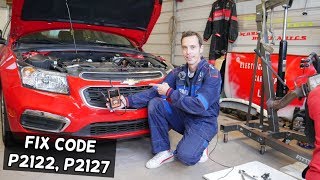
How to confirm: Use a scan tool to monitor live data for APP Sensor 1 and APP Sensor 2. 🎬 Watch: How to diagnose P2122 and P2127 codes using live data. As you press the pedal, both should show a smooth, corresponding change in voltage. With P2127, Sensor 2's voltage will likely be stuck near zero or respond erratically.
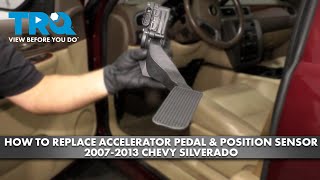
Typical fix: Replace the entire accelerator pedal assembly. 🎬 Watch: Step-by-step guide to replacing the accelerator pedal assembly. The sensors are integrated and not sold separately.
Est. part cost: $90-$160 - Poor Electrical Connection at the APP Sensor 🟡 Medium Probability GM issued TSB #PIP3783D specifically for this issue, noting that poor terminal tension in the APP sensor connector can cause intermittent low voltage signals and trigger this code. This is a very common point of failure, with many owners reporting that fixing the connector solved the problem after a new pedal did not.
How to confirm: Visually inspect the connector at the accelerator pedal for loose pins, corrosion, or damage. Wiggle the connector with the engine running to see if it triggers the fault. For intermittent issues, a graphing multimeter may be needed to spot the momentary voltage drop that a standard DMM would miss.
Typical fix: Clean the connector terminals and ensure a snug fit by slightly bending the pins for better contact. If terminals are loose or damaged, replace the connector pigtail (e.g., ACDelco PT2712).
Est. part cost: $15-$40 - Damaged Wiring Harness ⚪ Low Probability Wires can get stretched or damaged near the pedal from driver foot traffic or from being snagged. Chafing can also occur where the harness passes through the firewall or near engine components.
How to confirm: Perform a continuity test on the signal, reference, and ground wires for APP sensor 2 between the pedal connector and the ECM connector. Check for shorts to ground or voltage.
Typical fix: Repair the specific broken or shorted wire in the harness.
Est. part cost: $5-$20
Rare But Worth Checking
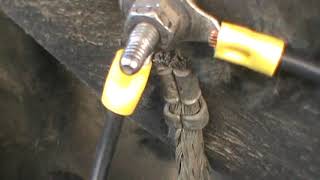
- Poor Engine Ground Connection: An intermittent P2127, especially one that occurs when hitting bumps or under load, can be caused by a poor ground connection. On GMT900 vehicles, a common culprit is the ground strap located at the back of the passenger-side cylinder head.
- Faulty Engine Control Module (ECM): → Shop Engine Control Module (ECM) This is very rare. Before condemning the ECM, all other possibilities (pedal, connector, wiring, grounds) must be exhaustively ruled out. An ECM failure usually presents with multiple, unrelated codes.
Diagnosis Steps
- Read the fault codes with an OBD-II scanner.
- Using the scanner's live data function, monitor the voltage readings for 'APP Sensor 1' and 'APP Sensor 2'.
- Slowly press and release the accelerator pedal. Both sensor voltages should rise and fall smoothly. APP Sensor 2 voltage should be between 0.275V and 4.75V.
- If APP Sensor 2 voltage is stuck low (near 0V) or is erratic/jumpy, proceed to inspect the pedal assembly.
- Turn off the ignition. Disconnect the electrical connector at the accelerator pedal.
- Inspect the connector and the pedal's pins for any signs of corrosion, moisture, or damage. Check for loose-fitting female terminals in the connector, as noted in TSB #PIP3783D. Wiggle the harness while monitoring live data if the issue is intermittent.
- If the connector looks good, the most likely cause is a failed APP sensor. Replace the accelerator pedal assembly.
- If the connector terminals are loose or damaged, replace the connector pigtail.
- If the issue is intermittent and not resolved, inspect the engine ground connection on the rear passenger-side cylinder head for tightness and corrosion.
- After repair, clear the codes. Some owners report the need for a 'relearn' procedure: let the engine idle for 3 minutes, turn off for 3 minutes, and repeat the cycle. Then, perform a test drive to ensure the problem is resolved.
Parts You'll Likely Need
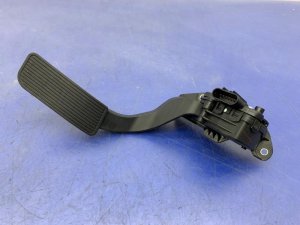
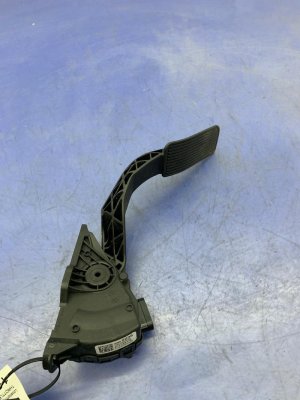
- Accelerator Pedal Assembly
(OEM #25832864 (supersedes 15847349))— This is the most common failure. The sensors are integrated into the pedal assembly and cannot be replaced individually.
Trusted brands: ACDelco, GM Genuine, Dorman (e.g., 699-208)
OEM price range: $90-$160
Aftermarket price range: $50-$100 - APP Sensor Connector Pigtail
(OEM #PT2712)— If diagnostics point to poor terminal tension or a damaged connector, replacing the pigtail is the correct fix, as highlighted by TSB #PIP3783D.
Trusted brands: ACDelco, Dorman, Standard Motor Products
OEM price range: $25-$40
Aftermarket price range: $15-$30
Related Codes That Often Appear With This One
- P2138 — P2138 is 'APP Sensor 1-2 Correlation'. This code sets when the ECM sees a disagreement between the signals from the two pedal sensors, which is a direct consequence of one sensor's signal being low or erratic (as in P2127).
- P2122 — P2122 is 'APP Sensor 1 Circuit Low Voltage'. Since the pedal assembly has two sensors, it's common for a connector issue or internal failure to affect both circuits, causing multiple codes to appear together.
Technical Service Bulletins (TSBs) & Recalls
- PIP3783D: Advises technicians to inspect the Accelerator Pedal Position circuits for poor terminal tension when codes like P2127 are present. It specifically calls out checking the APP connector, ECM connector, and intermediate connectors C109/X109 and C205/X205.
Platform-Specific Known Issues
- A known issue, documented in TSB #PIP3783D, is poor terminal tension in the accelerator pedal position sensor connector, which can cause this code and lead to a 'Reduced Engine Power' message.
- Some owners report that replacing the pedal assembly is only a temporary fix, with the issue returning. This often points to the true fault being the connector, wiring, or a poor ground all along.
- An intermittent issue that appears when hitting bumps can be a strong indicator of a loose ground wire, specifically the one on the passenger side cylinder head.
Mechanic-Grade Diagnostic Values
- APP Sensor 2 Signal Voltage (Key On, Engine Off) — expected: 0.275V to 4.75V. Failure: Voltage is stuck below 0.2V for more than 200 milliseconds.
- APP Sensor 5-Volt Reference Voltage (at pedal connector) — expected: 4.5V to 5.2V. Failure: Voltage below 4.5V indicates a problem in the supply circuit from the ECM or a short.
- APP Sensor Low Reference Circuit Resistance to Ground — expected: Less than 5 ohms. Failure: Resistance greater than 5 ohms indicates a poor ground connection.
- APP Sensor 2 Signal Circuit Resistance to Ground — expected: Infinite resistance (Open Line/O.L.). Failure: Any continuity or low resistance indicates a short to ground in the signal wire.
Scan Tool Commands That Help
- GDS2 / Tech2 or equivalent professional scanner: Graphing APP Sensor 1 vs. APP Sensor 2 — This is a primary diagnostic step to visually confirm if APP Sensor 2's voltage is dropping out or failing to respond while APP Sensor 1 is working correctly. This isolates the fault to the Sensor 2 circuit.
- GDS2 / Tech2 or equivalent professional scanner: Idle Learn Reset / Throttle Position Sensor Learn — After replacing the accelerator pedal assembly, this function forces the ECM to relearn the new sensor's voltage range. Some vehicles may not resolve the code until this relearn is performed.
Wiring & Ground Locations
- APP Sensor Connector — At the top of the accelerator pedal assembly, under the driver's side dashboard.. This is the primary connection point for the sensor. TSB #PIP3783D identifies poor terminal tension within this connector as a main cause of P2127.
- X205 / C205 — An intermediate inline harness connector located under the upper instrument panel trim, near the windshield defroster grille.. TSB #PIP3783D points to this connector as a potential site for corrosion, water intrusion, or poor seating, which can interrupt the APP sensor signals on their way to the ECM.
- X109 / C109 — An intermediate inline harness connector located in the engine compartment, below the underhood fuse block on the driver's side.. Similar to X205, this connector is a known trouble spot mentioned in TSB #PIP3783D for causing intermittent APP sensor codes due to corrosion or loose connections.
- Engine Ground Strap — A braided ground strap connecting the body to the rear of the passenger-side cylinder head.. A loose or corroded ground at this location is a known cause for intermittent electronic issues, including APP sensor codes, especially when symptoms appear while driving over bumps.
- G103 — Located on the cowl in the left rear of the engine compartment, above the brake booster.. This ground point serves the Body Control Module (BCM) and other critical interior electronics. While not directly for the APP sensor, a poor connection here can cause widespread electrical issues that may affect sensor readings.
Real Owner Repair Stories
- TahoeYukonForum.com user 'Fless' and OP (2014 GMC Yukon) — Sporadic P2127 code and 'Reduced Engine Power' message.
❌ Tried (didn't work) Replacing the accelerator pedal/sensor assembly., Replacing the throttle position sensor.
✅ What actually fixed it Performing a specific computer 'relearn' procedure after parts were replaced. The procedure involved idling the engine for 3 minutes, shutting it off for 3 minutes, and repeating the cycle twice before accelerating in Park.
OEM Part Supersession History
15847349→25832864— Standard part revision and update by GM.
Heads up: Part number 25832864 also supersedes 15101848. It is the correct replacement for Yukon models with adjustable pedals. No programming is required for this part.
Helpful Videos
We Have This Part in Stock

The information in this article is provided for general reference and educational purposes only. Vehicle specifications, procedures, and part compatibility can vary by production date, trim level, and region. Always consult your vehicle's factory service manual and verify part numbers before purchasing or performing repairs. Safety-critical components such as airbags, seat belts, and braking systems should be installed by a qualified professional.
- Gmc YUKON DENALI:
- 🧭 Diagnostic Flowchart
- 🎬 Helpful Videos
- 🛍️ Shop This Part
- What's Unique About the 2007-2011 Gmc YUKON DENALI
- Symptoms You May Notice
- Most Likely Causes
- Rare But Worth Checking
- Diagnosis Steps
- Parts You'll Likely Need
- Related Codes That Often Appear With This One
- Technical Service Bulletins (TSBs) & Recalls
- Platform-Specific Known Issues
- Mechanic-Grade Diagnostic Values
- Scan Tool Commands That Help
- Wiring & Ground Locations
- Real Owner Repair Stories
- OEM Part Supersession History
- 🎟️ Get 5% Off